
Deciding between a duplicate and triplicate order slip receipt book comes down to a simple question: how many people or departments need a physical copy of a transaction at the exact moment it occurs? If your business operates with a direct, two-party workflow—such as a simple retail sale where only you and the customer require a record—a duplicate book is the most efficient choice. However, if your operations involve a third party, such as a delivery rider, an external accounting department, or an inventory manager, a triplicate book is necessary to keep everyone aligned without the hassle of manual photocopying.
Selecting the wrong format can lead to operational bottlenecks. Choosing a duplicate book when you actually need three copies forces employees to manually write out information twice or make photocopies, which slows down service and increases the risk of transcription errors. Conversely, buying triplicate books for a simple two-party transaction wastes paper, increases stationery costs, and leaves you with stacks of unused third copies that eventually end up in the trash. Understanding how these books function and matching them to your daily workflow ensures smooth information routing and cost-effective record-keeping.
Understanding the Core Differences Between Duplicate and Triplicate Books
To make an informed choice, it helps to understand the physical structure of modern order slip receipt books. Most contemporary receipt books use carbonless copy paper, commonly referred to as NCR (No Carbon Required) paper. This technology relies on micro-encapsulated dye or ink coated on the back of the top sheet and a reactive clay coating on the front of the receiving sheet. When you apply pressure with a writing instrument, the micro-capsules rupture, releasing the dye to react with the clay on the sheet below, creating a clean, legible copy without the messy carbon sheets of the past.
Products mentioned in this guide
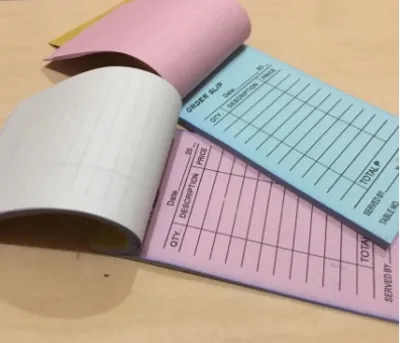
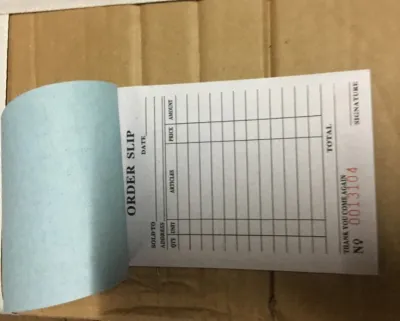
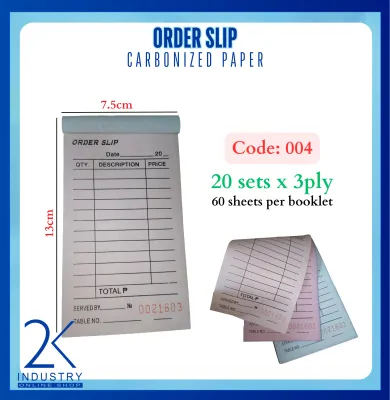
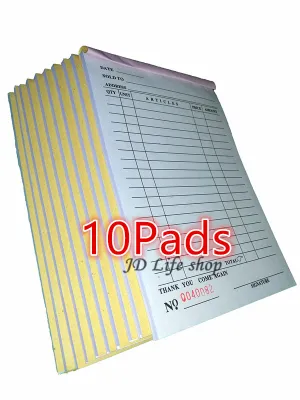
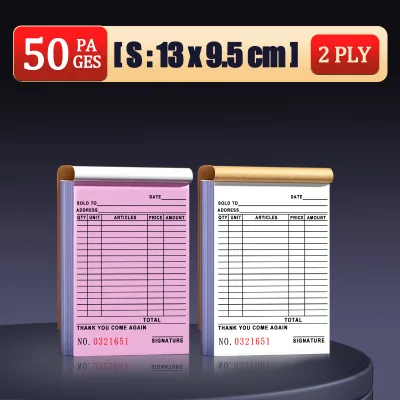
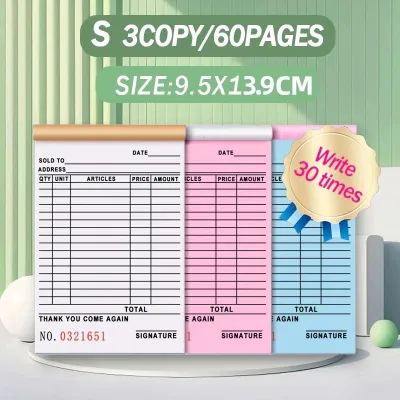
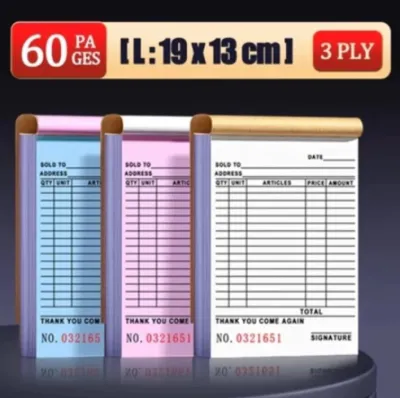
Prices are valid at publication and may change. Please refer to the product page for the latest price.
A duplicate (2-part) book consists of two sheets per set. The standard color sequence is a white top sheet, which serves as the original, followed by a canary yellow duplicate sheet. This format is designed to provide one copy for the customer and one copy for the business. Because there are only two layers of paper, the writing pressure transfers easily, resulting in sharp, highly legible text on both sheets.
A triplicate (3-part) book extends this structure by adding a third sheet to each set. The typical color sequence is a white top sheet, a canary yellow middle sheet, and a pink bottom sheet. The middle sheet is coated on both sides to receive the image from the top sheet and transfer it to the bottom sheet. This three-layer setup requires slightly firmer writing pressure to ensure the dye transfers clearly all the way to the pink copy.
It is important to note that the fundamental difference between these two formats lies entirely in information routing rather than paper quality, durability, or binding strength. Both duplicate and triplicate books are available in various paper weights and binding styles. Your decision should be guided by how many physical destinations your transaction data must reach simultaneously.
Workflows Best Suited for Duplicate (2-Part) Order Slips
Duplicate order slip books are ideal for straightforward, linear transactions where only the buyer and the seller need a record. In a standard retail or point-of-sale environment, the cashier writes down the items, calculates the total, and hands the original white copy to the customer as proof of purchase. The yellow copy remains bound in the book, providing the business owner or accountant with a secure, chronological record of daily sales for tax and inventory reconciliation.

Service-based businesses also benefit significantly from the simplicity of duplicate slips. For example, local repair shops, beauty salons, and home service providers—such as air conditioning technicians operating in tropical climates—only need to document the service rendered and the payment received. The technician hands the original slip to the client and keeps the duplicate copy to update the shop’s central records or to track individual technician commissions.
From a practical and financial standpoint, duplicate books offer distinct advantages for mobile workers. Because they contain fewer sheets per set, duplicate books are thinner, lighter, and much easier to carry in a pocket, tool bag, or vehicle glove compartment. Furthermore, they are generally more affordable per book than their triplicate counterparts, making them a highly cost-effective choice for high-volume, simple transactions where budget efficiency is a priority.
Workflows Best Suited for Triplicate (3-Part) Order Slips
Triplicate order slip books are designed for multi-step workflows where a third stakeholder must receive a physical copy of the transaction. This is particularly common in logistics, delivery, and supply chain operations. When goods leave a warehouse, the dispatch team, the delivery driver, and the end customer all require documentation. The driver carries the triplicate book, leaves the original white copy with the customer upon delivery, keeps the pink copy as signed proof of delivery, and returns the yellow copy to the warehouse to update inventory records.
Businesses with segregated administrative departments also rely on triplicate slips to maintain organizational order. In these setups, the sales department writes the order, the accounting department requires a copy to process invoices or tax filings, and the inventory or fulfillment department needs a copy to pack and ship the goods. A triplicate book allows the sales representative to distribute physical copies to both departments instantly, preventing communication delays and reducing reliance on digital networks.
Wholesale operations and business-to-business (B2B) transactions frequently utilize triplicate formats as well. In these scenarios, the sales representative, the purchasing client, and the billing department all require independent physical records to cross-reference purchase orders. Having three distinct, color-coded copies ensures that each department can quickly identify its designated slip, streamlining the auditing process and minimizing administrative confusion.
Essential Specifications to Check Before Purchasing
When shopping for order slip receipt books, evaluating physical and functional specifications is crucial to ensure they perform reliably under daily business conditions. First, pay close attention to paper weight and NCR coating quality. Standard carbonless paper typically ranges from 50gsm to 60gsm. You should verify that the paper is thick enough to resist accidental tearing but responsive enough to transfer writing clearly. To test this, perform an observable trial: write on the top sheet using your standard business pen and check if the text transfers sharply to the bottom copy without requiring excessive, hand-fatiguing pressure.
Ink compatibility and drying speed are also critical factors that depend on the exact material combination of the paper and the pen. Ballpoint pens are highly recommended for NCR paper because their hard, rolling tips provide the concentrated physical pressure needed to rupture the dye micro-capsules. Gel pens and fountain pens often do not apply enough pressure and their liquid inks may smudge or bleed on the coated paper surface. Before committing to a bulk purchase, conduct a quick test to observe the drying speed and smudge resistance of your preferred ink on the receipt paper, especially in humid environments where moisture can slow down ink drying times.
Binding and perforation quality directly affect how easily slips can be removed from the book. Look for books with clean, micro-perforated edges that allow you to tear out the customer copy smoothly without ripping the paper or damaging the remaining sets. The binding should be sturdy—either stapled or securely glued—and must include a thick, wrap-around cardboard cover, often called a writing shield. This shield is placed directly beneath the current active set to prevent your writing pressure from transferring through and ruining the blank slips underneath.
Finally, consider the size, format, and customization options. Standard sizes like 4″ x 5.5″ (pocket size) are excellent for mobile service providers, while larger 5.5″ x 8.5″ (half-letter) or A5 sizes are better suited for detailed invoices with multiple line items. Check if the books feature sequential numbering, which is essential for maintaining an accurate audit trail and preventing missing transactions. If your business requires official receipts for tax compliance, ensure the pre-printed fields align with local regulatory standards, including dedicated spaces for business details, taxpayer identification numbers, and breakdown of taxes.
Final Decision Framework for Your Business
To finalize your purchasing decision, evaluate your current operational structure against these clear, conditional guidelines:
- Choose Duplicate if: Your transaction workflow is completed entirely at the point of sale, involving only the customer and a single business record-keeper. This option is ideal for retail shops, cafes, personal service providers, and mobile technicians who prioritize portability and cost efficiency.
- Choose Triplicate if: Your business operations involve a third party that requires a simultaneous, physical record of the transaction. This is the correct choice for delivery services, wholesale distribution, businesses with separate accounting and warehouse departments, and B2B sales.
- Verify first if: Your business is planning a transition to a fully digital point-of-sale (POS) system. If you are moving toward digital invoicing, investing in a large inventory of physical receipt books may lead to wasted stock. However, keeping a few duplicate books on hand as a reliable backup during power outages or system downtime remains a smart business practice.
Frequently Asked Questions (FAQ)
Can I use a triplicate book if I only need two copies?
Yes, you can use a triplicate book for a two-copy workflow, but it is not highly recommended for daily operations. If you only need two copies, you will have to discard, void, or find a creative way to repurpose the third pink sheet, which leads to unnecessary paper waste. Additionally, triplicate books are thicker, heavier, and more expensive than duplicate books. Over time, paying for a third copy that you do not use will unnecessarily inflate your business’s stationery expenses.
How should I store unused order slip receipt books?
To preserve the quality of the carbonless coating, store your unused receipt books flat in a cool, dry environment away from direct sunlight and high humidity. Avoid placing heavy objects, boxes, or equipment on top of the stored books. Because NCR paper is pressure-sensitive, excessive weight or impact can accidentally rupture the micro-capsules inside the paper, causing unsightly blue or black smudge marks to appear on the sheets before you even write on them.
Community discussion
Share your experience or ask a question. Comments are reviewed before publication.