
Selecting the right receipt for business transactions is a foundational step in establishing an organized, legally compliant record-keeping system. The choice between duplicate and triplicate receipt books comes down to your operational workflow and how many stakeholders require a physical copy of each transaction. If your business operates on a direct, single-point model where only the customer and the business owner need a record, a duplicate receipt book is the most efficient choice. However, if your business involves multiple departments, external accountants, or strict inventory tracking, a triplicate receipt book provides the necessary third copy to keep all parties aligned without requiring manual photocopying.
Making this decision early prevents administrative bottlenecks and ensures your physical filing system matches your accounting practices. In tropical climates like the Philippines, where high humidity can affect paper storage and handling, choosing the correct format also helps minimize physical paper clutter and ensures that every copy remains legible over time. By analyzing your daily transaction flow, you can select a format that balances cost, convenience, and compliance.
Understanding How the Copy Structures Work
To choose the right format, it is essential to understand how these books are physically constructed and how they transfer information. Both duplicate and triplicate receipt books rely on carbonless copy paper, often referred to as NCR (No Carbon Required) paper. This technology replaced old-fashioned carbon paper sheets, which were messy to handle and required manual insertion between pages. Carbonless paper features microscopic dye capsules on the underside of the top sheet and a reactive clay coating on the upper side of the receiving sheet. When you apply pressure with a writing instrument, these capsules rupture, releasing dye that reacts with the clay to form a clear, permanent image on the copies below.
Products mentioned in this guide
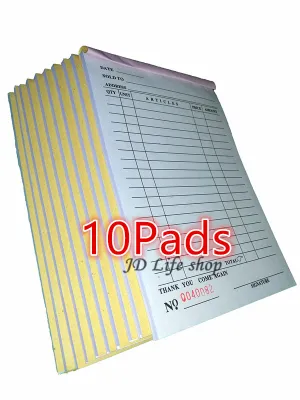
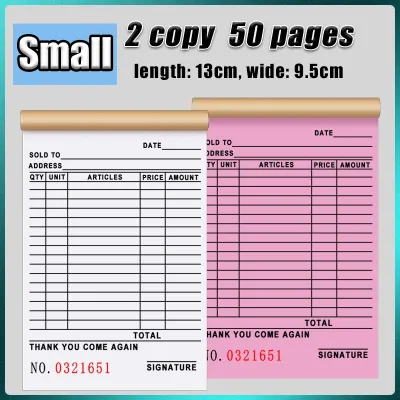
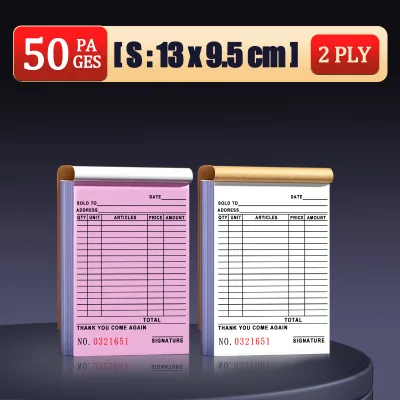
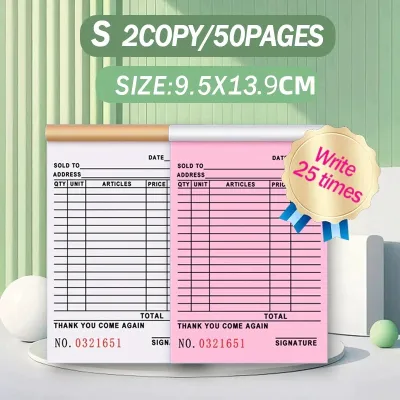
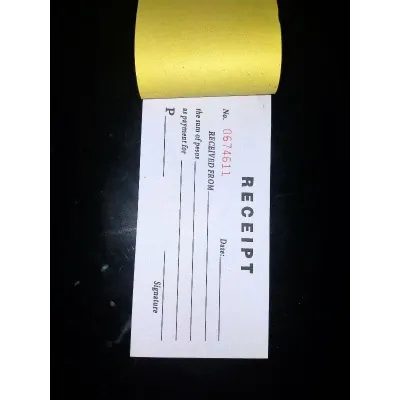
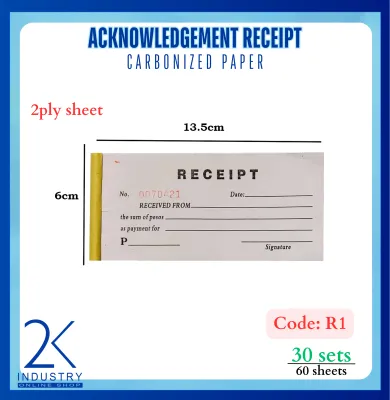
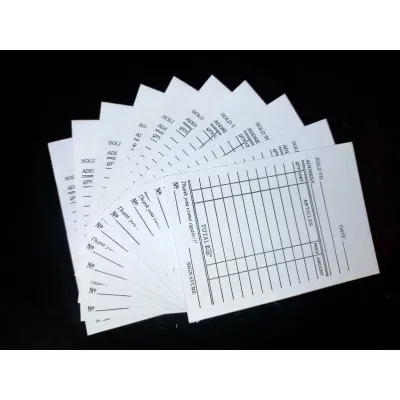
Prices are valid at publication and may change. Please refer to the product page for the latest price.
A duplicate receipt book consists of a two-part form. The top sheet is typically white and serves as the original receipt given to the customer. Directly beneath it lies the second sheet, often colored yellow or pink, which remains bound in the book as the business’s permanent record. This structure is straightforward, requiring only one transfer layer to capture the transaction details.
A triplicate receipt book expands this system into a three-part form. It includes the white original top sheet, a yellow middle sheet, and a pink bottom sheet. The middle sheet is coated on both sides—the top side has the reactive clay to receive the image from the white sheet, while the bottom side has dye capsules to transfer the writing down to the pink sheet. This allows a single pen stroke to write on three sheets simultaneously, creating two distinct copies alongside the original.
When a Duplicate Receipt Book Meets Your Needs
A duplicate receipt book is highly effective for businesses with simple, centralized operations. If you run a freelance service, a small retail kiosk, or a single-owner service business, your administrative needs are usually straightforward. You only need to provide proof of payment to your customer and retain one copy for your own weekly or monthly bookkeeping. Because there are no extra departments or external partners to notify, a second copy would simply sit unused, creating unnecessary physical waste.

Filing and organizing duplicate receipts is exceptionally simple. With only one copy remaining in the book, your physical archives are half the size of a triplicate system. This reduction in paper volume is particularly beneficial for mobile businesses, such as delivery riders, pop-up market vendors, or on-the-go service technicians. Carrying lighter, thinner books makes mobile operations more comfortable, and it reduces the physical storage space required in a small home office or retail counter.
From a cost perspective, duplicate books are generally more economical. Because they use fewer sheets of specialized carbonless paper per transaction, they are less expensive to purchase in bulk. For a startup or a micro-business operating on a tight budget, choosing duplicate books helps keep office supply expenses low while still maintaining a professional, physical paper trail for every transaction.
When Your Workflow Demands a Triplicate Format
As a business grows and its operational workflow becomes more complex, a two-part system often falls short. A triplicate receipt book is designed for multi-layered business structures where transaction data must be routed to different departments simultaneously. For example, when a sale is made, the customer receives the original white receipt. The second copy (yellow) is routed immediately to the accounting department or an external bookkeeper for tax preparation, while the third copy (pink) remains with the sales or inventory department to update stock levels.
This physical routing is crucial for businesses that maintain separate physical locations, such as a retail storefront and a detached warehouse. When a customer pays for an item at the storefront, they can take their original receipt to the warehouse as proof of payment. The warehouse staff can then file the third copy as authorization for releasing the goods, while the storefront retains the second copy for daily cash reconciliation. This prevents communication gaps and ensures that inventory control and financial accounting remain perfectly synchronized.
Furthermore, compliance and audit trails often dictate the use of triplicate formats. In many jurisdictions, including the Philippines, tax authorities and corporate auditors require robust, multi-copy documentation to verify business revenues and expenses. Having a dedicated, unalterable copy bound permanently inside the receipt book—while other copies are distributed for daily operations—provides an excellent safeguard during financial audits. It ensures that even if a routed copy is misplaced, an identical, sequentially numbered backup remains securely archived.
Key Physical Features to Check Before Buying
When shopping for a receipt for business use, evaluating the physical construction of the book is just as important as choosing the copy format. First, pay close attention to paper quality and transfer reliability. High-quality carbonless paper should transfer ink cleanly to the bottom layers without requiring excessive writing pressure. In humid tropical environments, lower-quality paper can absorb moisture from the air, causing the sheets to curl or the chemical transfer mechanism to degrade. Look for books with moisture-resistant packaging or those specified for high-humidity stability.
Binding style is another critical factor that affects daily usability. Perforated edges are essential for the sheets you intend to tear out, ensuring they pull away cleanly without ripping the receipt. For the copies that must remain in the book, check that the binding is secure enough to hold them in place over years of storage. Spiral-bound books are excellent for desk use because they lay completely flat, making it easier to write comfortably across the entire page. Glued-top pads are highly portable but may require a sturdy backing board to prevent writing pressure from transferring through to the unused receipts underneath.
Security features should never be overlooked. Always select receipt books that feature pre-printed sequential numbering. This numbering system is vital for internal control, as it allows you to easily identify missing receipts, track sales sequences, and prevent unauthorized transactions. Additionally, verify the physical dimensions of the book. A compact, pocket-sized book is ideal for field service workers, while a larger, detailed format with dedicated columns for item descriptions, unit prices, and tax calculations is better suited for a fixed retail counter.
Decision Framework: Matching the Format to Your Workflow
To make the final decision for your business, you can apply a simple, condition-based framework. Begin by mapping out the physical path a transaction record must take once a sale is completed. If the record stays entirely within a single office and is managed by one person, the duplicate format is your best option. It keeps your desk clutter-free, simplifies your filing cabinet, and reduces your ongoing stationery costs.
Conversely, if your business operations require physical hand-offs, you should opt for the triplicate format. Choose triplicate if you must hand a copy to a delivery driver, send a copy to an external accountant, or file a copy in a separate inventory log. This extra layer of documentation eliminates the need to make photocopies later, saving time and reducing administrative labor.
Finally, always verify your local regulatory requirements before purchasing. Check with your accountant or local tax guidelines to confirm if a specific number of physical copies is mandated for your industry. By matching the physical capabilities of your receipt book to both your internal workflow and external compliance standards, you ensure smooth, uninterrupted business operations.
Frequently Asked Questions (FAQ)
Can I use a triplicate book if I only need two copies?
Yes, you can physically use a triplicate book even if your current workflow only requires two copies. You can simply tear out and discard the unused third copy, or leave it blank inside the book. However, this practice is not recommended for long-term operations. It leads to unnecessary paper waste and increases your stationery expenses, as triplicate books are more expensive than duplicate ones. If you find yourself with extra copies, a better approach is to repurpose the third sheet for secondary internal tracking, such as a daily sales summary or a backup filing system, rather than letting the material go to waste.
Do carbonless receipt books require special pens?
Carbonless receipt books do not require highly specialized pens, but the type of writing instrument you use significantly affects the legibility of the copies. Standard ballpoint pens are the ideal choice because their hard, rolling tips naturally apply the firm, concentrated pressure needed to rupture the micro-capsules in the paper. In contrast, gel pens, felt-tip markers, and fountain pens should be avoided. These instruments rely on free-flowing ink rather than physical pressure, which often results in faint or completely blank lower copies. Additionally, liquid inks can smear on the coated surfaces of carbonless paper, especially in humid conditions, ruining the legibility of your records.
Community discussion
Share your experience or ask a question. Comments are reviewed before publication.