
The choice between an erasable ballpen and a regular ballpen depends on whether you prioritize the flexibility of correcting mistakes or the permanent security of your written words. Erasable pens offer unmatched convenience for dynamic tasks like brainstorming, scheduling, and sketching, while regular ballpens remain indispensable for official documents, legal signatures, and archival records where permanence is non-negotiable. Understanding how these two writing technologies interact with different paper types and environmental conditions will help you select the ideal tool for your daily routine.
How Erasable and Regular Ink Technologies Differ
Thermo-sensitive ink, the core technology behind the modern erasable ballpen, relies on a reversible chemical reaction triggered by temperature changes. This ink formulation contains specialized microcapsules housing three essential components: a color-forming dye, a color developer, and a temperature-sensitive transition regulator. When you rub the silicone or rubber tip of the pen against paper, the mechanical friction generates localized heat. Once this heat reaches a specific threshold, usually around 60°C, the transition regulator prevents the dye and developer from bonding, causing the ink to become completely transparent.
In contrast, regular ballpens utilize stable, non-reactive inks that dry through physical absorption into the paper fibers and solvent evaporation. Traditional ballpoint pens use a highly viscous, oil-based paste that clings tightly to the surface and resists water. Gel and liquid ink pens use a water-based suspension that flows more freely, allowing the pigments to penetrate deeper into the paper structure. These standard inks are formulated to remain chemically stable under normal environmental conditions, ensuring that the written mark remains visible and permanent over time.
Products mentioned in this guide

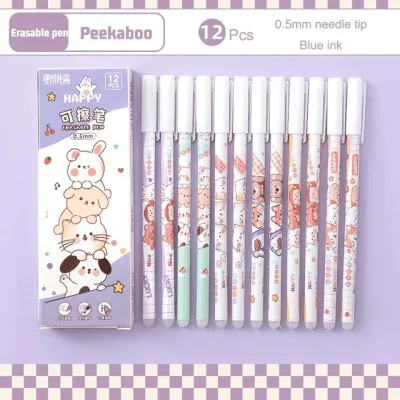
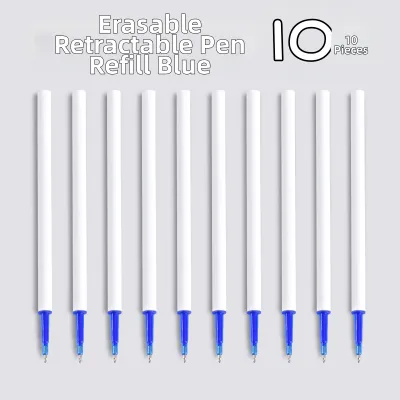
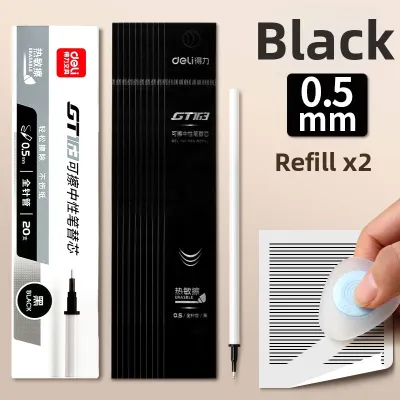
Prices are valid at publication and may change. Please refer to the product page for the latest price.
The viscosity of the ink directly influences how the pen glides across the page. Erasable ink has a fluid, gel-like consistency that flows easily, requiring very little downward pressure from your hand. However, because its visibility depends entirely on temperature, it lacks the chemical permanence of standard oil-based or pigmented gel inks. When purchasing, you can verify these characteristics by checking the manufacturer’s specifications regarding temperature thresholds, as some erasable inks are designed to withstand slightly higher ambient temperatures before fading.
Writing Performance and Paper Compatibility Checks
To determine which pen type suits your workflow, you can perform simple, observable checks on your preferred paper stocks. Begin by examining line consistency and color saturation. Erasable ballpens typically produce lines that are slightly lighter or more muted than standard gel pens, as the microcapsules in the ink scatter light differently. Regular gel and liquid ink pens deliver deep, highly saturated colors with minimal shading variations, while traditional oil-based ballpoints may occasionally skip or leave small ink blobs on the page.

Paper weight and coating play a critical role in how these inks behave. When writing on standard 70 gsm copy paper, highly fluid gel and liquid inks are prone to feathering, where the ink spreads along the paper fibers, and bleed-through, where the ink becomes visible on the reverse side. Erasable ink generally resists feathering well on standard paper, but the physical action of erasing can easily abrade and thin lightweight sheets. For the best results with erasable pens, look for smoother, heavier paper stocks of 80 gsm to 100 gsm that can withstand the friction of the eraser without tearing.
Writing smoothness and friction also depend on your personal grip and writing speed. Regular ballpens require a certain amount of friction and downward pressure to rotate the tiny ball in the tip and transfer the viscous ink. This resistance provides excellent control for precise handwriting but can lead to hand fatigue during long writing sessions. Erasable pens and regular gel pens glide with minimal resistance, making them highly comfortable for rapid note-taking, though they require a brief drying window to prevent smudging on coated paper surfaces.
Erasing Quality vs. Document Permanence
The defining feature of the erasable ballpen is its ability to correct mistakes cleanly, but this convenience comes with trade-offs in document longevity. Erasing thermo-sensitive ink does not physically remove the pigment from the page; it merely alters its chemical state to make it invisible. Over time, repeated erasing in the same spot can degrade the paper’s surface fibers, leaving a rough texture that makes neat rewriting difficult. Regular ballpens offer no such correction mechanism, requiring the use of correction tape or fluid, which leaves a visible mark but preserves the underlying paper structure.
Environmental factors present a significant vulnerability for erasable ink, particularly in tropical climates with high ambient temperatures and humidity. If you leave a notebook written with erasable ink inside a parked car under the sun, or near a hot window, the temperature can easily surpass the threshold required to turn the ink transparent, causing your notes to disappear. While this process can sometimes be reversed by exposing the paper to extreme cold, the restored text often returns with reduced clarity and may overlap with other erased writing on the same page.
For high-stakes documentation, the permanence of regular ballpoint ink is an absolute necessity. Legal contracts, financial ledgers, bank checks, and official government forms require tamper-evident writing instruments. Regular ballpens, especially those utilizing archival-grade gel or oil-based inks, are formulated to resist water, light exposure, and chemical alteration. Using an erasable pen on these documents poses a severe security risk, as the writing can be easily altered without leaving physical traces, or accidentally erased during high-speed document scanning and lamination processes.
Matching the Pen to Your Specific Daily Tasks
Selecting the right pen involves mapping their unique strengths to your daily writing activities. High-forgiveness tasks are the ideal domain for the erasable ballpen. Students taking lecture notes, designers sketching initial layouts, mathematicians working through complex equations, and enthusiasts organizing bullet journals all benefit from the ability to make instant, clean corrections. The flexibility to erase and rewrite keeps planners and study guides looking neat, organized, and professional without the clutter of crossed-out words or correction tape.
Conversely, high-stakes tasks demand the reliability of a regular ballpen. When signing official agreements, filling out medical forms, writing essay exams, or keeping a personal diary that you hope to preserve for future generations, a standard pen is mandatory. These scenarios require a permanent record that remains legible regardless of environmental exposure or physical handling. A regular pen ensures that your signature and critical data remain intact and legally binding over time.
A highly effective strategy for most writers is to build a mixed pen collection tailored to task rotation. By keeping both pen types in your stationery kit, you can switch tools based on the nature of the work. Use your erasable pen for brainstorming sessions, temporary daily to-do lists, and initial drafts where mistakes are common. Keep a high-quality regular ballpen or gel pen ready for final signatures, official correspondence, and any document that must be archived or submitted to an external authority.
Key Specifications to Verify Before Buying
Before purchasing a new pen, verifying specific product details will ensure it aligns with your ergonomic preferences and budget. Start by matching the tip size to your handwriting style and paper texture. Tip sizes generally range from ultra-fine (0.38mm) to medium (0.7mm or 1.0mm). Fine tips are excellent for compact handwriting and detailed diagrams, as they lay down less ink and minimize the risk of bleeding on thin paper. Medium tips offer a smoother, more fluid writing experience but require more drying time and can bleed through low-gsm paper.
Ink capacity and refill availability are crucial factors in determining the long-term cost of your stationery. Erasable ballpens typically consume ink at a faster rate than regular oil-based ballpoints because the thermo-sensitive formula requires a more generous application to maintain clear visibility. Check if the pen model supports refill cartridges, as purchasing refills is significantly more economical and environmentally friendly than buying entirely new pens. While a standard ballpen might cost between ₱15 and ₱50 and last for months, an erasable pen may require more frequent refills, making refill availability a key consideration for heavy writers.
Finally, evaluate the physical design and ergonomics of the pen barrel. Look for comfortable, non-slip grip materials such as silicone or textured rubber to reduce finger strain during extended writing sessions. Pay attention to the overall weight and balance of the pen; erasable pens often feature a built-in silicone eraser on the cap or the tail end, which can alter the balance of the pen when the cap is posted on the back. Ensure the eraser is made of high-quality, non-abrasive material that rolls smoothly over the paper without leaving rubber crumbs or smearing the remaining ink.
Decision Framework: Which Pen Fits Your Needs?
To finalize your decision, apply these straightforward, condition-based rules to your writing habits. Choose an erasable ballpen if your primary goal is maintaining neat, error-free pages in planners, notebooks, and study guides, and you primarily write on sturdy paper in temperature-controlled environments. The ability to edit your work on the fly makes it an invaluable tool for creative and analytical drafting.
Choose a regular ballpen if you require absolute permanence, archival safety, and resistance to environmental heat. Standard pens are the correct choice for any document that has legal, financial, or official significance, as well as personal journals intended for long-term preservation.
If you are ever uncertain about the rules of a specific institution, school, or workplace, always verify their ink requirements beforehand. When official guidelines are unclear, default to a standard, non-erasable regular ballpen to ensure your writing is accepted and preserved without risk of accidental loss.
Frequently Asked Questions (FAQ)
Can erased ink reappear if the paper gets cold again?
Yes, erased thermo-sensitive ink can reappear if the paper is exposed to sufficiently low temperatures. Because the erasing process relies on a temperature-induced chemical change rather than the physical removal of pigment, cooling the paper below -10°C (such as placing it in a household freezer) will cause the transparent ink to regain its color. However, the restored text may appear slightly faded compared to the original writing, and any other previously erased notes on the same page will also become visible, which can result in overlapping, illegible text.
Are erasable ballpens allowed in board exams or official tests?
No, erasable ballpens are almost universally prohibited in board exams, university finals, and standardized national tests. Examination authorities require permanent, non-erasable ink to maintain the integrity of the test and prevent any unauthorized alteration of answers. Additionally, the high-speed scanning and grading machines used to process exam sheets generate significant internal heat, which can accidentally erase thermo-sensitive ink, leaving your answer sheet blank. Always use a standard black or blue regular ballpen for all official examinations.
How do I fix an erasable pen that stopped writing after being left in the heat?
If an erasable pen has been exposed to high heat, such as being left inside a hot vehicle or under direct tropical sunlight, the ink inside the cartridge may have turned transparent. To restore the pen’s functionality, place the entire pen inside a household freezer for approximately two to three hours. This extreme cold will reset the thermo-sensitive chemical regulator, restoring the ink’s pigment. After removing the pen from the freezer, allow it to return to room temperature before writing to ensure smooth ink flow.
Community discussion
Share your experience or ask a question. Comments are reviewed before publication.