
Managing a growing office often leads to administrative bottlenecks, misplaced receipts, and uncoordinated employee requests that disrupt daily operations. Establishing a standardized system of administrative forms and templates is the most effective way to restore order, ensure financial accountability, and maintain legal compliance across your organization. By implementing structured documents for human resources, financial tracking, and facility management, you create clear operational boundaries and an objective audit trail that protects both the business and its employees.
Which HR and employee management forms do you need for onboarding and daily tracking?
To manage the employee lifecycle and maintain clear operational records, you must implement structured onboarding checklists, employee information sheets, leave request forms, and employee loan applications. These documents establish a transparent framework for personnel management and ensure consistent record-keeping from an employee’s first day to their departure.
An onboarding checklist is the first critical document, guiding HR personnel and new hires through necessary steps such as workstation setup, policy reviews, and document submission. Alongside this, an employee information sheet captures vital personal details, including full legal names, emergency contacts, tax identification numbers, and statutory contribution details like SSS, PhilHealth, and Pag-IBIG numbers. For physical records, printing these sheets on durable paper of at least 80gsm prevents tearing and ensures long-term legibility in filing cabinets.
Products mentioned in this guide
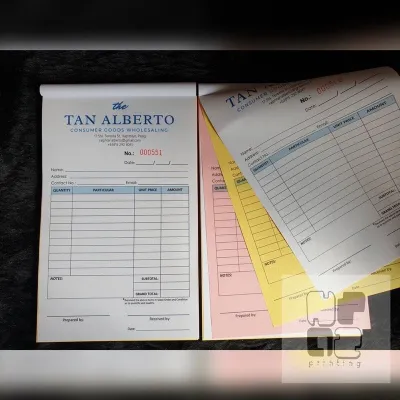
188 Lazada user ratings
Secure packaging for product protection, High-quality materials used, Order receipt for hassle-free transactions, Convenient size for easy h…Read full reviewShow less
Secure packaging for product protection, High-quality materials used, Order receipt for hassle-free transactions, Convenient size for easy handling, Duplicate copy for record-keeping,
Thank you seller.. Narecieve ko na po ang order ko.. Super ganda ng quality ng paper na ginamit nyo.. I highly reccomended this store.. 💯👍
Secure packaging for product protection, Acknowledgement receipt ensures transparency, photo And video not related
WORTH THE MONEY AND WORTH THE WAIT. ❤️ HIGH QUALITY SOBRANG GANDA TALAGA AS IN.
ang ganda complete delivery salamat po..
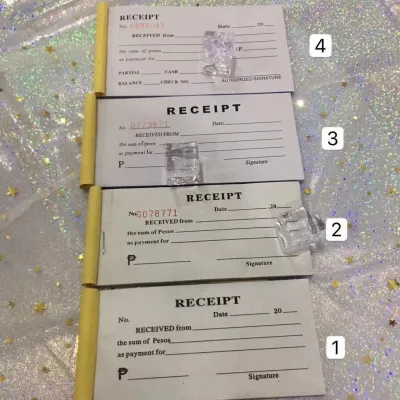
961 Lazada user ratings
The different sizes make it versatile., The quality of the materials is excellent., The four different sizes are very convenient.,
Appearance: ang cute nya🥰🥰🥰 kaso malaki pala naorder ko dapag pala yjng small size lamg perk order na lng ako ulit hehe
Appearance: Thank you and it arrived complete and safe. Might order again. Nice and useful!
legit na legit satisfied customer here thanks seller and lazada 5 star ka sa akin
Quality: fair Ease of Use: fair Appearance: fair
Prices are valid at publication and may change. Please refer to the product page for the latest price.
Daily tracking requires a formal leave and absence request form to maintain scheduling clarity and prevent understaffing. This form should include fields for the employee’s name, department, the specific dates of planned absence, the type of leave requested—such as vacation, sick, or parental leave—and a dedicated section for supervisor approval. Requiring written or digital requests at least two weeks in advance for non-emergencies helps managers adjust workflows smoothly.
Additionally, many workplaces offer short-term financial assistance, which necessitates a formal employee loan application form. This document must clearly outline the principal loan amount, the agreed repayment schedule, any applicable interest, and a legally binding payroll deduction authorization. This authorization permits the finance department to deduct installments directly from the employee’s salary, protecting the company’s cash flow while providing a clear, documented repayment path for the staff member.
What financial templates are required to track daily office expenses and petty cash?
Maintaining tight control over cash flow requires a systematic approach using petty cash vouchers, expense reimbursement forms, purchase requisitions, and standardized invoice templates. These financial forms prevent unauthorized spending and ensure that every centavo of company funds is fully accounted for.

Petty cash is highly vulnerable to leakage without strict controls, making physical petty cash vouchers and logs indispensable. A voucher must be filled out for every minor cash disbursement, specifying the date, recipient, purpose, and exact amount. To maintain control, establish a strict transaction limit, such as a maximum of ₱1,000 or ₱2,000 per transaction, routing any larger expenses through formal check or digital payment channels. The custodian must record these vouchers in a running petty cash log to track the remaining balance and facilitate timely replenishment.
For larger, out-of-pocket business expenses incurred by employees, such as travel, client meals, or emergency supplies, an expense reimbursement form is necessary. This form must require the employee to itemize each expense, state the business purpose, and attach original physical receipts. Implement a strict policy where receipts must be taped to a backing sheet or scanned clearly to prevent loss, and set a submission deadline, such as within 30 days of the transaction, to keep accounting records current.
Before any major purchase is made from an external vendor, employees should submit a purchase requisition form. This internal document requests approval from department heads or finance officers before funds are committed. Once approved, it can be matched against the vendor’s invoice and the receiving report to verify that the goods were actually ordered, approved, and delivered. Every financial document must feature designated lines for the preparer’s signature, the reviewing officer’s signature, and the final approving authority to maintain proper segregation of duties.
Which general administrative forms help maintain smooth facility and asset operations?
Keeping your physical workplace secure and your equipment accounted for requires general administrative forms like office supply requisitions, asset handover forms, visitor logs, and incident reports. These operational templates establish clear ownership of company resources and document daily facility events for safety and security audits.
To prevent inventory shrinkage and over-ordering, implement an office supply requisition form. Employees use this form to request stationery, printer cartridges, or cleaning supplies from the central storage closet. By requiring a supervisor’s signature and tracking these requests, the administrative team can monitor usage patterns, identify waste, and maintain optimal stock levels without tying up capital in excess inventory.
When issuing company property, such as laptops, mobile phones, tablets, or specialized tools, an asset handover form is indispensable. This document must record the item’s brand, model, serial number, and current physical condition, noting any pre-existing scratches or defects. The employee signs the form to acknowledge receipt and accept financial responsibility for negligent damage or loss. When the employee leaves the company or upgrades their equipment, an asset return form is completed to verify that the item was returned in acceptable working order.
Physical security and safety compliance rely heavily on accurate documentation. A visitor log sheet at the reception desk tracks everyone entering and exiting the building, recording their name, company, purpose of visit, host employee, and time of entry and exit. In the event of an accident, injury, property damage, or security breach, an incident report form must be completed immediately. This form captures the date, time, location, detailed description of the event, names of witnesses, and corrective actions taken, serving as vital documentation for insurance claims or legal reviews.
How should you format and store these administrative forms for compliance and easy access?
Standardizing your administrative forms with consistent headers and choosing the appropriate physical or digital storage medium is essential for maintaining an organized, compliant archive. Proper formatting ensures that forms are easy to read and complete, while secure storage protects sensitive business and employee data from unauthorized access.
Every form used in your office should feature a standardized header. This header must include the company name, corporate logo, the official title of the form, a unique document control number, and the revision date, such as “Rev. 10/2026”. Version control is critical; it ensures that employees are always using the most up-to-date version of a form and that outdated templates are systematically retired.
When choosing physical forms, carbonless copy paper (NCR) is highly efficient for documents requiring immediate duplicates, such as petty cash vouchers or delivery receipts. NCR paper uses a chemical coating that transfers writing from the top sheet to subsequent sheets without the mess of carbon paper. For physical forms, select a paper weight of at least 70gsm to 80gsm to prevent ink bleed-through, and use a firm ballpoint pen to ensure clean, legible transfers through all copies. Avoid gel pens or fountain pens, as they do not apply enough pressure to transfer the impression and can easily smudge on the treated paper. For digital workflows, secure, fillable PDFs are the standard, as they preserve formatting across different devices and can be electronically signed and archived automatically.
Establish a strict, segregated filing system to organize your completed forms. Sensitive documents, such as HR records, employee loan agreements, and financial expense reports, must be stored in locked filing cabinets or secure, encrypted digital folders with restricted access controls. General administrative logs, like visitor sheets or supply requisitions, can be kept in standard binders or shared network drives. Develop a clear document retention policy that aligns with local regulations, keeping financial and tax-related documents for several years and employee files for a designated period post-employment, before securely shredding physical copies or permanently deleting digital archives.
When should you choose pre-printed form books over custom or digital templates?
Deciding between pre-printed form books, custom-printed pads, and digital templates depends on your office’s operational volume, branding requirements, and workflow complexity. Each format offers distinct advantages in terms of cost, convenience, and speed of implementation, making a hybrid approach often the most practical solution.
Pre-printed standard form books, such as generic petty cash receipt books, visitor logs, or purchase order pads, are highly cost-effective and readily available at local office supply stores. They are ideal for small businesses, low-volume operations, or immediate setups where custom branding is unnecessary. These books usually feature sturdy cardboard backings and perforated edges for clean tearing. However, their primary limit is the inability to customize fields, meaning you must adapt your workflows to fit the pre-printed layout.
Custom-printed pads are the preferred choice when your business requires branded documents with specific, non-standard fields unique to your operations. For example, a custom asset handover form might need specific columns for proprietary equipment codes. These are typically printed on NCR paper and bound into pads using a glue-top binding, allowing sheets to be peeled off easily. While they project a highly professional image, they require higher upfront printing costs and longer lead times, making them best suited for established offices with stable, high-volume physical workflows.
Digital templates and cloud-based form builders are the most scalable, eco-friendly, and searchable option. They are perfect for remote or hybrid work environments, allowing for instant electronic approvals and automated data entry into databases. Digital forms eliminate physical storage needs and ink costs entirely. However, they require reliable internet connectivity, compatible devices, and robust cybersecurity measures to protect sensitive data.
To choose the right format, evaluate your daily transaction volume and user environment. For field operations or quick reception desk check-ins, physical pre-printed books or custom NCR pads are often faster and less prone to technical glitches. For centralized administrative tasks, payroll processing, and multi-department approvals, digital templates offer unmatched efficiency and searchability.

Community discussion
Share your experience or ask a question. Comments are reviewed before publication.