
A complete Kuromi DIY bracelet bead set is a self-contained creative package that allows you to design, assemble, and finish multiple high-quality bracelets without requiring an extra trip to a local craft store or an online order for missing components. For hobbyists and parents alike, purchasing a set that is truly complete saves time and prevents the frustration of unboxing a kit only to realize you lack the tools to finish a single piece of jewelry.
To be considered truly complete, a bead set must include four mandatory categories:
- Thematic Beads: A curated selection of beads in Kuromi’s signature color palette, including deep black, hot pink, lavender, and white.
- Character Charms: Detailed, high-quality pendants featuring Kuromi’s face, her signature jester hat, or complementary gothic-cute motifs like skulls and stars.
- Stringing Materials: High-tensile elastic cord or flexible beading wire paired with the necessary hardware like jump rings and clasps.
- Tools and Storage: Essential assembly tools such as fine-tipped scissors, tweezers, and a sturdy, compartmentalized storage case to keep small pieces organized.
Many budget-friendly options sold online are labeled as complete kits but are actually starter bead refills. These basic packages often lack elastic cord, essential metal findings, or basic tools. Using this four-pillar checklist will help you filter out incomplete products and ensure a seamless crafting experience from the moment you open the box.
Products mentioned in this guide
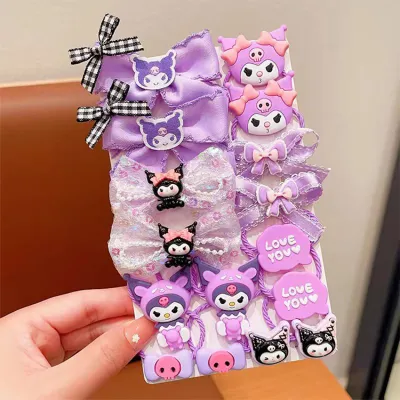
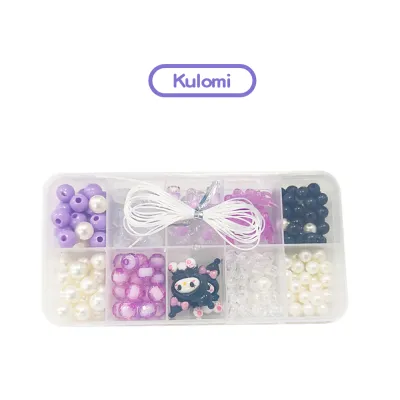
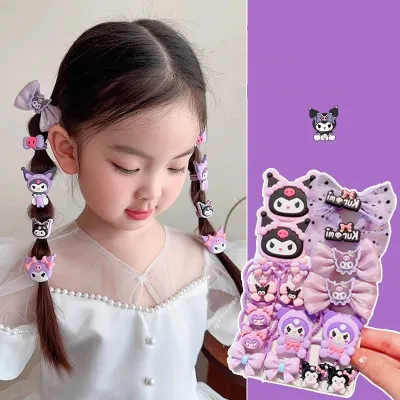
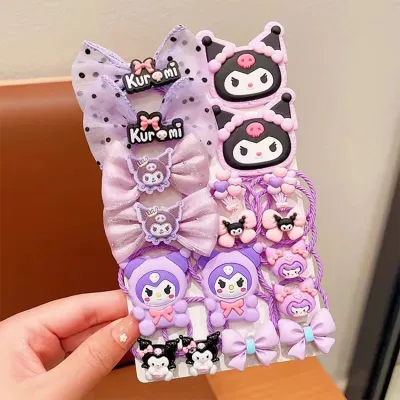
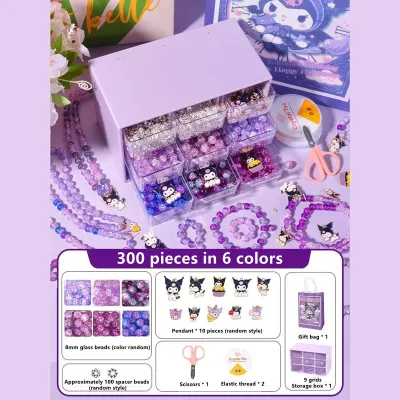
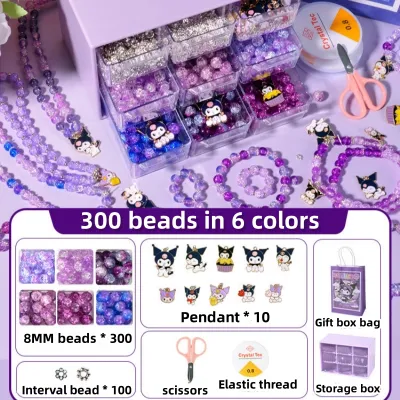
Prices are valid at publication and may change. Please refer to the product page for the latest price.
Beads and Charms: Achieving the Authentic Kuromi Aesthetic
To capture the distinct personality of Sanrio’s mischievous, punk-spirited character, the beads in your set must adhere to a specific visual theme. Kuromi’s signature aesthetic relies on a balance of rebellious gothic elements and cute, playful designs. A high-quality set should feature a color palette dominated by deep black, vibrant hot pink, lavender, and clean white. Be cautious of generic kits that dilute this theme by including too many unrelated pastel colors like mint green or baby blue, which detract from the character’s cohesive look.
Beyond color, the variety of bead materials and shapes in the set determines the texture and style of your finished bracelets. Acrylic beads are excellent for creating chunky, retro-style jewelry because they are lightweight, highly durable, and can be molded into playful shapes like stars, hearts, and ribbon bows. Glass beads, including crackle glass and pearlized glass, add a premium weight and catch the light beautifully. Small seed beads, typically in sizes 8/0 or 11/0, are essential for creating delicate spacer strands or intricate, pixel-art style patterns that spell out names or depict character icons.
Before purchasing, verify the bead hole diameter specified by the manufacturer. If you plan to use a standard 0.8mm elastic cord, the bead holes should be at least 1.0mm to 1.2mm wide. This extra clearance is crucial because finishing a stretch bracelet securely often requires passing the elastic cord through the final bead twice to conceal the knot. If the holes are too small or blocked by manufacturing debris, threading the cord becomes incredibly difficult and can lead to frayed stringing material.
Charms and pendants serve as the focal points of your DIY bracelets, making their structural and visual quality highly important. Metal alloy charms should feature clean enamel paint fillings that do not bleed past the metal borders, and the edges must be smooth to prevent skin irritation. Acrylic charms, which are lighter and often feature highly detailed printed graphics, should be checked for clear, double-sided printing and a protective film that prevents scratching during transit. Ensure each charm comes with a pre-installed, secure jump ring so it can be easily threaded onto your bracelet.
Finally, evaluate the ratio of quantity to variety within the set. A product that boasts a high piece count, such as “1,500 pieces,” may simply be padded with thousands of tiny, identical black seed beads. A superior set balances its total count by offering a generous variety of statement beads, alphabet letters, and unique charms alongside the necessary spacer beads. This variety ensures you can create multiple distinct bracelet designs rather than repeating the same pattern.
Stringing Materials and Hardware: Ensuring Durability and Fit
The longevity of your handmade jewelry depends heavily on the quality of the stringing materials and hardware included in the kit. For daily wear, stretch bracelets are the most popular and practical option. The standard stringing material for these projects is clear or black polyurethane elastic cord. Polyurethane is highly preferred over cheap, fabric-wrapped rubber thread because it offers superior stretch recovery, does not fray over time, and is less likely to snap under sudden tension.

When evaluating the elastic cord in a set, pay close attention to its thickness, which typically ranges from 0.5mm to 0.8mm. A 0.5mm cord is ideal for small, lightweight seed beads, while a 0.8mm cord is necessary to support heavier acrylic and glass beads. The cord should feel pliable and return to its original length immediately after being stretched. Avoid kits that include brittle, low-grade plastic cords that retain a stretched-out shape or snap easily when knotted.
If the set is designed for non-stretch jewelry, it must include alternative stringing materials such as nylon-coated stainless steel beading wire or strong nylon thread. Because these materials do not stretch, the kit must also provide the necessary metal findings to make the bracelets wearable. This includes lobster clasps to open and close the bracelet, jump rings to connect the clasps to the wire, and metal crimp beads to lock the wire loops in place. Crafting with wire without these essential findings is impossible, so verify their inclusion in the product description.
Finishing a stretch bracelet securely can be challenging for beginners, as simple knots in slick elastic cord can slip and untie over time. A truly comprehensive set will include specialized knotting and finishing supplies. Look for kits that feature knot covers, also known as clamshell bead tips, which hide the ugly knot inside a neat metal bead. While not always included, having a small tube of jewelry glue or clear nail polish to dab onto the finished knot before hiding it adds an extra layer of security.
In warm, humid climates like the Philippines, humidity and sweat can accelerate the tarnishing and rusting of cheap metal components. Iron or low-grade zinc alloy findings can turn green or black within weeks of wear, ruining the look of your custom bracelet. To ensure your creations remain beautiful, look for kits that feature tarnish-resistant hardware made from stainless steel, brass, or alloys with a protective clear e-coating.
Tools and Storage: What Makes a Set Truly "Complete"
Auxiliary tools and a well-designed storage system elevate a basic bag of beads into a user-friendly, professional crafting kit. The most critical tool for any jewelry-making project is a pair of sharp, fine-tipped scissors. Standard household scissors are often too bulky or dull to cut elastic cord cleanly, resulting in frayed ends that are nearly impossible to thread through small bead holes. A dedicated pair of small crafting shears or U-shaped thread snips ensures clean, effortless cuts every time.
Handling tiny 2mm seed beads and small jump rings can be incredibly tedious without the proper instruments. A complete set should include a pair of fine-tipped tweezers or a specialized bead scoop to help you pick up individual beads quickly. Additionally, look for kits that include a soft bead mat or a flocked plastic tray. These textured surfaces prevent round beads from rolling off your worktable and getting lost on the floor, allowing you to lay out your designs and arrange your patterns before threading.
Sturdy, organized storage is essential for keeping your crafting space tidy and preventing accidental spills. The ideal storage solution is a hard plastic organizer box with a secure, multi-latch locking lid. The interior dividers should fit snugly against the lid when closed to prevent tiny seed beads from sliding into adjacent compartments. Adjustable dividers are a valuable bonus, as they allow you to customize the compartment sizes to accommodate bulky charms or long tools.
For beginners, translating a character’s likeness into a beaded pattern can be intimidating. A high-quality set addresses this by including physical or digital instructional guides. These guides should feature step-by-step tutorials, color-matching charts, and specific patterns for creating Kuromi-themed designs. Having a clear visual map to follow makes the crafting process much more enjoyable and accessible for crafters of all skill levels.
How to Evaluate Quality, Safety, and Licensing Before Buying
When shopping for a Kuromi bead set on online marketplaces or in local craft stores, it is important to understand the distinction between officially licensed Sanrio products and third-party, “inspired” designs. Officially licensed sets are manufactured under strict quality control standards, ensuring highly accurate character proportions, vibrant colors, and durable materials. These premium kits will explicitly state their official status on the packaging and usually feature a holographic authenticity sticker. While they are more expensive, they offer the highest level of detail and material safety.
Third-party or “inspired” kits are widely available and significantly more affordable, making them popular choices for casual crafting. However, the quality of these sets can vary dramatically. Some budget kits may feature distorted character faces, mismatched colors, or thin charms with poorly applied paint that chips off easily. If you choose an unofficial set, pay close attention to product photos and customer feedback to ensure the character details look accurate and appealing.
Because bead sets are highly tactile and frequently used by younger crafters, material safety is a paramount consideration. Check the product packaging or online listing for non-toxic certifications, such as ASTM D-4236 in the United States or EN71 in Europe. These safety standards guarantee that the plastics, paints, and metals used in the kit are free from harmful levels of heavy metals like lead, cadmium, and phthalates, which can leach onto the skin during prolonged wear or accidental ingestion.
Small beads, jump rings, and charms pose a severe choking hazard for infants and toddlers. Always check the manufacturer’s age recommendation before purchasing a kit, especially if it is intended as a gift. Most bead sets are rated for children aged 6 or 8 and older, and they should always be used under adult supervision. Ensure the storage box can be latched securely and stored out of reach of children under the age of 3.
To avoid disappointment, look beyond the polished, highly edited promotional images provided by sellers. Scroll down to the customer review section and filter for reviews that include user-uploaded photos and videos. These real-world images will reveal the actual size of the storage box, the true color saturation of the beads, the thickness of the elastic cord, and whether the charms arrived scratched or damaged. Reading about other buyers’ experiences is the most reliable way to verify if a set is truly complete and worth your money.
Frequently Asked Questions (FAQ)
Can I use regular sewing thread instead of the elastic cord included in the set?
Regular sewing thread is not a suitable substitute for jewelry-grade elastic cord when making stretch bracelets. Sewing thread is designed to be static and thin, meaning it lacks the elasticity required to stretch over your hand when putting the bracelet on or taking it off. Additionally, sewing thread has low abrasion resistance and will quickly fray and snap when rubbed against the sharp inner edges of acrylic or glass bead holes. If the cord in your kit is damaged or runs out, purchase proper polyurethane elastic cord or flexible beading wire to ensure your jewelry remains durable.
How do I clean acrylic Kuromi beads if they get dirty or sticky?
If your acrylic Kuromi beads become dirty, dusty, or sticky from daily wear, they can be cleaned safely using mild, low-risk methods. Gently wipe the surface of the beads with a soft microfiber cloth dampened with lukewarm water and a single drop of mild dish soap. Avoid soaking the beads in water, and never use harsh chemicals, rubbing alcohol, or acetone. These strong solvents can dissolve or cloud the transparent acrylic plastic, strip away the painted character details, and weaken the structural integrity of the elastic cord inside the bracelet.
What should I do if the bead holes are too small for the string?
If you encounter a bead with a hole that is too small for your stringing material, do not attempt to force the cord through, as this can stretch, fray, or snap the elastic. Instead, try using a collapsible eye beading needle, which compresses to guide the thread smoothly through tight spaces. If a needle does not work, you may need to switch to a thinner gauge of elastic cord, such as 0.5mm instead of 0.8mm. For glass beads, a specialized tool called a bead reamer can be used to carefully enlarge the hole, but this tool is not recommended for painted acrylic or plastic beads as it can easily crack the material or ruin the exterior finish.
Community discussion
Share your experience or ask a question. Comments are reviewed before publication.