
A complete high school supply set requires a thoughtful selection of writing instruments tailored to different academic tasks. High school students face a demanding workload that spans rapid lecture note-taking, complex mathematical graphing, and precise standardized testing. Having the right tools prevents hand fatigue, keeps notebooks organized, and ensures that critical exam answers remain legible.
Building an effective stationery kit is not just about grabbing a random assortment of writing tools. It involves understanding how different inks interact with standard notebook paper, how graphite grades affect erasability, and how ergonomic designs support long writing sessions. By selecting a balanced mix of everyday pens, precision pencils, and organizational markers, you can create a reliable system that supports your academic success throughout the school year.
Core Writing Tools: Everyday Pens for Notes and Exams
Everyday writing requires a pen that balances smooth ink flow with fast drying times. High school students write thousands of words weekly, making the choice of ink type critical to both writing speed and notebook neatness. The three primary ink categories—ballpoint, gel, and rollerball—each offer distinct characteristics that suit different writing styles and paper types.
Products mentioned in this guide
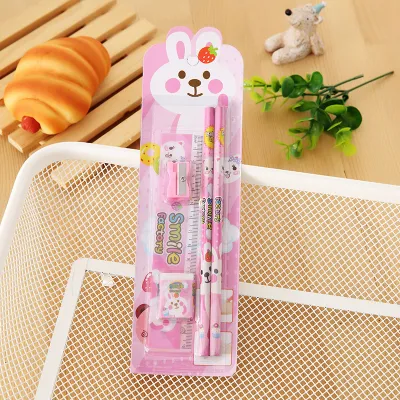
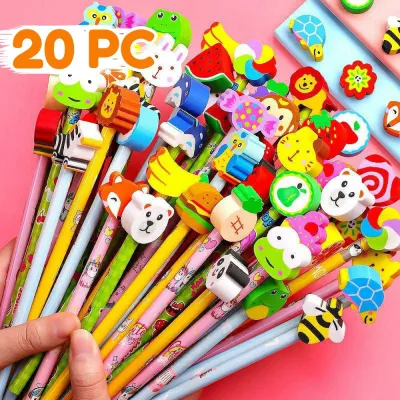
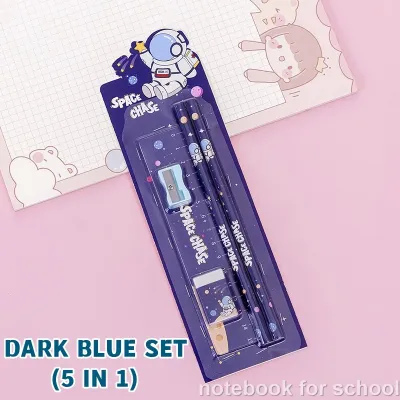
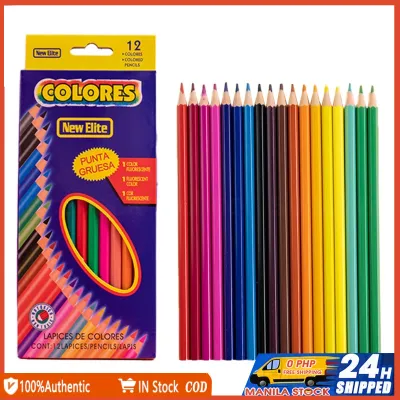
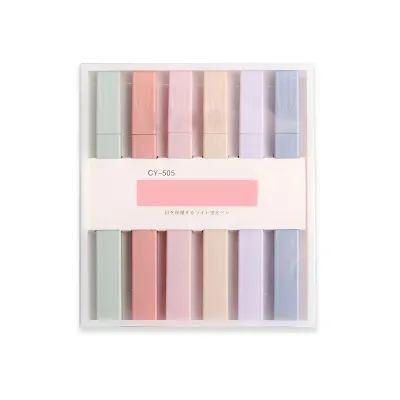
Prices are valid at publication and may change. Please refer to the product page for the latest price.
Ballpoint pens use a thick, oil-based ink that dries almost instantly upon contact with paper. This rapid drying makes them highly resistant to smudging, which is particularly beneficial for left-handed writers or when writing quickly during timed exams. Ballpoint ink is also highly water-resistant, meaning notes are less likely to run if they encounter accidental spills or high humidity. However, because the ink is viscous, ballpoint pens require more downward pressure to write, which can lead to hand fatigue during long writing sessions.
Gel pens utilize a water-based gel that holds pigment in suspension, offering an incredibly smooth writing experience with vibrant, dark lines. They require very little pressure to write, reducing finger strain. The trade-off is a slower drying time, which increases the risk of smudging on standard notebook paper. For high schoolers who prefer gel pens, looking for formulas specifically designated as quick-drying is essential to keep notes clean and legible.
Rollerball pens use liquid water-based ink that flows effortlessly, mimicking the feel of a fountain pen. While they offer an exceptionally smooth glide, the liquid ink easily penetrates thin paper fibers. On standard school notebooks, rollerball ink is highly prone to feathering—where the ink spreads sideways—and bleed-through, where the writing shows clearly on the reverse side of the page. Consequently, rollerballs are best reserved for thicker paper stocks.
Tip size is another crucial variable in pen selection. Standard tip sizes range from ultra-fine (0.38mm) to bold (1.0mm). A 0.5mm tip is highly recommended for high school students because it produces clean, thin lines that fit easily within narrow-ruled notebooks and allows for detailed margin notes. A 0.7mm tip offers a slightly smoother feel but deposits more ink, which may bleed through lower-quality paper.
Ergonomics play a vital role in preventing writer’s cramp during multi-hour study sessions. Look for pens with soft rubberized or silicone grips that cushion the fingers and prevent slipping, especially in warm classroom environments. The weight and balance of the pen barrel also matter; lightweight plastic barrels keep the hand agile, while excessively heavy metal barrels can shift the center of gravity backward, straining the wrist over time.
Drafting and Math Essentials: Pencils for Precision
Mathematics, scientific diagrams, and standardized exams require the precision and erasability of graphite. While pens are ideal for continuous text, pencils allow for the constant adjustments and corrections inherent in technical subjects. A complete school supply set should include both mechanical and traditional wooden pencils to cover all academic scenarios.

Mechanical pencils are the preferred tool for math and technical drawing because they maintain a consistent line width without the need for sharpening. They utilize thin lead refills, typically in 0.5mm or 0.7mm diameters. When choosing a mechanical pencil, pay attention to the internal clutch mechanism that holds the lead. Metal clutches are far more durable than plastic ones, preventing the lead from slipping back into the sleeve when you apply writing pressure.
Traditional wooden pencils remain indispensable for their reliability and versatility. They have no mechanical parts that can jam or break during a high-stakes exam, making them the ultimate backup tool. Wooden pencils also allow for variable line widths and shading, which is useful for art classes or quick diagrams where mechanical leads might snap under angled pressure.
The hardness of the graphite lead determines its darkness, durability, and ease of erasure. This is measured on a standard scale ranging from hard (H) to soft and dark (B). An HB lead is the standard middle-ground option, offering a clean line that is easy to erase without leaving deep grooves in the paper. For standardized test answer sheets, which are graded by optical mark readers, a 2B lead is highly recommended. The softer 2B graphite deposits a darker, more opaque mark that scanners can easily detect, though it does smudge more easily than HB lead.
To support these tools, several supplementary items are necessary. Always carry a dedicated container of lead refills that match your mechanical pencil’s exact diameter. For wooden pencils, a compact, dual-hole sharpener with an enclosed shavings receptacle prevents messy cleanups at your desk. Finally, skip the abrasive pink erasers often found on the ends of cheap pencils; instead, invest in a dedicated block eraser made of soft vinyl or polymer, which lifts graphite cleanly without tearing the paper fibers.
Organization and Creativity: Highlighters and Specialty Pens
Active reading and effective study habits rely heavily on visual organization. High school students must process large volumes of information, making highlighters and specialty pens essential for color-coding, annotating, and creating clear diagrams.
Highlighters are designed to draw attention to key terms and definitions without obscuring the text beneath. Chisel-tipped highlighters are the most versatile, allowing you to use the broad flat edge to cover entire lines of text or the sharp point for precise underlining. When selecting highlighters, prioritize ink transparency. Heavy, overly wet fluorescent inks can saturate thin notebook paper, bleeding through to the other side and ruining subsequent pages. Mild or pastel-colored highlighters have become increasingly popular because they reduce eye strain and are less likely to bleed through standard paper.
Fineliners and porous point pens feature fine, plastic-collared felt tips, usually ranging from 0.3mm to 0.4mm. These are excellent for drawing detailed scientific diagrams, labeling maps, and writing precise marginal notes in textbooks. Because they use water-based ink, they produce vibrant, crisp lines that do not spread, provided the paper is dry. However, they should not be highlighted over immediately, as the water-based ink can smear if it has not fully cured.
Erasable pens offer a unique middle ground between the permanence of ink and the flexibility of graphite. Modern erasable pens use thermo-sensitive ink that becomes transparent when subjected to the heat generated by rubbing the paper with a built-in silicone tip. While highly convenient for keeping notebooks neat, they have distinct limitations. The ink can fade if notebooks are left in hot environments, such as a school bag inside a warm car or under direct sunlight. Conversely, the writing may reappear if exposed to extreme cold. Because of this instability, erasable pens should never be used for official exams, graded assignments, or legal documents.
How to Build and Balance Your High School Supply Set
A well-organized school supply set balances daily accessibility with long-term preparedness. Carrying too many items clutters your pencil case and adds unnecessary weight to your backpack, while carrying too few leaves you unprepared for unexpected classroom tasks.
To optimize your kit, establish a clear division between your daily carry pencil case and your bulk storage at home or in your locker. Your daily pencil case should be compact and contain only the essentials: two black or blue everyday pens, one red pen for peer grading and corrections, one mechanical pencil with spare lead, one wooden backup pencil, two highlighters in contrasting colors, a polymer eraser, and a small ruler. Your bulk storage should contain economy packs of pens, extra wooden pencils, a spare sharpener, and multiple lead refill cases to replenish your daily kit as needed.
Before purchasing writing tools in bulk, perform a simple compatibility test on the actual notebooks you will use for the school year. Write a few lines with your preferred pen and observe how the ink behaves. Check for feathering along the paper fibers and flip the page to inspect for bleed-through. Conduct a three-second smudge test by running your finger across the ink immediately after writing; this helps you determine if the ink dries fast enough for your writing speed. Finally, test your eraser on your pencil marks to ensure it leaves a clean surface without dark smudges.
When budgeting for your school supplies in ₱, consider the long-term cost efficiency of refillable systems versus disposable options. While disposable pens are cheap upfront, they generate significant plastic waste and must be replaced entirely when the ink runs out. Investing in a high-quality, refillable pen body and buying ink refills in bulk is far more economical over the course of a high school career. Similarly, a durable mechanical pencil can last for years, requiring only inexpensive lead refills, making it a highly cost-effective and sustainable choice for students.
Frequently Asked Questions (FAQ)
How do I prevent gel pens from smudging on standard notebook paper?
To prevent gel pens from smudging, select pens that feature quick-drying ink formulas designed to set rapidly on the page. Opting for a finer tip size, such as 0.5mm or 0.38mm, also helps because it deposits less ink onto the paper, significantly reducing drying time. Additionally, try to adjust your hand position to write from below the line, or place a clean sheet of scrap paper under your palm to act as a barrier as you move across the page.
What is the best lead size for a mechanical pencil in high school math?
A 0.5mm lead size is generally the most effective choice for high school mathematics. This fine diameter allows you to write complex equations, fractions, and exponents clearly within the small grids of graphing paper without the numbers blurring together. If you tend to write with heavy hand pressure and find that 0.5mm lead snaps frequently, upgrading to a 0.7mm lead provides a sturdier alternative that still offers sufficient precision for geometric drawings and algebraic calculations.
Community discussion
Share your experience or ask a question. Comments are reviewed before publication.