
Buying 6mm beads by the kilo is a highly cost-effective strategy for jewelry makers, craft business owners, and hobbyists. Purchasing in bulk significantly lowers the cost per unit compared to buying small retail packs or individual strands. However, navigating bulk pricing requires a clear understanding of what you are actually paying for, as a low price per kilo can sometimes mask poor quality, high defect rates, or low usable yields.
To determine if a bulk offer is a genuine bargain, you must evaluate the material composition, the durability of the surface finishes under local environmental conditions, and the physical consistency of the beads. By learning how to calculate the true cost per usable bead and identifying common industry red flags, you can confidently source high-quality materials that elevate your craft designs without overstretching your budget.
What Drives the Price of 6mm Beads Sold by the Kilo
The primary factor influencing the wholesale price of bulk beads is the raw material used in their production. Acrylic and plastic beads are the most affordable options because they are lightweight, inexpensive to manufacture, and easy to mass-produce using injection molds. Glass beads sit in a mid-range pricing tier, offering a heavier, more premium feel and superior clarity, though they require higher energy costs to melt and shape. Natural semi-precious stones, freshwater pearls, and dense hardwoods occupy the highest price bracket due to the costs associated with mining, harvesting, sorting, and individual lapidary work.
Products mentioned in this guide
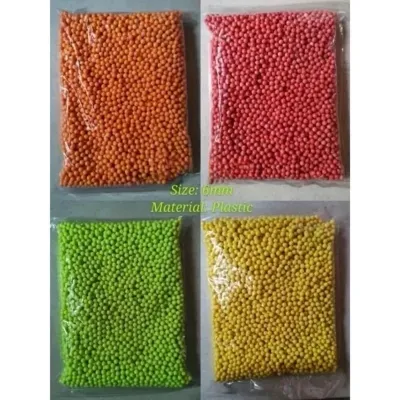
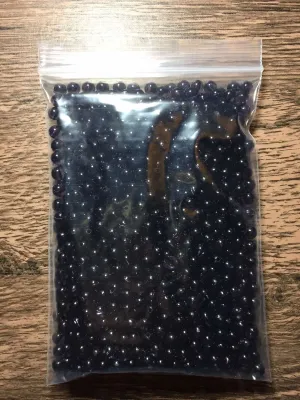
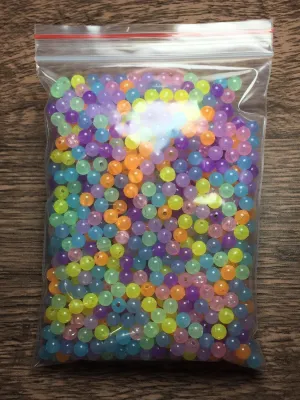
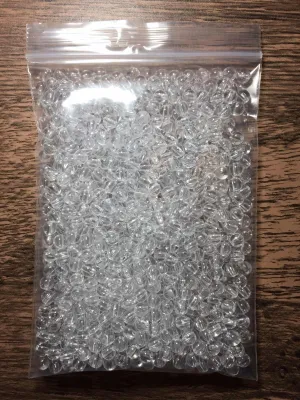
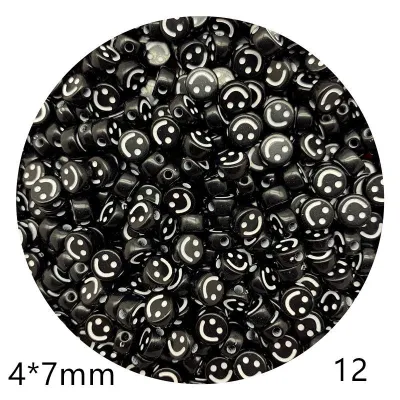
Prices are valid at publication and may change. Please refer to the product page for the latest price.
Beyond the base material, the density of the substance plays a massive role in how pricing is structured. Because beads are sold by weight, denser materials like glass or natural agate will yield far fewer individual 6mm beads per kilo than lightweight acrylic. Consequently, even if a kilo of acrylic beads and a kilo of glass beads are priced similarly, the actual cost per individual bead will be much lower for the acrylic batch. Manufacturers adjust their wholesale prices to account for these material costs and the physical volume of the raw substances.
Surface treatments and decorative finishes add another layer of cost to bulk bead production. Plain, solid-color beads that are colored throughout the material are the most economical to produce. In contrast, beads that undergo secondary processes—such as electroplating for metallic finishes, applying an aurora borealis (AB) iridescent coating, or hand-painting intricate patterns—require additional labor, specialized machinery, and extra processing time. These surface treatments increase the wholesale price per kilo but add significant visual value to your finished jewelry pieces.
In the warm and highly humid climate of the Philippines, the quality of these surface finishes is particularly critical. Cheaply painted or poorly electroplated coatings can quickly degrade, peel, or tarnish when exposed to ambient moisture, body heat, and sweat. High-quality bulk beads utilize baked-on finishes, protective lacquer seals, or vacuum-deposition coatings that resist environmental wear. While these durable finishes command a higher price per kilo, they prevent your finished products from discoloring or losing their luster prematurely.
Finally, the scale of production and the geographic origin of the beads heavily influence bulk pricing. Large-scale industrial factories utilizing automated machinery can produce millions of highly uniform glass or plastic beads daily, driving down the cost per kilo through sheer volume. Conversely, artisanal workshops that focus on hand-cut stones, hand-blown glass, or hand-carved wooden beads operate on much smaller margins. These artisanal beads exhibit charming natural variations but carry a premium price tag due to the intensive manual labor involved in their creation.
Calculating the True Cost and Usable Yield of Bulk Beads
To accurately assess a bulk bead offer, you must calculate the estimated yield of the package rather than relying solely on the total weight. Because 6mm beads are relatively small, a single kilogram represents a substantial volume of material, but the exact count varies wildly by material. For example, a lightweight acrylic 6mm bead typically weighs around 0.1 grams, meaning a one-kilo bag could yield approximately 10,000 beads. A standard 6mm glass bead is much denser, weighing roughly 0.2 to 0.25 grams, which reduces the yield to about 4,000 to 5,000 beads per kilo.

To find the true cost of your purchase, you must also factor in the landing costs, which include shipping fees, local delivery charges, and packaging materials. Because a kilogram is a heavy unit of measure in the shipping industry, delivery fees can quickly inflate the final price of your order, especially when sourcing from overseas suppliers or remote provinces. Always calculate your total investment—the purchase price plus all shipping and handling fees—and divide that sum by the estimated number of beads to find your true cost per individual piece.
Another critical factor in bulk purchasing is the defect rate, which represents the percentage of unusable beads in a loose, unstrung batch. Mass-produced bulk beads are rarely sorted individually before packaging, meaning a standard bag will inevitably contain some flawed pieces. Common defects include completely blocked drill holes, off-center drilling, chipped edges, fused double-beads, or severe color variations. A standard, acceptable defect rate for commercial-grade bulk beads ranges from 3% to 8%, but low-quality batches can sometimes exceed 15% unusable material.
If you purchase a kilo of glass beads for ₱500 and find that 10% of the batch is unusable due to blocked holes or chips, your effective yield drops from 4,000 beads to 3,600 beads. This raises your cost per usable bead from ₱0.125 to nearly ₱0.14. When comparing different suppliers, a slightly more expensive kilo from a reputable seller who guarantees a low defect rate is often more economical than a cheaper, unsorted batch filled with manufacturing waste.
Pre-Purchase Checklist for Evaluating Bulk Bead Quality
Before committing to a large bulk purchase, it is essential to run through a systematic quality checklist to ensure the beads will work seamlessly with your existing tools and jewelry findings. First, verify the exact size tolerances and hole diameters of the beads. A nominal “6mm” bead can actually range from 5.5mm to 6.5mm depending on the manufacturer’s quality control. More importantly, ensure the inner hole diameter is consistent and wide enough (typically 0.8mm to 1.2mm for a standard 6mm bead) to accommodate your preferred stringing materials, such as elastic cord, nylon thread, or metal wire.
Next, request high-resolution, close-up photos or videos of the actual bulk batch from the seller, rather than relying on polished, stock promotional images. Examine these images closely for color consistency across the entire pile, as uneven dye lots can ruin the uniform look of your jewelry designs. Look at the entry and exit points of the drill holes; high-quality glass and stone beads should have smooth, slightly chamfered hole edges, whereas low-quality options often feature sharp, jagged edges that can easily slice through elastic cords or bead-stringing threads over time.
Additionally, evaluate the seller’s customer service policies, sample availability, and historical buyer feedback on local online marketplaces. Reputable bulk suppliers are usually willing to sell smaller sample packs, such as 50-gram or 100-gram bags, allowing you to test the material, weight, and compatibility before investing in a full kilo. Read through customer reviews specifically looking for comments regarding weight accuracy, packaging security during transit, and how the seller handles disputes or returns for defective merchandise.
Red Flags to Avoid When Buying Beads in Bulk
When browsing bulk bead listings on online marketplaces, extremely low prices should always be approached with caution. If a seller offers a kilo of “natural gemstone” or “semi-precious quartz” beads at a price that mirrors cheap plastic, the product is almost certainly a synthetic imitation, dyed glass, or low-grade resin. While synthetic materials have their place in crafting, paying gemstone prices for disguised plastic is a poor investment that can damage your brand’s reputation if you sell your finished jewelry.
Vague or misleading material descriptions are another major red flag in the bulk bead industry. Listings that use ambiguous terms like “crystal beads” without specifying whether they are made of glass, lead crystal, or acrylic are often trying to obscure the true value of the product. Similarly, terms like “jade-style,” “cherry quartz,” or “opalite” are frequently used to market dyed glass or synthetic resins as natural stones. A trustworthy seller will clearly state the exact material, the manufacturing process, and whether any color enhancements or heat treatments have been applied.
Finally, avoid suppliers who refuse to provide basic specifications, such as approximate bead counts per kilo, or those who cannot provide real-time photos of the current warehouse stock. A lack of transparency often indicates that the seller is drop-shipping low-grade inventory directly from unverified factories, meaning the quality of the batch you receive will be entirely unpredictable. Choosing communicative, transparent suppliers who stand behind their product specifications is the best way to ensure you get a fair, repeatable deal on your bulk craft supplies.
Frequently Asked Questions (FAQ)
How many 6mm beads are typically in one kilo?
The number of 6mm beads in a one-kilogram package depends entirely on the density of the material. Lightweight acrylic beads yield the highest count, typically ranging from 8,000 to 10,000 beads per kilo. Standard glass beads are heavier, yielding approximately 4,000 to 5,000 pieces per kilo. Dense materials, such as natural gemstones, metallic hematite, or ceramic, will yield even fewer, often falling between 3,000 and 4,000 beads per kilo. Because these numbers are estimates, you should always ask the seller for their specific material density or request a small sample count to calculate your exact project needs.
Is it more cost-effective to buy beads by weight or by strand?
Buying beads by weight is significantly more cost-effective for large-scale production, community workshops, or high-volume crafting, as the price per bead is substantially lower than buying individual strands. However, buying by the strand is often preferred for small, precise projects or high-end jewelry making. Stranded beads are pre-sorted for size, color, and quality, resulting in a near-zero defect rate and saving you the time required to sort through loose bulk piles. If you need absolute uniformity and a small quantity, strands are ideal; if you need volume and are willing to sort out a few defective pieces, buying by the kilo offers the best overall value.
Community discussion
Share your experience or ask a question. Comments are reviewed before publication.