
Choosing between a fidget ballpen, a novelty ballpen, and a kids’ toy ballpen depends on whether you prioritize sensory focus, visual flair, or safe, developmental play. While all three categories fall under the broad umbrella of the “toy ballpen,” they serve vastly different roles in daily life. A fidget ballpen integrates tactile mechanisms like spinners or clickers to help adults and students maintain focus during long writing sessions. A novelty ballpen prioritizes striking, often humorous visual designs that make excellent gifts or desk ornaments but may sacrifice writing comfort. Meanwhile, a kids’ toy ballpen focuses on safety, durability, and early motor skill development, ensuring that young writers can explore their creativity without exposure to small, detachable parts or toxic materials. By understanding these core distinctions, you can select a writing instrument that balances playful engagement with functional utility.
Defining the Core Purpose of Each Toy Ballpen Type
To make an informed purchase, you must first understand the primary design intent and functional boundaries of each toy ballpen category. Although they all write, their structural designs are optimized for different environments, from quiet corporate boardrooms to active primary school classrooms. The term “toy ballpen” is broad, spanning from highly engineered, functional writing tools with subtle sensory features to purely decorative collectibles that prioritize visual impact over ergonomic comfort.
The target audience and primary use case dictate each pen’s physical build, weight distribution, and ink mechanism. Fidget ballpens are typically designed for older students and working professionals who require a reliable writing tool that also offers quiet, non-disruptive tactile stimulation. Consequently, these pens often feature balanced metal or high-density plastic bodies and standard, easily replaceable ink cartridges. Novelty ballpens, on the other hand, are designed to capture attention, celebrate pop culture, or serve as memorable gifts. Their shapes can be highly irregular, ranging from oversized cartoon characters to flexible, bending silhouettes, which often requires proprietary or non-standard ink tubes. Kids’ toy ballpens are engineered specifically for small hands, prioritizing lightweight materials, thick ergonomic grips, and robust safety features to prevent accidental swallowing or ink leaks during play.
Products mentioned in this guide
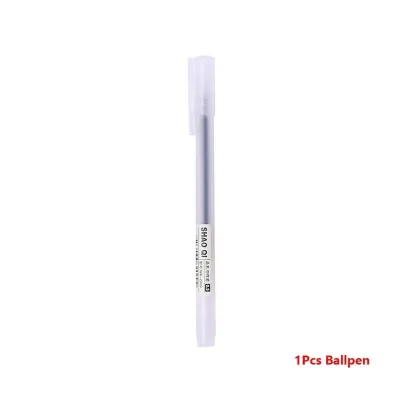
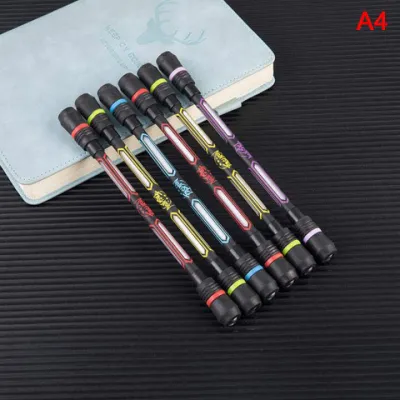
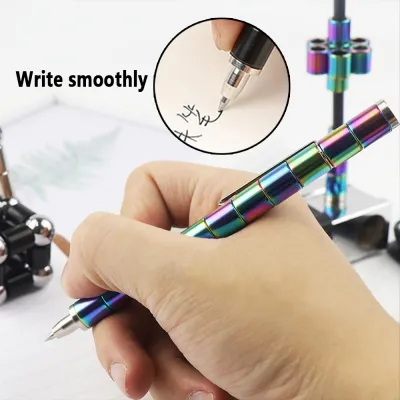
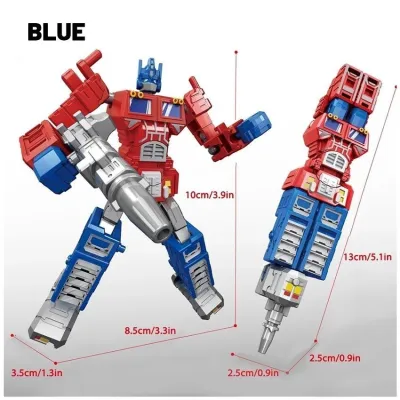
Prices are valid at publication and may change. Please refer to the product page for the latest price.
Fidget Ballpens: Evaluating Stress Relief and Daily Writing
Fidget ballpens are designed to provide sensory input and stress relief without disrupting your surrounding environment. Common mechanisms integrated into these pens include magnetic rings, rolling spheres, gears, clickers, and top-mounted spinners. For individuals who find themselves clicking standard pen caps or tapping their fingers during long meetings or study sessions, these integrated features offer a quiet, constructive outlet for restless energy. The primary benefit of a high-quality fidget pen is its ability to keep your hands occupied, which can help improve focus and cognitive engagement during passive tasks.

However, adding mechanical components to a writing instrument introduces a clear trade-off between sensory features and writing ergonomics. Extra gears, magnets, or spinning tops can alter the pen’s weight balance, making it top-heavy or excessively thick. This uneven distribution of weight can lead to hand fatigue during extended writing sessions, such as taking lecture notes or drafting reports. Additionally, protruding parts can make the pen difficult to slide into a standard shirt pocket, pencil case, or notebook loop. When evaluating a fidget ballpen, look for designs where the moving parts can be detached or are recessed into the barrel to maintain a comfortable grip.
Another critical factor to verify before buying is ink refill compatibility and mechanism durability. Because these pens are subjected to constant twisting, clicking, and spinning, the structural joints and internal springs must be robust enough to withstand repetitive motion. Check the manufacturer’s specifications to see if the pen accepts standard international refills, such as D1 or Parker-style cartridges. If a fidget pen uses a proprietary ink size, you may find yourself with an unusable shell once the initial ink supply runs dry. Inspecting the casing material—such as choosing anodized aluminum over thin plastic—can also ensure the pen survives accidental drops onto hard office or classroom floors.
Novelty Ballpens: Assessing Visual Appeal and Gifting Value
Novelty ballpens are designed to delight the eye, spark conversation, or serve as decorative additions to a workspace. These pens come in an endless variety of shapes, including miniature animals, food items, sporting equipment, and glowing or floating glitter wands. They are highly popular as party favors, seasonal gifts, or collectible items for fans of specific themes. Because their primary appeal is visual, they are often displayed on desks or shelves rather than tucked away in a drawer, adding a touch of personality to an otherwise sterile work or study environment.
Despite their charm, novelty ballpens often present challenges when it comes to grip and writing comfort. The irregular shapes, oversized toppers, and hard plastic edges that make these pens visually interesting can make them highly impractical for writing more than a quick signature or a brief note. An oversized character head on top of a pen can cause severe hand strain by pulling the pen backward as you write. Furthermore, the materials used in budget-friendly novelty pens are often lightweight, brittle plastics that can crack easily under pressure. If you plan to use a novelty pen for actual writing, look for models that confine the decorative elements to the upper half of the barrel, leaving a smooth, cylindrical grip area near the tip.
Before purchasing a novelty pen, it is also essential to check the ink flow and refill availability. Many novelty pens are manufactured as single-use items, meaning the ink cartridge is permanently sealed inside the decorative casing. Once the ink is exhausted or dries out—a common issue in tropical climates where high humidity and heat can affect low-grade ink formulations—the pen becomes a non-functional ornament. If you want the pen to remain useful, verify whether the tip can be unscrewed to access the refill. Testing the ink flow on a scrap piece of paper before committing to a large purchase can also help you avoid pens that skip, leak, or smudge easily.
Kids' Toy Ballpens: Balancing Playfulness and Writing Safety
When selecting toy ballpens for children, the purchasing decision must balance entertainment with strict safety and functional standards. Kids’ toy ballpens often feature bright colors, stampers, bubble blowers, or light-up elements designed to make writing activities more engaging. These pens can play a helpful role in early childhood development by encouraging fine motor skills, hand-eye coordination, and a positive association with writing and drawing. However, parents and educators must distinguish between pens designed as safe, functional learning aids and those intended purely as cheap playthings.
Safety is the paramount concern when choosing any stationery item for young users. Before buying, always check for age-grade labels and verify that the materials used are certified non-toxic. Many cheap toy pens contain small, detachable parts—such as tiny caps, decorative beads, or small batteries for light-up features—that pose severe choking hazards for children under three years old. Ensure that any battery compartments are securely fastened with screws and that the pen’s body is made of durable, shatterproof plastic that will not splinter if dropped or chewed. Additionally, look for ventilated caps that allow air passage in the event of accidental swallowing.
Beyond safety, the pen’s writing performance is crucial for preventing frustration in young learners. Children who are still developing their grip strength require pens that glide smoothly across the paper without requiring heavy downward pressure. A scratchy pen that skips or requires constant scribbling to start can discourage a child from practicing their writing. Look for kids’ toy pens that feature soft, rubberized, triangular grips, which naturally guide fingers into the correct tripod position. Water-based gel inks or smooth-flowing ballpoint inks are ideal, provided they are labeled as washable to make cleanup from hands and clothing easy.
Decision Matrix: Matching the Pen to Your Primary Use Case
To help you finalize your selection, the following matrix compares the three categories of toy ballpens across key decision-making dimensions.
| Pen Category | Primary Use Case | Target Audience | Writing Ergonomics | Refill Availability | Key Verification Checks |
|---|---|---|---|---|---|
| Fidget Ballpen | Stress relief, focus, and daily writing | Professionals, students, and teens | Moderate to High | High (often standard refills) | Check joint durability and spinning smoothness |
| Novelty Ballpen | Gifting, desk decoration, and light writing | Collectors, gift givers, and office workers | Low to Moderate | Low (frequently sealed ink) | Check if casing opens and if grip is smooth |
| Kids' Toy Ballpen | Creative play and motor skill practice | Toddlers, primary students, and educators | High (thick, soft, or triangular grips) | Low to Moderate | Verify non-toxic labels and check for choking hazards |
When making your final choice, apply these conditional guidelines to match your specific needs:
- Choose a Fidget Ballpen if you need a reliable, long-term writing tool for work or school that also helps you manage anxiety or restless energy quietly.
- Choose a Novelty Ballpen if your primary goal is to find a fun, visually striking gift, a themed collectible, or a decorative desk accessory that only needs to write occasionally.
- Choose a Kids' Toy Ballpen if you are purchasing for a child and require a lightweight, safe, and ergonomically supportive tool that makes learning to write feel like play.
Pre-Purchase Checklist: Verifying Quality, Safety, and Refills
Before completing your purchase, especially when browsing online marketplaces or local stationery stores, taking a few systematic steps can save you from buyer’s remorse. Because toy ballpens are often produced by non-specialist manufacturers, their quality control can vary significantly compared to standard office stationery. Use this checklist to verify the product’s quality, safety, and long-term usability:
- Verify Ink and Refill Specifications: Check the product description or packaging for details on the ink type (e.g., oil-based ballpoint, gel, or water-based) and whether the pen accepts standard refills. If you are buying for a child, confirm that the ink is explicitly labeled as non-toxic and washable. For daily writers, look for standard refill codes like D1 or G2 to ensure you can easily find replacements.
- Inspect Material Safety and Build Quality: For children's pens, look for safety certifications such as EN71 or local equivalents, and ensure there are no small, easily detachable parts. For fidget and novelty pens, examine the materials used; anodized aluminum, stainless steel, or thick ABS plastic will withstand daily wear and tear much better than thin, brittle plastics.
- Read User Feedback and Reviews: When shopping on e-commerce platforms, sort reviews to look for mentions of common failure points. Pay close attention to complaints about ink skipping, leaking, mechanisms jamming after a few uses, or decorative parts breaking off during transit.
- Check Seller Ratings and Return Policies: Because toy pens have a higher rate of mechanical defects than standard pens, buy from reputable sellers with high ratings and clear return or replacement policies. This is particularly important if you are purchasing bulk sets for party favors or classroom gifts, where a few defective units can disrupt your plans.
- Assess the Writing Environment: Consider where the pen will be used. If you are in a humid, tropical environment, cheap gel inks in novelty pens may dry out quickly or leak if left in a hot car or backpack. Opting for sealed ballpoint cartridges or storing your pens in a cool, dry place can help extend their lifespan.
Frequently Asked Questions (FAQ)
Can I use a novelty or fidget ballpen for official document signing?
It is generally not recommended to use novelty or fidget ballpens for signing official, legal, or financial documents unless you have verified that the pen uses archival-quality ink. Most toy and novelty pens are filled with standard, dye-based inks that are highly susceptible to fading over time when exposed to light, and they can easily bleed or wash away if they come into contact with water or high humidity. For official documents, government forms, or bank checks, you should use pens specifically labeled as containing pigment-based, water-resistant, and fade-resistant archival ink. If you must use your favorite fidget pen, check if you can swap its default cartridge with a high-quality, document-proof refill from a reputable stationery brand.
Are there left-handed options available for kids' toy ballpens?
While dedicated left-handed toy ballpens are rare, you can find highly suitable options by looking for specific design features. Left-handed writers push the pen across the page rather than pulling it, which can cause standard ink to smudge as their hand follows the writing line. To prevent this, look for kids’ toy pens that use quick-drying gel ink or advanced low-viscosity ballpoint ink, which dries almost instantly upon contact with paper. Additionally, avoid pens with asymmetrical molded grips designed strictly for right-handed users. Instead, opt for pens with symmetrical, triangular rubber grips or round, soft barrels that allow for a comfortable, ambidextrous hold, ensuring a frustration-free writing experience for left-handed children.
Community discussion
Share your experience or ask a question. Comments are reviewed before publication.