
Finding a large-format 2027 calendar in the Philippines requires balancing visibility, writing space, and environmental durability. Large calendars serve as central hubs for families, offices, and personal planning, but their size means they must be chosen with care to fit your physical space and withstand local tropical conditions. Whether you need a massive wall poster to track team deadlines or an oversized desk blotter to organize your daily tasks, selecting the right planner involves matching physical dimensions with practical features.
This guide outlines the essential criteria for evaluating large calendars, categorizes the most useful formats for home and office environments, and provides actionable steps for verifying authentic 2027 stock and ensuring long-term durability throughout the year. By understanding what to look for in paper weight, binding, and layout design, you can make an informed purchase that keeps your schedule organized from January to December.
Defining "Big Size" Dimensions and Space Requirements
When searching for a “big size” calendar, the first step is understanding that dimensions vary widely across manufacturers. Standard paper sizes like A3 (297 x 420 mm) and A2 (420 x 594 mm) are common benchmarks for large-format planners. For even greater visibility, some brands offer custom poster sizes, such as 24 x 36 inches, which provide a massive canvas for year-at-a-glance scheduling.
Products mentioned in this guide
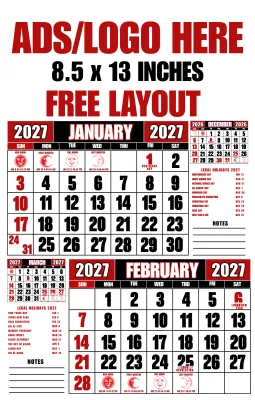
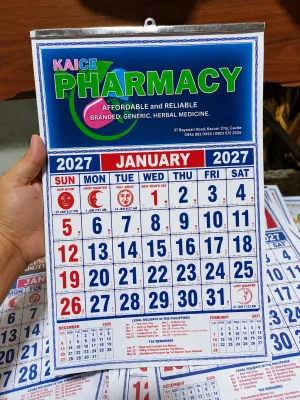
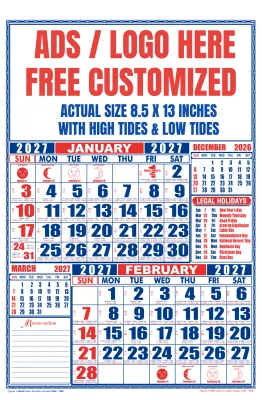
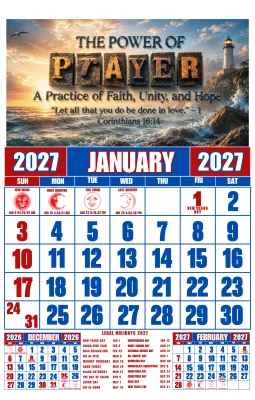
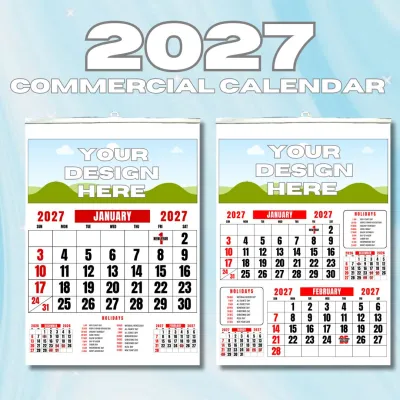
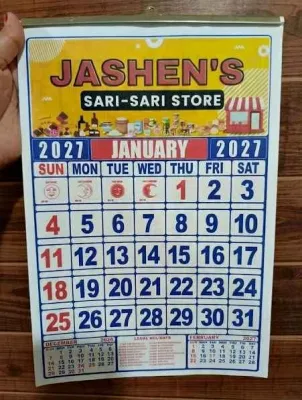
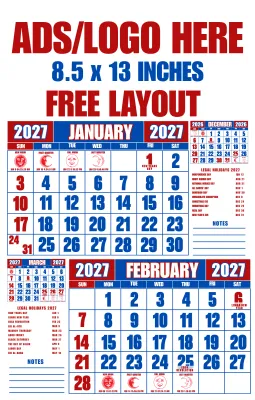
Prices are valid at publication and may change. Please refer to the product page for the latest price.
Choosing between a wall calendar and a desk blotter involves distinct spatial trade-offs. An oversized wall calendar keeps your schedule visible to everyone in the room, making it an excellent collaborative tool. However, writing on a wall-mounted calendar requires standing up and reaching, which can be inconvenient for detailed daily journaling. Conversely, a large desk blotter calendar sits flat on your workspace, providing a comfortable writing surface right under your hands, but it consumes significant desk real estate and can easily be covered by laptops, keyboards, or paperwork.
Before making a purchase, it is crucial to measure your available space to ensure a proper fit. Use a measuring tape to determine the exact width and height of your target wall or desk area. For wall calendars, account for vertical clearance; ensure there is enough room to flip pages upward without hitting shelves, ceiling fans, or light fixtures. For desk pads, verify that your keyboard, mouse, and other daily essentials can sit comfortably alongside or on top of the pad without blocking critical planning grids.
Evaluating Paper Quality, Binding, and Layout Features
The usability and longevity of a large calendar depend heavily on its material specifications. In the Philippines, high relative humidity can cause thin paper to sag, curl, or absorb moisture, which often leads to ink feathering and bleed-through. To prevent this, look for calendars utilizing heavy-duty paper, ideally with a weight of 120 gsm (grams per square meter) or higher. If you plan to use heavy markers, fountain pens, or highlighters, prioritizing 150 gsm to 200 gsm cardstock will ensure your writing remains crisp and does not ruin the subsequent months.

Paper texture also plays a significant role in how ink behaves. Uncoated, slightly textured paper absorbs ink quickly, which reduces drying time and minimizes smudging—a vital feature for left-handed writers. However, highly absorbent paper can cause wet inks to feather or spread. Smooth, coated papers offer excellent line definition and vibrant color reproduction, but they require longer drying times, making them more prone to accidental smearing if you close or touch the page too quickly.
Because large calendars carry substantial physical weight, their binding and mounting hardware must be exceptionally sturdy. For wall-mounted options, Wire-O (double-loop wire) or spiral bindings are highly recommended because they allow pages to turn a full 360 degrees without tearing. Ensure the calendar includes a reinforced metal hanger loop integrated into the binding to distribute weight evenly and prevent the pages from sagging over time. For desk pads, look for a thick cardboard backing and reinforced vinyl or leatherette corner pockets to keep the pages flat and prevent dog-eared corners.
The primary advantage of an oversized calendar is the generous writing space, so the grid layout must be designed efficiently. Examine the daily blocks to ensure they are proportionally large enough for your handwriting; a standard large-format calendar should offer daily blocks of at least 2 x 2 inches (approximately 5 x 5 cm). Check if the layout includes dedicated sections for notes, weekly goals, or a mini-preview of the preceding and succeeding months, which can greatly enhance your long-term planning efficiency.
Matching Calendar Types to Your Planning Environment
Selecting the right style of oversized calendar depends on your daily planning habits and the environment where it will be used. Wall poster and vertical calendars are the ultimate high-visibility tools, making them ideal for shared spaces like family kitchens, corporate offices, or project command centers. A vertical layout or a full-year-at-a-glance poster allows multiple people to track long-term deadlines, school terms, and vacation schedules simultaneously, acting as a passive visual reminder that keeps everyone aligned.
If your work involves deep, individual daily planning, a large desk pad or blotter calendar is often the most practical choice. Placed directly under your keyboard or to the side of your workspace, it provides an immediate, flat writing surface that is always within arm’s reach. It also acts as a protective barrier for your wooden or glass desk surface. When choosing a desk pad, look for models with tear-off pages so you can easily transition to the next month, and ensure the backing is non-slip to prevent the calendar from sliding around during active writing.
For dynamic environments where schedules change rapidly, paper-based calendars might not be the most efficient option. Dry-erase or laminated planning boards offer a reusable, non-paper alternative that allows you to wipe away and rewrite plans instantly. These are particularly useful for agile project management, shift scheduling, or tracking fluctuating household chores. When using laminated boards, ensure you use high-quality dry-erase or wet-erase markers to prevent ghosting, which is the permanent staining of the board’s surface over time.
Sourcing and Verifying 2027 Stock in Local and Online Stores
Finding authentic, correctly dated 2027 calendars requires a strategic approach, especially when shopping early in the season. Major bookstore chains and specialty stationery boutiques in the Philippines typically begin stocking next-year planners and calendars around the third or fourth quarter of the preceding year. Visiting a physical store is highly beneficial because it allows you to touch the paper, inspect the binding strength, and verify the physical dimensions firsthand before committing to a purchase.
If you prefer the convenience of online shopping, navigating e-commerce platforms requires extra vigilance to avoid mislabeled or outdated stock. Always use precise search terms, such as “2027 calendar big size,” and avoid listings with generic titles that do not explicitly state the year. Because some sellers reuse old product listings to maintain search rankings, the title might say “2027” while the description or customer reviews still refer to previous years.
To verify the authenticity of an online listing, always check the product specifications and look for interior preview images. Confirm that the calendar grid aligns correctly with the 2027 calendar year; for example, January 1, 2027, must fall on a Friday, and February must have 28 days. Reading recent customer reviews and looking at uploaded photos from other buyers can provide valuable clues about the actual print quality and paper thickness. Whenever possible, prioritize purchasing from official brand storefronts or authorized distributors to ensure accurate holiday markings and reliable customer service.
Inspecting, Mounting, and Maintaining Your Large Calendar
Once your large calendar arrives, perform a thorough inspection before mounting it or writing on it. Check for any printing defects, misaligned grids, or bent corners that may have occurred during transit. Flip through all twelve months to ensure no pages are missing or duplicated, and verify that the binding is secure and undamaged. Identifying these issues early allows you to initiate a return or exchange before you have invested time into filling out your schedule.
Mounting a heavy wall calendar in a tropical climate like the Philippines requires careful consideration of humidity and adhesive strength. Standard double-sided tape or lightweight adhesive putties often fail when exposed to high humidity, causing the calendar to fall and tear. Use damage-free, moisture-resistant adhesive strips or sturdy wall hooks designed for heavy hanging. If you are mounting the calendar on a painted concrete wall, ensure the surface is clean, dry, and free of dust before applying any adhesive to ensure a strong, long-lasting bond.
To keep your large calendar looking pristine throughout the year, handle the pages with clean, dry hands and avoid placing hot drinks or wet glasses directly on desk pads, as moisture will cause the paper to warp and the ink to bleed. If the corners of your desk pad begin to curl due to humidity, you can use low-tack artist’s tape or corner protectors to hold them flat against your desk. When storing unused months or transitioning to a new year, keep the pages flat in a dry drawer rather than rolling them up, which can cause permanent creasing and make the paper difficult to flatten later.
Frequently Asked Questions (FAQ)
Can I use fountain pens or heavy markers on standard large calendar paper?
Whether you can use wet inks depends entirely on the paper’s weight and coating. Standard calendar paper (often around 80 to 100 gsm) will likely experience feathering and bleed-through with fountain pens or heavy alcohol-based markers. To use these writing instruments safely, look for calendars specified as having 120 gsm to 150 gsm acid-free paper. Always perform a small ink test in an inconspicuous corner or on the back cover before writing your full schedule.
What is the best way to mount an oversized wall calendar without damaging the paint?
The safest method is using removable, damage-free adhesive hooks or mounting strips designed specifically for hanging pictures. These adhesives hold strong even in humid conditions but pull off cleanly without stripping paint. Before mounting, clean the wall surface with rubbing alcohol to remove dust and oils, let it dry completely, and follow the weight limits specified on the adhesive packaging. Avoid using heavy-duty mounting tapes or hot glue, which can permanently damage drywall or plaster.
How do I ensure an online listing is actually for the 2027 edition and not old stock?
To avoid buying outdated stock, check the product title, detailed description, and customer reviews. Look closely at the product images; if the seller only shows the cover, ask them directly for a photo of the interior pages. Verify the calendar grid: for 2027, February should have 28 days, and the year must start on a Friday. If a listing has conflicting information or uses outdated reviews from previous years, it is safer to purchase from an official brand store.
Community discussion
Share your experience or ask a question. Comments are reviewed before publication.