
Selecting the right rainbow loom bands for elementary art classes requires balancing creativity, safety, and practical classroom management. While the market offers countless options, the ideal kit for young students must go beyond bright colors to include durable materials, age-appropriate tools, and reliable safety standards. This guide helps educators and parents evaluate loom band sets to ensure they support engaging, frustration-free, and safe art projects in the Philippines. By understanding what to look for in terms of material quality and kit configuration, you can avoid common pitfalls like brittle bands and broken tools, turning every crafting session into a successful learning experience.
Identifying Classroom Needs for Loom Band Activities
Before purchasing any crafting supplies, it is essential to assess how the loom band activities will fit into your specific classroom environment. The physical layout of the workspace and the size of the student group dictate the type of equipment you need. For instance, you must determine the ratio of students to available loom boards. In large classroom settings, budget or space constraints might make individual boards impractical. If students must share boards, you will need to design lesson plans that allow for collaborative weaving or structured rotation, ensuring that every child gets adequate hands-on time without long periods of idle waiting.
The physical size of the loom boards is another critical factor. Standard school desks in many classrooms are relatively small and must accommodate not only the loom itself but also storage containers, hooks, and reference instruction sheets. A bulky, oversized loom board can easily crowd a student’s workspace, leading to accidental spills of tiny bands. Compact, modular looms or even simple hand-held Y-looms are often much better suited for tight desk spaces, as they allow students to work comfortably without encroaching on their classmates’ areas.
Products mentioned in this guide
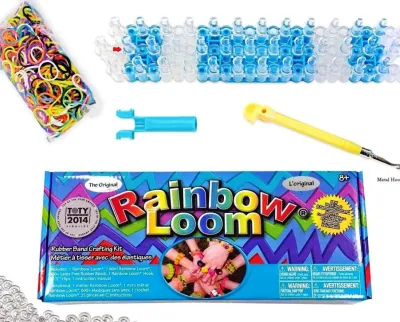
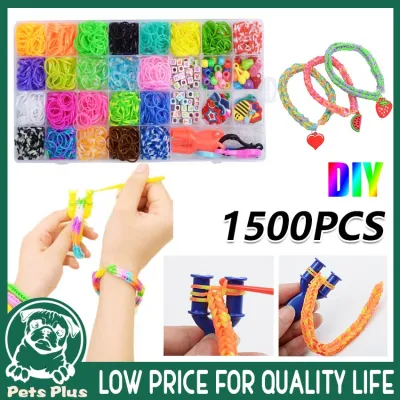
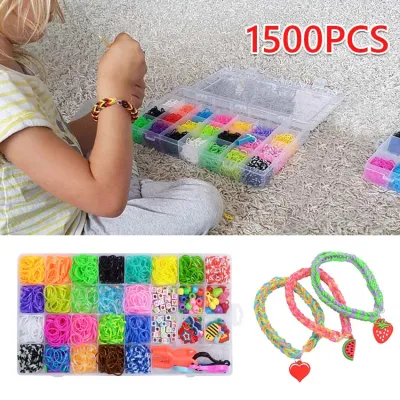
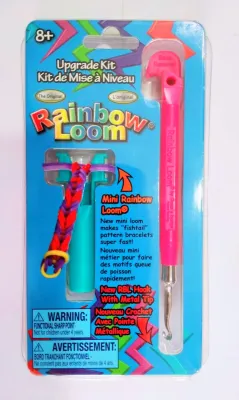
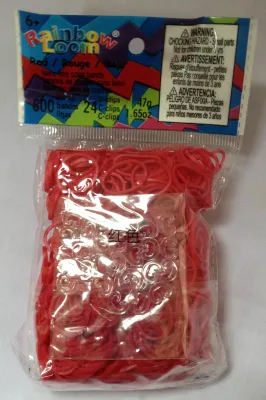
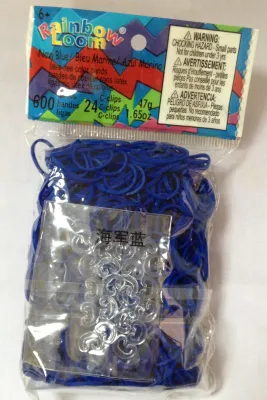
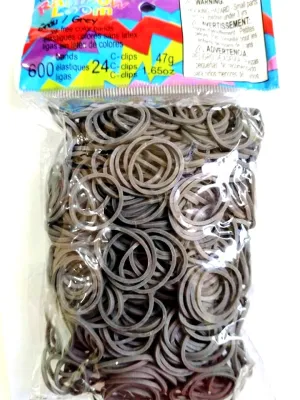
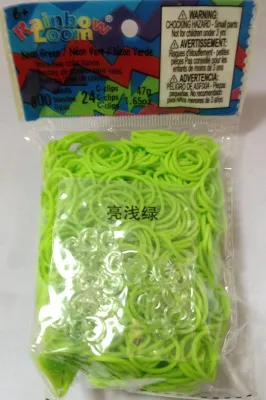
Prices are valid at publication and may change. Please refer to the product page for the latest price.
Finally, match the complexity of the intended projects with the students’ fine motor skill levels. Lower elementary students in early grades are still developing their hand-eye coordination and finger strength. For these younger crafters, complex patterns requiring multi-row configurations on a standard loom can lead to intense frustration. Instead, simpler activities like finger-weaving or using basic two-pin looms are highly effective. Upper elementary students, on the other hand, possess the dexterity required for intricate designs and will benefit more from full-sized, adjustable loom boards that challenge their spatial reasoning and patience.
Evaluating Kit Components for Young Crafters
A successful loom band project relies heavily on the physical quality of the kit components. When evaluating potential sets, the first element to inspect is the rubber bands themselves. High-quality bands should exhibit consistent thickness, uniform shape, and excellent snap resistance. Inconsistent bands with thin spots are highly prone to snapping mid-weave, which can ruin hours of student effort and cause minor, startling snaps on young fingers. To verify quality, perform a simple stretch test: pull a sample band gently to about three times its resting diameter. A durable band will stretch smoothly and return to its original shape without showing white stress marks, cracks, or permanent deformation.

The tools included in the kit are just as important as the bands. Many budget kits include thin, highly flexible plastic hooks that bend or snap when subjected to the tension of multiple bands. For a classroom setting, look for kits that feature sturdy, thick-handled plastic hooks or hooks with metal tips. These robust tools provide better leverage and are far less likely to break during complex weaves. Additionally, ensure the kit contains an abundant supply of C-clips or S-clips. These tiny plastic fasteners are essential for securing the ends of bracelets and necklaces; without a sufficient quantity, students will be unable to finish or wear their creations, leading to incomplete projects.
Loom board design also varies significantly across different kits, and each style has distinct trade-offs. Solid, single-piece plastic boards are highly recommended for beginners and general classroom use. Because they lack moving parts, they are incredibly stable and can withstand the rough handling typical of young children. Conversely, modular loom boards with detachable rows offer greater flexibility, allowing advanced crafters to rearrange the pins for wide or 3D patterns. However, these detachable rows can easily separate or shift if a student pulls too hard, which can be highly frustrating for a beginner trying to maintain consistent tension.
Prioritizing Safety and Age-Appropriate Materials
When introducing any craft material into an elementary school environment, safety must be your primary consideration. Because loom band projects involve prolonged skin contact with synthetic materials, you must carefully review the product specifications. Always check the packaging or product descriptions for explicit latex-free claims. Many inexpensive bands are made from natural rubber latex, which can trigger allergic reactions ranging from mild skin rashes to severe respiratory issues in sensitive children. Opting for silicone-based or certified latex-free synthetic rubber bands ensures a safe environment for all students.
Choking hazards are another critical safety concern, particularly in lower elementary classrooms. The bands, clips, and small charms included in these kits are small enough to be easily swallowed. While older elementary students are generally past the stage of putting non-food items in their mouths, close supervision is still necessary to prevent accidental ingestion or unsafe behavior, such as shooting bands across the room. Ensure that all students understand the safety rules before the activity begins, emphasizing that the materials are strictly for crafting.
To protect students from low-quality chemical formulations, rely on simple, observable checks rather than unverified marketing claims. When opening a new kit, take note of any strong, pungent chemical odors. A heavy, petroleum-like smell often indicates the presence of volatile organic compounds or low-grade plasticizers that should not be handled by children. Furthermore, avoid bands that leave a heavy, powdery residue on your hands or have an excessively greasy texture. High-quality, safe loom bands should feel clean, smooth, and dry to the touch, ensuring a comfortable and hygienic crafting experience.
Managing and Storing Small Craft Supplies
The key to a peaceful and productive loom band session lies in effective organization and storage. With thousands of tiny, colorful bands and microscopic clips, a single tipped container can quickly turn a classroom into a chaotic mess. To prevent this, invest in kits that come with compartmentalized plastic storage boxes featuring secure, heavy-duty latches. Keeping the bands sorted by color not only makes the crafting process much faster and more enjoyable for the students but also prevents the bands from tangling into an inseparable, dusty knot.
In the tropical climate of the Philippines, environmental factors play a significant role in material preservation. High humidity and elevated temperatures can cause low-quality rubber bands to degrade rapidly, becoming sticky, brittle, or even melting together into a single solid mass. To protect your inventory, store all loom band containers in a cool, dry cabinet away from direct sunlight and heat sources. If you are using DIY storage, clear plastic tackle boxes or bead organizers with adjustable dividers work exceptionally well for keeping supplies organized and airtight.
To maintain order during the activity, establish a structured distribution routine. Rather than allowing students to crowd around a single large storage box, distribute small, pre-sorted portions of bands in paper cups or small trays to individual desks or groups. This minimizes movement around the classroom and reduces the risk of major spills. At the end of the art session, implement a quick, five-minute cleanup checklist: have students search their immediate desk area for stray bands, count their hooks and clips, and return all unused materials to their designated storage compartments.
Sourcing and Verifying Kits in the Philippines
Finding reliable loom band kits in the Philippines requires a careful and discerning approach, whether you are shopping at local school supply stores or browsing online marketplaces. When shopping online, do not rely solely on polished product photos, which often look identical across different sellers. Instead, navigate to the customer review section and filter for feedback that includes real-life photos and detailed descriptions. Look specifically for comments regarding the elasticity of the bands, the sturdiness of the hooks, and whether the kit arrived with all the advertised components.
Pay close attention to recurring complaints in user reviews. If multiple buyers mention that the bands are brittle, snap easily during use, or arrive stuck together, it is a strong indication of poor manufacturing or improper storage conditions. Conversely, positive reviews that highlight smooth, stretchy bands and durable plastic looms are a good indicator of a reliable product. When purchasing from local physical stores, inspect the packaging for clear brand labeling, safety certifications, and manufacturer contact information, avoiding generic, unbranded bags that offer no quality guarantees.
Finally, consider the long-term cost-effectiveness of your purchase based on how often you plan to conduct these art activities. If you are introducing loom bands as a one-time project, a complete starter kit containing a loom, hooks, clips, and a moderate selection of bands is the most practical and economical choice. However, if loom weaving is a recurring part of your school’s art curriculum, it is far more cost-effective to purchase a few high-quality, durable starter kits and supplement them with bulk refill packs of bands and clips. This strategy ensures you always have an ample supply of consumables without paying extra for unnecessary plastic looms.
Frequently Asked Questions (FAQ)
Can loom bands be reused if a student makes a mistake?
Yes, loom bands can be carefully unhooked and reused if a student makes an error during weaving. However, repeated stretching weakens the material over time. To maximize their lifespan, avoid leaving the bands stretched on a loom for extended periods, and keep them away from direct sunlight and high heat, which accelerate rubber degradation.
What is the best way to clean the loom boards after class?
To clean plastic loom boards, wipe them down with a damp microfiber cloth and a small amount of mild dish soap. Avoid using harsh chemical solvents, alcohol-based sanitizers, or boiling water, as these can warp, crack, or cloud the plastic pegs, making it difficult for bands to slide off smoothly during future projects.
How many bands does a typical student need for a basic bracelet?
A standard single-chain bracelet for an elementary student’s wrist typically requires about 20 to 25 bands, along with a single C-clip or S-clip. More complex designs, such as the popular fishtail pattern, require approximately 40 to 50 bands. Planning for roughly 50 bands per student per project is a safe estimate for classroom budgeting.
Community discussion
Share your experience or ask a question. Comments are reviewed before publication.