
Finding the right 0.3mm ballpen in the Philippines requires looking beyond brand names and focusing on how a pen’s mechanical design, ink formulation, and paper compatibility handle local environmental conditions. In a tropical climate where high humidity can soften paper fibers and high temperatures can alter ink viscosity, an ultra-fine writing instrument must be chosen with care. Whether you are a student cramming formulas into tight margins, an artist working on intricate stippling, or a professional organizing a compact planner, selecting the right ultra-fine pen involves understanding how a tiny 0.3mm metal ball interacts with both ink and paper. By evaluating the physical construction of the tip, testing ink behavior on various local paper stocks, and sourcing from verified channels, you can secure a reliable writing tool that delivers crisp, skip-free lines without tearing your writing surface.
Understanding 0.3mm Ballpens and Their Ideal Use Cases
A 0.3mm ballpen is a highly specialized writing instrument designed to produce an exceptionally thin, precise line. To put this in perspective, standard ballpoint pens typically feature a 0.7mm or 1.0mm tip, while medium-fine pens sit around 0.5mm. A 0.3mm tip reduces the line width by more than half compared to standard options, allowing for incredibly dense writing and highly detailed work. This ultra-fine line is achieved through a microscopic ball bearing housed in a precision-engineered metal collar, which regulates the flow of ink onto the page in minute quantities.
These pens are uniquely suited for specific, high-precision tasks where space is at a premium. Students and professionals who use compact planners, pocket notebooks, or multi-column ledgers find that 0.3mm pens allow them to write legibly within tiny grid squares or narrow ruled lines. In technical fields, these pens are invaluable for labeling complex diagrams, drafting schematics, or adding marginalia to printed documents. Artists also favor them for detailed ink drawings, cross-hatching, and stippling, where control over line weight and spacing is paramount.
Products mentioned in this guide
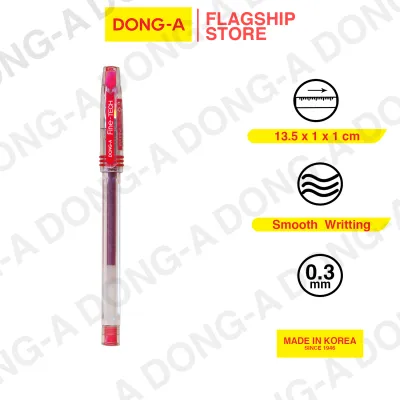
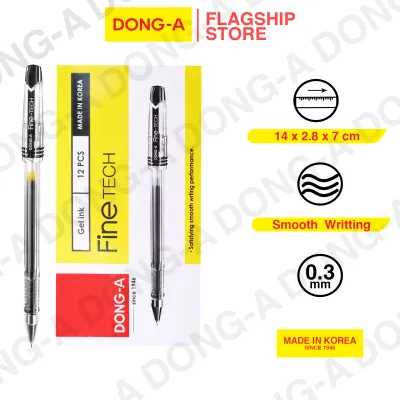
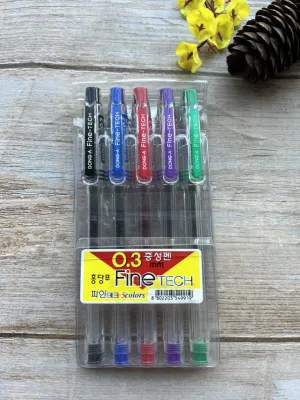
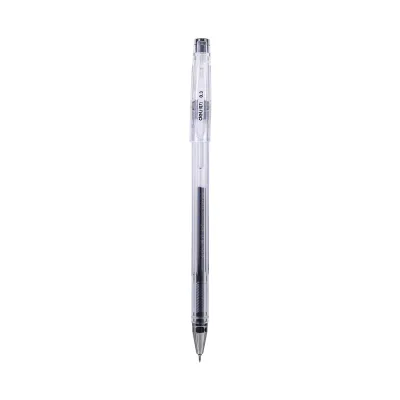
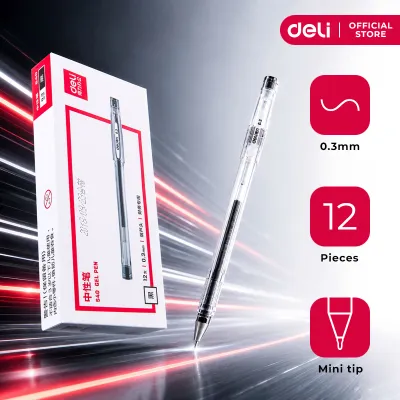
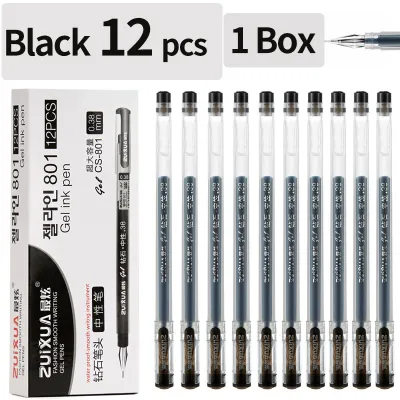
![Muji Smooth Gel Ink Ballpoint Pen KNOCK TYPE (0.3mm 0.5 mm) [AVAILABLE IN 16 COLORS]](https://img.lazcdn.com/g/p/674b60c46d75fb3c84b0c4303ef169ea.jpg_400x400q80.jpg_.webp)
Prices are valid at publication and may change. Please refer to the product page for the latest price.
However, the extreme thinness of a 0.3mm tip introduces distinct physical limitations that users must navigate. Because the contact area between the pen tip and the paper is so small, you will experience significantly more tactile feedback—often described as “tooth” or “scratchiness”—compared to broader pens. This feedback is highly pronounced on textured or low-grade paper, where the sharp metal tip can catch on loose fibers. Additionally, the microscopic clearance between the ball and the collar makes 0.3mm pens highly susceptible to clogging from airborne dust, paper debris, or dried ink, requiring careful handling and consistent capping.
Key Evaluation Criteria for Fine-Tip Ballpens
When shopping for a 0.3mm ballpen, the physical construction of the tip is the first and most critical factor to evaluate. Manufacturers generally employ one of two primary tip designs: needle-point or conical. A needle-point tip features a slender, cylindrical tube that holds the ball at the very end, offering an unobstructed view of the writing line, which is ideal for drawing along rulers or doing detailed drafting. However, needle-points are more delicate and can bend under heavy writing pressure. Conical tips, on the other hand, feature a gradually tapering cone that provides robust structural support to the ball, making them more durable for everyday writing, though they slightly obscure the user’s view of the exact contact point.

Grip ergonomics and overall barrel weight play a vital role in managing the hand fatigue associated with ultra-fine pens. Because 0.3mm pens require a controlled, relatively upright writing angle to maintain consistent ink flow, users often unconsciously grip the pen more tightly. To counteract this, look for pens with a low center of gravity—often achieved with a weighted metal nose cone—and a comfortable, non-slip rubberized or textured grip section. A slightly wider grip diameter can also help distribute finger pressure, preventing cramping during extended writing sessions.
The choice between a capped and a retractable design involves balancing convenience with tip protection. Capped pens generally offer superior protection against ink evaporation and physical damage, as the cap seals the tip assembly from dust and prevents the pen from rolling off a desk. Retractable designs, operated by a click or clip mechanism, offer one-handed convenience but rely on internal spring-loaded seals that may not be as airtight as a dedicated cap. For a 0.3mm pen, where even minor ink drying can cause permanent clogs, a high-quality capped design is often preferred for long-term reliability.
Finally, always check the manufacturer’s specifications regarding the materials used in the tip and ball assembly. Premium ultra-fine pens typically utilize tungsten carbide balls housed in stainless steel tips, a combination that resists wear and maintains its spherical shape over millions of rotations. Checking these specifications on the manufacturer’s official website or packaging ensures you are purchasing a tool designed for longevity rather than a disposable novelty pen that may wear out prematurely.
Ink Formulations and Paper Compatibility
The performance of a 0.3mm pen is heavily dictated by the type of ink it uses, with oil-based, gel, and hybrid formulations each offering distinct characteristics. Traditional oil-based ballpoint ink is highly viscous, drying almost instantly upon contact with the paper, which makes it highly resistant to smudging and water. However, because oil-based ink requires significant friction to roll the ball, it can feel stiff and prone to skipping in a 0.3mm size. Gel ink, which uses a water-based suspension, flows much more smoothly and offers vibrant, opaque lines, but it has a slower drying time and is more prone to feathering on absorbent paper. Hybrid inks combine the smoothness of gel with the fast-drying properties of oil, making them an excellent middle ground for ultra-fine tips.
Paper selection is uniquely critical when using a 0.3mm pen, as the paper’s weight, texture, and surface coating directly affect ink absorption and line consistency. In the humid climate of the Philippines, paper fibers naturally absorb moisture from the air, making them softer and more absorbent. When a fine gel pen writes on damp, low-grade paper, the ink quickly spreads through the fibers, turning a crisp 0.3mm line into a fuzzy 0.5mm line. To achieve the sharpest results, pair your ultra-fine pens with high-density, smooth, or coated paper stocks that resist rapid absorption and allow the ink to dry cleanly on the surface.
To verify how a specific pen-and-paper combination will perform, you can conduct a simple, observable test on your preferred notebooks. Draw a series of tight, overlapping figure-eight patterns, followed by a row of rapid vertical hatches. Observe the paper’s backside for any signs of bleed-through, where the ink penetrates completely to the other side, and inspect the edges of the lines under bright light to check for feathering, which appears as tiny, spider-web-like bleeds. If the lines remain sharp and the reverse side of the page is clean, the paper is well-suited for your 0.3mm pen.
Additionally, consider the long-term sustainability of your writing setup by checking refill availability and cross-compatibility. Because 0.3mm pens consume ink relatively slowly due to their thin lines, you won’t need to replace the ink as frequently as you would with a 0.7mm pen, but finding replacements is still essential. Before committing to a specific pen model, verify if the manufacturer offers individual refills in the local market, and check if the pen body can accommodate standard-format refills from other reputable brands, ensuring your favorite pen barrel doesn’t become useless once the initial ink supply runs out.
Sourcing and Verifying 0.3mm Pens in the Philippines
Acquiring genuine, high-quality 0.3mm pens in the Philippines requires careful selection of retail channels to avoid degraded or counterfeit stock. Specialty stationery stores, official brand boutiques, and verified flagship stores on major ecommerce platforms are the most reliable sources. These authorized sellers maintain direct supply chains with manufacturers, ensuring that the pens you purchase are genuine and have not been subjected to prolonged, improper storage.
Counterfeit stationery is a persistent issue, particularly on online marketplaces where unauthorized third-party sellers operate. When evaluating listings, watch out for red flags such as missing batch codes on the pen barrel, blurry or poorly aligned printing on the packaging, and unusually low prices—such as multi-packs offered for a fraction of the standard retail price of a single genuine pen (which typically ranges from ₱50 to ₱150 depending on the model). Genuine pens will feature crisp, legible branding, precise molding lines on the plastic components, and clear country-of-origin markings.
Environmental factors in local retail spaces can also impact the quality of fine-tip pens before they even reach your hands. In tropical climates, prolonged exposure to high heat, direct sunlight, or extreme humidity can degrade the chemical stabilizers in gel and hybrid inks, leading to premature drying, separation, or leakage. When shopping in physical stores, avoid buying pens displayed in sunny window fronts or on racks directly beneath hot halogen spotlights. If purchasing online, choose sellers who package their stationery in protective, light-blocking wraps to shield the delicate ink formulations during transit through warm sorting facilities.
Maintenance, Storage, and Troubleshooting
Proper maintenance and storage are essential to keep a 0.3mm pen writing smoothly throughout its lifespan. Always store your ultra-fine pens horizontally when not in use, or vertically with the tip pointing downward. Storing a fine-tip pen with the tip pointing upward can cause the ink column to pull back from the ball assembly, introducing air bubbles that lead to skipping and hard starts. Furthermore, make it a habit to cap or retract the pen immediately after writing; even a few minutes of exposure to dry air can cause a microscopic skin of dried ink to form over the ball, blocking the flow.
If your 0.3mm pen begins to skip or stops writing entirely, there are safe, reversible troubleshooting methods you can attempt before discarding it. First, gently scribble in circular motions on a clean, textured rubber surface, such as a clean pencil eraser or a silicone mat. The friction against the rubber can help dislodge microscopic paper fibers or dried ink particles trapped between the ball and the metal collar. Alternatively, you can scribble lightly on the back of a smooth receipt paper, as the thermal coating can sometimes help draw ink down through capillary action.
However, it is vital to recognize when to stop troubleshooting to avoid damaging the pen or your writing surface. Never use harsh solvents, alcohol, or direct heat from a lighter to clear a clog, as these can permanently warp the plastic housing, dissolve the internal ink stabilizers, or ruin the precision fit of the ball. If gentle scribbling on rubber or warm-water soaking of the metal tip (for water-soluble inks, strictly following manufacturer guidelines) does not restore flow, the ball may have suffered physical damage from a drop or excessive writing pressure. In such cases, replacing the refill or the pen is the safest and most practical course of action.
Frequently Asked Questions (FAQ)
Can I use a 0.3mm ballpen for everyday fast writing?
An ultra-fine 0.3mm ballpen is generally not recommended for rapid, long-form writing or fast note-taking. Because of the tiny contact area, writing quickly requires you to maintain a precise, upright angle and consistent pressure, which can quickly lead to hand fatigue and finger cramping. Furthermore, fast, sweeping strokes on standard paper can cause the sharp metal tip to scratch or tear the page, while also increasing the risk of skipping as the ink flow struggles to keep pace with rapid movements. For fast-paced environments like lecture halls or business meetings, a slightly broader 0.5mm or 0.7mm pen is a more practical choice.
Why does my 0.3mm pen skip even on smooth paper?
Skipping on smooth paper is usually caused by microscopic debris, dried ink, or oil contamination on the paper’s surface. Because the clearance between the 0.3mm ball and its housing is incredibly small, even tiny paper fibers or abrasive dust can wedge themselves into the mechanism, preventing the ball from rotating freely. Another common cause is the transfer of natural oils from your hands onto the page; when the ultra-fine tip passes over an oily patch, the ink cannot adhere properly, resulting in a blank spot. To diagnose this, try writing on a fresh sheet of paper while resting your hand on a clean piece of scrap paper to prevent oil transfer.
Are 0.3mm gel pens and 0.3mm ballpoint pens the same?
No, they are not the same, as they utilize entirely different ink formulations that behave differently on the page. A 0.3mm gel pen uses water-based gel ink, which flows with minimal friction, producing highly saturated, dark lines that are excellent for detailed drawing and precise journaling, though they require more drying time. A 0.3mm ballpoint pen uses a thick, oil-based ink that dries instantly and offers superior water resistance, making it ideal for signing documents or writing on thin paper where gel ink might bleed. Choose gel ink if you prioritize smooth, vibrant lines, and opt for traditional ballpoint ink if you require fast drying and smudge resistance.
Community discussion
Share your experience or ask a question. Comments are reviewed before publication.