
Finding the right clearbook for your studies in the Philippines is a balancing act between organizing your academic papers and surviving a daily commute. With unpredictable tropical weather, crowded public transport, and heavy course loads, a flimsy folder will quickly fall apart. The ideal choice depends on matching your specific student profile with the right combination of pocket capacity, cover durability, and overall portability.
To make an immediate decision, you must identify your primary daily challenge. If you are a heavy document user who archives every single handout, you need a high-capacity binder. If you are a daily commuter navigating tight spaces on jeepneys or tricycles, a slim, flexible option is far more practical. For those on a strict budget, finding a basic but structurally sound folder is the top priority.
Ultimately, the primary decision metric is pocket count versus portability. Carrying a massive, rigid clearbook in a packed backpack can cause the plastic to crack or the seams to split under pressure. Conversely, a book with too few pockets will force you to stuff multiple sheets into a single sleeve, stretching the plastic and ruining your notes.
Products mentioned in this guide
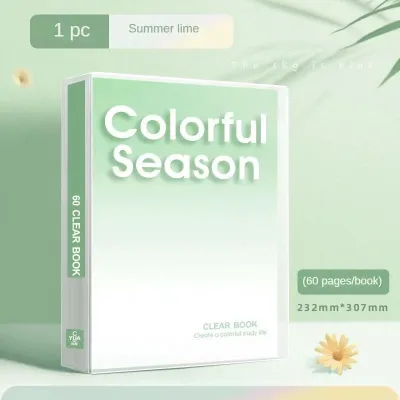
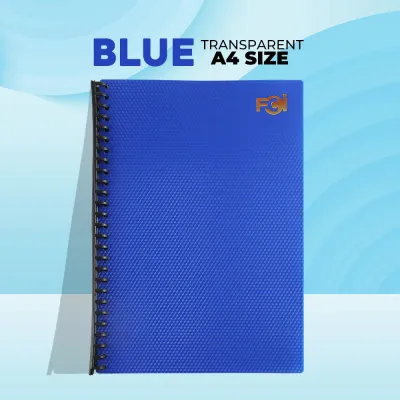
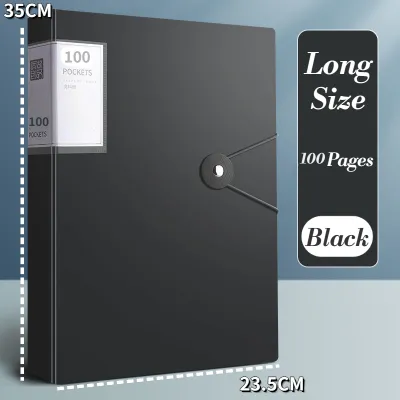
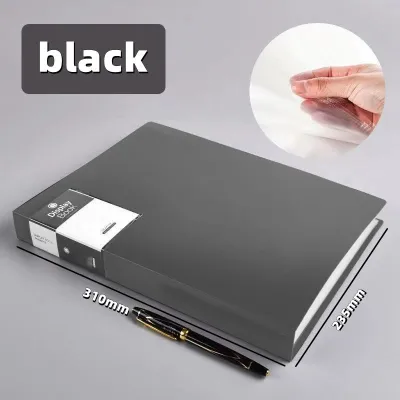
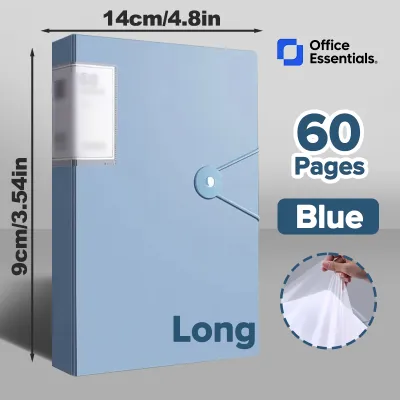
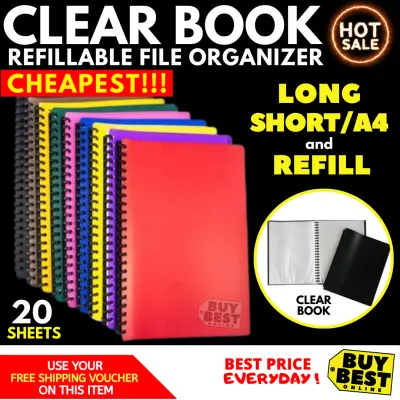
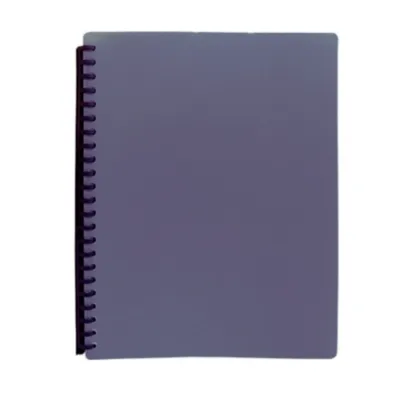
Prices are valid at publication and may change. Please refer to the product page for the latest price.
Key Factors to Consider When Buying a Clearbook
Selecting school supplies requires looking beyond aesthetic designs and bright colors. For a clearbook to survive a demanding school year, you must evaluate how its physical components interact. The pocket count, material thickness, and binding style together determine how well the folder protects your documents.
Durability is not a single, isolated metric. Instead, it is a combination of cover stiffness, pocket seam strength, and resistance to environmental factors like humidity. Understanding these technical aspects allows you to inspect any clearbook, whether you are browsing a physical store shelf or scrolling through an online marketplace.
Pocket Capacity and Document Volume
Before purchasing any clearbook, take a moment to calculate your actual document volume. Count the typical number of weekly handouts, syllabi, activity sheets, and printed modules you receive for your current subjects. If your instructors rely heavily on printed materials, your storage needs will quickly multiply over a single grading period.
You must also decide between single-sided and double-sided pocket usage. Placing two sheets back-to-back in a single pocket allows you to double your storage capacity, but it makes the pages thicker and harder to slide out. If you prefer to read both sides of a double-sided printout without removing it, you will need to allocate one pocket per sheet.
For light daily use or single-subject organization, a clearbook with 10 to 20 pockets is usually sufficient. This range keeps the folder slim and easy to slip into a tote bag or backpack. For heavy semester archival, where you store all your completed modules and reference sheets at home, look for a capacity of 40 to 60 pockets.
Material Durability and Cover Thickness
When shopping, always check the product descriptions for material types and cover thickness indicators. Most student clearbooks are made of polypropylene, a lightweight and flexible plastic. The thickness of the outer cover is often measured in microns or millimeters, with thicker covers offering better protection against bending and impact.
If you are buying in a physical store, you can perform a few quick, non-destructive tests to assess quality. Gently flex the outer cover to see if it springs back into shape without leaving a permanent crease. Inspect the inner pocket seams by lightly pulling the edges of a pocket apart; high-quality seams will resist tearing and show a clean, consistent weld line.
Avoid covers that are excessively rigid and brittle, as they are prone to cracking when compressed inside a tight school bag. At the same time, steer clear of ultra-thin, flimsy pockets that feel like plastic wrap. These thin sleeves tear easily at the seams when you insert multiple sheets of paper, rendering the pocket useless.
Binding Types and Page Security
The way the pockets are attached to the cover plays a massive role in how you organize your schoolwork. Fixed bindings feature pockets that are permanently heat-sealed or glued directly to the spine of the clearbook. This design offers excellent page security, ensuring that your documents will never accidentally fall out or get misplaced.
However, fixed bindings offer zero flexibility. You cannot rearrange the order of the pages, nor can you add extra pockets if you run out of space. If your coursework requires a dynamic organization system where you constantly shuffle sections, a fixed-binding clearbook might feel too restrictive.
For more adaptable needs, look for clearbooks with screw-post, ring, or snap-button bindings. These models allow you to open the binding mechanism to insert, remove, or rearrange individual pockets. While they offer unmatched flexibility, they tend to be bulkier and require you to purchase compatible refill pockets separately.
Building Your Shortlist: Clearbook Categories for Different Student Profiles
Once you understand the key technical factors, you can begin categorizing clearbooks into distinct profiles. While specific brands and models frequently change or go out of stock, these functional categories remain highly stable. Recognizing these profiles helps you filter through hundreds of options on online marketplaces or in local stationery aisles.

Using these categories as search filters allows you to ignore irrelevant products and focus on what works for your lifestyle. Whether you need a heavy-duty archive or a feather-light daily companion, there is a specific configuration designed for your exact routine.
High-Capacity Clearbooks for Heavy Course Loads
Students enrolled in research-heavy programs, medical courses, or engineering tracks often deal with an overwhelming volume of printed materials. For these demanding academic paths, a high-capacity clearbook is an essential tool. The target range for these folders is 40 to 60 pockets, providing ample space to store entire semesters of reference sheets.
To support this massive volume of paper, the clearbook must have a semi-rigid or rigid cover. A flimsy cover will sag under the weight of dozens of pages, causing the entire folder to warp and bend your documents. Look for a spine width that matches the expanded thickness of the pockets to ensure the book closes flat.
The ideal binding type for high-capacity use is a heavy-duty welded spine or a sturdy screw-post system. Keep in mind that a fully loaded 60-pocket clearbook is heavy and bulky. It is often best used as a stationary archive kept on your study desk at home, rather than a daily commuter item that weighs down your backpack.
Slim and Lightweight Options for Daily Commutes
If your daily routine involves long commutes on public transport, minimizing bag weight is crucial for your physical comfort. A slim and lightweight clearbook is designed specifically to carry only your current-week handouts and active assignments. For this purpose, a pocket range of 10 to 20 sleeves is the optimal choice.
Look for covers made from highly flexible, lightweight polypropylene that can bend slightly inside your bag without creasing or cracking. These flexible covers adapt to the shape of your backpack, making it much easier to pack alongside water bottles, umbrellas, and lunch boxes.
To maximize efficiency, choose slim clearbooks that feature integrated index tabs or front cover label slots. These small design details allow you to label each folder by subject or priority. You can quickly identify and grab the correct clearbook from your bag during fast-paced class transitions without having to open it.
Budget-Friendly Picks for Basic Organization
Staying organized does not have to break the bank, especially when managing multiple school expenses. If you need basic document protection for a single semester, you can find highly affordable clearbooks by knowing which features to prioritize. You can safely skip premium additions like textured covers, customizable spine inserts, and complex ring mechanisms.
Instead, focus your budget entirely on the minimum acceptable seam construction. Even the cheapest clearbook must have clean, reinforced welds along the pocket edges to prevent premature tearing. A budget folder that tears on the first day of class ends up costing more in the long run if you have to replace it.
To get the best value, consider purchasing basic clearbooks in multipacks. Many online marketplaces and wholesale stationery stores offer significant discounts when you buy packs of three or five. This approach allows you to allocate a separate, low-cost clearbook to each of your subjects while keeping your overall expenses low.
Where to Buy and What to Check Before Checkout
When you are ready to make a purchase, you have two primary avenues: physical stationery stores and online marketplaces. Visiting a physical store allows you to perform tactile quality checks, feel the thickness of the cover, and inspect the pocket seams in person. It also eliminates the wait time and shipping fees, making it ideal for last-minute school shopping.
On the other hand, online marketplaces offer a much wider variety of colors, sizes, and capacities, often at lower price points. If you choose to shop online, you must be diligent before clicking the checkout button. Always read recent customer reviews specifically looking for mentions of seam failures, warped covers, or incorrect sizes. Check the seller’s overall rating to ensure reliable packaging, as poor packaging can result in bent corners during transit.
Most importantly, double-check the paper size compatibility of the clearbook. In the Philippines, three standard paper sizes are widely used in schools: Short (Letter, 8.5 x 11 inches), Long (Folio, 8.5 x 13 inches), and A4 (8.27 x 11.69 inches). A standard A4 clearbook will not fit a Long-sized document without folding the paper, while a Long clearbook will leave excess empty space when holding Short-sized sheets. Mismatched sizes lead to folded document edges or overstretched pocket seams, so always match the clearbook size to your school’s standard printing format.
Maintenance Tips to Extend Your Clearbook's Lifespan
Taking care of your clearbook ensures it lasts throughout the school year and protects your hard work. Proper loading is the first step in preventing damage. When inserting papers, slide them in gently from the top, holding the sheet flat to avoid catching and tearing the inner seams. Never force a thick stack of papers into a single pocket; if a document is too thick, distribute the pages across multiple sleeves.
The tropical climate in the Philippines presents a unique challenge: high humidity can cause printed pages and plastic pockets to stick together over time. To prevent this, ensure your printed documents are completely dry before sliding them into the pockets, as fresh ink from inkjet printers is particularly prone to sticking. If possible, use acid-free paper for your printed notes, and store your clearbooks in a cool, dry place away from direct sunlight. Placing a small silica gel packet inside your school bag can also help absorb excess moisture.
Finally, pay attention to how you store your clearbooks when they are not in use. Store them either completely flat or vertically upright on a shelf. Avoid piling heavy textbooks on top of a clearbook that is lying on an uneven surface, as this constant pressure can cause permanent creases in the plastic covers and warp the inner pockets. By practicing these simple handling habits, you can keep your clearbooks looking clean and professional semester after semester.
Frequently Asked Questions (FAQ)
Can I replace or add pages inside a standard clearbook?
Most standard clearbooks feature a fixed-binding design where the plastic pockets are permanently heat-sealed or glued directly to the spine. Because of this permanent construction, it is impossible to add, remove, or replace individual pages without tearing the binding and permanently damaging the folder. If you attempt to cut or pull a pocket out, you risk unraveling the adjacent sleeves.
If you anticipate that your document volume will change or if you prefer to rearrange your notes constantly, you should look specifically for refillable clearbooks. These models utilize a ring-binder mechanism, a multi-ring plastic spine, or a screw-post system. They allow you to open the binding to insert fresh refill pockets or remove old ones, giving you complete control over the book’s capacity.
How do I prevent clearbook pockets from tearing at the seams?
The most common cause of pocket tearing is mechanical stress from overloading. To prevent this, avoid forcing thick packets of paper, such as entire chapters of a textbook or heavy modules, into a single plastic sleeve. Instead, distribute the pages evenly across multiple pockets, keeping a maximum of two sheets back-to-back per sleeve.
Additionally, be mindful of sharp objects that can puncture the plastic from the inside. Stapled documents are a frequent culprit; the sharp metal prongs of a staple can easily catch on the thin plastic pocket as you slide the paper in. To prevent punctures, cover the back of the staple with a small piece of adhesive tape, or use paper clips positioned away from the pocket edges.
Community discussion
Share your experience or ask a question. Comments are reviewed before publication.