
Working on the move in the Philippines presents a unique set of challenges for professionals who rely on physical paperwork. Whether you are a site engineer navigating a dusty construction zone in Metro Manila, a medical professional managing patient charts in a busy ward, or a logistics coordinator tracking deliveries under the unpredictable tropical weather, a standard clipboard often falls short. High humidity can quickly turn crisp documents limp, sudden afternoon downpours risk ruining critical records, and loose pens have a habit of disappearing during transit. A high-quality clipboard with storage addresses these issues by combining a rigid, reliable writing surface with a secure, protective compartment that acts as a portable desk.
Finding the right storage clipboard requires looking beyond basic aesthetics to evaluate how well a model handles the specific demands of your daily workflow. The ideal choice must not only accommodate your primary document sizes but also withstand the physical wear and tear of field use while keeping your essential writing tools organized. By focusing on structural integrity, material suitability for tropical climates, and smart compartment layouts, you can select a tool that enhances your efficiency and protects your valuable documents from the elements.
Identifying Your Document and Accessory Requirements
Before browsing online marketplaces or visiting local office supply stores, you must define the exact dimensions and volume of the materials you carry every day. In the Philippines, office and school work relies on a mix of paper standards, primarily Letter size (8.5 by 11 inches), A4 size (8.27 by 11.69 inches), and Legal size (8.5 by 13 inches, often locally referred to as long bond paper). A clipboard designed strictly for Letter-sized documents will fail to protect the bottom edges of A4 or Legal papers, leaving them exposed to fraying, folding, and moisture. Always check the external and internal length specifications of the clipboard to ensure your preferred paper format fits entirely within the protective boundaries of the storage compartment.
Products mentioned in this guide
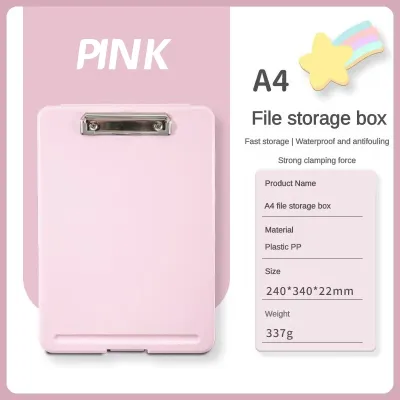
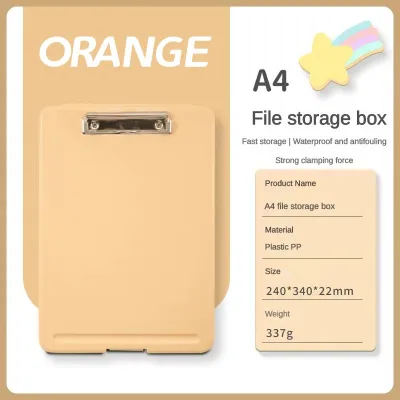
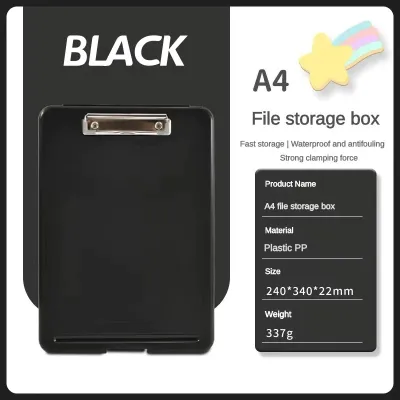
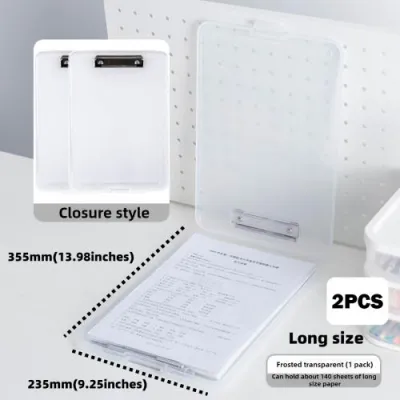
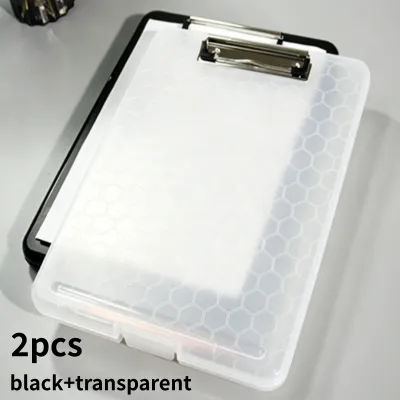
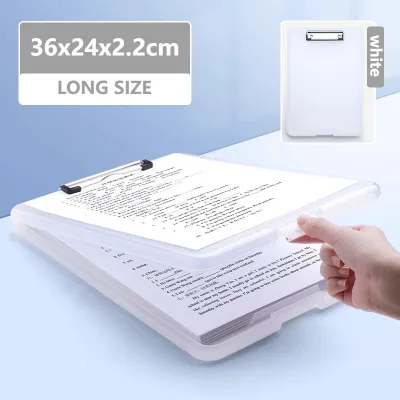
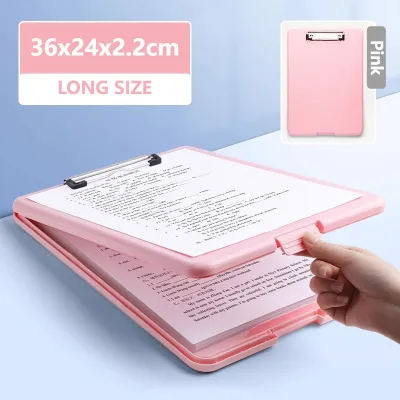
Prices are valid at publication and may change. Please refer to the product page for the latest price.
Document volume is another critical factor that dictates the depth of the storage compartment you require. If your daily routine involves carrying only a few active forms, contracts, or delivery receipts, a slim-profile clipboard with a shallow document sleeve will keep your profile light and portable. Conversely, if you manage thick logbooks, multi-page blueprints, duplicate carbonless copy forms, or entire reams of blank paper, you will need a deep, box-style compartment. Choosing a compartment that is too shallow forces you to cram papers inside, which damages the sheets and strains the latch mechanism, while an excessively bulky box can become unnecessarily heavy during long hours of standing or walking.
Beyond paper, your clipboard must accommodate the daily tools of your trade. Consider whether you need to carry only a single ballpoint pen or a broader assortment of items, such as permanent markers, highlighters, mechanical pencils, rulers, calculators, or electronic tablets. Some storage clipboards feature dedicated internal pen trays or external elastic loops that keep writing instruments immediately accessible. If you carry small, loose items like paperclips, staples, keys, or USB flash drives, look for models with secure, zippered accessory pockets or partitioned sub-compartments to prevent these items from rattling around and scratching your documents.
Comparing Storage Configurations and Compartment Layouts
The internal and external layout of a storage clipboard directly influences how quickly you can access your tools and organize your paperwork under pressure. The most common design is the single-compartment hollow box, which opens either from the bottom or the side. Side-opening models function much like a standard book, allowing you to flip the cover open quickly while holding the base steady with one hand. Bottom-opening models, on the other hand, prevent papers from sliding out sideways when opened in tight spaces, making them highly favored by field researchers and emergency responders who must access forms while standing.

For professionals who need to maintain a strict separation between different types of paperwork, multi-pocket folio styles offer superior organization compared to single-compartment boxes. These designs often feature internal dividers, expanding file pockets, or clear plastic sleeves that allow you to separate blank forms from completed contracts, receipts, and personal identification documents. This separation is particularly useful for sales representatives and field auditors who must keep client-facing materials pristine and free from ink smudges or accidental folds.
Security features such as exterior pen loops, elastic closures, and zippered edges play a vital role in preventing item loss during transit. In high-traffic environments or during active field travel, a simple snap latch can sometimes catch on clothing or equipment and accidentally pop open. A heavy-duty zipper closure or a secondary elastic band provides an extra layer of security, ensuring that even if the clipboard is dropped, the contents remain safely contained inside. Furthermore, in dusty or highly humid environments, a fully zippered or tightly sealed compartment helps shield paper from airborne grime and ambient moisture.
When choosing a layout, you must also weigh the trade-offs between rigid storage boxes and flexible fold-over designs. Rigid boxes, typically constructed from molded plastic or aluminum, provide an exceptionally stable writing surface that does not flex, even when you are writing without a table. They offer maximum physical protection for fragile items inside, such as tablets or carbon copy papers that are sensitive to pressure. Flexible fold-over designs, often made of fabric, nylon, or synthetic leather, prioritize lightweight portability and comfort when carried under the arm, making them excellent for corporate meetings and office-to-car transitions, though they offer less impact resistance.
Inspecting Material Build and Clip Mechanisms
To ensure your clipboard survives the rigors of daily use without premature failure, you must carefully evaluate its physical construction and hardware. Begin by inspecting the hinges and rivets that hold the storage box and the main clip together. High-quality models utilize metal piano hinges or reinforced, thick plastic living hinges that can withstand thousands of opening and closing cycles. Look for solid metal rivets rather than cheap plastic pins to secure the clip mechanism to the backboard, as loose rivets will cause the clip to wobble, leading to misaligned papers and a frustrating writing experience.
The structural rigidity of the backboard material is paramount, especially when you must write legibly while standing or walking. Aluminum clipboards offer the highest level of rigidity and durability, making them highly suitable for industrial, agricultural, or construction settings where the tool might be subjected to rough handling or accidental drops. Heavy-duty molded plastics, such as polypropylene, provide a lightweight, impact-resistant alternative that naturally resists water and chemical spills, making them ideal for healthcare environments. Avoid low-grade, unprotected cardboard or thin fiberboard models, as they tend to absorb moisture from the air, leading to warping, soft spots, and eventual structural failure in humid tropical climates.
For fabric-covered or synthetic leather storage clipboards, pay close attention to the quality of the stitching and the interior lining. Inspect the seams along the edges and corners to ensure there are no loose threads or fraying fabric that could catch on objects and unravel. A water-resistant interior lining, such as nylon or polyester, is highly beneficial as it prevents accidental ink leaks from ruined pens from soaking through the entire clipboard or ruining the documents stored inside. Additionally, check that any metal components, including the clip and corner guards, feature rust-resistant coatings to prevent corrosion caused by sweat and humid air.
Finally, evaluate the tension and design of the clip mechanism itself. A high-tension spring is necessary to hold documents firmly in place, especially when working outdoors in windy conditions. However, excessive tension without protective elements can crush or tear the top edges of your paper. Look for clips equipped with rubberized or plastic corner grips, which provide excellent holding power without leaving deep, damaging indentations on your documents. Low-profile clips are generally preferred if you frequently slide the clipboard into a backpack or briefcase, while high-capacity wire clips are better suited for holding thick stacks of paper on the outside of the board.
Building Your Shortlist and Verifying Before Purchase
When you are ready to make a purchase, whether browsing online marketplaces or visiting a local physical stationery store, a systematic verification process will help you avoid common buying mistakes. Start by cross-referencing the internal compartment dimensions of the clipboard with the actual measurements of the largest items you plan to carry. Do not rely solely on product titles that use generic terms like “A4 Clipboard” or “Legal Size,” as these often refer only to the external dimensions of the board. A clipboard might have an external length of 13 inches, but the internal storage space may be restricted to 11 inches due to thick plastic borders or latch mechanisms, making it too short for long bond paper.
If you are purchasing from third-party vendors on e-commerce platforms, take the time to review the seller’s return policies and warranty terms. Because plastic clipboards can occasionally suffer damage during shipping, or arrive with weak spring mechanisms, choosing a seller that offers straightforward returns or replacements is essential. Read customer reviews carefully, paying close attention to feedback regarding the durability of the latch, the stiffness of the plastic, and whether the product arrived warped or cracked.
For in-store purchases, perform a quick physical inspection routine to verify the quality of the clipboard before heading to the cashier. Open and close the storage compartment several times to ensure the latch snaps shut securely and does not feel loose or flimsy. Test the clip spring tension by inserting a single sheet of paper and gently tugging on it; the paper should remain firmly in place without slipping. Run your fingers along the interior and exterior edges of the clipboard to check for sharp plastic flashing, rough metal burrs, or misaligned seams that could scratch your hands, snag your clothing, or damage your documents during daily use.
Frequently Asked Questions (FAQ)
Can a standard storage clipboard accommodate both A4 and Letter size papers?
Yes, many standard storage clipboards can accommodate both A4 and Letter size papers, but this compatibility depends entirely on the internal dimensions of the storage compartment. Letter paper is wider at 8.5 inches but shorter at 11 inches, whereas A4 paper is narrower at 8.27 inches but longer at 11.69 inches. To safely store both sizes without bending or folding the corners, the internal compartment must have a usable space of at least 8.7 inches in width and 12 inches in length. Always verify these internal measurements rather than relying on the product title, as some compact clipboards are molded strictly to fit Letter paper and will cause A4 sheets to buckle at the top or bottom.
How do I test the durability of the clip mechanism before buying?
To evaluate the durability and strength of a clip mechanism during an in-store inspection or immediately upon delivery, perform a simple paper-stack test. First, insert a single sheet of paper under the clip and gently pull; the clip should hold the sheet firmly without allowing it to slide out. Next, insert a stack of approximately thirty sheets to ensure the spring can expand comfortably and maintain even pressure across the entire stack without warping or losing its grip. Visually inspect the clip for a smooth, rust-resistant coating, such as nickel plating, and check that the rivets securing the clip to the board are flush, tight, and free of any play or wobbling when you wiggle the mechanism.
What is the best way to clean and maintain the interior storage compartments?
Keeping the interior storage compartments clean prevents the accumulation of paper dust, graphite, and dirt that can smudge your clean documents. For rigid plastic or aluminum clipboards, start by emptying the compartment and using a dry microfiber cloth, a soft-bristled brush, or a can of compressed air to blow out loose debris from the corners. If the surface is sticky or stained, wipe it down with a slightly damp cloth and a mild dish soap solution, ensuring you dry the compartment completely with a clean towel before storing paper inside. For fabric, nylon, or synthetic leather interiors, always check the manufacturer’s care label first; generally, these materials should only be spot-cleaned with a damp cloth and allowed to air dry completely in a well-ventilated area to prevent mold growth in humid climates.

Community discussion
Share your experience or ask a question. Comments are reviewed before publication.