
Finding the right daily writing tool is more than just grabbing the first pen you see on the stationery shelf. For students, office workers, and professionals, a reliable ballpen is an essential tool that directly impacts daily productivity, handwriting clarity, and hand comfort. Joyko offers a diverse range of ballpens, each designed with specific tip sizes, ink formulations, and barrel shapes to suit different writing styles. To make an informed purchase, you must evaluate how a pen’s physical features align with your specific writing habits, the paper you use, and the environment in which you work.
By focusing on observable specifications and practical testing methods, you can easily identify which model will serve you best without relying on trial and error. This guide provides a comprehensive framework to help you analyze your writing needs, decode packaging specifications, and verify pen quality before making a purchase.
Understanding Your Daily Writing Requirements
Before evaluating specific pen models, you must first analyze your personal writing habits and the environments where you use your stationery. Hand fatigue is a common issue for those who write continuously for hours, such as students taking lecture notes or professionals drafting reports. If you tend to grip your pen tightly or apply heavy downward pressure, you will require a model designed with ergonomic support. Conversely, if you write in short, rapid bursts, portability and quick deployment may be more important than a cushioned grip.
Products mentioned in this guide
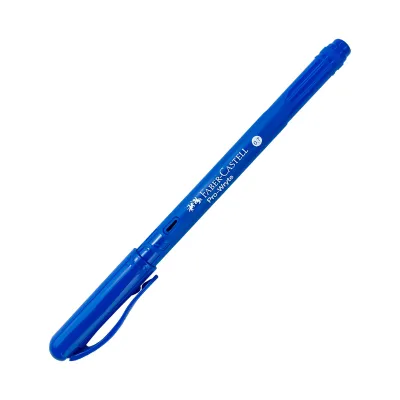
Prices are valid at publication and may change. Please refer to the product page for the latest price.
The type of paper you write on also dictates the ideal pen specifications. Standard copy paper used in most offices is relatively porous and absorbs ink quickly, which helps prevent smudging but can lead to feathering if the ink flow is too heavy. On the other hand, glossy planner pages, thermal receipts, and high-grade journal paper have smoother, less absorbent surfaces. Writing on these materials requires an ink formulation that dries rapidly on the surface rather than relying on absorption, especially in humid tropical climates where moisture in the air can naturally delay drying times.
Finally, consider how you store and transport your writing instruments. If you frequently carry a pen in a shirt pocket, a uniform slot, or a loose bag, a retractable model with a secure pocket clip is essential to prevent accidental ink stains on your fabrics. For a dedicated desk setup, a capped pen with a stable, roll-resistant barrel design might be more suitable. Assessing these environmental factors beforehand ensures you select a pen that remains reliable throughout your daily routine.
Key Specifications to Check on Joyko Ballpen Packaging
When browsing options in a bookstore or browsing listings on an online marketplace, the packaging contains vital clues about how the pen will perform. The tip size is one of the most prominent specifications, usually measured in millimeters. Fine tips, typically ranging from 0.38mm to 0.5mm, produce thin, precise lines that are ideal for small handwriting, detailed mathematical formulas, and accounting ledgers. Medium tips, ranging from 0.7mm to 1.0mm, deliver a bolder line and a smoother glide across the paper, though they consume ink faster and may require thicker paper to prevent bleed-through.

Ink formulation is another critical detail to verify on the label. Traditional oil-based ballpoint ink is highly viscous, water-resistant, and dries almost instantly upon contact with paper, making it highly reliable for everyday document signing. Hybrid inks, which combine the smoothness of gel with the fast-drying properties of oil, offer a lower-friction writing experience but may require a brief moment to set on coated papers. Checking the packaging for terms like “semi-gel” or “low-viscosity” will help you anticipate how smoothly the pen will glide and how quickly the marks will dry.
Physical construction details should also be evaluated from the packaging or product description. Look for indications of the barrel’s material composition, weight distribution, and grip texture. A lightweight plastic barrel reduces overall hand strain during long writing sessions, while a slightly heavier barrel can provide better control for precise signatures. Additionally, check for a rubberized or textured grip zone, which prevents your fingers from slipping down the barrel as you write.
Lastly, look for refill compatibility codes on the packaging to ensure the long-term cost-effectiveness of your purchase. Choosing a pen body that accepts standard, widely available refills allows you to reuse the plastic casing multiple times, which is both environmentally friendly and economical. Keeping track of these specifications helps you budget your office supplies in ₱ while ensuring you always have compatible refills on hand.
Matching Joyko Ballpen Features to Your Use Cases
Different writing tasks demand different pen characteristics to achieve the best results. By matching specific design features—such as tip size, ink type, and grip style—to your primary daily activities, you can ensure a seamless and comfortable writing experience.
For Extended Note-Taking and Journaling
For long writing sessions, such as journaling or transcribing lectures, minimizing hand strain is the top priority. You should look for models that feature a soft, cushioned rubber grip or a contoured triangular barrel that encourages a relaxed, ergonomic hand posture. These design elements distribute the pressure of your grip more evenly, reducing the likelihood of finger cramps and wrist fatigue over time.
In addition to ergonomics, smooth ink flow is essential for reducing the physical effort required to write. Low-viscosity or hybrid ink formulations glide across the page with minimal friction, allowing you to write quickly without pressing hard into the paper. To prevent distracting bleed-through on standard notebook paper, pair these smooth-flowing inks with a fine 0.5mm tip, which limits the volume of ink deposited on the page while maintaining excellent legibility.
For Official Documents and Signatures
When signing contracts, filling out official government forms, or writing legal documents, clarity and permanence are paramount. A medium or bold tip size, such as 0.7mm or 1.0mm, is highly recommended for these tasks because it produces a thick, authoritative line that is easy to read and photocopy. The ink must also be highly resistant to water and fading to ensure the document remains legible for years to come.
To avoid messy smudges on important paperwork, select a quick-drying oil-based ink that sets immediately. This is especially important for left-handed writers whose hands naturally glide over recently written text. Furthermore, a capped pen design is often preferred for formal settings, as the physical cap provides a reliable seal that prevents the tip from drying out between signatures, ensuring immediate ink flow the moment the pen touches the paper.
For Quick Jotting and Field Work
For professionals who work on the move, such as delivery personnel, warehouse staff, or field researchers, speed and durability are the most critical factors. A retractable click mechanism is highly advantageous in these scenarios, as it allows you to deploy and retract the pen tip with a single hand, leaving your other hand free to hold clipboards, packages, or mobile devices.
Field pens must also be physically resilient to withstand accidental drops onto hard surfaces. Look for models constructed from durable, high-impact plastics or those featuring reinforced metal clips that secure firmly to pockets, clipboards, or lanyards. Choosing a pen with a brightly colored barrel can also save time, making the tool easy to locate when dropped in a busy workspace or packed inside a cluttered utility bag.
How to Verify Pen Quality and Comfort Before Purchasing
Whether you are shopping at a local brick-and-mortar stationery store or ordering in bulk from an online marketplace, performing a few simple quality checks can save you from purchasing defective or uncomfortable pens. If you are shopping in a physical store, start by testing the mechanical action of the pen. For retractable models, click the button several times to ensure the internal spring operates smoothly without catching or sticking. Shake the pen gently near your ear; a high-quality pen should have minimal internal wobble, indicating that the refill fits snugly within the barrel housing.
Next, closely inspect the physical construction of the pen body. Run your fingers along the plastic seams of the barrel to check for rough, sharp edges left over from the manufacturing mold, as these imperfections can irritate your skin during use. Test the flexibility of the pocket clip by gently lifting it; it should offer firm resistance and spring back tightly against the barrel without feeling brittle or showing signs of stress whitening in the plastic.
When purchasing bulk packs from online marketplaces where physical testing is not possible, you must rely on careful observation of the listing details and customer feedback. Look for sellers that provide clear, high-resolution photos of the pen tips and writing samples. Read customer reviews thoroughly, paying close attention to comments regarding ink consistency, skipping, or leakage during transit. It is also wise to verify the seller’s return and exchange policies for defective items, especially when ordering larger quantities for office or school use.
If you are planning a large purchase for an entire department or classroom, consider ordering a single sample pen first. This allows you to conduct a hands-on evaluation of the ink drying time, smudge resistance, and overall comfort on your specific office paper before committing to a larger financial investment in ₱. Taking these precautionary steps ensures that your final purchase meets your expectations for quality and performance.
Frequently Asked Questions (FAQ)
Are Joyko ballpen refills universally compatible across all models?
No, Joyko ballpen refills are not universally compatible across all pen models. The physical dimensions of a refill—including its overall length, barrel diameter, spring stop placement, and tip shape—vary significantly depending on whether the pen is retractable, capped, fine-tipped, or medium-tipped. Forcing an incompatible refill into a pen body can jam the click mechanism, cause the tip to wobble, or result in internal ink leaks that ruin the pen casing.
To ensure a proper fit, always check the specific model number or refill code printed on the original packaging or on the side of the empty refill cartridge itself. Many manufacturers use standardized refill shapes, such as the international G2 style, but many budget-friendly models utilize proprietary shapes unique to that specific product line. When in doubt, bring your empty pen body or the old refill to a local stationery store to physically compare the dimensions before purchasing a replacement.
How can I prevent ink from drying out if I do not use the pen daily?
To prevent your ballpens from drying out during periods of inactivity, proper storage is essential. Always store your pens horizontally or with the tip pointing downward. Storing a pen tip-up allows gravity to pull the ink away from the tiny ball bearing at the writing tip, which can lead to air pockets in the refill and cause the pen to skip or fail to write when you next use it.
Additionally, protect your stationery from environmental extremes by keeping your pens out of direct sunlight and away from high-heat sources, such as windowsills or the inside of parked vehicles. High tropical temperatures can thin the ink, causing it to leak past the ball mechanism or dry out prematurely. Finally, always ensure that retractable pens are fully clicked closed and capped pens are securely sealed after every use to prevent air exposure from hardening the ink at the tip.
Community discussion
Share your experience or ask a question. Comments are reviewed before publication.