
Selecting the ideal metallic gold acrylic paint for your art and craft projects in the Philippines requires a careful balance of pigment chemistry, binder quality, and application technique. The local tropical climate, characterized by high relative humidity and warm ambient temperatures, directly influences how acrylic paints flow, dry, and cure on various surfaces. Finding the right gold paint is not about searching for a single universal winner, but rather identifying how a paint’s specific formulation—whether it is a heavy body paint for textured canvas work, a fluid medium for detailed miniatures, or a multi-surface craft paint—aligns with your substrate and working environment. By understanding these technical specifications and learning how to verify them, you can achieve a brilliant, lasting metallic finish that resists the test of time and climate.
Evaluating Pigment and Binder Quality in Metallic Gold Paints
The brilliance of any metallic gold acrylic paint relies heavily on the type and size of the reflective particles suspended within its formula. Most modern metallic acrylics utilize mica-based pearlescent pigments, which consist of natural or synthetic mica flakes coated with thin layers of titanium dioxide or iron oxide. Mica is highly stable, chemically inert, and completely resistant to tarnishing, making it an excellent choice for the humid conditions of the Philippines. In contrast, paints formulated with actual metal powders, such as bronze or copper, can offer an exceptionally realistic liquid-metal appearance but are highly susceptible to oxidation and greening over time if they are not sealed with an airtight protective varnish.
Particle size within the pigment also dictates the final visual texture of your gold finish. Paints with larger metallic particles tend to scatter light dynamically, creating a sparkling, glitter-like effect that catches the eye from a distance. However, if you require a smooth, continuous, and highly reflective sheen that mimics polished gold leaf, you should look for formulations that utilize micro-milled, ultra-fine pigments. These smaller particles settle closely together as the paint dries, minimizing visible gaps and creating a more cohesive metallic surface.
Products mentioned in this guide
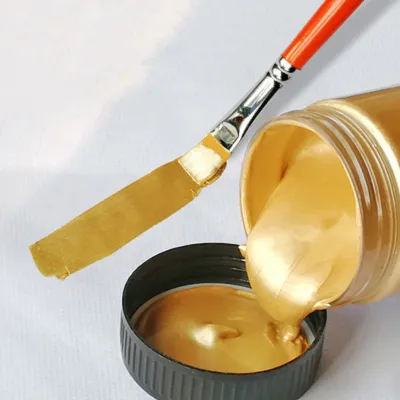
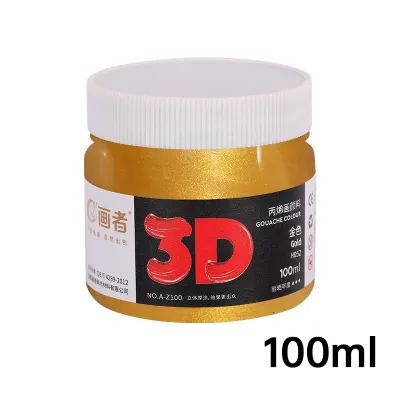

![[Fast Shipping] 100ml Waterproof Metallic Color Pigment Gold Acrylic Paint Gypsum Toys Statuary Coloring DIY Textile Painting Graffiti Colorant](https://img.lazcdn.com/g/ff/kf/S8e8a105a20f743e9932e772ff045ab562.jpg_400x400q80.jpg_.webp)
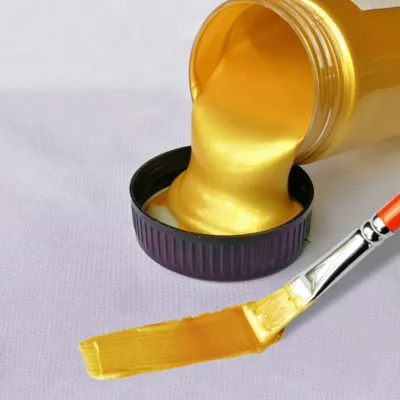
Prices are valid at publication and may change. Please refer to the product page for the latest price.
The quality of the acrylic polymer binder is the second crucial component of a high-performing metallic paint. The binder is the transparent emulsion that holds the pigment particles in suspension and glues them to your substrate. High-quality, 100% acrylic binders dry completely clear and glossy, allowing light to pass through and bounce off the metallic flakes without obstruction. Lower-grade binders, often found in budget or student-grade paints, may contain vinyl or cheap co-polymers that dry slightly cloudy or matte. This cloudiness scatters the light before it can reach the pigment, resulting in a dull, plasticky, or muddy gold finish once cured.
When browsing options at local art supply stores or online marketplaces, you can identify professional-grade formulations by checking the product labels for pigment concentration and transparency indicators. Professional paints typically feature a higher pigment-to-binder ratio, meaning you will need fewer coats to achieve complete opacity. They also frequently list the exact pigment index codes (such as PW20 for mica-based gold) and lightfastness ratings. Student-grade paints, while highly economical for large-scale projects or practice, generally contain more fillers and water, which can lead to significant shrinkage and a less intense metallic luster upon drying.
Selecting Metallic Gold Acrylics by Project Category
Different artistic endeavors demand distinct paint behaviors, making it essential to match the paint’s viscosity and formulation to your specific medium. For fine art and canvas painting, heavy body metallic acrylics are highly recommended. These paints have a thick, buttery consistency that holds brush strokes, palette knife marks, and deep textures without slumping. When working on canvas, you must prioritize archival quality, which means selecting paints with high lightfastness ratings to ensure the gold does not fade or shift color when exposed to ambient light over several decades.

If your focus is on miniature painting, model kit detailing, or scale modeling, heavy body paints are unsuitable as they will quickly clog fine details. Instead, you should opt for fluid acrylics, high-flow formulations, or specialized airbrush metallic paints. These products feature an extremely low viscosity but maintain a very high concentration of micro-milled pigments. This allows the paint to flow smoothly into tiny crevices and self-level across plastic, resin, or metal surfaces, preserving the intricate details of the sculpt while providing a thin, uniform metallic coat.
For general crafts, home decor, and mixed media projects, multi-surface craft acrylics offer the most practical solution. Craft projects often involve diverse, highly porous substrates such as unfinished wood, terracotta, plaster, or papier-mâché. Multi-surface metallic paints are specifically engineered with specialized adhesion promoters that help the binder grip these challenging surfaces without peeling or cracking. Furthermore, because craft projects often require covering larger surface areas, these paints are typically sold in larger, cost-effective squeeze bottles, making them a budget-friendly choice for hobbyists.
To help guide your selection based on project needs and typical budget considerations in the local market, the following framework outlines the primary options available:
| Paint Category | Typical Viscosity | Ideal Substrates | Key Selection Criteria | Price Range (Approximate) |
|---|---|---|---|---|
| Professional Heavy Body | Thick, buttery | Canvas, linen, heavy paper | High lightfastness, pure mica pigment, excellent texture retention | ₱500 – ₱1,200 per tube |
| Fluid / Airbrush Acrylic | Low, water-like | Plastic, resin, metal, cardstock | Micro-milled particles, self-leveling, high pigment density | ₱250 – ₱600 per bottle |
| Multi-Surface Craft Paint | Medium, creamy | Wood, terracotta, unglazed ceramic, fabric | Strong adhesion to porous surfaces, economical volume | ₱100 – ₱300 per bottle |
Essential Specifications to Verify Before Purchase
Before purchasing any metallic gold acrylic paint, it is vital to verify several technical specifications on the product packaging or manufacturer data sheets. First among these is the lightfastness rating, which measures a pigment’s resistance to fading under prolonged light exposure. Look for ratings certified by the American Society for Testing and Materials (ASTM). Paints rated as ASTM Class I (Excellent) or ASTM Class II (Very Good) are highly stable. In the Philippines, where homes and studios often experience intense tropical sunlight, choosing a lightfast paint is critical to preventing your gold accents from degrading into a dull, chalky yellow-brown over time.
Opacity and coverage levels are also essential to check, as metallic paints are inherently more translucent than solid earth tones. Because light must penetrate the acrylic film to reflect off the suspended mica flakes, many metallic golds are classified as semi-transparent or semi-opaque. Manufacturers usually indicate this on the tube using a small square symbol: a solid black square denotes full opacity, a diagonally split square indicates semi-opacity, and an empty white square indicates transparency. If a paint is highly transparent, you must plan to apply multiple thin layers or use a colored base coat to achieve solid coverage.
Because drying speed, smoothness, and water resistance depend entirely on the exact combination of paint formulation and your specific substrate, you should always perform an observable trial on a scrap piece of your material before starting your final piece. Apply a single thin stroke and monitor how quickly it skins over and dries under your local room temperature and humidity. Once the paint is fully cured (typically 24 to 72 hours), perform a gentle scratch test with a fingernail to verify adhesion, and wipe the surface with a damp cloth to check its water resistance. If the paint peels, lifts, or dissolves easily, you will need to adjust your surface preparation, primer, or topcoat.
Finally, verify the manufacturer’s recommendations regarding surface compatibility and required primers. While acrylic paint is incredibly versatile, certain formulations are optimized only for porous materials like paper and canvas. If you plan to paint on non-porous surfaces such as glass, glazed ceramics, or polished metals, check the label to ensure the paint is rated for those materials, or identify the specific primer required to establish a secure physical bond.
Surface Preparation and Application Techniques for Optimal Shine
To maximize the reflective brilliance of metallic gold acrylic paint, proper surface preparation is just as important as the quality of the paint itself. Because metallic paints are naturally translucent, applying them directly over a stark white canvas or light-colored wood often results in a washed-out, streaky appearance. The most effective way to enhance the depth and luster of gold paint is to apply a solid, dark base coat first. A base layer of matte black, deep dark brown, or burnt umber absorbs the light that passes through the translucent gold layer, preventing it from bouncing back as white light and making the metallic gold flakes on top appear incredibly rich, vibrant, and solid.
Proper priming protocols must be followed based on the material you are painting. For canvas, a smooth layer of acrylic gesso seals the fabric fibers and prevents the paint’s binder from sinking into the weave. For porous wood or terracotta, applying a dedicated wood sealer or multi-surface primer is essential; otherwise, the dry wood will rapidly suck the moisture and binder out of the paint, leaving the metallic pigments poorly bound and prone to rubbing off. For non-porous surfaces like plastics or metals, sand the surface lightly with fine-grit sandpaper to create a mechanical key, wipe away the dust, and apply an adhesion-promoting primer before painting.
When applying the gold paint, your choice of tools and technique will directly impact the smoothness of the metallic finish. Use soft, synthetic flat brushes rather than stiff natural bristle brushes. Stiff bristles leave deep, coarse ridges in the wet paint, which disrupt the flat alignment of the metallic flakes and cause uneven, scattered light reflections. Apply the paint in thin, consistent layers, brushing lightly in a single direction. Avoid overworking the paint as it begins to dry; in warm tropical weather, acrylic paint can skin over rapidly, and dragging a brush through semi-dry paint will tear the forming film, misalign the metallic particles, and result in a dull, streaky texture.
Once your painting is completely dry and cured, applying a protective varnish is highly recommended to shield the surface from dust, moisture, and physical wear. However, you must choose your varnish finish carefully, as it will alter the metallic appearance. A high-gloss varnish will enhance the metallic depth and shine by creating a perfectly smooth, glass-like top layer that maximizes specular reflection. Conversely, a matte or satin varnish will scatter the incoming light, transforming a brilliant, polished gold effect into a soft, diffused, and muted bronze or satin brass finish.
Frequently Asked Questions (FAQ)
Can I mix metallic gold acrylic paint with regular acrylic colors?
Mixing metallic gold acrylic paint directly with regular, non-metallic acrylic colors is generally not recommended if you want to preserve a bright metallic shine. Adding standard opaque or matte paints—such as yellow, brown, or white—introduces solid, non-reflective pigment particles that block and dilute the metallic mica flakes, resulting in a flat, pearlescent, or satin pastel finish rather than a true metallic luster. If you wish to alter the tone of your gold, it is far better to apply the metallic gold paint first as a solid base, and then apply highly transparent acrylic glazes or fluid washes of regular color over the dry gold to tint it without extinguishing its reflective properties.
Why does my metallic gold paint look dull or streaky after drying?
A dull or streaky finish is usually caused by improper application techniques or inadequate surface preparation. If you apply metallic paint in a single thick coat, the water inside cannot evaporate evenly, which prevents the metallic flakes from settling flat and causes them to dry at chaotic, non-reflective angles. Over-brushing the paint as it begins to set also tears the drying acrylic film and misaligns the pigments. To correct and prevent this, ensure your surface is properly primed and sealed so it does not absorb the paint unevenly. Then, lightly sand any existing rough textures and apply the gold paint in multiple, very thin layers using a soft synthetic brush, allowing each layer to dry completely before applying the next.
How should I store metallic acrylic paints to maintain their consistency?
To prevent metallic acrylic paints from drying out, separating, or spoiling in the warm and humid climate of the Philippines, proper storage is essential. Always store your paint tubes and bottles upright in a cool, dry cupboard or drawer, completely away from direct sunlight and localized heat sources. Before sealing the container, wipe any excess wet paint off the nozzle or cap threads; dried paint buildup can prevent a perfect airtight seal, allowing air to slowly enter and solidify the remaining paint. Additionally, always shake liquid paint bottles thoroughly before each use to redistribute any metallic pigments that may have settled to the bottom during storage.

Community discussion
Share your experience or ask a question. Comments are reviewed before publication.