
Selecting a purple ballpen set for bullet journaling, planners, and creative writing requires matching the pen’s physical specifications to your specific paper and writing habits. Because ink behavior varies significantly between formulations, a color that looks vibrant on a display screen may perform differently on the page. In a tropical climate like the Philippines, where high relative humidity can slow down ink drying times and affect paper absorbency, choosing the right pen is crucial to avoid ruined pages. This guide helps you evaluate ink types, tip sizes, and paper compatibility to build a reliable shortlist. By focusing on observable specifications and manufacturer labels rather than unverified performance claims, you can choose a set that delivers smooth ink flow and consistent color for your daily note-taking needs.
Matching Ink Types and Tip Sizes to Your Journaling Style
To find the perfect purple pen, you must first understand the three primary ink formulations available in modern ballpoint sets: gel, traditional oil-based, and hybrid inks. Gel ink utilizes water-based gel to suspend rich, highly saturated pigments. This formulation allows for incredibly vibrant purple hues, ranging from soft pastel lilacs to deep royal plums. Because the pigments sit on top of the paper fibers rather than soaking in, gel pens offer unmatched color clarity. However, this generous ink flow means they require more time to dry, making them more susceptible to smudging in humid environments.
Traditional oil-based ballpoint pens use a thick, viscous ink that dries almost instantly upon contact with the page. This makes them highly reliable for rapid note-taking and less prone to smearing if your pages get damp. The trade-off is that oil-based purple inks tend to be less vibrant, often appearing as a muted, dark violet that can sometimes look closer to blue or black under low light. Additionally, oil-based inks are more prone to leaving small ink blobs at the start or end of your strokes.
Products mentioned in this guide
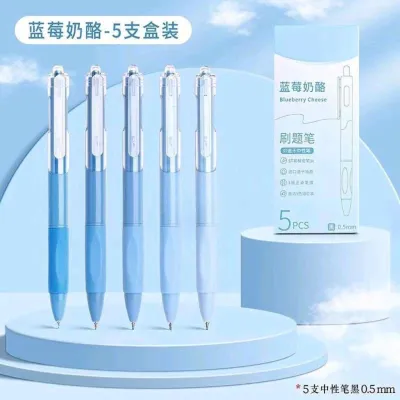
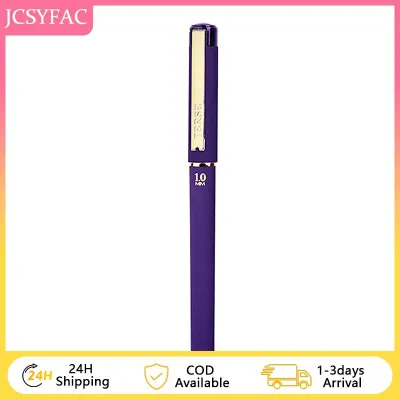
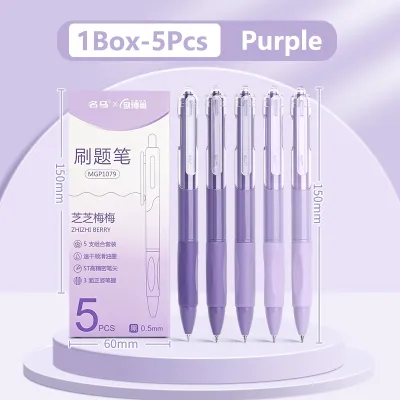
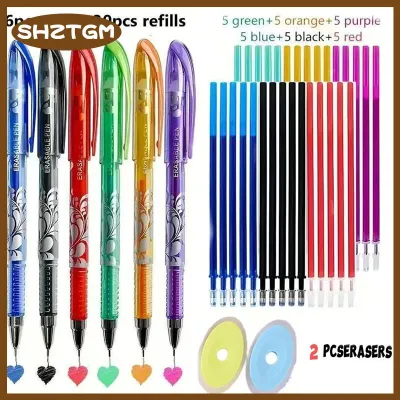
Prices are valid at publication and may change. Please refer to the product page for the latest price.
Hybrid inks represent a modern middle ground, blending the low viscosity of gel ink with the fast-drying properties of oil-based formulations. A hybrid purple ballpen offers a smooth, gliding writing experience with a rich color profile while drying much faster than a standard gel pen.
Once you have selected your preferred ink type, you must match it with the correct tip size. Tip sizes generally fall into three categories:
- Ultra-fine (0.38mm and below): These tips are excellent for compact planners, intricate habit trackers, and small grid layouts. They lay down a very thin, precise line of purple ink, which minimizes the risk of bleed-through even on thinner paper. However, they can feel somewhat scratchy on textured pages.
- Fine (0.5mm): This is the standard choice for daily journaling. It provides a clean, highly legible line that balances smoothness with precision, making it suitable for both writing and simple line drawings.
- Medium to Bold (0.7mm to 1.0mm): These tips deliver a thick, juicy line of ink that showcases the full depth and shading of your purple ink. They are perfect for headers, titles, and creative lettering, but they require thicker paper to prevent the ink from bleeding through to the other side.
Evaluating Paper Compatibility and Smudge Resistance
The performance of your purple ballpen is only half of the equation; the paper you write on plays an equally critical role. Standard notebook paper, which typically ranges from 70 gsm to 80 gsm (grams per square meter), is highly porous and thin. When you use a wet purple gel pen on this type of paper, the ink is quickly pulled through the fibers by capillary action, resulting in “ghosting” (where you can see the writing on the reverse side) or outright “bleed-through” (where the ink physically leaks through). For a clean journaling experience, look for notebooks featuring paper weights of 100 gsm to 160 gsm, which can easily handle heavy ink flow without compromising the back of the page.

Paper texture and coating also dictate how your purple ink behaves. Coated papers, often found in premium planners, have a smooth, slick surface that prevents the ink from spreading. This keeps your purple lines incredibly sharp and prevents “feathering” (where the ink spreads sideways into the paper fibers like a tiny spiderweb). However, because the coating prevents the paper from absorbing the ink quickly, the drying time is extended. In the humid Philippine climate, a gel pen that dries in three seconds on uncoated paper might take ten seconds or more on coated paper. If you close your journal too quickly, you risk transferring a mirror image of your writing to the opposite page.
If you are left-handed or tend to write quickly, smudge resistance is your primary concern. Left-handed writers naturally drag their pinky finger across the freshly written line. To prevent smudging, pair a fast-drying hybrid ink or a fine 0.38mm gel pen with uncoated, absorbent paper. You can also use a “pencil board” (a thin plastic sheet placed under your writing page) or a simple piece of blotting paper to protect your pages from the natural oils on your hands, which can otherwise create spots where the purple ink fails to adhere smoothly.
Building Your Purple Ballpen Shortlist for Purchase
When searching for a purple ballpen set on online marketplaces or at local stationery shops, avoid relying on generic search terms. Instead, filter your options by specific technical details such as “0.5mm purple gel pen set” or “retractable violet hybrid pens.” This helps you bypass low-quality novelty sets that prioritize cute packaging over actual writing performance.
Consider the composition of the set before making a purchase. Some sets offer a gradient of purple shades, including lavender, violet, magenta, and deep plum, which is fantastic for creative color-coding and artistic journaling. Other sets contain multiple identical pens of a single, reliable purple shade. If you write daily, a uniform pack is often more practical. Additionally, check if the manufacturer sells individual refills for the pen bodies. Investing in a set that accepts standard refills is highly economical over time, as a pack of refills often costs a fraction of a brand-new pen set, typically ranging from ₱50 to ₱150, while reducing plastic waste.
Ergonomics should also influence your decision. Look for pens that feature a soft rubberized or textured grip section. A good grip reduces the finger pressure required to hold the pen, preventing hand fatigue during long journaling sessions.
Finally, analyze user reviews critically. Ignore superficial comments about shipping speed and look for feedback regarding observable performance. Search for reviews that mention whether the pens “skip” mid-sentence, feel “scratchy” on standard paper, or arrive with dried-out tips. Many stationery enthusiasts upload photos of their swatches; use these images to verify the actual color of the purple ink on paper, as digital product listings often display colors that are significantly brighter than they appear in reality.
Testing and Maintaining Your Pens for Consistent Performance
Once you receive your purple ballpen set, performing a systematic test will ensure your pens are in perfect working order before you begin writing in your journal. Start by checking the tip of each pen for a tiny plastic or wax protective bead, which manufacturers apply to seal the ink and prevent drying during transit. Gently peel or scrape this bead off with your fingernail.
Next, conduct a controlled scribble test on a piece of scrap paper that matches the weight of your journal. Draw a series of tight, continuous loops, horizontal lines, and rapid dots. This test allows you to observe the consistency of the ink flow and check for any initial skipping or scratching. If the ink does not flow immediately, do not press down excessively hard, as this can damage the delicate ball mechanism in the tip. Instead, scribble gently in circles to encourage the ball to rotate and draw the ink down.
Proper storage is essential to maintain the quality of your purple pens, especially in tropical environments where temperature and humidity fluctuate. Gel and hybrid pens are best stored horizontally. Storing them vertically tip-up can cause the ink column to pull away from the tip, leading to air bubbles and skipping. Conversely, storing them vertically tip-down can cause excess ink to pool at the tip, resulting in messy blobs or leaks when you click the pen open. Keep your stationery storage away from direct sunlight and heat sources, as high temperatures can thin the ink and cause it to leak through the seals.
If a pen begins to skip after some use, it is often due to paper fibers or dust getting trapped between the tiny rotating ball and its metal socket. You can easily clean this by scribbling firmly on a clean rubber eraser or gently wiping the tip with a damp paper towel. If the ink has dried slightly at the tip due to the pen being left uncapped, dipping the very tip into warm water for a few seconds can dissolve the blockage and restore a smooth, beautiful purple line.
Frequently Asked Questions (FAQ)
Can I use purple ballpens on dark or black paper?
Standard purple ballpoint and gel inks are translucent, meaning they rely on the light background of white or cream paper to reflect through the ink and show the color. If you write with a standard purple pen on dark or black paper, the ink will absorb into the dark background and become virtually invisible. To write on dark paper, you must look for specialized pastel, metallic, or opaque pigment gel pens. These formulations contain a heavy white titanium dioxide base mixed with purple pigments, allowing the ink to sit opaquely on top of the dark paper fibers and remain highly visible.
Why does my purple gel pen skip after a few days of non-use?
Skipping after a period of inactivity is usually caused by a tiny plug of dried ink forming at the tip, or an air bubble entering the cartridge. This is common if the pen was stored vertically tip-up or left uncapped. To resolve this, scribble in rapid, gentle circles on a scrap piece of paper to dislodge the dried ink. If that fails, dip the metal tip in warm water for five seconds to dissolve the dried water-based gel, then wipe it dry. For persistent air bubbles, hold the end of the pen opposite the tip and gently swing it in a downward arc to force the ink column back down toward the writing point.
Community discussion
Share your experience or ask a question. Comments are reviewed before publication.