
Selecting the right floral lace is a foundational decision in formal gown construction, as the fabric dictates the garment’s movement, structure, and overall elegance. Because formal wear demands precise tailoring and a refined aesthetic, the choice of lace must align with the gown’s silhouette, the desired drape, and the specific formality level of the event. In tropical climates like the Philippines, where high humidity and warm temperatures are common, the weight and breathability of the lace and its lining play an equally critical role in the wearer’s comfort. To achieve a professional finish, designers and home sewists must evaluate how different lace constructions behave under tension, how they interact with light, and how their motifs can be seamlessly integrated into the gown’s seams and hems.
Understanding Floral Lace Constructions and Drape
Lace is not a single uniform textile but rather a category of openwork fabrics created through various construction methods. The two primary categories you will encounter when sourcing flower laces for gowns are net-backed laces and independent motif laces. Understanding these structural differences is essential, as they dictate how the fabric behaves on the cutting table and on the body.
Net-backed laces, such as Chantilly and Alençon, feature floral motifs woven directly into or embroidered onto a delicate mesh or tulle background. Chantilly lace is renowned for its flat, highly detailed floral designs and gossamer-thin net, which offers an incredibly soft, fluid drape that clings gently to the body. This construction allows the lace to remain lightweight and breathable, making it highly suitable for warm-weather formal wear.
Products mentioned in this guide
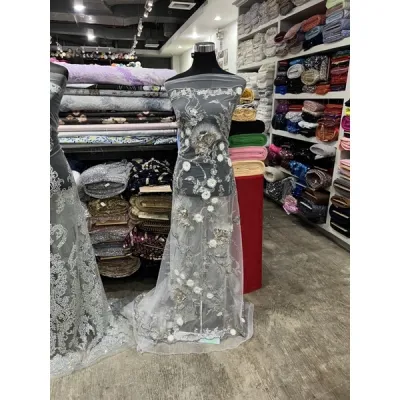
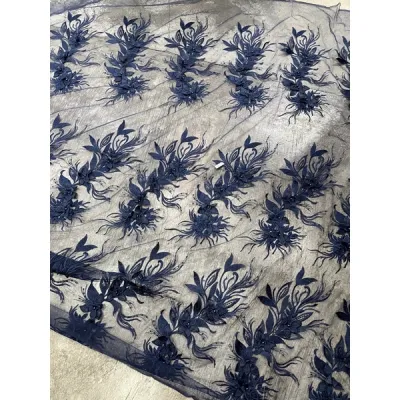
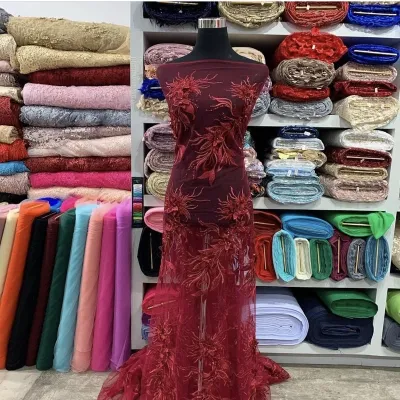
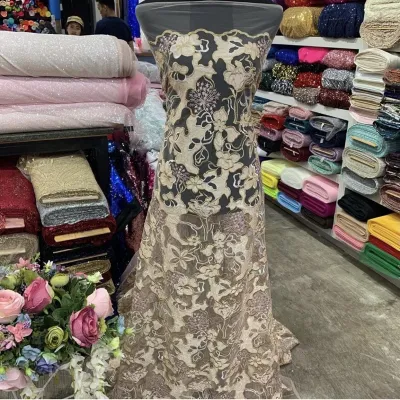
Prices are valid at publication and may change. Please refer to the product page for the latest price.
Alençon lace, often referred to as the queen of lace, begins with a similar net backing but features a distinct corded outline—known as a cordonnet or rebrodé thread—stitched around the edges of the floral motifs. This raised cord adds three-dimensional depth, making the flowers stand out visually while giving the lace slightly more body and structural integrity than Chantilly. The corded outline also helps prevent the edges of the motifs from fraying when cut, which is a significant advantage during construction.
In contrast, guipure lace (also known as Venetian or chemical lace) lacks a net backing entirely. Instead, the floral motifs are connected by delicate thread bars or brides. Because the motifs are densely packed and embroidered onto a sacrificial backing that is later dissolved, guipure lace is significantly heavier, thicker, and more rigid than net-backed varieties. It offers an architectural quality that is highly valued for modern, structured designs.
The presence or absence of a backing, combined with the weight of the embroidery threads, directly dictates how the lace drapes. Lightweight net laces flow effortlessly, making them ideal for soft, romantic movements, whereas heavy guipure and heavily corded laces behave more like structured fabrics, resisting soft folds and instead holding architectural shapes. Fiber content also influences drape and comfort; nylon and silk-blend laces offer the softest hand and most fluid movement, while polyester and cotton-blend laces tend to be stiffer and more durable.
Matching Lace Styles to Gown Silhouettes
A successful gown design requires a harmonious marriage between the silhouette of the dress and the physical properties of the floral lace. If you pair a stiff, heavy lace with a fluid, bias-cut slip dress, the fabric will buckle and distort the clean lines of the pattern. Conversely, a delicate, lightweight lace may get lost or sag under the weight of a voluminous, structured skirt.

For body-skimming silhouettes such as mermaid, trumpet, sheath, or bias-cut gowns, lightweight and highly fluid laces are the standard choice. Chantilly lace excels in these designs because its delicate net backing stretches slightly and conforms to the curves of the body without adding bulk or stiffness. This allows the gown to maintain a sleek, continuous line that moves naturally with the wearer.
When working with these fluid designs, the lace overlay must move in tandem with the lining fabric. Lightweight silk crepe, satin-faced georgette, or high-quality rayon slip linings work beautifully under Chantilly, preserving the liquid-like movement of the gown as the wearer walks. It is crucial to ensure that the lining fabric is cut on the same grain as the lace to prevent twisting or pulling at the side seams.
Conversely, structured silhouettes like ballgowns, structured A-lines, and gowns with dramatic architectural pleats require laces that can support or match the volume of the skirt. Guipure lace and heavy Alençon lace are excellent candidates here, as their inherent stiffness allows them to stand away from the body when supported by crinoline or structured petticoats. These laces hold their shape beautifully, ensuring that the dramatic lines of the skirt remain crisp and defined.
For a dramatic ballgown, you might use a heavy corded floral lace for the bodice to provide structural support and visual texture, then allow the lace to trail off into appliqués on a voluminous tulle skirt. This technique distributes the weight of the lace while maintaining the gown’s grand scale. The interaction between the lace and the underlying foundation fabric is critical; a heavy lace placed over a flimsy lining will cause the lining to sag and pull at the seams. For structured lace overlays, pair them with stable, mid-to-heavyweight foundation fabrics such as duchess satin, taffeta, or structured silk organza to ensure the gown maintains its intended shape throughout the event.
Evaluating Formality and Visual Impact
The visual scale and density of the floral motifs on your lace dictate the overall formality and aesthetic tone of the gown. Large, dramatic floral patterns with significant space between the motifs create a bold, modern look that is highly visible from a distance, making them suitable for stage wear, pageants, or high-fashion formal events. These large-scale motifs require careful placement on the body to ensure they flatter the wearer’s proportions.
For traditional black-tie events, weddings, and formal evening galas, dense, continuous floral patterns with intricate detailing are often preferred. These classic designs offer a refined, delicate texture that looks equally stunning up close and in photographs, conveying a sense of timeless luxury. The density of the pattern also provides more coverage, allowing for more modest designs without requiring heavy, opaque linings.
Embellishments can dramatically elevate the formality of floral lace, transforming a simple daytime fabric into a dazzling evening gown. Sequins, glass beads, seed pearls, and metallic threads woven into the floral motifs catch and reflect light, adding movement and dimension as the wearer moves across a ballroom. This is particularly effective for evening events where artificial lighting can highlight the sparkle of the embellishments.
However, when selecting embellished lace, consider the weight of the beads and sequins, as heavy embellishments can cause the lace to stretch out of shape over time. In tropical climates, heavily beaded gowns can also feel incredibly warm and heavy, so strategic placement of embellished motifs on the bodice or hem is often more comfortable than an all-over beaded design. This approach keeps the gown lightweight while still delivering the desired visual impact.
Visual contrast is another powerful design tool; placing a sheer floral lace over a contrasting lining color can completely change the prominence of the pattern. For example, layering a white or ivory floral lace over a nude or champagne lining makes the intricate floral motifs pop dramatically, highlighting the craftsmanship of the lace. For a more subtle, classic look, matching the lining color exactly to the lace creates a rich, monochromatic texture where the floral pattern is revealed only by the play of light and shadow on the different fabric weaves.
Sourcing Floral Lace: Pre-Purchase Checks and Yardage
Sourcing floral lace for a formal gown requires careful planning and precise measurements, as lace is often one of the most expensive components of the garment. Before purchasing, always verify the usable width of the fabric, which can vary significantly from standard apparel fabrics, often ranging from 36 inches to 60 inches. The usable width excludes the selvages, which may contain plain netting or manufacturing holes that cannot be used in the gown panels.
Pay close attention to the pattern repeat length—the distance between identical floral motifs along the length of the fabric. To ensure a professional finish, you must match the floral patterns across major seams, such as the center back, side seams, and sleeves, which requires purchasing extra yardage beyond what a standard pattern suggests. A good rule of thumb is to add at least one full pattern repeat for every major seam line you need to match.
Examine the edge finishes of the lace; many high-quality floral laces feature beautiful scalloped borders on one or both selvages. These pre-finished scallops are incredibly valuable, as they can be cut off and appliqués onto necklines, sleeve cuffs, and hems to create a seamless, professional edge without the need for traditional folded hems. If the lace only has a scalloped border on one side, you will need to plan your pattern layout carefully to utilize it effectively.
If you are sourcing lace online through an online marketplace or specialty textile retailer, ordering a physical swatch is an absolute necessity. Whether you are budgeting ₱500 or ₱5,000 per yard, a swatch allows you to feel the hand of the lace, test its drape over your hand, check for scratchiness against the skin, and place it over your chosen lining fabric to verify the color match and visual contrast. It also lets you perform a needle test to ensure your sewing machine can handle the fabric without snagging.
When preparing to sew, verify your tool compatibility. Delicate lace net requires a fine, sharp needle, such as a size 70/10 or 60/8 universal or microtex needle, to prevent snagging the mesh. Pair this with a high-quality, fine polyester or silk thread that matches the lace color perfectly. If you are working with corded or embellished lace, you may need to use a zipper foot or a piping foot to sew close to the raised motifs without breaking your machine needle on beads or heavy cords.
Frequently Asked Questions (FAQ)
Can I use stretch flower lace for a formal gown?
While stretch flower lace is highly comfortable and excellent for form-fitting casual wear, it presents significant challenges for structured formal gowns. The elastane fibers that provide stretch can cause the floral motifs to distort and warp when pulled across curves, resulting in an uneven, unprofessional appearance. Additionally, stretch lace lacks the structural integrity required to support heavy skirts or structured bodices, and pairing it with a non-stretch lining defeats the purpose of the stretch. If you choose to use stretch lace, reserve it for flexible, unlined design elements such as sheer sleeves, back panels, or comfortable overlays on knit-based gowns, and always use a specialized stretch needle and ballpoint pins to prevent snagging.
How do I finish the edges of floral lace on a gown?
Traditional folded hems can look bulky and unsightly on delicate floral lace, so alternative finishing techniques are highly recommended for a clean, couture look. The most common method is utilizing the natural scalloped border of the lace, carefully cutting around the scallops and hand-stitching them to the hemline or neckline. If your lace does not have a scalloped border, or if you need to finish a curved seam, you can create a custom edge using the appliqué method. This involves cutting individual floral motifs from your scrap lace, positioning them along the raw edge of the gown so they overlap the border, and hand-appliquéing them in place with fine thread before trimming away the excess backing fabric from behind.
Community discussion
Share your experience or ask a question. Comments are reviewed before publication.