
Quick Answer: Which Clipboard Should You Choose?
Choosing between a foldable clipboard and a traditional rigid clipboard depends on where you work and how you handle your documents. If your daily routine involves constant movement, tight bag spaces, and a need to protect sensitive documents from bending or tropical humidity during transit, a foldable clipboard is the ideal choice. It collapses to a fraction of its size, shielding your papers inside a protective cover.
Conversely, if your work is centered around a desk, workshop, or stationary station where you require maximum writing stability on uneven surfaces and need to hold thick stacks of paper, a traditional rigid clipboard is more reliable. Rigid boards offer an unyielding surface that does not flex under heavy writing pressure. However, if your work involves specialized field inspections in extreme weather or requires digital integration, you may need to look beyond both options toward heavy-duty storage boxes or specialized digital tablets.
Structural Differences and Document Handling
The fundamental difference between these two organizational tools lies in their structural architecture. A traditional rigid clipboard utilizes a single, solid piece of material—typically pressed wood, heavy-duty plastic, or aluminum—to provide an uninterrupted flat plane. Because there are no joints, the writing surface remains perfectly uniform from top to bottom, ensuring that your pen or pencil moves smoothly across the paper without encountering dips or ridges.
Products mentioned in this guide
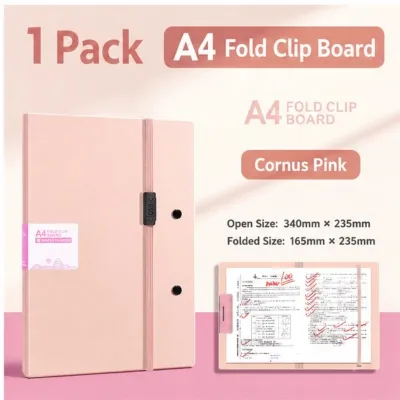
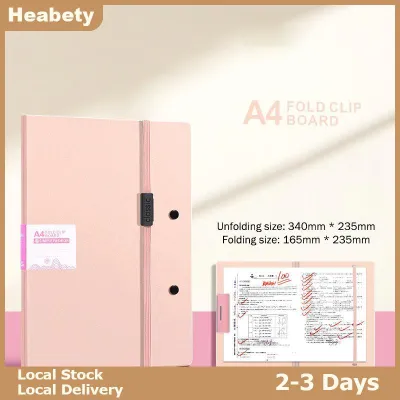
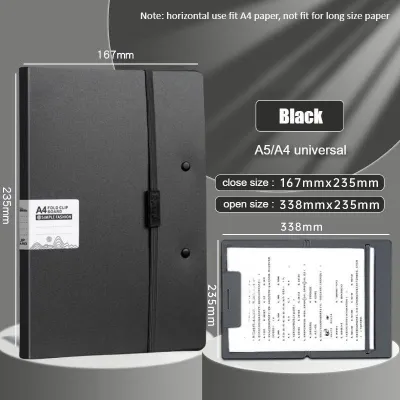
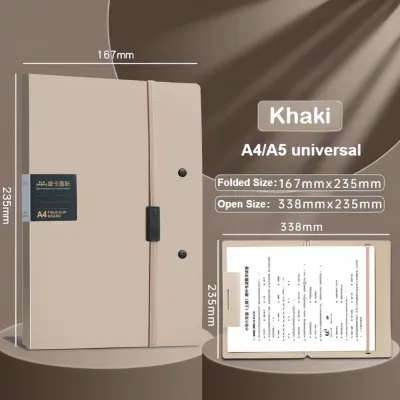
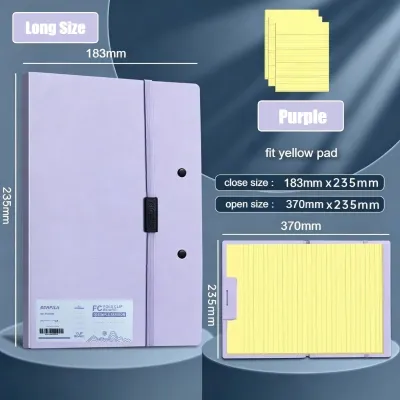
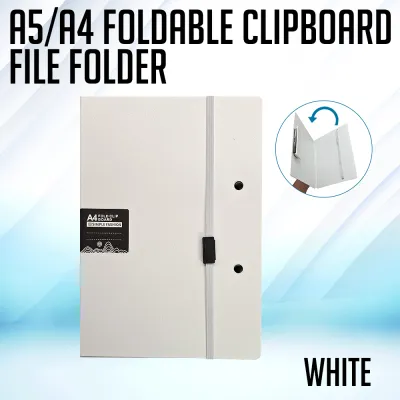
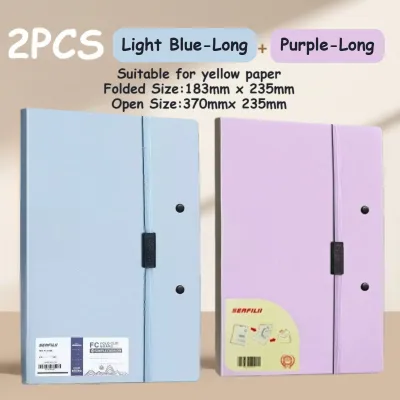
Prices are valid at publication and may change. Please refer to the product page for the latest price.

Foldable clipboards introduce a hinge mechanism, allowing the board to fold in half or into thirds. These joints are typically constructed from flexible polymer bands, metal pin hinges, or fabric-reinforced creases. While this design offers exceptional compactness, the presence of a seam requires careful document handling. When writing directly over the hinge line, the paper can sag or puncture if you apply heavy pressure with a fine-tipped pen. Users often need to place a backing sheet or write away from the fold line to maintain clean penmanship.
Clip mechanisms also vary significantly between the two styles. Rigid clipboards often feature heavy-duty, high-tension spring clips or wire clips that can secure up to 100 sheets of paper. These clips are designed for high-capacity storage but can be bulky. Foldable models usually employ low-profile clamp clips or magnetic closures to keep the overall profile as slim as possible when folded. These low-profile clips are highly streamlined but generally accommodate fewer sheets before the tension grip begins to slip.
Edge finishing and corner designs play a critical role in paper preservation. High-quality rigid boards feature rounded corners and rubberized protective grips on the clip to prevent tearing or crimping the top edge of your documents. Foldable clipboards must align perfectly when opened; any manufacturing misalignment at the hinge can cause the edges of your paper to snag or misalign when you flip pages. Inspecting the flushness of the center joint is essential when evaluating a foldable model.
Portability and Storage Footprint
When it comes to mobility, the foldable clipboard offers a distinct spatial advantage. A standard rigid clipboard designed for A4 or Letter-sized documents maintains a fixed footprint of approximately 23 by 32 centimeters. This rigid shape requires a spacious backpack, a dedicated briefcase, or an open tote bag. Carrying a rigid board during a busy commute on public transport can be cumbersome, as the corners can poke against your bag or snag on clothing.
In contrast, a foldable clipboard reduces its footprint by half when closed, easily fitting into compact messenger bags, small backpacks, or even large utility pockets. This makes them highly popular among medical professionals, field inspectors, and students who move frequently between locations. The folded design also distributes weight more centrally, making your bag feel less awkward and preventing the board from bending under the weight of other items.
Document protection is another area where foldable designs excel, particularly in tropical climates. High humidity can quickly soften paper, making loose sheets susceptible to creasing, tearing, or smudging from sweat and dirt. When a foldable clipboard is closed, the outer panels act as a protective book cover, shielding your documents from environmental exposure, light rain, and accidental spills. Rigid clipboards leave your documents completely exposed to the elements unless you store the entire board inside a separate protective sleeve.
Writing Stability and Long-Term Durability
The primary trade-off for the portability of a foldable clipboard is its writing stability. Writing while standing or walking requires a completely rigid backing. A traditional rigid clipboard excels here, providing a rock-solid foundation regardless of how you hold it. Whether you are taking notes during a warehouse audit or filling out forms in a standing queue, a rigid board ensures your handwriting remains legible and consistent.
Foldable clipboards require a locking mechanism or a highly rigid hinge to prevent the board from flexing or collapsing slightly while you write. If the locking mechanism is weak, the board may bow inward under the pressure of your hand, making standing writing tasks frustrating. Over time, repeated folding and unfolding can lead to material fatigue. Plastic living hinges can crack, fabric joints can fray, and metal hinges can loosen, causing the two halves of the board to become misaligned.
Material resilience is crucial for long-term durability. Traditional rigid boards made of anodized aluminum or high-impact polystyrene are incredibly durable, resisting drops, moisture, and daily friction. Pressed wood (MDF) boards are highly affordable, typically ranging from ₱100 to ₱250, but they are highly vulnerable to moisture; high humidity can cause the edges to swell and peel over time. Foldable clipboards made of water-resistant polypropylene or aluminum offer excellent protection against moisture, but you must verify that the hinge components are rust-resistant and securely fastened to ensure a long service life.
Side-by-Side Feature Comparison
To help you quickly weigh the trade-offs between these two designs, the table below summarizes their key performance characteristics and highlights what to look for on the product label before purchasing.
| Feature | Foldable Clipboard | Rigid Clipboard | What to Verify on the Label |
|---|---|---|---|
| Portability | High; folds to fit small bags and large pockets | Low; requires full-sized bags or manual carrying | Folded dimensions, weight, and hinge type |
| Writing Stability | Moderate; depends on hinge lock and backing stiffness | High; completely solid surface with zero flex | Material thickness and board rigidity |
| Storage Footprint | Compact; occupies half the standard surface area | Fixed; requires full A4/Letter flat storage space | Overall dimensions (length, width, and thickness) |
| Document Protection | High; enclosed design shields paper from damage | Low; paper is fully exposed to dust and moisture | Cover material water-resistance and closure type |
| Ideal User Profile | Mobile workers, medical staff, field inspectors | Desk-bound staff, students in exam halls, builders | Maximum sheet capacity and clip tension style |
Decision Framework: Matching the Clipboard to Your Workflow
To make the right choice, analyze your daily workflow and the specific environments where you will use the clipboard. If your routine involves walking several kilometers a day, climbing stairs, or moving between different work sites, a foldable clipboard is highly practical. It allows you to tuck your paperwork away safely when not in use, keeping your hands free and your documents pristine. This is especially valuable if you budget between ₱300 and ₱800 for a specialized, durable folding model that can withstand daily transit.
If your primary task is filling out multi-part carbon copy forms, writing detailed technical drawings, or managing thick stacks of paper (more than 50 sheets), a rigid clipboard is the superior functional tool. The solid surface ensures that pressure is distributed evenly across all copies, preventing faint or illegible duplicates. Rigid boards are also the practical choice for high-volume environments like busy retail counters, reception desks, or classrooms where boards are shared among multiple users and subjected to rough handling.
Finally, always verify the rules of your specific environment before making a purchase. In some professional settings, such as clinical hospital wards or cleanrooms, clipboards must be regularly sanitized with isopropyl alcohol; in these cases, a medical-grade aluminum rigid board or a seamless plastic board is easier to wipe down than a foldable model with hard-to-clean hinge crevices. Similarly, academic examination halls often prohibit foldable clipboards to prevent students from concealing notes inside the folding joints. Always check local institutional guidelines to ensure your chosen tool is fully compliant.
Frequently Asked Questions (FAQ)
Can a foldable clipboard hold as many sheets as a rigid one?
Generally, foldable clipboards hold fewer sheets than traditional rigid clipboards. While the clip mechanism itself dictates the initial holding capacity, the folding joints and the overall thickness of the folded unit limit how many papers you can comfortably carry. A thick stack of paper prevents the clipboard from folding flat, which defeats its primary portability benefit. If you regularly handle more than 30 to 50 sheets of paper, a rigid clipboard is more practical, as foldable models are optimized for slim, highly mobile document sets of 10 to 20 pages.
Are foldable clipboards permitted in secure facilities or exams?
Not always. Many secure facilities, government offices, and academic examination boards enforce strict rules regarding the stationery items permitted inside testing rooms or secure zones. Foldable clipboards can sometimes be restricted because their hollow folding joints, internal pockets, or double-layered panels can potentially be used to conceal unauthorized notes or materials. If you are purchasing a clipboard specifically for professional licensure exams or secure workplace environments, a transparent or solid, single-piece rigid plastic clipboard is usually the safest and most compliant choice.
Community discussion
Share your experience or ask a question. Comments are reviewed before publication.