
Sourcing garter elastic by the kilo in Philippine wholesale hubs like Divisoria in Manila or Taytay in Rizal offers a highly cost-effective solution for garment manufacturers, home sewists, and craft businesses. The price of garter per kilo is not a single fixed number; instead, it fluctuates based on raw material costs, the type of elastomeric core used, the outer textile casing, and the physical width of the band. To secure the best value, you must look beyond the initial price tag and evaluate how many usable linear meters a single kilogram actually yields, as well as how the elastic performs under tension.
In the local textile trade, buying by weight is the standard for high-volume production, but it requires a keen eye for material specifications. Because elastic is a composite product made of rubber or synthetic strands wrapped in polyester or nylon yarns, its weight is heavily influenced by its structural design. Understanding these variables allows you to negotiate effectively with local suppliers, accurately calculate your garment production costs, and avoid purchasing degraded stock that can ruin your finished products.
Key Factors That Determine the Price of Garter Per Kilo
The primary driver of garter elastic pricing is the material composition of both the inner stretch core and the outer protective casing. The inner core typically consists of either natural rubber latex or synthetic elastane (often referred to as spandex). Natural rubber is highly elastic and cost-effective, making it the standard choice for budget-friendly apparel, but it is sensitive to high temperatures, chlorine, and repeated laundering. Synthetic elastane cores generally command a higher price per kilo because they offer superior resistance to tropical heat, body oils, and chemical exposure, ensuring the garment retains its shape over a longer lifespan.
Products mentioned in this guide
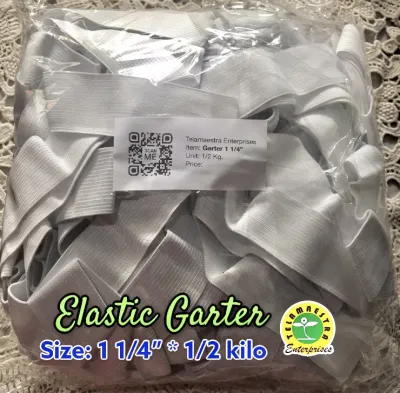
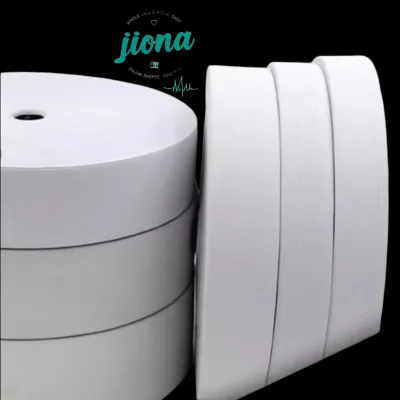
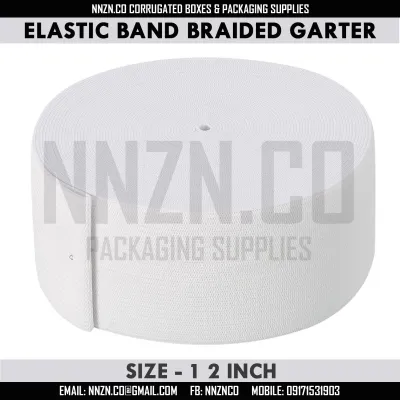
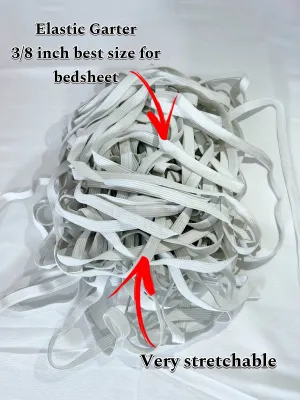

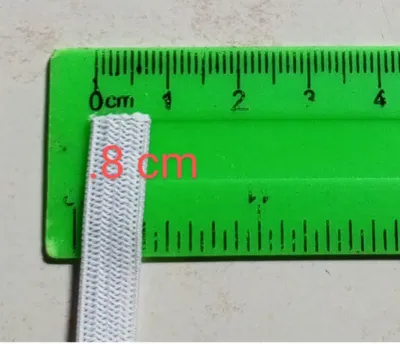
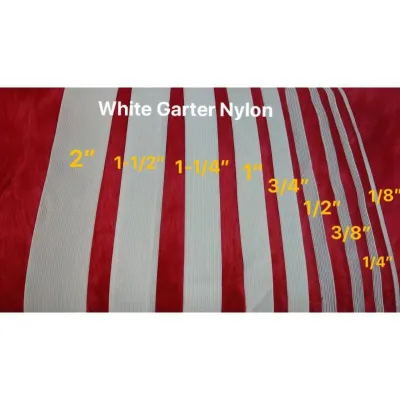
Prices are valid at publication and may change. Please refer to the product page for the latest price.
The outer casing fiber also plays a significant role in determining the wholesale cost. Most commercial garters use polyester yarn for the outer knit or braid because it is durable, quick-drying, and economical. However, garters wrapped in nylon yarn are typically more expensive. Nylon offers a much softer texture against the skin, making it highly desirable for undergarments and children’s wear, and it accepts dyes more readily than polyester. When comparing per-kilo prices between suppliers, always ask whether the outer casing is polyester or nylon to ensure you are comparing equivalent grades.
Beyond material types, the physical dimensions of the elastic directly dictate its weight-to-length ratio, which is known as the yield. A one-kilogram roll of narrow one-quarter-inch braided elastic will contain significantly more linear meters than a one-kilogram roll of wide two-inch knitted waistband elastic. Consequently, while the price per kilo might be identical, the cost per finished garment will vary dramatically. Heavy-duty, densely woven elastics require more raw fiber and rubber per meter, increasing their weight and reducing the total yield per kilo, which naturally raises the overall cost of the material for your project.
Finally, manufacturing origin and quality control standards heavily influence market pricing. Imported elastic from large-scale regional manufacturing hubs often benefits from economies of scale, offering lower entry-level pricing. However, premium commercial-grade elastics—which undergo strict tension testing, shrinkage controls, and UV-stabilization treatments—carry a premium. Basic utility garters sold in loose bundles without brand markings are cheaper but often suffer from inconsistent stretch profiles, meaning one section of the roll may stretch significantly more or less than another.
Evaluating Fair Value and Weight Accuracy in Local Markets
When navigating busy wholesale districts, verifying the actual net weight of the elastic is your first line of defense against overpaying. Many bulk rolls are wound around heavy plastic spools or thick cardboard cores, which can add substantial weight to the product. If a supplier sells elastic strictly by gross weight (including the spool and packaging), you are effectively paying the per-kilo garter rate for cheap cardboard or plastic. Always ask the supplier to clarify if the quoted price is for the net weight of the elastic alone, or bring a portable digital scale to verify the weight of the spool itself.

Environmental factors in tropical climates can also subtly affect weight measurements. In high-humidity environments, the textile fibers wrapping the elastic core can absorb ambient moisture from the air, slightly increasing the overall weight of the roll. While this might seem negligible on a single roll, it can add up to significant discrepancies when purchasing dozens of kilos for commercial production. To protect your budget, inspect how the supplier stores their inventory; rolls kept in sealed plastic packaging are less likely to have absorbed excess moisture than those left exposed to the humid air.
To assess the quality of the elastic on the market floor, perform a quick manual tension and recovery test. Pull a sample length of the garter to its maximum limit and hold it for a few seconds before releasing it. High-quality elastic should snap back instantly to its exact original length without leaving any wavy edges or permanent elongation. If the sample remains stretched out or feels sluggish during recovery, the rubber core is either of low quality or has begun to degrade, meaning it will fail quickly once sewn into a waistband or sleeve casing.
Before committing to a bulk purchase by weight, compare the cost-efficiency of buying by the kilo versus buying by the pre-measured roll or yard. For large-scale manufacturing operations, buying by the kilo is almost always the most economical route because it minimizes packaging overhead and offers volume discounts. However, for small-scale hobbyists or custom tailors, buying pre-measured rolls (typically sold in 36-yard or 50-yard lengths) provides better quality control and reduces waste. It also eliminates the need to store large quantities of heavy elastic, which can degrade over time if not kept in optimal conditions.
Budget Allocation and Sourcing Strategy for Sewing Projects
Successful budget allocation requires matching the specific elastic type to the functional demands of your garment. For high-stress applications that undergo constant stretching and washing—such as the waistbands of athletic shorts, swimwear, or children’s playwear—it is wise to allocate a larger portion of your budget to high-recovery knitted or woven elastic. For casual gathers, pocket openings, or lightweight crafts where the elastic is not under constant high tension, you can safely compromise by sourcing standard braided elastic, which is generally more affordable by the kilo.
To plan your project budget accurately and avoid mid-production material shortages, you must calculate the estimated linear yield of the elastic you plan to buy. You can easily do this by requesting a small, precise one-meter sample from the supplier. Weigh this one-meter sample on a digital pocket scale in grams, then divide 1,000 grams by that sample weight. For example, if your one-meter sample weighs 20 grams, a one-kilogram roll will yield approximately 50 meters of elastic. This simple calculation allows you to translate the per-kilo price directly into a cost-per-meter figure, making it easy to determine the exact material cost for each garment.
When sourcing from major fabric hubs, establishing a reliable relationship with a dedicated supplier is key to securing consistent quality and pricing. On your initial visits, do not hesitate to request small sample cuts—usually 10 to 20 centimeters—to test on your specific sewing machines. This step is crucial because different elastic structures interact uniquely with sewing needles; for instance, some dense elastics may require specialized ballpoint or stretch needles to prevent skipped stitches or needle breakage. Once you find a supplier whose product performs well on your machines, stick with them to negotiate better bulk rates for future production runs.
Quality Traps and Red Flags When Buying Elastic by Weight
One of the most common hazards when buying bulk elastic by weight is purchasing stock that has suffered from dry rot. In warm, unventilated warehouses, the natural rubber cores inside garter elastic can dry out, lose their moisture, and become incredibly brittle. You can easily spot dry rot by holding a section of the elastic close to your ear and stretching it firmly; if you hear a faint crackling sound or feel the internal strands snapping, the rubber has degraded. This elastic will disintegrate completely during the first wash cycle, ruining your finished garment.
Another frequent issue in budget-grade bulk rolls is inconsistent width and uneven weaving along the length of the roll. Poorly manufactured elastic may measure one inch wide at the start of the roll but taper down to three-quarters of an inch further inside, or it may feature loose, frayed edges where the outer casing fibers have unraveled. These physical defects can cause serious issues during production, leading to jammed sewing machine feed dogs, broken needles, and uneven gathers that compromise the professional appearance of your apparel.
Finally, be wary of misleading packaging practices designed to artificially inflate the weight of the roll. Some low-tier distributors may wind high-quality, pristine elastic on the visible outer layers of a roll while hiding spliced, knotted, or lower-grade elastic on the inside. When inspecting a roll, look closely at the exposed sides to ensure the color, texture, and winding density are completely uniform from the outer edge all the way to the center core. If you notice sudden color shifts or uneven layers, it is highly likely the roll contains mixed-quality batches.
Frequently Asked Questions (FAQ)
Is it generally more cost-effective to buy garter by the kilo or by the roll?
Buying garter elastic by the kilo is highly cost-effective for commercial operations, garment factories, and small businesses that consume hundreds of meters of elastic weekly. Sourcing by weight lowers the unit cost per meter significantly by eliminating individual retail packaging and spooling costs. However, for home sewists, hobbyists, or those working on limited-run projects, buying by the pre-measured roll or yard is often more practical. It reduces the upfront financial investment and prevents the waste associated with storing excess bulk material that may degrade before it can be used.
How should bulk garter elastic be stored to prevent degradation?
To protect your investment in bulk garter elastic, store your rolls in a cool, dry, and dark environment away from direct sunlight and extreme heat. Ultraviolet rays and high temperatures rapidly degrade both natural rubber and synthetic elastane cores, causing them to become brittle or sticky. Keep the elastic sealed in airtight plastic bins or bags to shield the fibers from tropical humidity and dust. Avoid tightly folding or compressing the stored elastic for long periods, as prolonged pressure can permanently deform the internal elastomeric strands and reduce their overall stretch recovery.
Community discussion
Share your experience or ask a question. Comments are reviewed before publication.