
Finding the best value for a standard 500-sheet ream of short bond paper involves looking beyond the initial price tag. True value is a balance of cost per sheet, paper quality that prevents printer damage, and smart purchasing decisions that account for shipping fees and storage risks. In the Philippines, where high humidity can quickly ruin poorly stored paper, buying the cheapest option can often lead to wasted sheets and jammed machines. To get the most out of your purchase, you must evaluate how the paper will be used, where it will be stored, and how much it actually costs to get it delivered to your doorstep.
Calculating the True Cost of a 500-Sheet Ream
When shopping for a 500-sheet ream of short bond paper, the listed price on an e-commerce platform or retail shelf is only the starting point of your calculation. To find the true cost, you must look at the price per sheet. This is calculated by dividing the total cost of the ream by 500. For example, a ream priced at ₱180 costs ₱0.36 per sheet, while a ream priced at ₱220 costs ₱0.44 per sheet. While a difference of a few centavos per sheet seems negligible, it quickly adds up when printing high-volume documents, school modules, or office forms.
However, the calculation becomes more complex when purchasing from online marketplaces. Shipping fees can significantly alter the final cost of your paper. Because a ream of paper is relatively heavy—typically weighing around 2 to 2.5 kilograms depending on the thickness—shipping rates can be surprisingly high. A low-priced ream of paper can easily become more expensive than a premium option once the shipping fee is added at checkout. Always compare the total landed cost, which is the product price plus shipping, rather than the product price alone.
Products mentioned in this guide
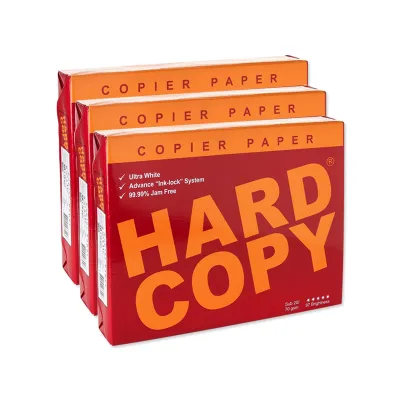
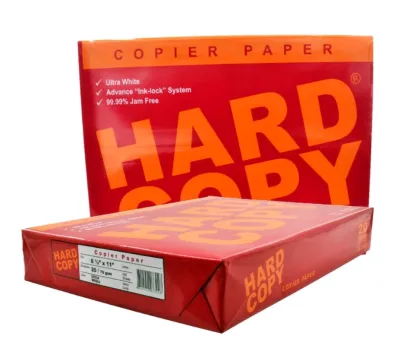
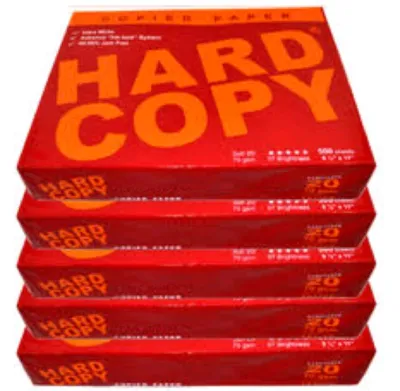
![1 Ream 500 sheets [ Short / A4 / Long ] - Hard Copy Bond Paper](https://img.lazcdn.com/g/p/dd814106619b5155c05e561e88cf0500.png_400x400q80.png_.webp)
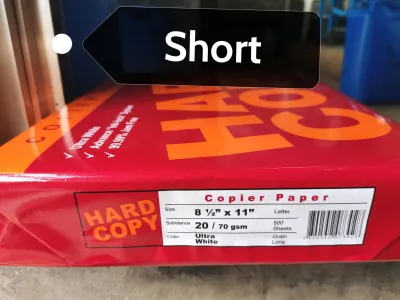
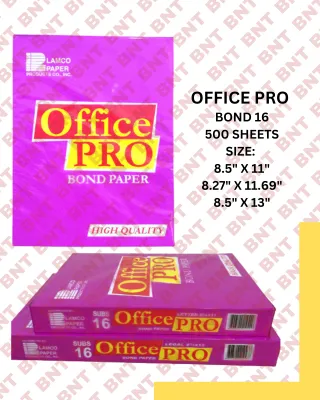
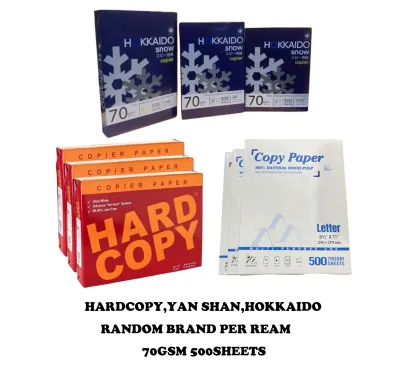
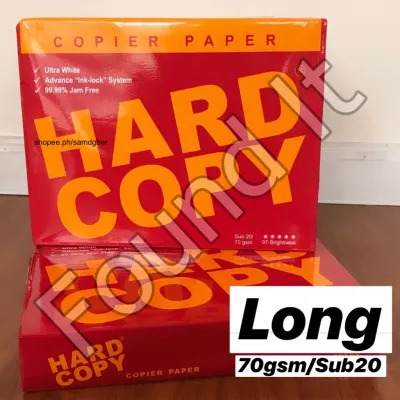
Prices are valid at publication and may change. Please refer to the product page for the latest price.
Many online sellers offer “free shipping” promotions, but these often come with a catch. Some merchants artificially inflate the base price of the paper to cover the shipping costs they absorb. In other cases, you must meet a minimum order value to qualify for a free shipping voucher. If you only need one ream of paper, adding unnecessary items to your cart just to reach a voucher threshold can lead to overspending. Conversely, if you regularly use other stationery items like black ballpoint pens, highlighters, or paperclips, purchasing them together with your paper can help you hit the free shipping limit naturally, lowering the overall cost of your order.
Quality Specifications That Justify the Price
Paying a slightly higher price for a ream of short bond paper is often justified by the technical specifications of the paper. The most critical specification to consider is the paper weight, measured in Grams per Square Meter (GSM). The two most common weights for short bond paper are 70 GSM and 80 GSM. Lightweight 70 GSM paper is highly economical and perfectly suitable for everyday single-sided printing, internal drafts, and high-volume copying. However, because it is thinner, it is more prone to curling under the intense heat of laser printers, which can lead to frequent paper jams.

In contrast, 80 GSM paper is thicker and sturdier. This extra thickness provides the opacity needed for double-sided printing, preventing ink or toner from showing through to the other side. If your office or home setup relies heavily on duplex printing, investing in 80 GSM paper will save you money in the long run by allowing you to use both sides of every sheet without sacrificing readability. Additionally, the stiffer structure of 80 GSM paper feeds more reliably through automatic document feeders and high-speed printers, reducing downtime caused by misfeeds.
Brightness and whiteness are two other specifications that directly impact the perceived value of your printed documents. Brightness refers to how much blue light reflects off the paper surface, usually rated on a scale up to 100. Whiteness measures the reflection of all light wavelengths across the visible spectrum. Paper with a high brightness rating (typically 95 or above) provides a sharp contrast against black ink or toner, making text incredibly easy to read and giving reports a highly professional appearance. Lower brightness paper (around 90 or below) may look slightly dull or grayish, which is acceptable for internal office drafts but less suitable for client-facing proposals or school projects.
Finally, the surface smoothness of the paper plays a vital role in protecting your printing equipment. High-quality bond paper undergoes a rigorous manufacturing and cutting process that minimizes the creation of paper dust. Cheap, low-grade paper often has rough, poorly cut edges that shed tiny paper fibers inside your printer. Over time, this accumulated dust coats the rubber pickup rollers, causing them to lose their grip and fail to pull paper from the tray. Smooth paper also ensures that ink from inkjet printers dries evenly without feathering, and toner from laser printers adheres perfectly to the surface for crisp, smudge-free results.
Bulk Buying vs. Single Ream Purchases
Deciding whether to buy a single ream of short bond paper or purchase a box of five or ten reams in bulk requires a careful assessment of your storage environment. In tropical climates like the Philippines, humidity is a constant challenge. Paper is highly hygroscopic, meaning it naturally absorbs moisture from the surrounding air. When paper becomes damp, the fibers swell, causing the sheets to curl, stick together, and jam inside your printer. If you do not have a dry, elevated, and climate-controlled space to store your paper, buying in bulk can lead to significant financial loss.
To determine the break-even point of a bulk purchase, you must weigh the potential savings against the risk of paper spoilage. Bulk purchases often come with a lower price per ream and discounted shipping rates. However, if you only print a few dozen pages a month, a single ream of 500 sheets will easily last you half a year or more. Storing several extra reams in a humid closet for months increases the likelihood that the paper will absorb moisture and become unusable before you ever get to print on it. If even one ream in a bulk box gets ruined by dampness, the money you saved on the bulk discount is completely wiped out.
To prevent long-term degradation, match your purchase volume to your actual consumption rate. If your household or small office goes through a ream of paper every two to three weeks, buying a box of five reams is a highly practical and cost-effective choice. When storing paper, always keep the reams in their original moisture-resistant wrappers until you are ready to use them. Store the packages flat on a shelf or inside a plastic storage bin, elevated off the floor, and away from damp walls or open windows. If you only print occasionally, sticking to single-ream purchases is the safest way to ensure every sheet remains crisp, dry, and ready to print.
Red Flags When Shopping on E-Commerce Platforms
The convenience of shopping on online marketplaces comes with the risk of encountering substandard or misrepresented products. When searching for a 500-sheet ream of short bond paper, you must be vigilant against common red flags. One of the most frequent issues is vague product descriptions. If a listing simply says “short bond paper” without clearly stating the GSM, brightness rating, or sheet count, it is best to look elsewhere. Reliable sellers provide detailed specifications so you know exactly what you are paying for.
Another major red flag is a price that seems too good to be true. While everyone loves a bargain, suspiciously low prices often indicate “short-count” reams. Some unscrupulous sellers repackage paper into generic wrappers, advertising a full ream of 500 sheets when the package actually contains only 400 or 450 sheets. You can spot these listings by carefully reading the buyer reviews. Look for feedback from customers who have physically counted the sheets or noticed that the ream feels unusually thin compared to standard retail packages.
Additionally, pay close attention to reviews mentioning the condition of the paper upon delivery. Because paper is heavy and susceptible to moisture, proper packaging is essential. If multiple reviews complain that the reams arrived with torn wrappers, bent corners, or water damage from rain during transit, it indicates the seller does not package their items securely. Finally, always verify the seller’s return and refund policy. A reputable seller will offer a straightforward process for returning items that arrive damaged, ensuring you do not lose money on a ruined ream of paper.
Your Pre-Purchase Shopping Checklist
To ensure you get the best possible value for your money, it is helpful to run through a quick checklist before hitting the checkout button. First, clearly define your primary use case. If you are printing everyday school worksheets, internal office drafts, or temporary receipts, a standard 70 GSM ream with moderate brightness will offer the best value. If you are printing official business letters, resumes, or documents that require double-sided printing, prioritize an 80 GSM ream with high brightness to ensure a professional look.
Next, set a strict maximum budget per ream in ₱, keeping in mind that this budget must include any estimated shipping and handling fees. Comparing the total cost of different listings side-by-side will help you avoid overpaying for shipping. Once you find a potential listing, double-check the exact dimensions and sheet count. Short bond paper must measure exactly 8.5 x 11 inches (215.9 x 279.4 mm), and the listing should explicitly state “500 pcs” or “1 ream” to guarantee you are receiving a full count.
Finally, take a moment to verify the seller’s rating and customer feedback. Choosing a preferred or highly rated seller who specializes in school and office supplies increases the likelihood of receiving genuine, well-packaged paper. By taking these few extra steps, you can confidently purchase a high-quality ream of short bond paper that fits your budget and performs flawlessly in your printer.
Frequently Asked Questions (FAQ)
Can I use 70 GSM short bond paper for double-sided printing?
While you can physically feed 70 GSM short bond paper through a printer for double-sided printing, it is generally not recommended for formal or professional documents. Because 70 GSM paper is relatively thin, it has lower opacity, which leads to significant show-through or bleed-through. The text or images printed on one side will be clearly visible from the reverse side, making the document difficult to read. If you must use 70 GSM paper for double-sided printing, try adjusting your printer settings to a draft or ink-saver mode to reduce the amount of ink or toner applied to the page. For clean, professional duplex printing, upgrading to 80 GSM paper is the best choice.
Why does my printer keep jamming with cheap bond paper?
Frequent printer jams are often caused by the physical characteristics of low-quality bond paper. Cheap paper is often cut unevenly, which prevents the sheets from feeding straight into the printer mechanism. Additionally, low-grade paper tends to shed a high amount of paper dust, which accumulates on the printer’s rubber pickup rollers and causes them to slip. Another common culprit is moisture absorption. In humid environments, cheap paper quickly absorbs water vapor from the air, causing the sheets to stick together and feed into the printer in clumps. To prevent jams, look for paper that specifies a dust-free manufacturing process and store your reams in a dry, sealed container.

Community discussion
Share your experience or ask a question. Comments are reviewed before publication.