
When launching a jewelry brand, selecting the right raw materials directly dictates your profit margins, production workflow, and customer satisfaction. If you are searching for a high-quality glossy 3mm beads set for business operations, your primary material choices will be glass, acrylic, and molded plastic. Glass beads offer the highest perceived value, a luxurious weight, and an enduring gloss that resists weathering, making them ideal for premium or bridal collections. Acrylic beads serve as the ultimate commercial middle ground, delivering a highly reflective, glass-like shine at a fraction of the weight and cost, which is perfect for scalable, everyday fashion lines. Standard plastic beads provide the lowest unit cost, making them highly suitable for high-volume budget lines, novelty items, or children’s jewelry. Balancing these materials against your target retail price points and shipping logistics is the key to building a sustainable and profitable jewelry venture.
Quick Decision Guide: Matching 3mm Bead Materials to Your Business Goals
To streamline your initial inventory sourcing, it helps to match bead materials directly to your specific business model and target audience. For instance, if your brand positions itself in the premium or semi-fine jewelry segment, glass is almost always the mandatory choice. Customers purchasing jewelry at higher price points expect a certain tactile experience; they associate a heavier weight and a cold-to-the-touch feel with high quality.
Conversely, if you are targeting the fast-fashion market or high-volume e-commerce sales, acrylic beads allow you to scale rapidly. They mimic the initial luster of glass beautifully but keep your production costs low enough to maintain healthy retail margins. For businesses focusing on children’s accessories, party favors, or promotional giveaways, standard molded plastic beads offer unmatched cost efficiency and safety due to their ultra-lightweight, shatterproof nature. Ultimately, your choice should balance the cost of materials, the expectations of your target demographic, and the logistical realities of shipping physical goods.
Products mentioned in this guide
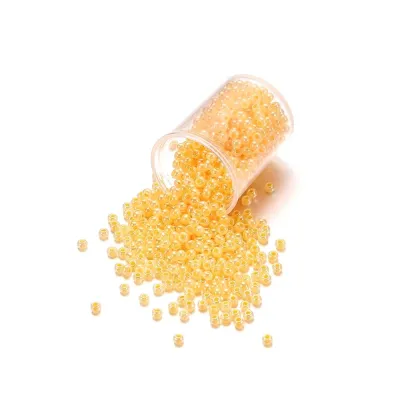
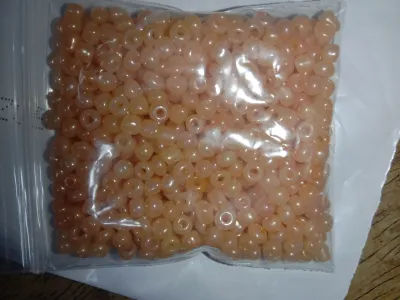
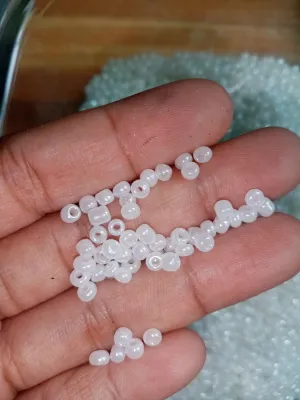
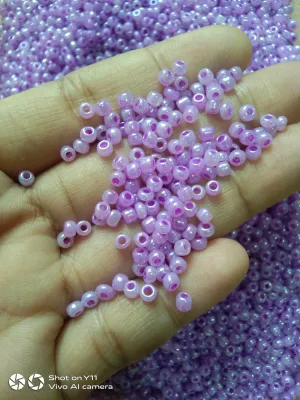
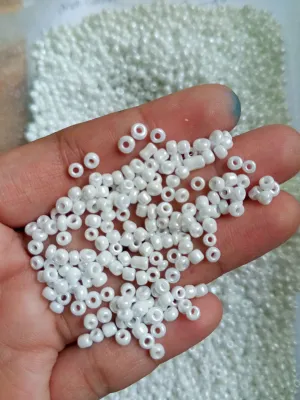
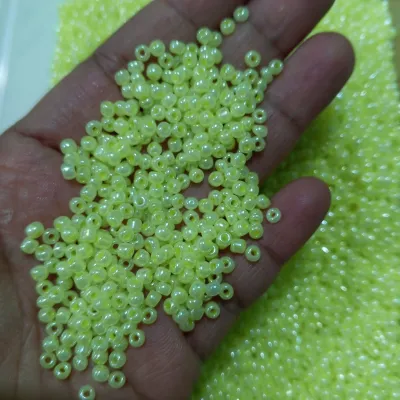
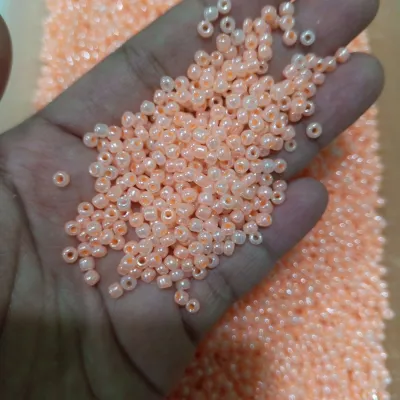
Prices are valid at publication and may change. Please refer to the product page for the latest price.
Material Breakdown: Choosing the Best Glossy 3mm Beads Set for Business
To make a smart bulk purchasing decision, you must look beyond the surface shine and understand how glass, acrylic, and plastic perform under real-world conditions. A 3mm bead is exceptionally small, which means that any manufacturing imperfections, structural weaknesses, or variations in luster become amplified when hundreds of beads are strung together into a finished necklace, anklet, or bracelet. Understanding the distinct physical, aesthetic, and financial profiles of these three popular materials will protect your brand’s reputation.

Glass Beads: Weight, Luster, and Premium Appeal
Glass beads represent the traditional standard in bead crafting, offering a level of sophistication that synthetic alternatives struggle to replicate. One of the most prominent advantages of glass is its physical weight. Glass has a dense molecular structure, giving finished jewelry pieces a satisfying, heavy drape that feels substantial when worn against the skin. Furthermore, glass possesses a superior refractive index, allowing light to pass through and reflect off the bead in a way that creates a deep, multi-dimensional gloss.
From a commercial standpoint, this premium aesthetic justifies a higher retail price, allowing you to target affluent customer segments. However, glass beads carry a higher wholesale cost per gram and require meticulous handling. Because glass is brittle, it is susceptible to chipping or cracking if subjected to hard impacts. This fragility means you must invest in protective packaging—such as padded mailers or small jewelry boxes—to prevent damage during transit to your customers. On the positive side, the glossy finish of a high-quality glass bead is highly durable; it will not fade, yellow, or peel when exposed to daily wear, sweat, or tropical humidity.
Acrylic Beads: The Cost-Effective Middle Ground
Acrylic beads have become the industry favorite for modern, mid-tier jewelry brands looking to maximize their product variety without draining their capital. Made from a synthetic polymer, acrylic is incredibly lightweight—roughly half the weight of glass. This lightweight property is a massive advantage for statement jewelry pieces, such as multi-strand necklaces or chunky drop earrings, which would otherwise be too heavy and uncomfortable if made entirely of glass.
Modern manufacturing techniques allow high-grade acrylic beads to achieve an initial gloss and clarity that closely rivals true glass. To the untrained eye, a freshly unboxed acrylic bead bracelet can look just as brilliant as its glass counterpart. However, acrylic is a softer material, making it highly susceptible to micro-scratches from daily wear, friction against metal findings, or contact with rough surfaces. Over time, these tiny scratches accumulate, gradually dulling the bead’s glossy finish and giving it a slightly cloudy appearance. Despite this limitation, the low cost and high aesthetic appeal of acrylic make it the most scalable option for trend-driven jewelry lines.
Plastic Beads: Maximizing Volume for Budget Lines
Standard molded plastic beads, often made from polystyrene or polypropylene, are engineered for maximum cost efficiency. If your business model relies on high-volume sales with low profit margins per unit, plastic beads are the logical choice. They offer the lowest wholesale price point, enabling you to produce thousands of items for promotional giveaways, festival wear, or budget-friendly novelty lines.
While highly economical, plastic beads do come with noticeable visual and structural limitations. Because they are mass-produced via injection molding, they often feature visible molding seams or small plastic tabs where the bead was detached from the manufacturing sprue. Additionally, the glossy finish on cheap plastic beads is typically achieved through an external spray coating rather than the material’s inherent properties. This coating can unevenly pool in some areas, look cloudy, or peel off entirely when exposed to friction, water, or skin oils. However, the ultra-lightweight and shatterproof nature of plastic makes it exceptionally safe and comfortable for children’s jewelry lines, where heavy or fragile glass beads would pose a choking or injury hazard.
Aligning Bead Materials with Your Jewelry Product Lines
Designing a successful product line requires you to balance material properties with operational costs and local market conditions. In the Philippines, where the e-commerce landscape is highly competitive and shipping logistics can be complex, your material choice directly impacts your bottom line.
For premium, bridal, or bespoke collections, the investment in glass beads is easily justified. Customers purchasing bridal jewelry or personalized keepsakes are looking for heirloom-quality pieces that will last for years. They are willing to pay a premium price—often ranging from ₱500 to ₱1,500 or more per piece—which easily covers the higher material costs and the necessary protective packaging. The heavy drape and permanent shine of glass reinforce this high perceived value, leading to excellent customer reviews and repeat business.
For everyday fashion and trend-focused jewelry, acrylic beads are the ideal choice. The fast-paced nature of fashion trends means you need to introduce new colors, shapes, and designs constantly. Acrylic allows you to purchase a wide variety of glossy 3mm beads in bulk without tying up excessive capital in expensive glass inventory. You can price these everyday items affordably—perhaps between ₱150 and ₱350—attracting budget-conscious students and young professionals who want to update their style regularly without spending a fortune.
Logistics and shipping are critical factors to consider when running an online jewelry business in an archipelagic country like the Philippines. Local courier services calculate shipping fees based on both volumetric size and weight. A bulk order of glass beads is heavy, which increases your inbound shipping costs from wholesale suppliers. Furthermore, when shipping finished products to customers across Luzon, Visayas, and Mindanao, the cumulative weight of glass jewelry can push packages into higher weight brackets, increasing shipping fees (which typically range from ₱80 to ₱200 depending on the region). Using lightweight acrylic or plastic beads keeps your package weights minimal, allowing you to offer competitive or even free shipping rates to your customers, which is a powerful marketing tool.
Finally, managing customer expectations is vital for protecting your brand’s reputation. If you choose to use acrylic or plastic beads, transparency in your product descriptions is essential. Clearly labeling your items as “high-grade acrylic crystals,” “faux pearls,” or “lightweight resin beads” prevents customers from feeling misled when they receive a lightweight item. Misrepresenting synthetic materials as genuine glass or crystal is a quick way to receive negative reviews, which can severely damage your online store’s search visibility and sales conversion rates.
Sourcing and Quality Control: Verifying Bulk 3mm Bead Orders
When purchasing glossy 3mm beads in bulk from wholesale suppliers or online B2B marketplaces, conducting rigorous quality control is essential to avoid production delays and wasted materials. Because 3mm beads are so small, even minor manufacturing defects can render an entire batch unusable.
First, you must verify the drill hole diameter of the beads. A 3mm bead typically features a very small hole, often ranging from 0.5mm to 0.8mm. If the hole is partially blocked by excess gloss coating, molding flash, or glass debris, you will struggle to pass your stringing material through. This is particularly problematic if your jewelry designs require multiple passes of a thread or the use of thicker beading wires. Always ask suppliers for the exact drill hole specifications and test a small handful of beads with your preferred stringing materials before starting mass production.
Second, perform a thorough visual inspection of the bead surfaces. Examine your sample packs under a bright light or magnifying glass to check for consistent gloss application. Look for uneven finishes, cloudy spots, or rough molding seams. In plastic and low-grade acrylic beads, seams can be sharp enough to cut or fray nylon threads over time, leading to broken jewelry and unhappy customers. For glass beads, check for tiny chips around the drill holes, which can weaken the bead and cause it to shatter during the stringing process.
Third, learn how to authenticate your materials to ensure you are getting what you paid for. Unscrupulous suppliers may sometimes mix cheaper coated plastic beads into orders of high-grade acrylic or glass. You can perform several simple, observable tests to verify the material:
- Temperature Feel: Glass beads feel noticeably cold to the touch when first picked up, whereas acrylic and plastic quickly adjust to room temperature and feel warm.
- Weight Comparison: Weigh a set quantity of beads (e.g., 100 pieces) on a digital pocket scale. Glass beads will weigh significantly more than acrylic or plastic beads of the exact same size.
- Sound Test: Drop a few beads onto a hard surface like a glass table or ceramic tile. Glass beads produce a bright, high-pitched clinking sound, while acrylic and plastic produce a duller, softer thud.
Finally, establish a reliable relationship with your suppliers by starting with small trial orders. Requesting mixed-material sample sets or small color assortments allows you to verify the supplier’s batch consistency, color accuracy, and packaging quality before committing your hard-earned capital to a massive wholesale order.
Frequently Asked Questions (FAQ)
To help you maintain your inventory and assemble your jewelry pieces efficiently, here are answers to some of the most common questions regarding the care and handling of 3mm glossy beads.
How do I prevent acrylic or plastic beads from losing their glossy finish?
To preserve the brilliant shine of acrylic and plastic beads, proper storage and gentle handling are required. You should store your bead inventory in a cool, dry place away from direct, prolonged UV exposure, as sunlight can yellow synthetic polymers and degrade external gloss coatings. Additionally, advise your customers to keep their jewelry away from harsh chemicals, perfumes, hairsprays, and alcohol-based sanitizers. These substances can chemically react with the plastic, stripping away the glossy outer layer and leaving the beads looking dull, sticky, or discolored.
What stringing materials work best with 3mm glass versus acrylic beads?
The choice of stringing material depends heavily on the weight of the beads and the size of their drill holes. For heavier 3mm glass beads, it is highly recommended to use a flexible, nylon-coated stainless steel beading wire (such as 7-strand or 19-strand wire) paired with crimp beads. This wire provides the necessary strength to support the weight of the glass and resists the abrasive edges of the glass drill holes. For lightweight acrylic and plastic beads, high-quality nylon thread, fireline, or durable elastic cord (typically 0.5mm or 0.6mm in diameter) works beautifully. These flexible materials allow for a comfortable, stretchy fit and easily slide through the tight drill holes of synthetic beads without snapping.
Community discussion
Share your experience or ask a question. Comments are reviewed before publication.