
When you open a new beads set kit pearl package, the immediate visual appeal of those lustrous, rounded shapes can spark endless creative ideas. However, the material of those beads plays a fundamental role in how your finished jewelry looks, feels, and lasts over time. For enthusiasts in the Philippines, where high humidity can challenge the durability of jewelry finishes, choosing the right bead material is the first step toward a successful crafting project. Whether you are assembling a delicate necklace, a statement bracelet, or personalized gifts, the physical properties of the beads will directly dictate the final piece’s quality.
The material you choose impacts several key areas of your jewelry-making process. First, it determines the drape—how the jewelry sits against the skin or hangs when worn. Heavier beads pull the stringing material down naturally, creating a fluid, elegant contour, whereas lightweight beads may sit stiffly or twist out of place. Second, the durability of the bead surface determines how well the jewelry resists scratches, oils, and daily wear. Finally, the perceived value and aesthetic depth of the finished accessory are tied directly to the luster and authenticity of the materials.
In typical craft kits, you will encounter three primary types of pearl beads: freshwater pearls, glass pearls, and plastic (or acrylic) pearls. Each material offers distinct characteristics that suit different skill levels, budgets, and design goals. Before committing to a specific kit, it is essential to evaluate your project against four core decision factors: weight, luster depth, shape consistency, and overall budget. By understanding these differences, you can manage your expectations and select a kit that aligns perfectly with your creative vision.
Products mentioned in this guide
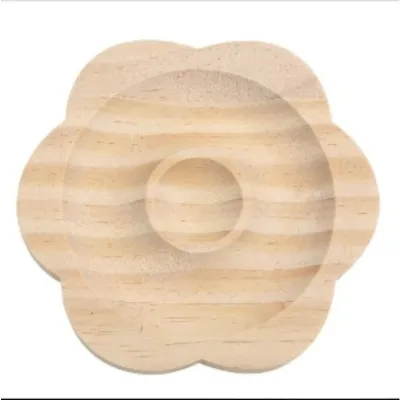
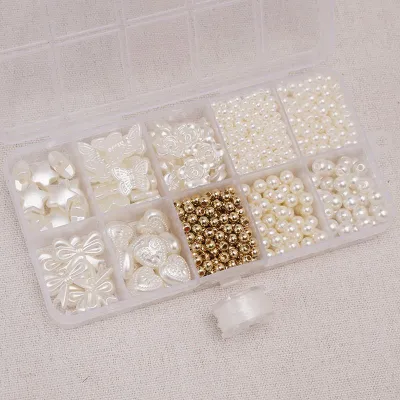
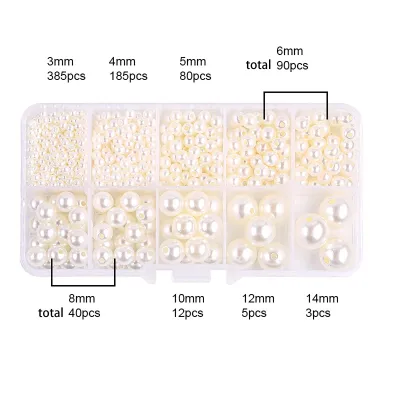
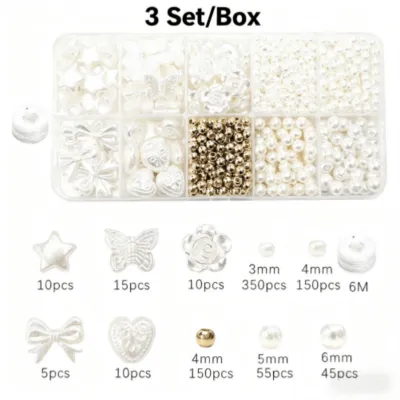
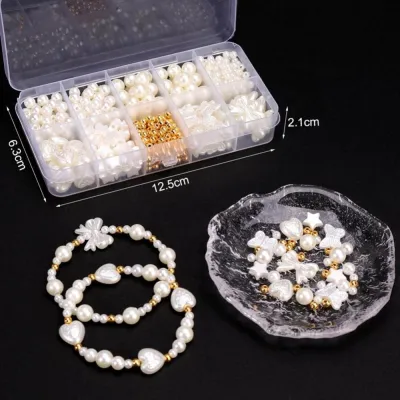
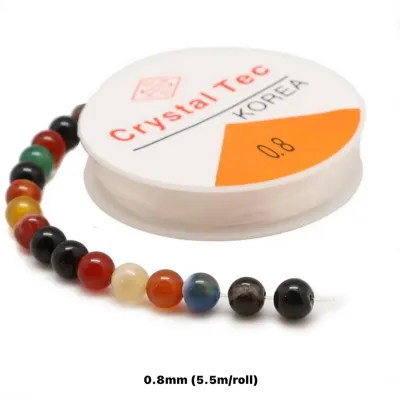
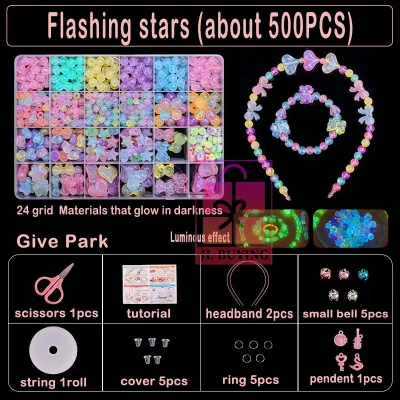
Prices are valid at publication and may change. Please refer to the product page for the latest price.
Freshwater Pearls: Natural Luster and Unique Variations
Freshwater pearls represent the premium tier of materials often found in high-quality jewelry-making kits. These are organic gemstones grown inside freshwater mussels, making each bead a unique creation of nature. When you work with a freshwater beads set kit pearl collection, you are handling genuine pearls that carry an organic charm unmatched by synthetic alternatives.
The most striking visual trait of freshwater pearls is their deep, multi-layered luster. Unlike the surface-level shine of coated beads, a natural pearl’s luster comes from nacre—the microscopic layers of calcium carbonate deposited by the mollusk. This structure allows light to penetrate and reflect from within, giving the pearl a soft, warm glow. Because they are naturally grown, these pearls exhibit beautiful variations in shape and color. You will find baroque (irregular and abstract) shapes, ovals, drops, and button shapes, alongside subtle color undertones ranging from creamy white and peach to soft lavender.
In terms of physical feel, freshwater pearls carry a satisfying weight. They feel cool to the touch when first picked up and warm gradually against the skin. This weight gives necklaces and bracelets an elegant, substantial drape, ensuring the jewelry clings comfortably to the body rather than shifting awkwardly. For high-end jewelry designs, bridal accessories, heirloom gifts, and sophisticated everyday wear, freshwater pearls are the gold standard. They elevate a simple hand-strung piece into a piece of fine jewelry.
However, working with natural freshwater pearls requires patience and specific techniques. Because they are organic, they lack the absolute uniformity of factory-made beads. Their drill holes are notoriously small and sometimes irregular, as drilling too deeply or widely can damage the pearl’s structural integrity. When using a freshwater pearl kit, you must carefully sort your beads before stringing. You will likely need to use flexible, multi-strand beading wire or a high-quality silk thread paired with a collapsible eye needle to navigate the narrow passages. This irregularity means crafting with freshwater pearls takes longer, but the organic, high-value result is well worth the extra effort.
Glass Pearls: Consistent Shine and Substantial Weight
For crafters who desire the weight and elegance of natural pearls but require perfect symmetry and color consistency, glass pearls are an exceptional choice. These beads are manufactured by taking a solid glass bead core and applying multiple layers of a pearlescent coating, often made from ground fish scales, synthetic lacquer, or titanium dioxide. The result is a bead that closely mimics the physical presence of a high-grade natural pearl while maintaining strict manufacturing standards.

The primary visual advantage of glass pearls is their high uniformity. Every bead in a glass-based beads set kit pearl will have the exact same diameter, spherical shape, and color tone. This makes them highly desirable for classic, traditional jewelry designs, such as a perfectly balanced single-strand pearl necklace or matching drop earrings. The reflective shine of glass pearls is bright and sharp, catching the light easily and giving the jewelry a polished, professional appearance that looks expensive from any distance.
Weight is another major benefit of glass pearls. Because glass has a high density, these beads have a substantial heft that is virtually identical to that of natural gemstones. When strung into a necklace, glass pearls fall into a beautiful, fluid drape that resists tangling and holds its shape elegantly on the wearer. This weight makes them feel luxurious and high-quality, providing a satisfying sensory experience that belies their accessible price point. They are ideal for formal wear accessories, bridesmaids’ jewelry, and structured bead-weaving patterns where dimensional precision is non-negotiable.
Despite their beauty, glass pearls have specific limitations that crafters must keep in mind. The pearlescent coating on glass beads is a surface treatment, meaning it can chip, scratch, or peel if subjected to friction or hard impacts. If you drop a glass pearl onto a tiled floor or rub the beads together forcefully, the outer layer can flake off, revealing the clear or white glass core underneath. Additionally, because of their weight, glass pearls are not always suitable for very delicate, ultra-fine wire-wrapping projects, as the heavy beads can stretch or distort thin wire over time.
Plastic Pearls: Lightweight Versatility for Budget Crafting
Plastic pearls—often labeled as acrylic, resin, or polystyrene beads—are the most common and budget-friendly option found in entry-level craft kits. These beads are produced by molding plastic into various shapes and spraying them with a shiny, pearlized finish. While they may not offer the luxury of freshwater or glass options, they serve a vital role in the crafting world, offering unmatched versatility and ease of use.
Visually, modern plastic pearls can look remarkably convincing from a distance. Manufacturers have improved coating techniques to give these lightweight beads a bright, uniform sheen. However, upon closer inspection, they lack the optical depth of glass or natural pearls. The reflection is purely superficial, and you can often spot tiny molding seams or uneven coating around the drill holes.
The defining physical characteristic of plastic pearls is their extremely light weight. While this lightweight nature means they do not have the elegant drape of heavier materials, it makes them exceptionally comfortable for large, oversized statement pieces. A massive, multi-strand bib necklace made of glass or freshwater pearls would feel uncomfortably heavy on the neck, whereas a plastic version can be worn effortlessly all day. This makes plastic pearls the perfect choice for theatrical costumes, hair accessories, large-scale home decorations, and children’s crafting activities.
For beginners and high-volume crafters, plastic pearl kits provide a low-risk environment to practice intricate knotting, weaving, and wire-wrapping techniques without the fear of wasting expensive materials. They are highly economical, allowing you to create bulk items like party favors or casual summer accessories on a strict budget.
However, plastic pearls are the least durable of the three types. The soft plastic core and thin outer coating are highly susceptible to scratching, and the finish can wear away quickly when exposed to friction, skin oils, or cosmetics. Furthermore, during the manufacturing process, excess plastic can pool around the drill holes, leaving sharp plastic burrs. If you do not inspect and clean these holes before stringing, these burrs can quickly fray or cut through nylon beading threads, causing your finished jewelry to break unexpectedly.
How to Choose the Right Pearl Beads Set Kit
Selecting the ideal beads set kit pearl depends entirely on your project’s final purpose, your budget, and your aesthetic preferences. To help you evaluate your options at a glance, the table below compares freshwater, glass, and plastic pearls across five essential crafting dimensions:
| Bead Material | Luster Depth | Weight & Drape | Uniformity | Durability | Ideal Project Type |
|---|---|---|---|---|---|
| Freshwater Pearl | High (Deep, internal glow) | Heavy (Excellent, natural drape) | Low (Unique, organic shapes) | High (Resists peeling; long-lasting) | Bridal jewelry, heirloom gifts, fine crafts |
| Glass Pearl | Medium-High (Bright, reflective) | Heavy (Fluid, substantial drape) | High (Perfect size and shape) | Medium (Coating can chip on impact) | Classic strands, formal wear, symmetrical designs |
| Plastic Pearl | Low-Medium (Surface shine only) | Very Light (Stiff drape; prone to shifting) | High (Symmetrical; molded shapes) | Low (Scratches easily; coating wears off) | Kids' crafts, costumes, practice, bulk items |
When deciding which kit to purchase, consider who will wear the finished piece and how often it will be worn. If your goal is to create a meaningful, long-lasting gift—such as a graduation bracelet or a bridal necklace—investing in a freshwater pearl kit is highly recommended. The natural variations add a personal, one-of-a-kind touch, and the material will not degrade with proper care.
If you are aiming for a classic, sophisticated look that requires clean lines and perfect symmetry, a glass pearl kit offers the best balance of quality and cost. You get the luxurious weight and drape of natural stones without the high price tag or the frustration of sorting through irregular shapes. A high-quality freshwater pearl kit might cost upwards of ₱1,500, whereas a basic glass or plastic pearl kit can be found on local online marketplaces for under ₱300.
For school projects, interactive crafting sessions with children, temporary holiday decorations, or bold costume jewelry, a plastic pearl kit is the most practical choice. It allows for worry-free experimentation and ensures that large, heavy-looking designs remain comfortable and lightweight.
Because the word “pearl” is often used as a descriptive term for color and finish rather than material, it is crucial to read product descriptions carefully before buying a craft kit. Online listings may use titles like “luxury pearl beads set” for kits that actually contain cheap acrylic plastic. Look closely at the specifications: real freshwater pearls will usually be explicitly labeled as “natural freshwater,” while glass pearls will specify a “glass core.” If a listing only mentions “pearl beads” at an incredibly low price, you can safely assume they are made of plastic. Checking customer reviews for mentions of weight and coating quality is also an excellent way to verify what you are buying.
Inspecting and Working with Your Bead Kit Materials
Once your chosen beads set kit pearl arrives, taking a few minutes to inspect and prepare your materials will save you time and prevent frustration during the assembly process. Start by pouring a small batch of beads onto a soft bead mat or a clean towel to keep them from rolling away.
First, examine the beads for surface defects such as chipped coatings, scratches, or bubbles. Set aside any damaged beads to use as hidden spacers near the clasp or discard them entirely. Next, look closely at the entry and exit points of the drill holes. For glass and plastic pearls, check for sharp edges or rough plastic burrs. For freshwater pearls, ensure the hole goes all the way through and is wide enough for your stringing material. If you find plastic burrs on acrylic beads, you can gently clear them away using a bead reamer or a thick sewing needle. This simple step prevents the sharp edges from cutting your thread later on.
Your choice of stringing material must match the physical properties of your beads. Freshwater pearls, with their small and irregular holes, pair best with fine, flexible beading wire or traditional silk thread. If you use silk thread, learning to tie small knots between each pearl will prevent them from rubbing against one another and keep them secure if the thread ever breaks. Glass pearls work beautifully with standard nylon monofilament, braided bead thread, or medium-gauge jewelry wire. Because they are heavy, ensure your clasps and crimp beads are securely fastened to support the weight. Plastic pearls, being incredibly light, can be strung on almost any material, including elastic cord, nylon thread, or memory wire, making them highly versatile for quick projects.
To keep your handmade pearl jewelry looking pristine, proper care is essential—especially in warm, humid climates like the Philippines. High humidity, sweat, perfumes, and hairsprays can rapidly break down the delicate coatings of glass and plastic pearls and dull the natural nacre of freshwater pearls. Always apply your cosmetics, lotions, and perfumes before putting on your jewelry, allowing them to dry completely first. After wearing, gently wipe your jewelry with a soft, dry microfiber cloth to remove skin oils. Store your pearl pieces in a soft fabric pouch or a separate compartment in your jewelry box, away from direct sunlight and sharp metal findings that could scratch their delicate surfaces. Never store natural or coated pearls in airtight plastic bags, as they need a small amount of moisture from the air to prevent their finishes from drying out and cracking.
Frequently Asked Questions (FAQ)
Can I mix freshwater and glass pearls in the same jewelry project?
Yes, you can absolutely mix freshwater and glass pearls in a single design, and doing so can create a beautiful contrast between natural irregularity and manufactured symmetry. To make the design look intentional, try using the unique, organic shapes of freshwater pearls as focal points or central drops, while using the perfectly uniform glass pearls as matching side strands or spacers. It is important to balance the weight of the piece so that one side does not pull heavier than the other. Mixing these materials allows you to stretch your budget while still achieving a high-end, artistic look.
How do I clean plastic and glass pearl beads without damaging the coating?
To clean manufactured plastic and glass pearls safely, wipe them gently with a soft, lint-free cloth slightly dampened with clean, lukewarm water. If the beads are particularly dirty, you can use a tiny drop of mild, pH-neutral dish soap diluted in water, but ensure you wipe away all soap residue with a clean, damp cloth afterward. Never soak these beads in water, and absolutely avoid using harsh chemical solvents, rubbing alcohol, abrasive jewelry cleaners, or ultrasonic cleaning machines. These aggressive methods will quickly dissolve or strip away the delicate pearlescent coatings, leaving your beads dull, cloudy, and permanently damaged.
Community discussion
Share your experience or ask a question. Comments are reviewed before publication.