
Choosing between hand stretch wrap and machine stretch wrap is a pivotal decision that directly impacts your warehouse efficiency, product safety, and operational budget. The right choice for your business depends primarily on your daily pallet volume, labor capacity, and upfront capital. While hand stretch wrap is ideal for low-volume, irregular, or highly varied loads, automated machine systems are designed to streamline high-volume, standardized shipping operations.
Hand stretch wrap refers to manual application where an operator holds a roll of film, often using a simple hand dispenser, and walks around a pallet to secure the load. This method relies heavily on the operator’s physical technique, strength, and endurance to apply the necessary tension. Because it requires minimal equipment, the initial setup cost is virtually non-existent, making it a highly accessible option for startups and smaller warehouses.
In contrast, machine stretch wrap utilizes specialized equipment, such as semi-automatic or automatic turntable wrappers, rotary arms, or orbital wrapping systems. The operator typically places the pallet on a platform, attaches the film, and starts a programmed cycle that rotates the load or the wrapping arm. This automated process ensures consistent tension, precise film overlap, and a predictable wrapping pattern every single time, though it requires a dedicated physical footprint in your facility.
Products mentioned in this guide
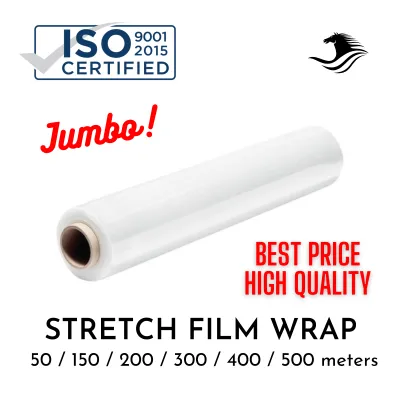
1,119 Lazada user ratings
Efficient packaging solution., Great value for the price., Convenient size for various packaging needs., Provides a tight and secure wrap., …Read full reviewShow less
Efficient packaging solution., Great value for the price., Convenient size for various packaging needs., Provides a tight and secure wrap., High-quality material for reliable protection., Ideal for shipping and storage., Durable stretch film for secure packaging., Perfect for pallet wrapping.,
Durable stretch film for secure packaging. Efficient packaging solution. Easy to use and handle. Perfect for wrapping of many files and stor…Read full reviewShow less
Durable stretch film for secure packaging. Efficient packaging solution. Easy to use and handle. Perfect for wrapping of many files and storybooks.
Received package just in time well package with bubble wrappers intact start to use it good as of now value for the money
Provides a tight and secure wrap., Efficient packaging solution., looks okey. Good for packaging items for shipping.
Strong adhesive for a secure wrap., Efficient packaging solution., Durable stretch film for secure packaging.,
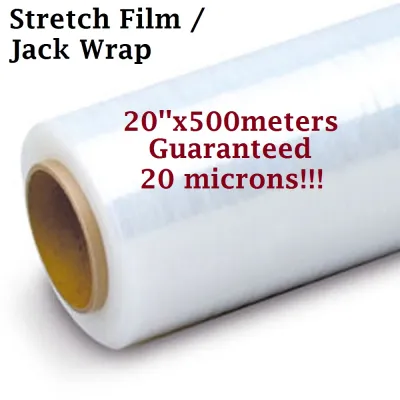
122 Lazada user ratings
Antagal dumating. Wala sa expected delivery date.I’ve seen it on the delivery history namasyal sa bulacan from QC bago nakarating sa Mandalu…Read full reviewShow less
Antagal dumating. Wala sa expected delivery date.I’ve seen it on the delivery history namasyal sa bulacan from QC bago nakarating sa Mandaluyong
Durability: .......................looks durable......... Clarity: very clear....................... Ease of Use: easy
Ease of Use:good Durability:good Clarity:good nice ang item nagustuhan ng asawa ko sya kc gagamit nyan legit seller
great value for money Clarity:should last me a very long time. pretty strong also dkes not tear easily
Received my order on time and in good condition, well packed 👍👍👍 Thank you seller and delivery rider 👍 👍👍👍👍
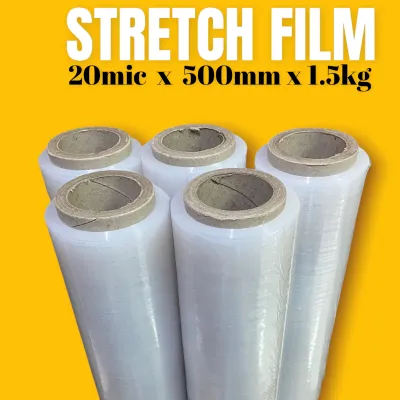
7,066 Lazada user ratings
Strong and tear-resistant, Easy to use and handle, Securely wraps and protects items, Convenient size for wrapping, Yahweh mush njgbah nugah…Read full reviewShow less
Strong and tear-resistant, Easy to use and handle, Securely wraps and protects items, Convenient size for wrapping, Yahweh mush njgbah nugah mga nvhha nbhah
Ease of Use:10/10 Durability:0/10 Clarity:10/10 what you see is what you get certainly will order again fast delivery and well packed
what you see is what you get,, super affordable ang price, fair pricing, fast delivery, courteous ang courier. more sales
napakaayos ang package ng items .medyo manipis yung na order ko ..pero ok n yun nextime nlang ulit .salamat seller
Useful tlga sya..maganda at mura dto sa shop na to..Salamat po
Prices are valid at publication and may change. Please refer to the product page for the latest price.
It is crucial to understand that hand film and machine film have distinct physical properties and are not designed to be interchangeable. Hand stretch wrap is engineered to be easily pulled and applied at walking speeds, often featuring high cling and puncture resistance at lower stretch levels. Machine stretch wrap, however, is formulated to withstand the intense mechanical forces of motorized pre-stretch rollers, which can stretch the film significantly without tearing. Attempting to use hand film on a high-speed machine will result in frequent breaks, while using machine film manually is physically impractical and will not achieve the proper containment force. Always check manufacturer labels and technical specifications before purchasing consumables.
Key Comparison Dimensions for Your Operations
To determine which wrapping method aligns with your business goals, you must evaluate several operational pillars. Comparing these dimensions allows you to calculate the true return on investment (ROI) and identify where bottleneck risks exist in your current workflow.
Shipping Volume and Daily Throughput
Establishing a clear baseline of your daily and weekly pallet output is the first step in assessing your packaging needs. If your warehouse processes only a handful of pallets each day, manual wrapping is highly manageable and keeps your operations flexible. However, as your daily volume grows, the time required to manually secure each load can quickly create a bottleneck at your shipping dock.
Manual wrapping has clear physical limits, as even the most efficient operator can only wrap a limited number of pallets per hour before fatigue sets in. During peak shipping seasons or sudden surges in order volume, relying solely on manual labor can lead to delayed shipments and backlogs. The physical speed of an operator walking around a pallet simply cannot scale to meet high-demand environments.
Machine wrappers, on the other hand, maintain consistent cycle times regardless of shift length, operator fatigue, or the time of day. A semi-automatic turntable wrapper can consistently wrap a pallet in a fraction of the time it takes a human operator. This predictability allows logistics managers to schedule shipments with high precision and ensures that throughput remains steady even during peak operational hours.
Labor Costs and Ergonomics
The human element of pallet wrapping is one of the most significant, yet frequently overlooked, costs in warehouse management. Manual wrapping is a highly repetitive, physically demanding task that requires operators to bend low, reach high, and walk backward while pulling heavy tension on the film. Over time, this repetitive motion can lead to physical strain, dizziness, and chronic musculoskeletal issues.
In the Philippines, businesses must remain mindful of local occupational safety guidelines regarding repetitive strain, heavy lifting, and manual handling limits. Minimizing the physical toll on your workforce not only protects employee health but also reduces the risk of workplace injuries and subsequent downtime. Implementing ergonomic tools or automated systems is a proactive way to maintain a safe and productive working environment.
Transitioning to a machine wrapping system fundamentally changes the role of your warehouse staff. Instead of spending valuable hours walking in circles around pallets, operators can simply load the machine, press a button, and focus on other critical tasks like inventory management, labeling, or quality control. This reallocation of labor can significantly boost overall warehouse productivity without increasing your headcount.
Initial Investment and Ongoing Expenses
The financial comparison between hand and machine wrapping involves balancing immediate upfront capital against long-term operational costs. Hand stretch wrap requires a very low initial investment, as you only need to purchase inexpensive hand dispensers and the film itself. This low barrier to entry is highly attractive for businesses looking to conserve cash flow or those with highly unpredictable shipping volumes.
However, hand wrapping often leads to higher ongoing film costs per pallet because manual application cannot maximize the film’s potential stretch. Most hand films are applied at a 10% to 50% stretch ratio, meaning you use more physical material to secure each load. Additionally, inconsistent manual tension can lead to wasted film through overwrapping or discarded, tangled pieces.
Machine stretch wrap systems require a substantial upfront capital investment for the machinery, installation, and electrical integration. Despite this high initial cost, machines utilize motorized pre-stretch carriages that can stretch film by 150% to over 300% before it is applied to the pallet. This high stretch efficiency drastically reduces the amount of film used per load, leading to significant long-term savings that can offset the initial machinery cost over time. When budgeting, businesses should request detailed quotes in ₱ from local equipment suppliers, factoring in delivery, installation, routine maintenance, and power consumption.
Load Stability and Film Consistency
The primary purpose of stretch wrap is to protect your products during transit, and this requires consistent containment force. Machine wrappers excel in this area by providing uniform tension and predictable containment force based on precise digital settings. Once a machine is calibrated for a specific load profile, it applies the exact same amount of holding force to every single pallet, minimizing the risk of product shifting or damage during transport.
In contrast, the consistency of hand wrapping relies entirely on the operator’s training, physical strength, and energy levels. A pallet wrapped at the beginning of a morning shift may be highly secure, while a pallet wrapped at the end of a long day might suffer from loose layers and poor containment. This variability increases the risk of load failure, leading to costly product damage, customer complaints, and return shipping expenses.
To ensure optimal load stability, businesses should carefully evaluate the technical specifications of their chosen film. Look for manufacturer data regarding puncture resistance, cling properties, and recommended stretch ratios to ensure the material matches your specific load types. Testing the containment force with a specialized gauge can help verify whether your manual or automated wrapping methods are meeting safety standards.
Decision Framework: Choosing the Right Equipment
To help your business make a definitive choice, it is helpful to evaluate your operational profile against a structured decision framework. The transition from manual to automated wrapping is rarely about a single factor, but rather a combination of volume, load characteristics, and facility constraints.

You should choose Hand Stretch Wrap if your business fits the following criteria:
- Your daily shipping volume is consistently below 10 to 15 pallets.
- You handle highly irregular, oversized, or fragile loads that cannot safely rotate on a standard turntable or withstand a rotary arm.
- Your warehouse operates with strict upfront capital limits and cannot justify the immediate expense of automated machinery.
- Your storage layout changes frequently, requiring a portable packaging solution that can be used anywhere on the warehouse floor.
You should choose Machine Stretch Wrap if your business meets these conditions:
- Your facility consistently processes more than 15 to 20 pallets per day, making manual wrapping a major bottleneck.
- You require highly consistent containment force to protect fragile, heavy, or high-value goods during long-distance transit.
- You want to reduce long-term consumable costs by leveraging the high pre-stretch capabilities of automated film carriages.
- You aim to improve warehouse ergonomics, reduce labor strain, and reallocate staff to higher-value operational roles.
Before making a final commitment, you must verify several critical facility requirements. Automated wrapping machines have a permanent physical footprint and require stable, level structural flooring to operate safely. You must also ensure your facility has the appropriate electrical infrastructure to power the machine and that you have sufficient clearance space around the turntable for forklift or pallet jack access. If your load profiles are highly mixed—ranging from tiny boxes to massive crates—you may need to look at specialized hybrid machines or versatile rotary arm systems rather than a basic turntable.
How to Evaluate Your Current Packaging Line
Before contacting suppliers or purchasing new equipment, conducting a thorough internal audit will ensure you select the most cost-effective solution for your business. Follow these actionable steps to evaluate your current packaging workflow.
First, audit your current daily pallet counts and track how they fluctuate during peak seasons. Record the average time it takes an operator to manually wrap a single pallet from start to finish, including the time spent retrieving film and moving around the load. This data will give you a clear picture of your current throughput capacity and highlight any existing bottlenecks.
Second, calculate your baseline packaging costs by tracking your film consumption and labor hours. Note how many rolls of hand wrap your team uses each week and multiply this by the cost per roll. Combine this with the hourly wages of the staff dedicated to wrapping to determine your current average packaging cost per pallet.
Third, measure your available warehouse floor space and inspect your facility’s infrastructure. Identify potential locations for a wrapping machine, keeping in mind the need for safe clearance zones and proximity to power outlets. Verify whether your electrical panel can support the voltage requirements of standard industrial packaging machinery.
Fourth, request equipment trials or consult with local packaging suppliers to test different film options. Many suppliers can bring demonstration units to your facility or run tests on your specific load types to demonstrate actual film savings and containment force. This hands-on verification ensures that whatever system you choose will perform reliably under your real-world operating conditions.

Community discussion
Share your experience or ask a question. Comments are reviewed before publication.