
Choosing the right pencil lead is not just about finding a tool that writes; it is about matching the physical properties of graphite to your unique hand movements, writing speed, and paper choices. In the world of stationery, the 2mm lead format occupies a special place, bridging the gap between traditional wooden pencils and fine-point mechanical pencils. Unlike thin 0.5mm or 0.7mm leads that snap under pressure, a 2mm lead offers a robust, customizable point that can be sharpened to a needle-sharp tip or worn down to a broad, expressive wedge.
However, finding the perfect match among the common grades—HB, 2B, and 4B—requires understanding how your personal writing or drawing style interacts with graphite hardness. The ideal grade for you depends entirely on your hand pressure, the texture of your paper, and your specific application. While an HB lead suits those with a heavy hand who need neat, smudge-free lines, a 2B lead offers a balanced, smooth glide for everyday note-taking, and a 4B lead provides the deep, velvety blacks needed for expressive sketching and soft shading. To find your perfect fit, you must evaluate how these leads perform under real-world conditions, especially when paired with your favorite notebooks or sketchpads.
Understanding the 2mm Lead Format and Graphite Scale
The 2mm lead format is a distinct standard in the stationery world, designed specifically for lead holders and clutch pencils rather than standard mechanical pencils. While standard mechanical pencils rely on internal click mechanisms to push thin leads forward, a lead holder uses a spring-loaded clutch or drop-action jaw to grip the thick 2mm lead securely. This design allows you to adjust the exposed lead length freely and use a specialized lead pointer or sharpener to shape the tip to your exact preference. Because of this structural versatility, 2mm leads are highly favored by artists, architects, and writers who appreciate the feel of a traditional wooden pencil but prefer the consistent weight and balance of a reusable metal or plastic barrel.
Products mentioned in this guide
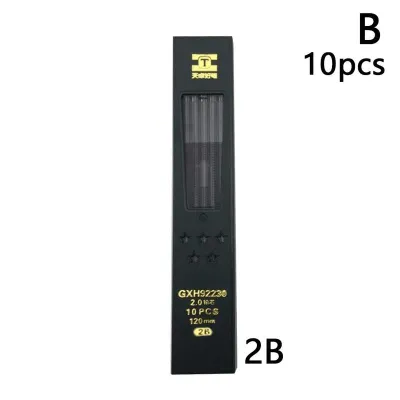
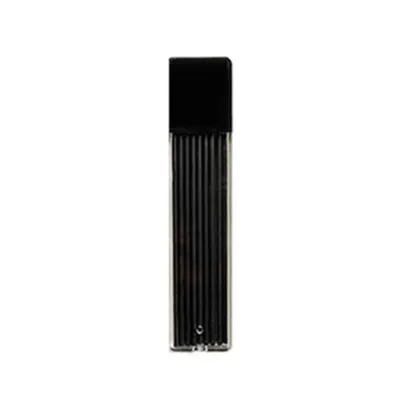
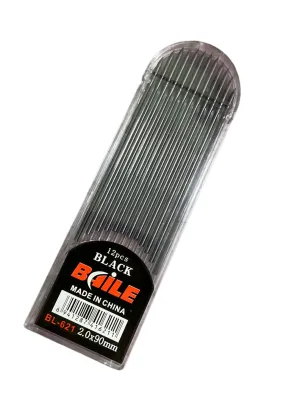
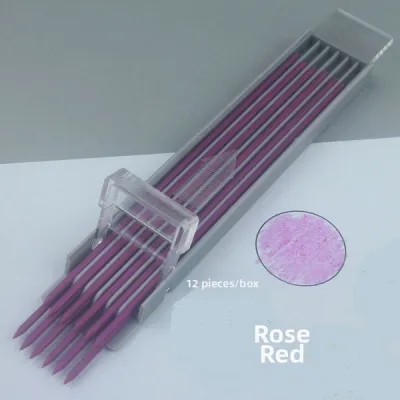
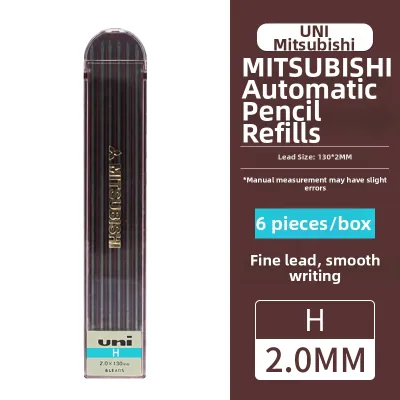
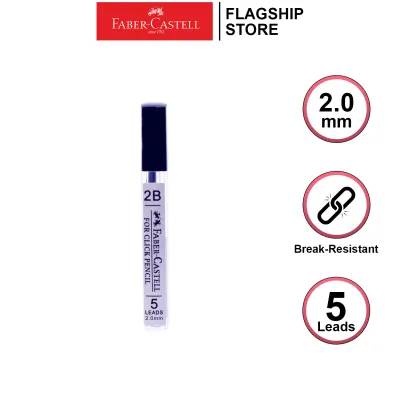
Prices are valid at publication and may change. Please refer to the product page for the latest price.
To choose the right lead, you must understand the European graphite scale, which classifies leads based on their hardness and blackness. The scale uses the letters “H” for hardness and “B” for blackness, with numbers indicating the intensity of these traits. An HB lead sits right in the middle of this scale, representing a balanced blend of medium hardness and medium darkness. As you move toward the “B” side of the scale—such as 2B and 4B—the graphite mixture contains a higher ratio of graphite to clay binder. This makes the lead softer, smoother, and capable of producing much darker, richer lines. Conversely, moving toward the “H” side introduces more clay, resulting in a harder lead that holds its point longer but produces lighter, gray lines.
It is important to note that the actual performance of any lead grade is not an absolute value; it is a variable that depends heavily on your paper’s surface texture (often called “tooth”) and the amount of pressure you apply. A soft 2B lead might feel incredibly smooth on a textured sketchpad but may wear down rapidly on rough, low-grade paper. Similarly, high tropical humidity—a common factor in countries like the Philippines—can slightly soften paper fibers, altering how the graphite adheres to the page and affecting both line darkness and smudge resistance.
Comparing HB, 2B, and 4B Lead Grades
When deciding between HB, 2B, and 4B leads, you are essentially balancing three physical trade-offs: line darkness, point retention, and smudge resistance. Harder leads like HB retain their sharp points for a long time, allowing you to write page after page without needing to use a lead pointer. However, they require more physical downward pressure to produce a dark line, which can lead to hand fatigue during long writing sessions. On the other hand, softer leads like 4B glide effortlessly across the page and produce deep, satisfying blacks with minimal pressure, but they wear down quickly and require frequent sharpening to maintain a fine line.

Smudging is another critical factor to consider, particularly if you are left-handed or tend to rest your hand on the paper as you write. Because softer leads deposit more loose graphite particles onto the paper surface, they are inherently more prone to smudging. In humid environments, where hands can become slightly damp, this smudge risk increases significantly. Understanding these physical characteristics allows you to match the lead’s behavior to your natural hand movements and environmental conditions.
HB Grade: The Balanced Standard
You should choose an HB lead if you have a naturally heavy hand pressure and require clean, highly legible text that resists smudging. Because HB contains a higher proportion of clay binder, the lead is physically firmer and resists crumbling under heavy downward force. This makes it an excellent choice for everyday writing, technical drafting, and laying down the initial, light guidelines of a drawing that you plan to erase later.
The observable traits of HB lead include a moderate, clean gray-black line and excellent point retention. When writing with HB, you will feel a distinct tactile feedback—often described as “tooth”—as the hard lead interacts with the paper fibers. This feedback provides greater control over your strokes, making it easier to maintain neat, consistent handwriting. Furthermore, because the graphite deposits are relatively light and firm, HB lines are highly erasable and rarely leave ghost images or dark smudges behind, even when subjected to friction from a hand sliding across the page.
2B Grade: Darker and Smoother
If you find that HB lead feels too scratchy or requires you to press down too hard to read your notes, the 2B grade is the logical next step. You should choose 2B if you want a darker, more legible line with less hand strain, allowing for a smoother, more fluid writing experience. It represents the sweet spot for general note-taking, journaling, and casual sketching, offering a perfect compromise between the hardness of HB and the rich darkness of softer grades.
Observably, 2B lead feels noticeably softer and glides across the paper with minimal resistance. It deposits a richer, darker line than HB, which enhances readability on various paper types, from standard school notebooks to premium journals. However, this softness means the point will wear down faster than an HB lead, requiring you to use your lead pointer more frequently if you prefer a sharp writing tip. While 2B is slightly more prone to smudging than HB, it still offers manageable smudge resistance for most right-handed writers and can be erased cleanly with a standard plastic eraser.
4B Grade: Soft, Dark, and Expressive
For those who prioritize deep, velvety blacks and expressive line variation, the 4B grade is an exceptional choice. You should choose 4B if you are primarily focused on artistic sketching, bold shading, or if you have an exceptionally light writing hand that struggles to make a mark with harder leads. The high graphite content in 4B allows you to create dramatic contrasts and rich, dark values that are impossible to achieve with HB or even 2B.
The physical traits of 4B lead are characterized by extreme softness and rapid point wear. When you write or draw with 4B, the lead crumbles slightly to deposit a thick layer of dark graphite on the paper, resulting in a buttery-smooth feel with virtually no tactile resistance. This high rate of graphite deposition means the lead loses its sharp point almost immediately, making it less suitable for fine, detailed writing but ideal for broad strokes, tonal shading, and filling in large dark areas. The primary trade-off with 4B is its high susceptibility to smudging; the loose graphite particles sit loosely on top of the paper fibers, meaning a stray hand or a closed notebook page can easily smear your work, especially in warm, humid climates.
Decision Framework: Matching Lead Grade to Your Habits
To help you decide which 2mm lead grade best suits your daily routine, consider how your physical writing habits, paper choices, and environmental factors interact. Below is a comparative overview of how these three common grades behave under typical conditions:
| Lead Grade | Line Darkness | Point Retention | Smudge Risk | Ideal Application |
|---|---|---|---|---|
| HB | Moderate Gray-Black | High (Stays sharp longer) | Low | Technical drafting, neat writing, light sketching |
| 2B | Rich Dark Gray | Medium (Requires regular sharpening) | Moderate | General note-taking, journaling, basic shading |
| 4B | Deep Velvety Black | Low (Wears down rapidly) | High | Artistic sketching, bold shading, expressive drawing |
To determine your natural hand pressure, try a simple self-check: write a few sentences on a standard sheet of paper using your normal grip, then flip the page over. If you can feel deep, raised ridges on the back of the paper, you have a heavy hand pressure and will likely find HB or a firm 2B most comfortable. If the back of the paper is completely smooth but your lines look faint, you have a light hand pressure and will benefit from the effortless dark marks of a 2B or 4B lead.
Your choice of paper texture also plays a critical role in this decision. Smooth, coated papers do not grip graphite easily, meaning a hard HB lead may look faint and feel slippery, while a soft 2B will perform beautifully. Conversely, highly textured paper (such as watercolor paper or rough sketchpads) acts like a grater on soft leads; using a 4B on rough paper will cause the lead to wear down almost instantly and create excessive graphite dust.
Finally, consider smudge management. If you are left-handed, your hand naturally follows your writing across the page. In this scenario, using a soft 4B lead can result in a graphite-stained hand and smeared text, especially when writing in the humid climate of the Philippines where moisture on the skin easily picks up loose graphite. Left-handed writers and those who write with a low hand clearance are generally more satisfied with the quick-setting, low-smudge characteristics of HB or a carefully managed 2B lead.
How to Test and Verify Your Ideal Lead Grade
Because the interaction between graphite, paper, and hand pressure is highly personal, the best way to find your ideal lead grade is to conduct a hands-on test using your actual writing or drawing tools. Avoid buying large bulk packs of a single grade until you have verified its performance on the specific paper you plan to use daily.
To perform a personal swatch test, obtain a small multi-pack containing HB, 2B, and 4B leads. Open your favorite notebook or sketchbook and draw a series of parallel lines with each grade, applying your natural writing pressure. Next, shade a small square with each lead, gradually increasing the pressure to see the full range of darkness each grade can achieve.
During this test, observe three key performance criteria:
- Line Consistency: Does the lead glide smoothly without catching or scratching the paper, and does it maintain a legible line width for a reasonable duration?
- Erasability: Use your preferred eraser to clear a section of each swatch. Does the graphite erase cleanly, or does it leave a stubborn gray smudge or physical indentation in the paper?
- Smudge Resistance: Run a clean, dry finger firmly across the swatches after a few seconds. Note how much graphite transfers to your skin and how far the smudge spreads across the page.
If you find that your current lead tears the paper, requires constant sharpening to remain legible, or leaves dark smudges all over your hands and pages, stop using it. Switch to a harder grade if you struggle with smudging and rapid wear, or move to a softer grade if your hand feels fatigued and your lines are too faint to read.
Frequently Asked Questions (FAQ)
Can I use 2mm lead in a standard mechanical pencil?
No, you cannot use 2mm lead in a standard mechanical pencil. Standard mechanical pencils are engineered to accommodate much thinner leads, typically ranging from 0.3mm to 0.9mm, and use an internal chuck mechanism that cannot physically hold or feed a thick 2mm lead. To use 2mm lead, you must purchase a dedicated clutch pencil or lead holder designed specifically for this format. Before buying refills, always check your writing tool’s barrel specifications and mechanism to ensure it is rated for 2mm leads, as some specialized drafting tools may use slightly different dimensions.
Does the manufacturer change the hardness feel of the same grade?
Yes, the physical feel and darkness of a specific grade can vary slightly between different stationery manufacturers. While the HB graphite scale is a widely accepted industry standard, there is no single, globally enforced formula for the exact ratio of graphite to clay. As a result, one brand’s 2B lead might feel slightly harder and write lighter, resembling another brand’s HB, while a different brand’s 2B might feel exceptionally soft and dark. If you are preparing for a critical project or planning a bulk purchase, it is highly recommended to test a small pack of refills from your chosen brand first to verify that its specific hardness profile matches your expectations.

Community discussion
Share your experience or ask a question. Comments are reviewed before publication.