
Choosing the right 0.5mm pencil refill depends on your writing style, paper choice, and how much pressure you apply. For most everyday tasks, HB serves as the standard baseline, offering a balanced mix of clean lines and moderate darkness. If you prefer a slightly darker, more fluid stroke without excessive smudging, B lead provides an excellent middle ground. For those who write with a light touch or want bold, highly visible text, 2B lead delivers rich contrast and maximum smoothness. However, because softer leads transfer more graphite to the page, they are also more prone to smudging—especially in humid tropical climates where paper absorbs moisture. Ultimately, the best grade is a personal choice that balances your natural writing pressure against your tolerance for smudges and lead breakage.
Understanding the Graphite Hardness Scale
To make an informed decision, it helps to understand what goes into a 0.5mm pencil refill. Mechanical pencil leads are not made of pure lead; instead, they consist of a carefully calibrated mixture of graphite and a binding agent, typically clay or synthetic polymers. Graphite is naturally soft, dark, and slippery, while clay is hard, light-colored, and rigid. The ratio of these two materials determines where a lead falls on the standard hardness scale.
The letter “H” stands for hardness, while “B” stands for blackness. An HB lead sits right in the middle of this scale, representing a balanced blend of graphite and binder. As you move toward B and 2B, the proportion of graphite increases while the binder decreases. This makes the lead progressively softer and darker.
Products mentioned in this guide
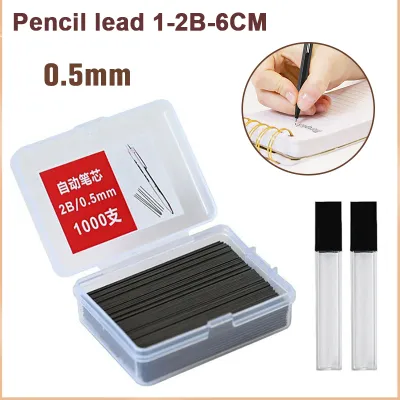
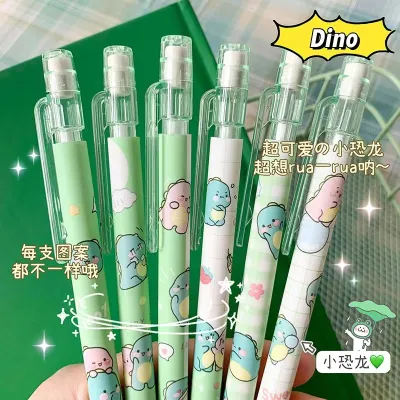
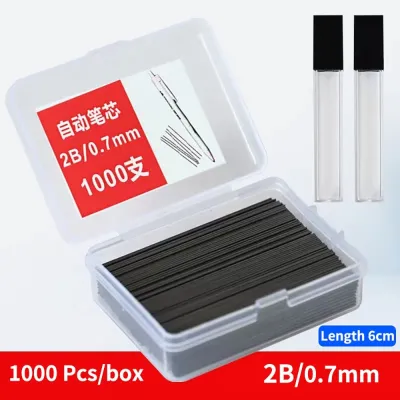
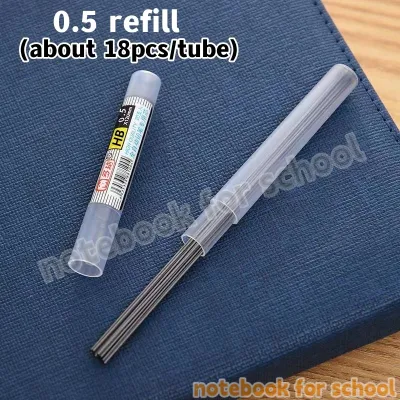
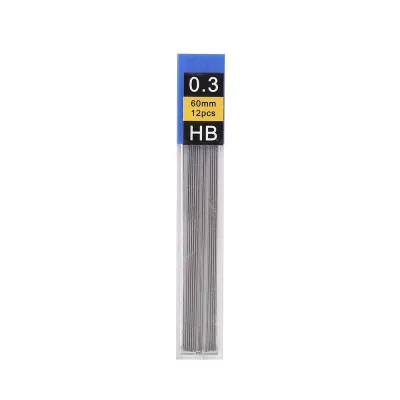
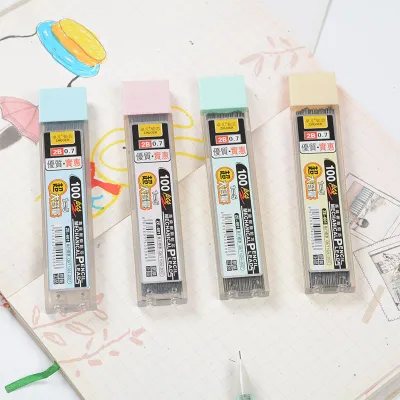
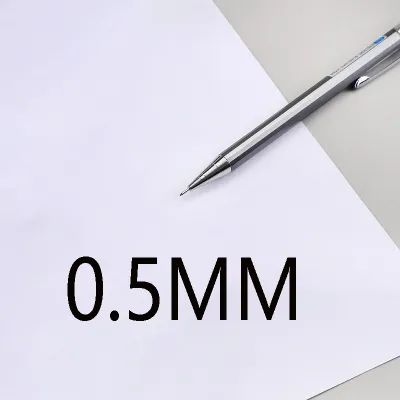
Prices are valid at publication and may change. Please refer to the product page for the latest price.
It is important to note that the “0.5mm” designation refers strictly to the physical diameter of the lead, not its hardness. A 0.5mm HB lead and a 0.5mm 2B lead are physically identical in thickness, meaning they will fit into the same mechanical pencil. However, because of their different internal compositions, they will behave very differently when they make contact with paper.
Comparing HB, B, and 2B Refills for Everyday Writing
When you swap an HB refill for a B or 2B in your 0.5mm mechanical pencil, the physical change in your writing experience is immediate. The shift in the graphite-to-binder ratio alters how the lead wears down, how much material is deposited onto the paper, and how the pencil feels in your hand. To find your ideal match, you need to look closely at three primary performance areas: darkness, smoothness, and cleanliness.

Darkness and Line Contrast
Line contrast is crucial for readability, especially if you need to scan your notes, photocopy documents, or read your handwriting under dim light. Under normal writing pressure, HB lead produces a grey, clean line. While perfectly legible for standard notebook entries, it can sometimes look faint on highly reflective or colored paper.
Upgrading to B lead introduces a noticeable jump in darkness, yielding a deep charcoal grey that stands out clearly on the page. If you require maximum contrast, 2B lead deposits a rich, near-black line with minimal effort. This high level of contrast is highly beneficial for creating bold headings, sketching quick diagrams, or ensuring that handwritten notes remain highly visible when digitized with a smartphone camera.
However, keep in mind that absolute darkness is not universally standardized. A B lead from one manufacturer might look as dark as a 2B lead from another. If you find your current brand’s HB too light, trying a B grade from the same brand is usually the most reliable way to achieve better contrast.
Smoothness and Writing Friction
The tactile feedback of a pencil—often described as “tooth” or “drag”—directly affects your writing speed and hand fatigue. HB leads contain more clay, which makes them firmer and more resistant to wearing down. This firmness provides a distinct feedback, allowing you to feel the texture of the paper as you write. While some writers appreciate this control, others find that it requires more downward pressure, which can lead to hand fatigue during long writing sessions.
In contrast, B and 2B leads glide across the page with significantly less friction. Because they are softer, they wear down more quickly, leaving behind a thick layer of graphite that acts almost like a dry lubricant. Writing with a 0.5mm 2B lead feels incredibly smooth, requiring almost no downward pressure to produce a dark line.
The trade-off for this buttery smoothness is a higher risk of lead breakage. Because 0.5mm lead is already quite thin, the softer structure of 2B makes it more susceptible to snapping if you write with a heavy hand or extend the lead too far out of the pencil tip. If you tend to press down hard when you write, the firmer support of an HB or B lead will likely feel more stable.
Smudge Resistance and Paper Cleanliness
One of the biggest challenges of using softer lead grades is keeping your pages clean. Because B and 2B leads deposit more loose graphite particles onto the paper, those particles are easily disturbed by physical contact. If you drag your hand across the page as you write—a common issue for left-handed writers—softer leads can quickly turn your notes into a smudged mess.
Environmental factors also play a significant role here. In warm, humid climates like the Philippines, paper naturally absorbs moisture from the air. This dampness softens the paper fibers and makes graphite transfer even easier. Under these conditions, a 2B lead that performs cleanly in an air-conditioned office might smudge heavily in a humid classroom or outdoor setting.
To check the smudge resistance of a lead grade, you can perform a simple physical test. Write a few lines on your preferred notebook paper, wait five seconds, and then firmly drag your finger across the text. If you see a dark grey trail behind your finger, the lead may be too soft for your writing style or environment, and switching to a firmer B or HB grade would be more practical.
Matching the Lead Grade to Your Specific Writing Tasks
To help you decide which 0.5mm pencil refill to purchase, consider how your daily tasks align with the strengths and weaknesses of each grade.
Choose HB if:
- You are taking rapid, high-volume notes where pages are turned quickly and must remain pristine.
- You are working on complex mathematical equations or technical drawings that require precise, thin lines that do not blur together.
- You are left-handed and need to prevent your hand from smearing the text as you write from left to right.
- You write with heavy downward pressure and want to minimize lead breakage.
Choose B if:
- You want a versatile, all-purpose lead that offers a darker line than HB without the extreme smudging of 2B.
- You find HB too light or scratchy but still need your notes to remain clean and legible over time.
- You write for extended periods and want to reduce hand fatigue by using a slightly softer lead.
Choose 2B if:
- You have a very light writing touch and want dark, high-contrast lines without pressing down.
- You use your mechanical pencil for both writing and quick sketching, shading, or drawing.
- You want to create bold headings or emphasis in your journals and planners.
Verify first if:
- You are preparing for standardized national exams or board examinations. Many automated optical mark recognition (OMR) scanners are calibrated specifically for standard No. 2 or HB pencils. While some modern scanners can read 2B marks, it is always safest to check the official exam guidelines before using a softer lead.
- You are signing official, legal, or archival documents. Graphite can be erased or smudged over time, so verify if a permanent ink pen is required instead of a mechanical pencil.
Checking Paper and Mechanical Pencil Compatibility
Before buying a large pack of 0.5mm refills, it is wise to consider how they will interact with the rest of your stationery setup. The texture, or “tooth,” of your paper has a massive impact on how a lead grade performs. Highly textured, rough paper will act like a grater on soft leads, wearing down a 2B refill incredibly fast and leaving behind excess graphite dust. Conversely, highly coated, ultra-smooth paper might cause a soft 2B lead to slide too quickly or skip, whereas a firmer HB lead can grip the surface better to produce a consistent line.
Your mechanical pencil’s internal mechanism also plays a role. The clutch—the small metal or plastic jaws inside the tip that hold the lead in place—must grip the lead firmly without crushing it. Because 2B lead is softer and more brittle, an aggressive metal clutch can sometimes bite too deeply into the lead, causing it to break internally before it even exits the sleeve.
If you are planning to stock up on refills for the school year or for office use, buy a single small tube first. Refills typically cost anywhere from ₱50 to ₱150 depending on the brand and pack size, so testing a small pack is a low-cost way to confirm compatibility with your favorite mechanical pencil and the specific notebooks you use daily. This simple check ensures you won’t end up with a bulk supply of lead that constantly snaps or smudges on your paper.
Frequently Asked Questions (FAQ)
Does the 0.5mm diameter affect the hardness of the lead?
No, the physical diameter of the lead and its hardness grade are entirely separate specifications. A 0.5mm measurement indicates the thickness of the lead shaft, while grades like HB, B, and 2B describe the ratio of graphite to clay binder inside that shaft. However, because a 0.5mm lead is quite thin, a softer grade like 2B will naturally feel more fragile and break more easily under pressure than a 0.5mm HB lead.
Can I use 2B lead in any standard 0.5mm mechanical pencil?
Yes, any standard 0.5mm mechanical pencil can accommodate 2B refills, as long as the lead diameter matches the pencil’s rated size. However, you may need to adjust how you write. Because 2B is softer, extending too much lead or applying heavy downward pressure can cause frequent breakage. If your pencil has a spring-loaded tip designed to absorb shock, it will handle softer 2B leads much better.
Why does my B lead look lighter than my friend's B lead?
The graphite hardness scale is not governed by a single, strict global standard. Different manufacturers use their own proprietary formulas, clay binders, and manufacturing processes. As a result, a B lead from one brand might feel firmer and look lighter, while a B lead from another brand might write more like a 2B. To ensure consistent performance, it is best to stick with a brand whose grading system matches your personal writing preferences.

Community discussion
Share your experience or ask a question. Comments are reviewed before publication.