
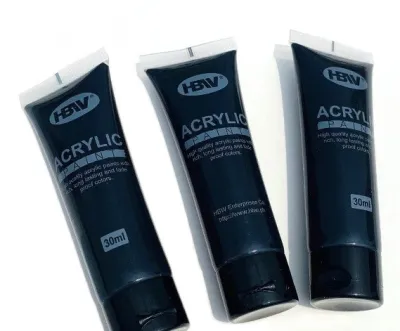
HBW acrylic paint is a highly accessible, budget-friendly option widely distributed across the Philippines, making it a staple in classrooms, offices, and hobbyist studios. When comparing this brand to other acrylic paints on the market, the primary distinction lies in its classification as a student-grade medium. For beginners, craft lovers, and those working on temporary projects, it offers an economical entry point. However, artists seeking archival longevity, intense pigment saturation, and predictable blending properties must weigh its characteristics against premium student or professional-grade alternatives.
To make an informed choice, you must look beyond the brand name and evaluate how the paint behaves on your chosen surface. Factors such as binder quality, pigment-to-filler ratios, and environmental conditions—like the high humidity typical of the Philippine climate—all play a critical role in how acrylic paint dries and lasts. By understanding these variables, you can determine whether a budget-friendly option like HBW fits your creative goals or if your project demands a higher-grade investment.
Understanding Acrylic Paint Grades to Set Realistic Expectations
Before comparing specific brands, it is essential to understand how manufacturers formulate acrylic paints. Acrylic paint consists of pigment particles suspended in an acrylic polymer emulsion. The ratio of these ingredients, along with the addition of fillers and extenders, determines the paint’s grade, performance, and price point.
Products mentioned in this guide
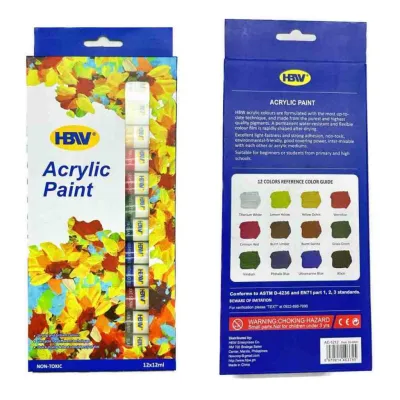
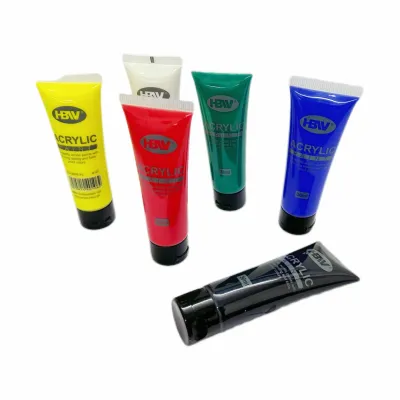
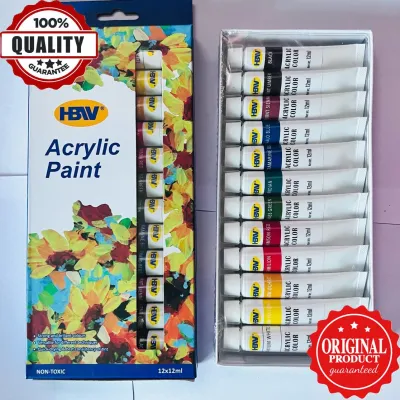
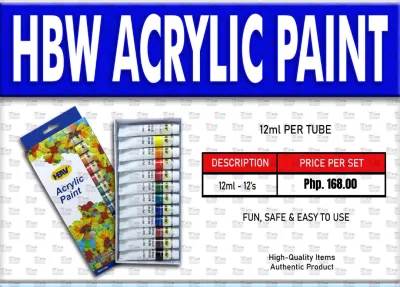
![Acrylic paint 12 colors x 12ml [HBW]](https://img.lazcdn.com/g/ff/kf/Sdc262cd74b8e49178361ea3de691eef69.jpg_400x400q80.jpg_.webp)
Prices are valid at publication and may change. Please refer to the product page for the latest price.
Student-grade acrylic paints, which include entry-level brands like HBW, are formulated to keep costs low. Manufacturers achieve this by using synthetic or less expensive pigments, reducing the overall pigment concentration, and adding more fillers like calcium carbonate or clay. These fillers bulk up the paint and give it body, but they also reduce its tinting strength and opacity. As a result, student-grade paints are highly affordable and excellent for learning, but they may require multiple coats to achieve solid coverage and can appear slightly chalky when dry.
In contrast, professional-grade paints prioritize performance and longevity over cost. These formulas feature high concentrations of pure, single pigments with minimal fillers. This high pigment load ensures exceptional color vibrancy, superior tinting strength, and excellent lightfastness, meaning the colors resist fading when exposed to light over time. Professional paints also offer a more consistent texture across different colors, whereas student-grade lines may vary in consistency from tube to tube.
To identify the grade of HBW or any other brand you encounter in local department stores or art shops, you must carefully examine the packaging. Look for indicators such as “Artist Grade,” “Professional,” “Studio,” or “Student.” Professional paints almost always list the specific pigment codes (such as PW6 for Titanium White or PB29 for Ultramarine Blue) and lightfastness ratings on the label. If a tube only lists the color name without pigment codes, chemical descriptions, or safety certifications, it is highly likely a student-grade or craft-grade product designed for general use.
How to Test and Compare Acrylic Paint Performance
Because you cannot always rely on marketing claims, conducting your own hands-on tests is the most reliable way to compare HBW with other brands. You can perform several simple, observable tests on a scrap piece of canvas or heavy paper to evaluate key performance metrics.

Pigment Load and Opacity To test pigment concentration and coverage, draw a thick black line across a piece of heavy, primed paper or canvas using a waterproof marker. Once the ink is dry, paint a single, even stroke of your acrylic paint directly over the black line. A paint with a high pigment load and high opacity will completely or mostly obscure the black line in a single pass. Student-grade paints, which contain more fillers and less pigment, will often appear translucent, allowing the black line to show through clearly. This “swipe test” helps you visually compare the coverage of different brands side by side.
Consistency and Texture Squeeze a small amount of paint from the tube or bottle onto your palette to observe its body. Heavy-body acrylics should hold their shape, retaining crisp brush marks or palette knife textures, which is ideal for impasto techniques. Soft-body acrylics will spread more easily and are better suited for smooth, flat washes. When working with budget-friendly paints, observe how the paint handles when you mix colors. Lower-grade paints may turn muddy or lose vibrancy quickly when blended, whereas high-quality pigments maintain their clarity during color mixing.
Lightfastness and Durability Lightfastness refers to a paint’s resistance to fading under prolonged exposure to light. When comparing brands, check the packaging for standardized ratings, such as those established by the American Society for Testing and Materials (ASTM). A rating of ASTM I indicates excellent lightfastness, while ASTM II represents very good lightfastness. If a brand lacks these ratings on its label, the paint is likely not rated for archival use. For non-archival craft projects, this may not matter, but for artwork intended for sale or display, verified lightfastness is crucial.
Drying Time and Finish The drying speed of acrylic paint is highly sensitive to environmental conditions. In the warm, humid climate of the Philippines, the water in acrylic paint evaporates at a different rate than in dry, air-conditioned spaces. Apply a uniform layer of paint and monitor how long it takes to become dry to the touch. Additionally, observe the final sheen once the paint cures completely. Some budget brands dry to a very flat, matte, or slightly uneven finish due to high filler content, while premium brands tend to dry to a consistent satin or gloss finish that highlights the depth of the pigment.
Calculating the True Value and Cost per Milliliter
When shopping for art supplies in the Philippines, it is easy to focus solely on the upfront retail price of a paint set or individual tube. However, a cheaper price tag does not always translate to better value. To find the most cost-effective option for your projects, you should calculate the true cost per unit of volume.
To do this, divide the retail price in Philippine Pesos (₱) by the volume of the container in milliliters (ml) or its weight in grams (g). For example, if a 120 ml tube of student-grade paint costs ₱120, the cost is ₱1.00 per milliliter. If a premium brand costs ₱300 for a 60 ml tube, the cost is ₱5.00 per milliliter. This simple calculation allows you to compare the raw cost of different brands on an equal scale.
However, you must also factor in paint consumption. Because student-grade paints like HBW have lower opacity, you may need to apply three or four layers to achieve the same solid color coverage that a professional-grade paint achieves in a single coat. This means you will consume the budget paint much faster, potentially narrowing the actual cost gap over the course of a large project. If a project requires heavy layering, a slightly more expensive paint with better coverage might actually save you money and effort.
To maximize your budget, compare purchasing options across local art supply stores and online marketplaces. Buying individual tubes of frequently used colors (like Titanium White or Carbon Black) in larger volumes, such as 250 ml or 500 ml jars, is generally much cheaper per milliliter than buying small 12 ml tubes in a multi-color set. Reserve multi-color sets for testing new brands or for projects that require only tiny amounts of various accent colors.
Decision Framework: Which Paint Grade Fits Your Project?
Choosing between HBW and other brands comes down to matching the paint’s characteristics with your specific project requirements, skill level, and budget. No single paint grade is perfect for every scenario, so a structured decision framework can guide your purchase.
Choose HBW or similar student brands if:
- You are a beginner, student, or hobbyist practicing basic color theory, brushwork, and blending techniques.
- You are working on temporary crafts, school posters, or DIY home decor projects where archival longevity is not a priority.
- You are executing large-scale projects, such as theatrical backdrops or community murals, where you need a high volume of paint on a limited budget.
- You are conducting art workshops or classroom activities where cost-efficiency per student is the primary concern.
Choose professional or premium brands if:
- You are creating original fine art pieces intended for exhibition, sale, or long-term display.
- Your work relies on highly saturated, luminous colors, complex glazing layers, or heavy impasto textures that require a reliable heavy-body consistency.
- You require guaranteed archival quality and verified lightfastness to ensure your artwork does not fade or yellow over the years.
- You need precise, predictable color mixing without the risk of colors turning muddy or chalky.
Verify first if:
- You plan to mix different paint grades on the same palette. While you can physically mix student-grade and professional-grade acrylics because they share an acrylic binder, doing so will dilute the high pigment concentration of the professional paint. This compromise can alter the overall durability, finish, and archival quality of your final piece. If you must combine grades, use the student-grade paint for the initial underpainting layers and save the premium, high-pigment paint for the final, visible surface details.
Frequently Asked Questions (FAQ)
Can I mix HBW acrylic paint with professional brands?
Yes, you can physically mix HBW acrylic paint with professional-grade acrylic brands. Because almost all modern acrylic paints utilize a compatible water-based acrylic polymer emulsion as their binder, they will blend together smoothly without curdling or separating. However, you must consider the trade-offs in quality. Mixing a student-grade paint like HBW—which contains a higher proportion of fillers and lower pigment concentration—with a premium paint will dilute the professional paint’s pigment load. This reduction lowers the overall tinting strength, alters the texture, and compromises the archival longevity of the final mixture. For best results, reserve mixed-grade blends for preliminary sketches, color studies, or non-archival craft projects.
Does HBW acrylic paint work well on canvas and wood?
HBW acrylic paint adheres well to porous surfaces such as stretched canvas, wood panels, cardboard, and heavy watercolor paper. However, because student-grade paints contain more fillers and a thinner binder, preparing your surface is absolutely critical to achieving a good result. If you apply the paint directly to raw wood or unprimed canvas, the porous fibers will rapidly absorb the moisture and binder, leaving the pigment dry, chalky, and prone to flaking. To prevent this, always apply one or two coats of acrylic gesso to prime and seal the surface before painting. This step ensures even adhesion, prevents color sinking, and helps you get the best possible coverage from your paint.

Community discussion
Share your experience or ask a question. Comments are reviewed before publication.