
Purchasing a 250-gram pack of DIY beads is an excellent, cost-effective way to stock up for jewelry-making projects, but it often leaves crafters asking one critical question: how many individual beads are actually inside? The short answer is that there is no single, universal number. A 250-gram package can contain anywhere from a few dozen large focal beads to several thousand tiny seed beads.
The final count depends entirely on the material, size, shape, and manufacturing consistency of the beads you choose. Understanding how these physical properties interact allows you to estimate your bead count accurately, ensuring you have enough materials to complete your necklaces, bracelets, or beaded accessories without running short mid-project.
Understanding Bead Weight vs. Count
When buying crafting supplies in bulk, packages are almost always sold by weight rather than by individual piece count. This practice is standard because counting thousands of tiny items manually or mechanically for every single package is inefficient for manufacturers. Consequently, the 250-gram label on your bead pack represents the total mass of the product, which is determined by the volume of the beads and the density of the material used to make them.
Products mentioned in this guide
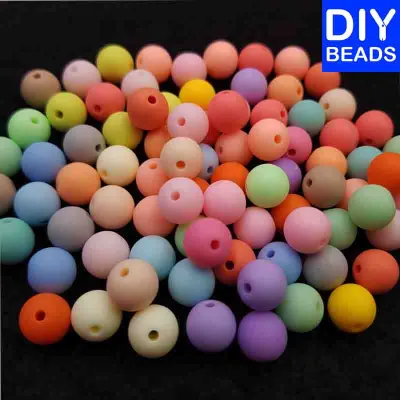
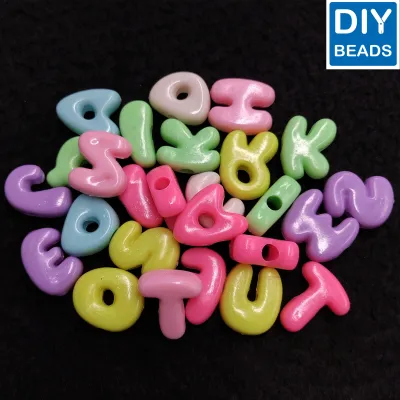
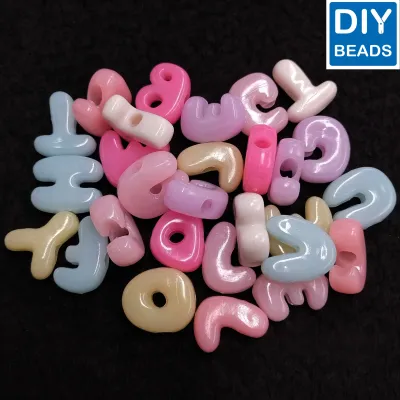
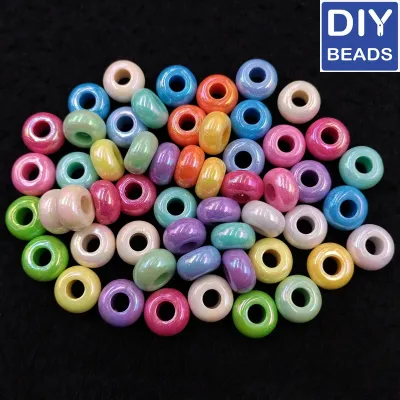
Prices are valid at publication and may change. Please refer to the product page for the latest price.
Material density plays the most significant role in how many beads you receive. For instance, lightweight materials like acrylic, resin, and natural wood have low densities. This means a single bead weighs very little, allowing a 250-gram pack to yield a high volume of pieces. Conversely, heavy materials such as glass, ceramic, metal, and natural gemstones have high densities. A glass bead of the exact same dimensions as an acrylic bead will weigh significantly more, meaning a 250-gram pack of glass beads will contain far fewer individual pieces.
Shape also alters the weight-to-count ratio. A perfect sphere utilizes volume differently than a highly faceted bicone, a flat disc, or an elongated oval bead. Even if two beads share the same millimeter designation, their physical shapes dictate how much material is present in each piece. Faceted cuts or hollowed designs remove material, while solid, chunky shapes add weight, directly shifting the total piece count in your bulk package.
Estimating Bead Counts by Size and Material
To plan your jewelry designs effectively, you must learn to read bead size specifications, which are almost universally measured in millimeters (mm). The millimeter size refers to the diameter of the bead. As the diameter increases, the volume and weight of the bead grow exponentially, not linearly. This means an 8mm bead is not just twice as heavy as a 4mm bead; it is actually several times heavier, resulting in a much lower piece count per gram.

When working with low-density materials like acrylic or lightweight wood, a 250-gram pack offers a generous yield. These materials are ideal for large-scale projects, statement necklaces, or children’s crafts where you want maximum volume without adding excessive weight to the wearer’s neck or wrists. In tropical climates like the Philippines, lightweight acrylic and treated wood beads are highly popular because they remain comfortable to wear in hot, humid weather and do not trap heat against the skin.
High-density materials require a more conservative estimation. Glass seed beads, crystal rondelles, and metallic spacer beads will feel noticeably heavier in the hand. If you are purchasing glass seed beads, a 250-gram pack will still yield thousands of pieces because the individual size is so minute. However, if you step up to 8mm or 10mm glass or gemstone beads, the count drops dramatically.
To get a realistic estimate before purchasing, always check the seller’s product description on your preferred online marketplace or craft store website. Many reputable suppliers list helpful metrics, such as the estimated number of beads per gram or the average count per temporary strand. If a seller notes that a standard 40-centimeter strand of 8mm beads contains approximately 48 to 50 beads, you can use this as a baseline. Avoid relying solely on generic online conversion charts. These charts often assume a standard glass density and do not account for variations in hole sizes, manufacturing tolerances, or unique material blends.
How to Calculate Exact Quantities for Your Project
If you are designing a specific piece of jewelry, such as a 45-centimeter necklace or an 18-centimeter elastic bracelet, you can calculate the exact number of beads required using a simple mathematical approach. First, determine the total length of your project in millimeters by multiplying centimeters by 10. Divide this total length by the millimeter size of your chosen beads. For example, a 180-millimeter bracelet made with 8mm beads would require approximately 22.5 beads. If you plan to add knots between the beads or insert small metal spacer beads, remember to add those dimensions to your calculation.
Once you know how many beads your project requires, you can verify if your 250-gram pack is sufficient by weighing a small sample. You will need a digital kitchen scale or a high-precision jewelry scale that measures in grams. Count out a small, manageable sample—such as 10 or 20 beads—and place them on the scale. Divide the total weight of the sample by the number of beads to find the average weight of a single bead.
With the average weight of a single bead established, you can easily calculate the total expected count in your bulk pack. Divide 250 grams by the average weight of one bead. For instance, if your sample of 10 beads weighs 5 grams, each bead averages 0.5 grams. Dividing 250 grams by 0.5 grams reveals that your pack contains approximately 500 beads.
Always factor in a standard margin for error when purchasing supplies. In bulk manufacturing, it is common to find a few deformed beads, chipped edges, or pieces with blocked drill holes. Additionally, beads are easily lost during the assembly process. Adding a 5% to 10% buffer to your calculated needs ensures you will not run out of matching pieces, which is especially crucial when working with natural materials that feature unique color variations.
Buying Tips for 250-Gram Bead Packs
Before finalizing your purchase of a 250-gram bead pack, verify the hole size compatibility. The internal drill hole must accommodate your chosen stringing material, whether you are using thick elastic cord, nylon thread, or jewelry wire. In humid environments, choosing the right stringing material is vital; elastic cords can degrade faster in heat, so ensuring your bead holes are smooth and wide enough for durable, coated jewelry wire or high-quality synthetic threads will prolong the life of your creations.
Pay close attention to whether the pack is sold as a uniform size or a mixed assortment. Mixed packs containing various shapes, sizes, and materials are excellent for creative, eclectic designs, but they make precise count estimation impossible. If your project requires a symmetrical pattern or a specific layout, stick to uniform packs where every bead shares identical dimensions.
Lastly, review seller descriptions carefully to confirm material authenticity. Synthetic substitutes, such as plastic beads coated to look like hematite, metallic alloy, or natural gemstone, can have vastly different weights than the genuine materials they mimic. Whether you are budgeting ₱150 or ₱500 for your craft supplies, checking customer reviews on local ecommerce platforms can help you verify if the beads feel authentic, weigh what is advertised, and hold up to daily wear without peeling or fading.
Frequently Asked Questions (FAQ)
How do I measure bead size if it is not labeled?
To measure bead size accurately at home, the most reliable tool is a pair of digital calipers, which provides a precise millimeter reading. If you do not have calipers, you can place a line of beads along a standard ruler, aligning them from the zero mark, and divide the total millimeters by the number of beads to find the average size. For irregular, oval, or baroque-shaped beads, always measure across the widest point to ensure your spacing calculations remain accurate.
Does the hole size affect the total weight of the beads?
Yes, the size of the drill hole directly affects the overall weight of the bead. A larger hole means more material has been drilled out and removed, making the individual bead slightly lighter than a bead of the same external size with a tiny hole. While this weight difference is negligible for small, casual craft projects, it can accumulate significantly in large-scale jewelry production, resulting in a slightly higher bead count per 250-gram pack.
Community discussion
Share your experience or ask a question. Comments are reviewed before publication.