
Choosing the right expanding file folder capacity is the key to transforming a chaotic stack of papers into a streamlined, accessible filing system. The ideal number of pockets depends on your specific categorization needs, the physical volume of your documents, and whether you plan to carry the folder daily or store it on a shelf. For simple daily tasks or single school subjects, a compact 3 to 5-pocket folder is highly efficient. If you are managing monthly bills, tax documents, or multiple academic courses, a medium-capacity folder with 7 to 13 pockets offers an ideal balance. For extensive archiving, alphabetical indexing, or multi-year records, a high-capacity folder with 24 or more pockets is necessary. Selecting the wrong size can lead to torn seams, bent documents, or unnecessary bulk in your bag.
Assess Your Document Volume to Determine Baseline Categories
Before purchasing an expanding file folder, you must evaluate the specific paperwork you intend to organize. Gathering all your documents in one place allows you to sort them into logical piles and determine your baseline category count. In the Philippines, household filing systems often need to accommodate utility bills, government-issued certificates, medical records, and school modules. If you are a student, your baseline categories will likely correspond to your active subjects. For home budget management, you might categorize by service provider or expense type.
Once you have grouped your documents, estimate the physical thickness of each pile. Standard 70 gsm or 80 gsm copy paper may seem thin individually, but a stack of fifty sheets measures roughly five millimeters thick. Overstuffing a single pocket puts immense pressure on the internal dividers and outer seams, which can cause the folder to warp or split. If a single category contains more than fifty sheets, consider splitting it into two sub-categories to distribute the physical weight evenly.
Products mentioned in this guide
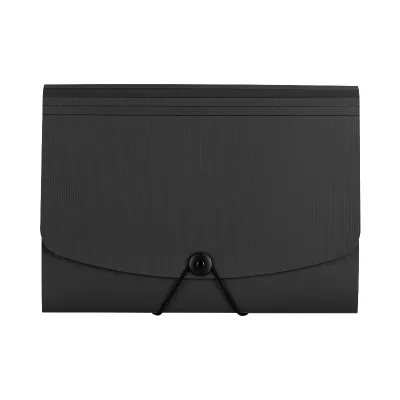
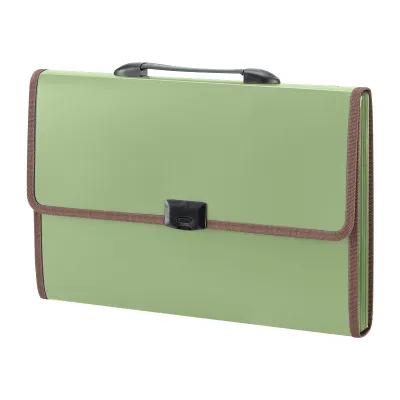
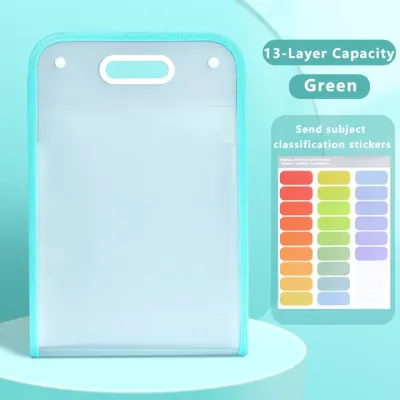
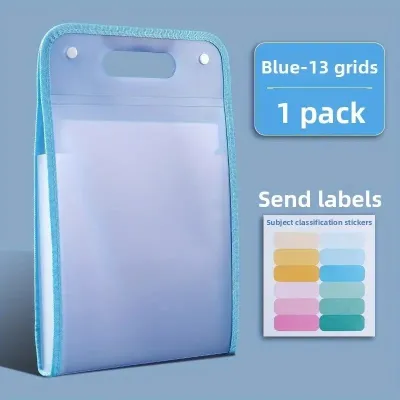
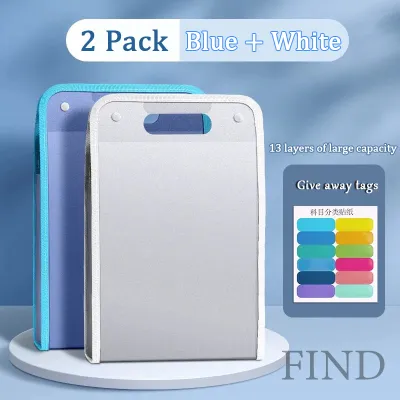
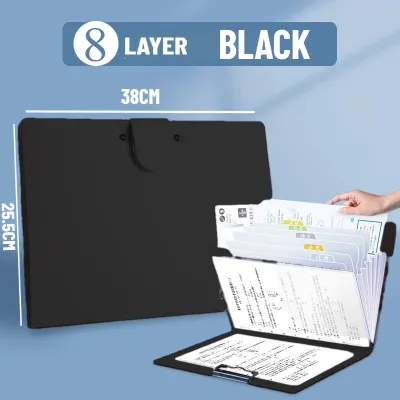

Prices are valid at publication and may change. Please refer to the product page for the latest price.
Additionally, you must verify the physical dimensions of your documents before choosing a folder. In local offices and schools, documents commonly use either A4 size (210 mm by 297 mm) or the longer legal bond paper size (often referred to locally as “long” bond paper, measuring 8.5 inches by 13 inches). Standard expanding folders designed for letter or A4 paper will not accommodate long bond paper; the top edges of the longer sheets will stick out, preventing the folder from closing and leaving the documents vulnerable to bending or tearing. Always check the product specifications to ensure the folder’s height and width match your paper standard.
Finally, determine the organizational logic that most effectively suits your workflow. Chronological sorting requires a minimum of 12 pockets for monthly tracking, while alphabetical filing requires a 24-pocket or 26-pocket system. If your workflow is project-based, a smaller folder with 5 to 7 pockets may be more than enough to handle the active phases of your tasks.
Match Pocket Counts to Your Specific Filing System
Matching the pocket count to your organizational system ensures that you do not carry excess bulk or run out of space mid-way through the year. Standard expanding file folders generally fall into three capacity ranges, each tailored to distinct workflows.

Low-capacity folders, featuring 3 to 5 pockets, are designed for active, short-term projects and high portability. These slim organizers fit easily into a backpack or tote bag without adding unnecessary weight. They are ideal for students who need to carry daily homework assignments or professionals who manage active contracts that require immediate signatures. By limiting the number of pockets, these folders force you to keep your filing system simple and prevent the accumulation of dead weight.
Medium-capacity folders, containing 7 to 13 pockets, represent the most versatile option for general home and office use. A 12-pocket or 13-pocket folder is well-suited for annual tracking, allowing you to dedicate one pocket to each month of the year, with an extra pocket for yearly summaries. This size is also highly popular among high school and college students who need to separate notes, syllabus sheets, and exam reviews for five to six distinct subjects.
High-capacity folders, which offer 24 or more pockets, are built for stationary archiving and comprehensive indexing. These accordion-style organizers are excellent for alphabetical filing of client records, managing extensive business receipts, or storing multi-year tax documents. Because they can hold hundreds of sheets of paper, they are most practically kept on a desk, shelf, or filing cabinet rather than carried around daily.
When choosing between these capacities, always weigh the trade-off between categorization granularity and physical weight. While a 24-pocket folder allows you to micro-categorize every single document, a fully loaded high-capacity folder can weigh several kilograms. If you must transport your files frequently, it is often more practical to use a slim 5-pocket folder for daily travel and transfer completed documents to a larger archive folder at home or in the office.
Evaluate Physical Expansion and Closure Security
An expanding file folder is only as good as its ability to contain its contents securely when fully loaded. To ensure your folder does not burst open, you must evaluate the physical expansion design and the closure mechanism.
Start by examining the gusset, which is the folding side material that allows the folder to expand. High-quality folders feature a full-expansion gusset that opens wide at both the top and the bottom. This design allows the folder to expand uniformly like an accordion and stand upright on your desk, making it easy to drop papers into the pockets. Folders that only expand at the top create a V-shape, which severely limits the capacity at the bottom of the pockets and causes papers to bunch up and wrinkle.
Next, compare the closure types based on your security and portability needs. Elastic cord closures are highly flexible because they stretch to accommodate varying load sizes. However, in warm and humid tropical climates, elastic bands can degrade, stretch out, or lose their tension over time. If you choose an elastic closure, look for thick, heavy-duty cords that are securely anchored to the back of the folder.
Snap button closures offer a clean, professional look and are highly secure, but they provide almost no adjustability. If you overfill a snap-button folder, the flap will not stretch far enough to reach the button, rendering the closure useless. Zipper closures provide high security, completely sealing all four sides of the folder to prevent small items like receipts, flash drives, or business cards from slipping out. The trade-off is that zipper folders have a fixed outer frame, meaning they cannot expand beyond the width of the zipper track. Hook-and-loop fasteners offer excellent adjustability for varying thicknesses, but the fibers can collect dust, lint, and hair over time, reducing their gripping power.
Check Material Durability for Heavy Document Loads
The durability of your expanding file folder determines how well it protects your documents from physical damage and environmental factors. Choosing the right material is especially important if you plan to store heavy document loads or use the folder in demanding environments.
Polypropylene (PP) plastic is the most common and practical material for modern expanding folders. It is lightweight, highly resistant to tearing, and waterproof. In humid environments, plastic folders act as an excellent barrier, preventing ambient moisture from softening your paper documents. To verify the quality of a plastic folder, perform a simple physical check: press your fingers against the outer cover to ensure it is rigid enough to protect the papers inside from bending, and inspect the welded seams to ensure they are smooth and free of air bubbles. You can also test the water resistance of the plastic cover by placing a single drop of water on a sample area; the moisture should bead up completely without soaking into the material.
Traditional cardstock and Manila paper folders are lightweight and budget-friendly, often costing under ₱200. While they are easy to write on directly, they lack the structural integrity of plastic. In high-humidity regions, paper-based folders absorb moisture from the air, making them soft, prone to tearing at the fold lines, and susceptible to mold growth over long periods. If you choose a paper-based folder, ensure it is stored in a dry, air-conditioned space and is not subjected to heavy daily travel.
For heavy-duty archiving, look for folders made from Oxford board or those featuring cloth-reinforced gussets. These materials provide excellent stiffness and can support the weight of dense media, such as laminated sheets, cardstock, or photo paper, without sagging. Pay close attention to the pocket dividers inside the folder. The points where the dividers are fused to the outer shell experience the most stress; folders with reinforced fabric piping or double-welded plastic edges are much less likely to split open under a heavy load.
Frequently Asked Questions (FAQ)
Can I add more dividers to an existing expanding file folder? (FAQ)
No, the internal dividers in pre-manufactured expanding file folders are permanently heat-sealed or glued to the outer gusset during production, meaning they cannot be structurally altered or expanded. If you find yourself needing more categories but do not want to buy a new folder, you can create sub-categories within a single pocket. Use color-coded sticky notes, attach loose index tabs to individual document groups, or insert slim paper folders inside an existing pocket to divide the space without compromising the folder’s structure.
How do I prevent thick documents from tearing the folder pockets? (FAQ)
To prevent seam failure and extend the lifespan of your folder, always distribute the weight of your documents evenly across multiple pockets rather than packing a single section to its limit. Before filing, remove bulky bindings such as thick binder clips, large metal clasps, or heavy plastic report covers, as these create localized pressure points that can puncture or tear the pocket walls. If you must file bound documents, place them in the center pockets of the folder to keep the overall center of gravity balanced and reduce stress on the outer edges.
Community discussion
Share your experience or ask a question. Comments are reviewed before publication.