
Sticker books are far more than simple quiet-time activities to keep young children occupied during rainy afternoons. These colorful books serve as highly effective, low-cost developmental tools that naturally target and strengthen fine motor skills. Every time a child interacts with a sticker, they engage in a complex sequence of physical movements that build hand strength, refine finger dexterity, and improve spatial awareness. By understanding the precise physical mechanics behind sticker play, parents can transform a simple hobby into an intentional learning experience that prepares young hands for future tasks like writing, drawing, and using everyday utensils.
With sticker books being highly affordable—often available as budget-friendly options under ₱200 in local stationery shops and online marketplaces—they represent one of the most accessible and high-yield educational resources available. Unlike digital screens that require only passive tapping, physical stickers demand active, tactile engagement. This hands-on interaction is crucial during early childhood, a period when the brain is rapidly mapping out motor pathways and building the physical strength required for school readiness.
The Mechanics of Sticker Play: How Each Step Builds Dexterity
The journey of a single sticker from the backing sheet to the page requires a sophisticated coordination of small muscle groups in the hands and fingers. This process can be broken down into three distinct physical phases: peeling, positioning, and pressing. Each phase challenges a child’s motor system in a unique way, turning playtime into a comprehensive workout for tiny hands.
Products mentioned in this guide
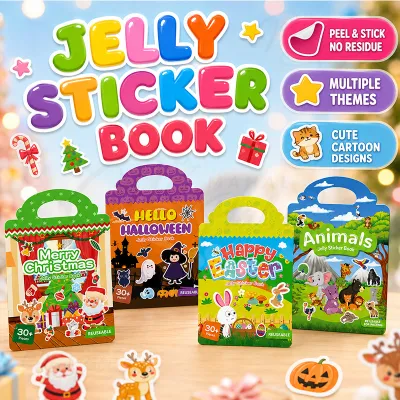
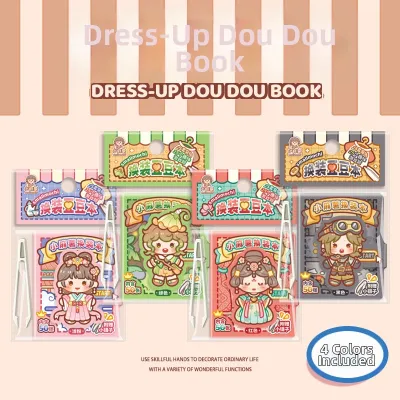
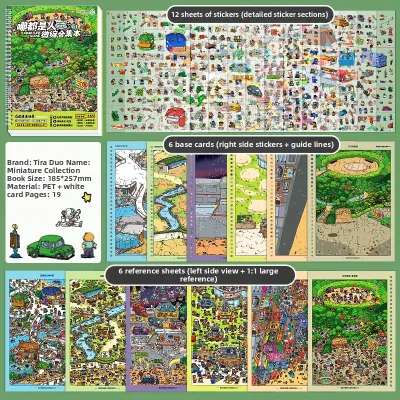
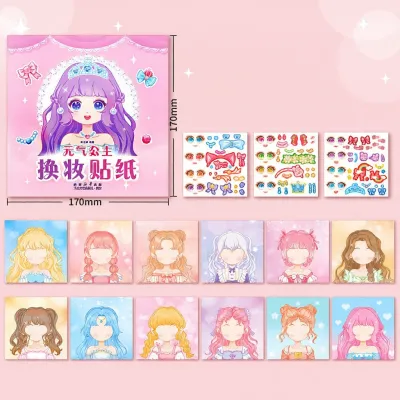
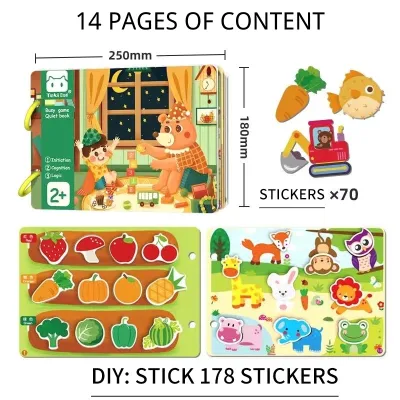
6,735 Lazada user ratings
📚Educational Value: This is a great educational toy that combines learning and play. It helps children develop early skills in number recogn…Read full reviewShow less
📚Educational Value: This is a great educational toy that combines learning and play. It helps children develop early skills in number recognition, color sorting, counting, and problem-solving while also improving hand-eye coordination and fine motor skills. 👶Age Appropriateness: The activities are suitable for toddlers and young children, especially those who are beginning to learn numbers and colors. The simple maze and sorting activities are easy to understand with proper adult supervision. ✅Quality: The wooden board feels sturdy and well-made. The magnetic pieces are a nice addition and make the activities easier and more enjoyable for little hands. Overall, the materials and construction are good for regular play. 🎮Engagement Level: The toy is interactive and keeps children interested because they can move the magnetic pieces around the board and complete different sorting activities. It’s a fun alternative to purely screen-based entertainment. 📚Educational Content: The toy offers useful early-learning concepts such as numbers, counting, colors, matching, sorting, and basic problem-solving. It’s a simple but effective way to introduce important preschool concepts through hands-on play.
Interactive learning made fun, hindi ko pa natry sa toddler ko (20mos) kasi medyo si punit pa to baka maexcite hahaha mahirap na. ok naman y…Read full reviewShow less
Interactive learning made fun, hindi ko pa natry sa toddler ko (20mos) kasi medyo si punit pa to baka maexcite hahaha mahirap na. ok naman yung item pero di ko lang talaga magets yung page 12 hahaha kasi di ko makita san ididikit yung velcro pero san nga ba seller?😅 nakapost yung photo nung para sa page 12. thanksss the rest ng pages naidikit ko naman haha page 12 lang hindi
Interactive learning made fun, Encourages creativity and imagination, Design: Easy to assemble 💰Price: Affordable
High-quality materials used, Engaging and educational, usable for my toddler 3yrs old boy. the quality is good.
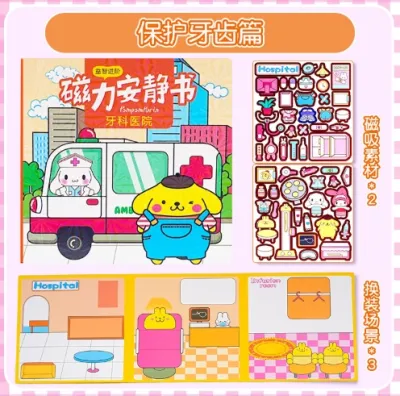
729 Lazada user ratings
Creative DIY decoration, Fun educational toy, Develops hand-brain coordination, Design: 10 Ease of Use: 10 🔨Durability: 10 Durability: 10 🛡️S…Read full reviewShow less
Creative DIY decoration, Fun educational toy, Develops hand-brain coordination, Design: 10 Ease of Use: 10 🔨Durability: 10 Durability: 10 🛡️Safety: 10 Adhesiveness: 10 Variety: 10 🌈Variety: 10
My daughter loves it and madami syang laman/accessories..she enjoys playing with it so much👍🏻👍🏻👍🏻Includes three scene pages,
nice nagustuhan talaga ng mga bata cute ng mga design makapal dn bilis lang ang delivery maraming salamat
my eldes happy with her kur0mi🥰less gadget😇 stress free din fr0m sch0ol😊 fav0rite nia pa ang vi0let😉😉
Prices are valid at publication and may change. Please refer to the product page for the latest price.
Peeling a sticker is the first and most complex step in the sequence. To lift a sticker, a child must isolate their thumb and index finger to pinch the edge of the adhesive shape. This specific movement is known as the pincer grasp, which is the foundational grip used later in life to hold pencils, zip up jackets, and feed oneself with cutlery. Because stickers are flat against the backing paper, children must use their fingernails or the pads of their fingertips to slide under the edge, lifting it just enough to gain a secure hold. This action requires high tactile sensitivity and precise force regulation; pulling too hard can tear the sticker, while pulling too softly will fail to lift it.
Once the sticker is successfully peeled, the child enters the positioning phase. This step shifts the focus from pure finger strength to hand-eye coordination and spatial awareness. The child must hold the sticky shape aloft while scanning the page to decide where it belongs. This requires the brain to translate visual information—such as a blank outline of a jeepney or a tree—into physical hand movements. As the hand approaches the page, the child must adjust the angle of their wrist and fingers to align the sticker correctly within the designated boundary. This micro-adjustment refines spatial judgment and teaches children how to control their hand movements in relation to visual targets.
The final phase is pressing and smoothing the sticker onto the page. This action builds finger strength and introduces the concept of bilateral coordination, which is the ability to use both hands together to complete a task. To press a sticker down flat without wrinkles, a child must use one hand to hold the book steady while the dominant hand uses a finger—often the index finger or thumb—to apply downward pressure and swipe across the surface. This bilateral integration is crucial for everyday activities like cutting paper with scissors while holding the sheet, or stabilizing a notebook while writing. The physical resistance of the paper and the adhesive provides valuable sensory feedback, helping the child learn how much pressure is required to secure the sticker.
Observing Your Child's Progress: What to Look For
As children spend more time with sticker books, their physical approach to the activity will naturally evolve. Parents do not need to rely on rigid age milestones to gauge development; instead, they can look for subtle, observable shifts in how their child handles the stickers and navigates the pages. These small victories offer clear evidence of growing motor control and cognitive maturity.
One of the most noticeable transitions is the shift from whole-hand grabs to precise fingertip pinching. Early on, toddlers often try to remove stickers using their entire hand, scraping at the page with their palms or multiple fingers clumped together. Over time, you will observe them isolating their thumb and index finger, using a clean, deliberate pinching motion to lift the edge of the sticker. This transition indicates that the small muscles in the hand are strengthening and that the child is gaining better control over individual finger movements.
Another key indicator of progress is the transition from random sticking to intentional placement. In the beginning, children tend to pile stickers on top of one another or place them haphazardly across the page, often ignoring boundaries or thematic backgrounds. As their hand-eye coordination improves, their placement becomes much more deliberate. You will notice them attempting to align a sticker with a specific outline, place an animal sticker upright on the ground rather than upside down in the sky, or arrange items neatly in a row. Even if the alignment is not perfect, the visible effort to control the final landing spot is a major milestone in spatial awareness.
Finally, parents should watch for changes in focus duration and frustration tolerance. Handling sticky, delicate paper can be incredibly challenging for young fingers, and early attempts often end in torn stickers or accidental folds. A child with developing motor skills will gradually show greater patience when a sticker sticks to their finger instead of the page. Instead of giving up or asking for immediate help, they will attempt to transfer the sticker from hand to hand or gently peel it off their skin. This persistence shows not only physical progress but also the cognitive growth required to problem-solve during hands-on tasks.
Choosing the Right Sticker Books for Skill Building
Not all sticker books are created equal, and selecting the right style can make a significant difference in how effectively they support your child’s physical development. By matching the design of the book to your child’s current skill level, you can provide a satisfying challenge that encourages growth without causing overwhelming frustration.
The size and shape of the stickers are the first elements to evaluate. For beginners who are just starting to explore sticker play, look for books featuring large, simple geometric shapes like circles, squares, or thick animal silhouettes. These larger designs are easier to grip and less prone to tearing when pulled from the backing sheet. As your child’s pincer grasp becomes more refined, you can transition to books with smaller, more intricate stickers that feature narrow sections, such as thin flower stems or delicate animal tails. These detailed shapes require a much higher level of finger isolation and careful handling to remove intact.
The quality and design of the backing paper also play a crucial role in the learning process. Many sticker books designed for very young children feature easy-peel backings, where the excess border paper around the stickers has been removed, leaving only the shapes themselves raised on the sheet. This design makes it much easier for little fingers to get underneath the edges. For a greater challenge, standard adhesive sheets with the border paper intact require the child to bend the page slightly to expose the sticker’s edge. In tropical climates like the Philippines, high humidity can sometimes make paper backing softer and adhesives slightly stickier, so choosing books with sturdy, high-quality backing paper prevents the sheets from tearing prematurely during play.
Lastly, consider the layout of the pages inside the book. Open-ended sticker books offer blank scenes—such as a farmyard, a bustling city street, or a tropical beach—where children can place stickers wherever they like. These are excellent for encouraging creative play and spatial exploration. On the other hand, books with designated target areas, such as dotted outlines or matching color spots, provide structured precision training. These target-based layouts challenge children to control their hand movements with high accuracy, helping them practice the exact alignment skills they will eventually need when learning to write letters within lines.
Maximizing Developmental Benefits During Playtime
While sticker books are excellent for independent play, a parent’s guidance can significantly amplify their developmental benefits. By adopting a supportive role that encourages problem-solving rather than immediate intervention, you can help your child get the most out of every sticker session.
The most important strategy is to encourage independent peeling and placing before offering physical assistance. It can be tempting to peel the stickers off the sheet and hand them to your child to save time or prevent tears, but doing so deprives them of the most valuable hand-strengthening part of the activity. If your child is struggling to lift a sticker, try bending the backing sheet slightly to pop the edge up for them, or peel up just a tiny corner and let them do the rest of the pulling. This minor adjustment keeps the task achievable while still requiring them to use their pincer grasp to finish the job.
When guiding your child’s placement, try using verbal cues rather than physically taking over their hand. If a sticker is upside down or drifting off the page, instead of grabbing their wrist to correct it, use descriptive language to guide them. You might say, “Can you turn the wheel so it touches the road?” or “Let’s slide the sticker a little bit to the left.” This approach forces the child’s brain to process your instructions and translate them into physical hand adjustments, which does far more for their spatial awareness and motor planning than passive physical guidance.
To further reinforce hand strength and coordination, try integrating sticker play with other stationery activities. For example, you can have your child draw a scene with crayons first, and then use stickers to populate their drawing. Alternatively, you can encourage them to use safety scissors to cut out sections of used sticker sheets, or have them use a glue stick to secure loose paper scraps. Combining these different hand movements—gripping a crayon, squeezing a glue bottle, cutting with scissors, and peeling stickers—creates a rich sensory and motor experience that builds a well-rounded foundation for school readiness.
Frequently Asked Questions (FAQ)
At what stage can toddlers start peeling stickers on their own?
Toddlers generally show readiness for independent sticker peeling when they can consistently pick up small objects, like pieces of food or tiny toys, using their thumb and index finger. This ability, known as the mature pincer grasp, typically develops alongside improved hand-eye coordination. If your toddler is interested in stickers but struggles to lift them, you can assist by peeling off the outer border paper from the sticker sheet, leaving only the individual stickers on the backing. This simple modification makes it much easier for young fingers to grip the edges independently.
Do reusable sticker books offer the same motor skill benefits?
Yes, reusable sticker books offer excellent motor skill benefits, though the physical mechanics differ slightly from traditional paper stickers. Reusable stickers are typically made of thicker, vinyl-like materials that do not tear easily, making them highly durable and forgiving for beginners. This thicker profile allows children to grip the edges more easily, which can be less frustrating for very young hands. However, because they lack strong adhesive, they require less pulling force to peel off, meaning they may offer slightly less resistance training for finger strength compared to traditional paper stickers.
Community discussion
Share your experience or ask a question. Comments are reviewed before publication.