
The amount of fabric cloth per yard for dress projects depends primarily on three factors: the dress silhouette, the wearer’s body measurements, and the usable width of the fabric bolt. As a general rule of thumb, a simple, sleeveless, knee-length sheath dress typically requires about 1.5 to 2 yards of 60-inch wide fabric, whereas a dramatic, floor-length maxi dress or a highly gathered tiered dress can easily demand 4 to 6 yards.
Accurately calculating this amount before visiting a local textile market in Divisoria or browsing online marketplaces prevents two frustrating scenarios: running out of material mid-project when the dye lot is no longer available, or overspending on excess yardage that simply sits in your storage. By understanding how pattern pieces fit onto a roll of cloth, you can confidently purchase the exact amount needed for your sewing projects.
Essential Measurements and Tools Before You Buy
Before you step into a fabric store or input your order on an ecommerce platform, you must collect a few precise measurements and assemble the right tools. Guessing your yardage based on ready-to-wear clothing sizes is a primary cause of sewing errors, as commercial sizing does not correlate directly with pattern layouts.
Products mentioned in this guide
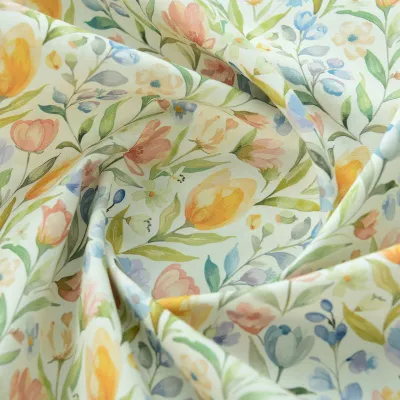
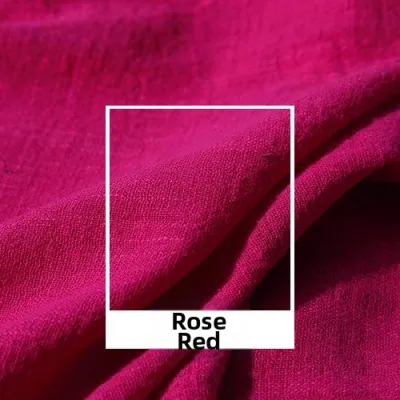

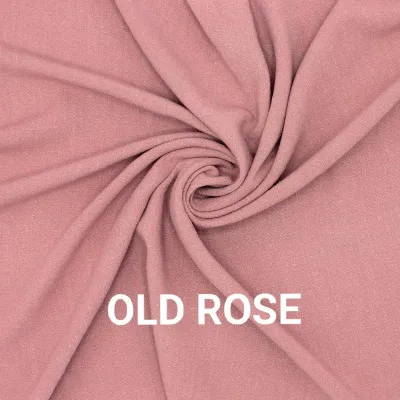
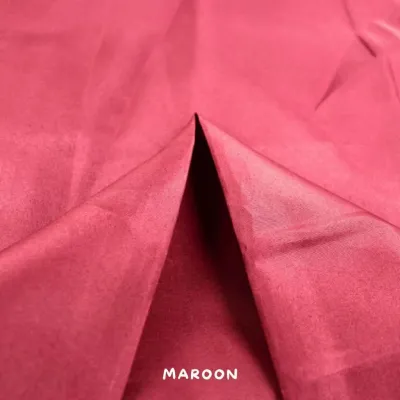
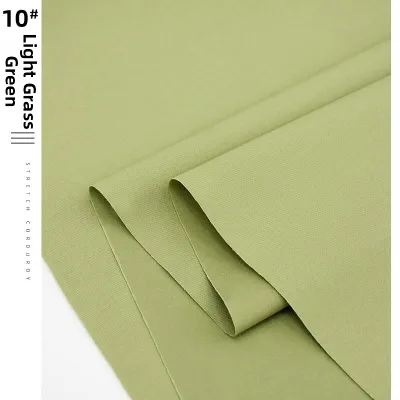
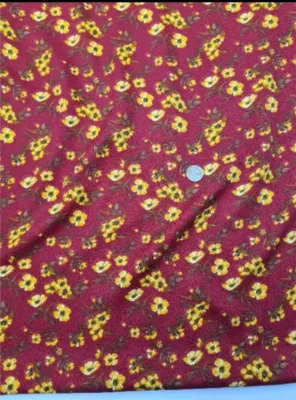
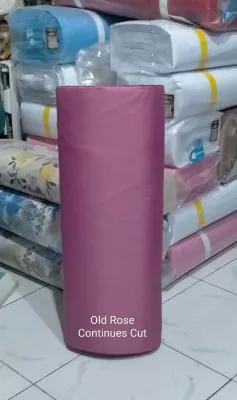
Prices are valid at publication and may change. Please refer to the product page for the latest price.
To get started, you will need a flexible measuring tape, a notepad or digital drafting app, a calculator, and your chosen sewing pattern instructions if you are using a commercial design. Always measure yourself or your client while wearing the undergarments intended to be worn with the finished dress, as this ensures the final drape and fit are accurate.
Four core body measurements are required for any standard dress project:
- Bust: Measure around the fullest part of the chest, keeping the tape parallel to the floor.
- Waist: Measure around the narrowest part of the torso, typically just above the belly button.
- Hips: Measure around the widest part of the hips and buttocks.
- Dress Length: Measure from the highest point of the shoulder, down over the bust, to the desired hemline.
In addition to body dimensions, you must identify the width of the fabric you intend to buy. Fabric cloth per yard for dress making is most commonly sold in two standard bolt widths: 45 inches (approximately 115 cm) and 60 inches (approximately 150 cm). Because a wider fabric allows you to place pattern pieces side-by-side rather than stacked vertically, knowing this width beforehand is just as critical as knowing your bust or waist measurements.
Estimating Yardage by Dress Style and Size
Different dress silhouettes distribute fabric across the body in distinct ways. Understanding the geometry of these styles allows you to estimate your yardage requirements even if you are drafting your own design without a pre-made pattern.

Fitted and Sheath Dresses
A sheath or fitted dress follows the natural contours of the body with minimal flare or excess volume. Because the skirt does not spread outward, the yardage calculation is relatively straightforward and relies on a simple vertical stacking method.
For a basic sleeveless sheath dress, the standard calculation formula is to take your desired finished dress length, add seam and hem allowances (typically 2 to 3 inches total), and multiply this number by two to account for the front and back panels. If you are using 60-inch wide fabric and your hip measurement is under 50 inches, both the front and back pieces can often be cut side-by-side from a single length of fabric, keeping your requirement close to 1.5 to 2 yards.
However, if you are using narrower 45-inch fabric, or if your hip measurement requires wider pattern pieces, you will need to cut the front and back panels sequentially. This layout immediately doubles the required length, pushing the estimate up to 2.5 or 3 yards. Adding sleeves will also increase your fabric needs: short sleeves generally require an additional half-yard, while full-length sleeves require an extra 3/4 to 1 yard of material.
A-Line and Fit-and-Flare Dresses
A-line and fit-and-flare dresses feature skirts that gently or dramatically widen from the waist down to the hem. This flared shape means that the bottom of the pattern pieces will be significantly wider than the top, preventing you from simply placing them side-by-side on narrow fabric.
When calculating fabric cloth per yard for dress styles with flared skirts, the standard “length times two” formula is rarely sufficient. For a knee-length A-line dress, you must evaluate whether the widest part of the skirt pattern fits within half the width of your fabric. If you are working with a 60-inch wide linen or cotton, you can alternate the direction of the pattern pieces (placing one upside down relative to the other) to save space, which typically requires about 2.5 to 3 yards.
If you plan to sew a full circle skirt or a dress with deep pleats, the fabric consumption increases dramatically. A circle skirt is cut as a large circle with a center cutout for the waist; because of this geometry, a knee-length circle skirt alone can consume 2 to 3 yards of 60-inch fabric, bringing the total dress requirement closer to 4 yards. Always verify that the maximum width of your pattern pieces does not exceed the physical width of the fabric bolt.
Maxi, Wrap, and Gathered Dresses
High-volume styles like maxi dresses, wrap dresses, and tiered garments require the highest yardage calculations due to their length, overlapping panels, or dense fabric gathers.
A floor-length maxi dress requires a substantial vertical run of fabric. For a wearer of average height, the shoulder-to-floor measurement is often around 55 to 60 inches. When you account for the front bodice, back bodice, and the long skirt panels, a simple maxi dress will require at least 3 to 4 yards of 60-inch wide fabric. If the maxi skirt is flared or tiered, this estimate can easily climb to 5 or 6 yards.
Wrap dresses feature overlapping front panels that secure with waist ties. This design means you are essentially cutting three front bodice pieces (two overlapping fronts and one back) and a skirt with similar overlapping coverage. You must also account for the fabric needed to construct the long waist ties and neck facings. A typical knee-length wrap dress with three-quarter sleeves will generally require 3.5 to 4 yards of fabric.
Gathered or tiered dresses, which are highly popular in warm climates for their breezy fit, utilize multiple horizontal strips of fabric stitched together. To create a gathered tier, the fabric strip must be 1.5 to 2 times wider than the tier above it. For a three-tiered midi dress, you may need to cut several continuous widths of fabric, which quickly compounds your yardage requirements to 4.5 or 5 yards, even when using wide 60-inch material.
Adjusting for Fabric Width, Patterns, and Shrinkage
Once you have a baseline estimate for your dress style, you must adjust that number to account for fabric characteristics, design prints, and laundry behavior. Failing to make these adjustments is a common reason why sewists find themselves a few inches short of completing a project.
Fabric Width Differences The difference between 45-inch and 60-inch fabric is substantial. A single yard of 60-inch fabric provides 1,440 square inches of material, while a yard of 45-inch fabric provides only 1,080 square inches—a 25% reduction in usable area. If a pattern specifies 2 yards of 60-inch fabric, you cannot simply buy 2 yards of 45-inch fabric. Instead, you will typically need to increase your purchase by 30% to 50%, resulting in a requirement of 2.75 to 3 yards of the narrower material to fit the same pattern pieces.
Directional Prints, Stripes, and Nap If your chosen fabric features a one-way directional print (such as flowers that all point upward), stripes, plaids, or a distinct nap (such as velvet or corduroy where the color changes depending on the light), you cannot flip your pattern pieces upside down to save space. All pieces must be laid out facing the exact same direction. For directional prints or textured fabrics, add an extra 15% to 20% to your total yardage calculation. For large plaids or horizontal stripes that must be matched across side seams, add 20% to 25% to ensure you have enough room to align the patterns.
Shrinkage and Climate Factors In tropical climates like the Philippines, breathable natural fibers such as cotton, linen, and rayon are highly favored for daily wear. However, these fibers are notorious for shrinking during their first wash. Cotton can shrink by 3% to 5%, while rayon can shrink by up to 10% in length.
To prevent your finished dress from turning out too small or too short after the first wash, always purchase an extra quarter-yard to half-yard of natural fiber fabrics. It is vital to pre-wash and dry your fabric using the exact methods you plan to use for the finished garment before you lay out your pattern and cut the cloth.
Verification Step If you are working with expensive material or are still unsure of your calculations, perform a rough paper layout. Draw a rectangle representing your fabric’s width (scaled down) on a sheet of paper, cut out miniature paper representations of your pattern pieces to the same scale, and arrange them within the rectangle. Alternatively, take your measurements and a sketch of your design to a local tailor or dressmaker to verify your yardage math before making your final purchase.
Common Mistakes to Avoid When Buying Fabric Cloth per Yard
Avoiding simple purchasing pitfalls can save you money and protect your sewing projects from costly delays.
One of the most frequent mistakes is forgetting to account for seam allowances, hem depths, and facings. A standard dress has multiple seams, each requiring a 5/8-inch (approximately 1.5 cm) allowance. Additionally, a beautiful, weighted hem on a skirt can require 1 to 2 inches of folded fabric. When you add up the fabric needed for neck facings, armhole bindings, pocket bags, and waistbands, these small components can easily consume an additional half-yard of material that is not accounted for in basic length measurements.
Another error is ignoring how fabric drape and weight affect layout flexibility. Stiff fabrics like structural brocade or heavy canvas cannot be easily squeezed or manipulated into tight layouts without creating awkward grainlines. If you buy a fabric that is too stiff for a fluid, draped design, you may find that the pattern pieces must be laid out strictly on the bias (a 45-degree angle), which drastically increases the amount of yardage required compared to cutting on the straight grain.
It is also important to inspect the fabric bolt carefully before the store clerk cuts your yardage. Look closely for weaving flaws, dye discoloration, dirt, or holes. If you spot a minor defect but still want the fabric, ask the clerk to add an extra quarter-yard to your cut so you can easily lay your pattern pieces around the flawed area without running short.
Finally, never assume that a single yardage estimate applies to all body sizes. Commercial sewing patterns list different yardage requirements for different size brackets for a reason. As sizes increase, pattern pieces become wider, eventually exceeding the width of the fabric fold. Always scale your fabric estimates upward if you are designing for plus-size or tall proportions to ensure every pattern piece fits comfortably on the grain.
Frequently Asked Questions (FAQ)
How do I convert meters to yards when buying fabric?
In the Philippines, some local textile shops sell fabric by the yard, while others, particularly larger department stores or import shops, measure by the meter. To convert meters to yards, use the standard conversion factor: 1 yard is equal to 0.9144 meters, and 1 meter is approximately 1.09 yards.
An easy mental math trick when shopping on the spot is to add roughly 10% to your required meter measurement to find the equivalent yardage. For example, if your pattern requires 3 meters of fabric, multiplying 3 by 1.1 gives you approximately 3.3 yards, meaning you should purchase 3.5 yards to be safe.
Should I buy extra fabric for matching plaids or stripes?
Yes, matching plaids, checks, or horizontal stripes across the seams of a dress requires extra fabric. To achieve a professional finish where the horizontal lines run seamlessly from the front bodice to the back bodice, or across the sleeve caps, you must align the pattern pieces precisely on identical repeat points of the fabric design.
For small, simple patterns like gingham or narrow stripes, adding an extra half-yard is usually sufficient. For large plaids or bold horizontal stripes with a repeat pattern larger than 3 inches, you should purchase an additional 1 to 1.5 yards of fabric to give yourself enough physical room to shift and align the pattern pieces during the cutting process.
Community discussion
Share your experience or ask a question. Comments are reviewed before publication.