
To find the exact yardage of cotton tela needed for your embroidery project, you must combine the dimensions of your finished design with a safety margin for your hoop, adjust for potential fabric shrinkage, and divide the total length by 36 inches. Because cotton is a natural fiber highly susceptible to moisture and heat, calculating your fabric requirements precisely prevents frustrating shortages and costly waste. Whether you are planning a delicate hand-embroidered garment, a decorative wall hanging, or a set of custom table linens, a systematic calculation ensures you purchase just the right amount of fabric from the local textile shop.
The process requires translating your design’s physical measurements into the standard units used by fabric retailers. In the Philippines, cotton fabric is typically sold by the yard, even when design measurements are planned in inches or centimeters. By establishing a reliable formula before you approach the cutting counter, you can confidently buy cotton tela per yard without relying on guesswork.
Determine Your Design and Hoop Dimensions
Before you can calculate any fabric purchase, you must establish the physical boundaries of your embroidery work. Start by measuring the maximum width and height of your finished embroidery design at its widest points. If your pattern is an irregular shape, draw a theoretical rectangle around the outermost stitches to find the true height and width. This represents the absolute minimum area your stitches will occupy, but it is not the size of the fabric you need to cut.
Products mentioned in this guide

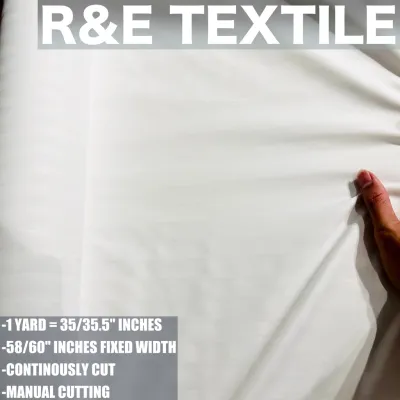
Prices are valid at publication and may change. Please refer to the product page for the latest price.
To this base measurement, you must add a generous margin for your embroidery hoop or frame. A standard rule of thumb is to add at least two to three inches of extra fabric on all four sides of the design. This extra space ensures that the fabric can be stretched tightly across your hoop or scroll frame, providing the necessary tension for clean, even stitches. In warm, humid tropical climates, maintaining consistent fabric tension is particularly vital, as fibers can relax or stretch slightly depending on the moisture in the air. Without adequate margins, your hoop will not be able to grip the fabric securely, leading to puckered stitches and distorted patterns.
Additionally, consider how you plan to finish and display the completed piece. If you intend to frame the embroidery in a wooden hoop, wrap it around a canvas board, or sew it into a functional item like a cushion cover, you will need to account for these finishing margins. For example, wrapping fabric around a mounting board requires an extra inch or two of material on the back for securing with lace or adhesive. If your design features a repeating motif or a directional pattern that must align perfectly with the grain of the fabric, you must also factor in extra length to allow for precise positioning.
Calculate the Base Yardage
Once you have determined your total required dimensions including margins, you can calculate the base yardage. First, calculate the total length of fabric needed by adding your design height to the top and bottom margins. For instance, if your design is 8 inches tall and you require a 3-inch margin on both the top and bottom, your total required length is 14 inches.

Next, calculate the total required width by adding your design width to the left and right margins. If your design is 10 inches wide with a 3-inch margin on each side, your total required width is 16 inches. You must then compare this total required width against the width of the fabric bolt you plan to buy. If the bolt width is wider than your total required width, you can fit your design across the fabric. If your design is exceptionally wide, you may need to orient the design along the length of the fabric instead, which will alter your yardage calculation.
To convert your total required length from inches into yards, divide the total length in inches by 36, which is the number of inches in a single yard. Using our previous example of a 14-inch total length, dividing 14 by 36 yields approximately 0.39 yards. Because fabric stores do not cut fabric to infinite decimal points, you must round this number up to the nearest standard cutting increment. Most local textile shops and department stores cut fabric in increments of a quarter-yard (0.25), half-yard (0.5), or full yard. In this scenario, you would round up 0.39 yards to a half-yard (0.5 yards) to ensure you have enough fabric.
Adjust for Shrinkage, Selvage, and Cutting Errors
A common mistake when buying cotton tela per yard is failing to account for fabric behavior and cutting realities. Pure cotton is notorious for shrinking during its first wash. Depending on the weave and quality of the cotton, you can expect a shrinkage rate of anywhere from 3% to 10%. In humid environments, pre-washing your fabric is non-negotiable to prevent the finished embroidery from puckering when washed later. To protect your project, always add a 10% buffer to your calculated yardage to absorb this shrinkage.
Another critical factor is the selvage, which is the self-finished edge of the fabric roll. The selvage is tightly woven to prevent fraying during manufacturing, but this tight weave often distorts the fabric tension and is unsuitable for embroidery stitches. When calculating whether your design width fits within the bolt width, always subtract about one to two inches from the total bolt width to account for the unusable selvages on both sides. If a bolt is advertised as 45 inches wide, treat the usable width as 43 inches to keep your design safely away from these stiff edges.
Finally, you must prepare for human error at the cutting table. Fabric store employees often cut fabric quickly, which can result in uneven or slanted cuts that reduce your actual usable length. Additionally, the fabric grain may not run perfectly perpendicular to the cut edge, requiring you to trim and square up the fabric before you begin. Adding a small safety margin of two to three inches to your total length calculation ensures that even if the store cut is slightly crooked, you will still have a perfectly square piece of cotton tela that meets your project’s exact needs.
Inspect and Purchase Cotton Tela Per Yard
When you visit the textile store or browse an online marketplace, active verification is key to getting the right material. Always check the bolt end label or product specifications to confirm the exact width of the cotton tela. Common widths include 36 inches, 44 inches, and 60 inches. Knowing this width beforehand allows you to determine if you can lay out multiple embroidery designs side-by-side across the width of the fabric, which can significantly reduce the total yardage you need to buy.
Before the store clerk makes the cut, ask to inspect the unrolled fabric. Look closely for any manufacturing flaws, such as slubs, snags, uneven weaving, or dye misprints. In cotton fabrics, minor color inconsistencies or dirt marks can sometimes occur during transport or storage. Since embroidery requires a clean, stable surface, ensuring the section of fabric you are buying is free of blemishes will save you from having to work around defects later.
When communicating with the seller, confirm their minimum cutting increments. If you find that your calculated requirement is extremely close to a standard increment—for example, if you need exactly 18 inches (0.5 yards) but have no room for error—it is highly recommended to politely request a slightly larger cut or round up to the next quarter-yard. Spending a few extra pesos for a small buffer is far better than returning to the store because your fabric shrank slightly more than expected.
Prepare and Verify the Final Usable Area
Once you have purchased your cotton tela, proper preparation is essential before you place it in your embroidery hoop. Begin by pre-washing the fabric using the water temperature and cycle you plan to use for the finished embroidery. For cotton, a gentle wash helps relax the fibers and trigger any latent shrinkage. Dry the fabric thoroughly, preferably away from direct, harsh sunlight to prevent color fading, and iron it while it is still slightly damp to remove all wrinkles and creases.
After the fabric is clean and pressed, lay it flat on a clean table and re-measure the usable area. Compare these post-wash dimensions against your original design and hoop requirements. This step verifies that the fabric still offers the necessary margins for secure hooping and finishing.
If, despite your calculations, the prepared fabric has shrunk too much or was cut too short, do not attempt to force it into a hoop that is too large. Forcing a tight fit can warp the fabric grain, leading to distorted embroidery designs once the hoop is removed. If the fabric falls short of the safe hooping boundaries, it is best to stop and source a larger piece, saving the smaller cut for practice stitches, patches, or smaller crafting projects.
Frequently Asked Questions (FAQ)
What is the standard width of cotton tela sold by the yard?
Cotton tela is commonly available in standard bolt widths of 36 inches, 44 to 45 inches, and 60 inches. The exact width depends on the manufacturer and the specific type of cotton weave, such as canvas, muslin, or broadcloth. Always check the bolt label or product description before purchasing, as a wider bolt allows you to fit larger embroidery designs or arrange multiple small patterns side-by-side, reducing the overall yardage you need to buy.
Should I buy extra fabric if I am a beginner?
Yes, beginners should always buy a slightly more generous amount of cotton tela. When you are learning, it is common to make mistakes in tension, require extra space for practicing new stitches, or need to re-hoop the fabric multiple times, which can cause wear along the edges. Having an extra quarter-yard of fabric provides a stress-free buffer for practice and ensures that a simple cutting or measuring mistake does not ruin your entire embroidery project.

Community discussion
Share your experience or ask a question. Comments are reviewed before publication.