
Starting journaling or scrapbooking (often referred to locally as hand-journaling or 手账) is an incredibly rewarding way to document your thoughts, track your daily goals, and express your creativity. However, entering a local bookstore or browsing an online marketplace can quickly become overwhelming due to the sheer volume of individual supplies available. A beginner journal kit solves this problem by bundling the core essentials into a single, cohesive package, allowing you to start your creative journey immediately without the stress of matching mismatched tools.
To choose the right beginner journal kit in the Philippines, you must look for a balance of high-quality paper (ideally 100 GSM or higher to withstand tropical humidity), versatile writing instruments, reliable adhesives, and entry-level decorative elements. Selecting a kit with these key features ensures that your pages will not warp, your ink will not bleed, and your creative layouts will remain intact for years to come. By focusing on practical utility rather than the sheer quantity of decorative items, you can find a kit that fits both your creative goals and your budget.
Essential Components of a Beginner Journal Kit
When evaluating a beginner journal kit, it is important to understand what a standard, high-value kit should contain. A complete kit is designed to eliminate the guesswork of matching different stationery types, but not all bundles are created equal. Knowing the function and ideal specifications of each component will help you determine if a kit is worth your investment.
Products mentioned in this guide
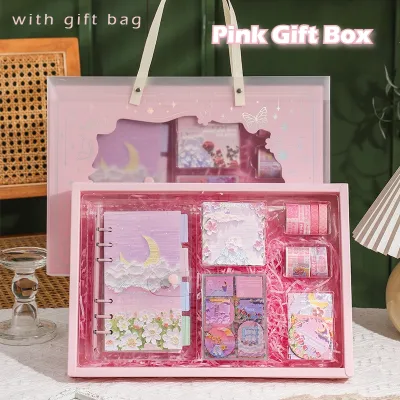
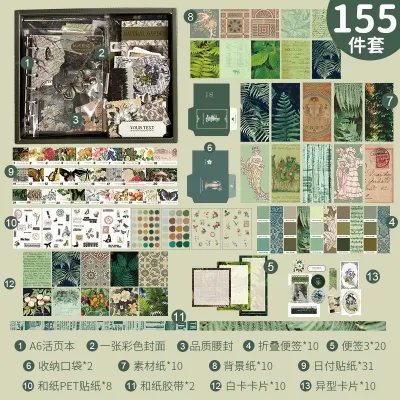
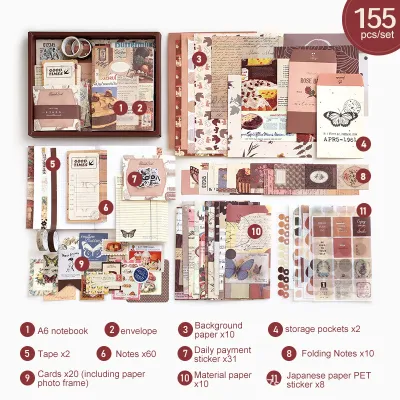
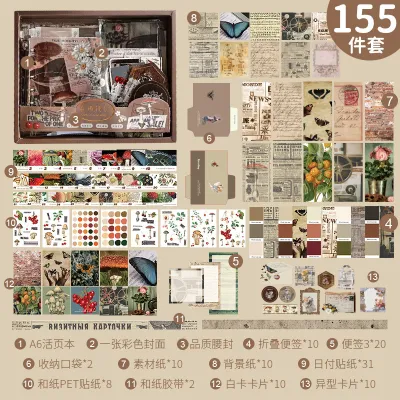
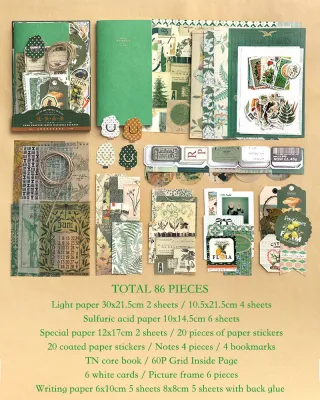
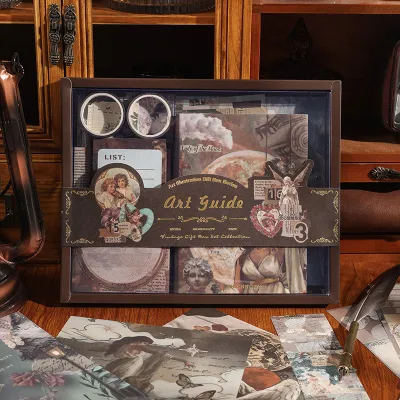
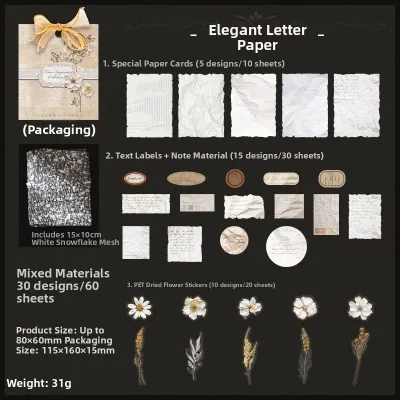
![ENWEI 16 Pcs [Hollow Mesh Series] Lovely Journal Material Paper Multiple Materials Deco Paper Scrapbooking Sticker Scrapbook Kit](https://img.lazcdn.com/g/p/9ce4acc63b20d805edc518051425c8cb.jpg_400x400q80.jpg_.webp)
Prices are valid at publication and may change. Please refer to the product page for the latest price.
The Core Journal
The notebook is the centerpiece of any journal kit, and its specifications will dictate your entire writing and crafting experience. First, consider the paper size; A5 (148mm x 210mm) is the most popular standard because it provides ample space for both writing and decorating while remaining highly portable. B6 (125mm x 176mm) is slightly smaller and ideal for those who want a more compact, travel-friendly option.
Next, pay close attention to the binding type. A lay-flat, thread-bound (Smyth-sewn) notebook is highly recommended for beginners because it opens completely flat at 180 degrees, allowing you to write and design across a two-page spread without fighting the spine. In contrast, spiral-bound notebooks allow you to fold the book back on itself, but the central coils can obstruct your hand when writing near the margins.
Finally, evaluate the page layout. Dotted pages (typically with 5mm spacing) offer the perfect balance of guidance and freedom, making it easy to align text, draw grids, and place stickers neatly. Grid layouts are excellent for structured bullet journaling and habit tracking, while blank pages are best suited for freeform sketching and heavy scrapbooking collages.
Writing and Drawing Tools
A well-rounded journal kit should include a selection of writing instruments tailored to different tasks. At a minimum, look for a reliable black fineliner (usually in a 0.3mm or 0.5mm tip size) for daily writing, journaling, and drawing structural borders. Many kits also include dual-tip brush pens, which feature a flexible brush tip on one end for modern calligraphy and headers, and a fine bullet tip on the other end for color-coding and detailing.
When assessing these tools, it is crucial to understand the ink type. Water-based inks, commonly found in highlighters and standard brush pens, are excellent for blending and creating soft watercolor effects, but they can easily smudge if they come into contact with moisture or sweaty hands—a common occurrence in warm climates. Pigment-based or archival inks, on the other hand, contain solid color particles that sit on top of the paper fibers. Once dry, pigment inks are highly water-resistant, fade-proof, and smudge-resistant, making them the superior choice for long-term preservation.
Adhesives and Cutting Tools
If you plan to incorporate photos, tickets, or decorative papers into your journal, reliable adhesives and cutting tools are indispensable. Standard glue sticks are clean, portable, and easy to use for lightweight paper, but they can dry out and lose their grip over time, especially when exposed to warm tropical temperatures. Double-sided tape runners are a modern, highly efficient alternative; they apply a thin strip of dry adhesive instantly, eliminating the risk of paper warping and requiring zero drying time.
For cutting tasks, a pair of compact safety scissors is a standard inclusion. When evaluating scissors, look for ergonomic handles with soft-touch rubber grips to prevent hand fatigue during detailed cutting sessions. Additionally, scissors with a non-stick fluorine coating on the blades are highly beneficial, as they prevent sticky residue from washi tape and stickers from building up and dulling the cutting edge.
Decorative Elements
Decorative elements are the creative consumables that allow beginners to practice visual layout design without needing advanced drawing skills. A typical beginner kit includes several rolls of washi tape, which is a repositionable decorative tape made from traditional Japanese rice paper. Washi tape is highly versatile because it can be easily torn by hand, written on, and peeled off without damaging the underlying page.
Sticker sheets and paper cut-outs (often referred to as ephemera) are also standard decorative inclusions. Sticker sheets may feature matte paper stickers, which blend seamlessly with the journal page and can be written over, or transparent PET (polyethylene terephthalate) plastic stickers, which are waterproof and highly durable. Paper cut-outs, including vintage-style labels, patterned paper scraps, and botanical illustrations, are excellent for practicing layering techniques and creating visually rich backgrounds.
Quality Indicators and Value Factors to Evaluate
With countless journal kits available online and in local stationery shops, distinguishing between a high-quality creative tool and a cheap, frustrating novelty set is essential. Shifting your focus from the sheer quantity of items to their physical quality and practical value will save you money and protect your creative work from deteriorating.

Paper Weight and Humidity Resistance
The single most critical quality indicator of any journal is its paper weight, measured in GSM (grams per square meter). In the humid climate of the Philippines, paper naturally absorbs moisture from the air, which weakens the cellulose fibers and makes the paper much more susceptible to ink feathering (where ink spreads out sideways), ghosting (where writing is visible on the reverse side), and outright bleed-through.
Standard school notebooks and cheap journal kits often feature paper weights between 70 GSM and 80 GSM. While perfectly fine for standard ballpoint pens, this thin paper will quickly buckle, warp, and bleed when exposed to wet gel pens, felt-tip markers, or glue. For a successful journaling experience, prioritize kits that feature a notebook with 100 GSM to 120 GSM paper. This thickness provides the structural integrity needed to resist moisture absorption, handle dual-tip brush markers, and support light layers of adhesive without warping.
Tool Safety and Ergonomics
The physical tools included in a kit should be built to last and safe to use. Cutting tools, such as scissors or craft utility knives, must have sturdy construction with no loose or wobbling parts. For beginners, scissors with rounded safety tips are preferred to prevent accidental punctures.
Adhesive tools should also be evaluated for smooth operation. A high-quality double-sided tape runner should feature a well-engineered gear mechanism that rolls smoothly without slipping, jamming, or tearing delicate paper. If the tape runner is poorly constructed, the adhesive film can bunch up, rendering the tool useless. Look for tools that feel balanced in your hand and feature protective caps to keep dust and humidity from degrading the adhesive when not in use.
Refillability and Expandability
A common pitfall for beginners is buying a kit that relies on proprietary, non-standard sizes or non-refillable tools. When the primary notebook is filled or the adhesive runner runs out, you may find yourself unable to replace individual components, forcing you to discard the entire set or buy another complete kit.
A high-value kit is designed with long-term compatibility in mind. Check if the notebook uses standard dimensions (such as A5 or B6) so you can easily purchase standard refills or protective covers later. Similarly, verify if the tape runner accepts standard refill cartridges, which are widely available in local stationery stores. Choosing a kit that integrates seamlessly with standard, open-stock stationery items ensures that your hobby can grow naturally without unnecessary waste.
Budget vs. Usable Quantity
Many low-cost kits attempt to attract buyers by advertising massive piece counts, such as “150-Piece Journaling Set.” However, a closer inspection often reveals that the vast majority of these pieces are tiny, repetitive paper stickers of low print quality, while the core notebook and writing tools are substandard.
To calculate the true value of a kit, isolate the core functional items: the notebook, the primary writing pens, and the main adhesive tool. Estimate what these items would cost if purchased individually. If the kit’s price is reasonable based on these core components, then the decorative stickers, washi tapes, and stencils are a genuine bonus. A slightly more expensive kit that includes reusable tools, such as high-quality plastic stencils or rubber stamps, offers far greater long-term value than a cheap kit filled with single-use, low-quality paper ephemera.
Recommended Journal Kit Profiles for Beginners
To help you find the perfect match for your specific skill level, creative goals, and budget, we have categorized the most common beginner kits available in the Philippines into three distinct profiles. Each profile serves a different purpose, allowing you to choose the one that aligns with your personal journaling style.
Profile: The Comprehensive All-in-One Kit
The comprehensive all-in-one kit is designed for individuals who want a premium, fully curated experience right out of the box. These kits are typically packaged in beautiful, sturdy storage boxes and are highly popular as gifts or as a complete starter set for busy professionals.
- Ideal User: Beginners who want to dive straight into journaling without the hassle of researching, selecting, and purchasing individual tools separately.
- What to Look For: A premium kit should feature an A5 thread-bound journal with 100 GSM or 120 GSM dotted paper that lies perfectly flat. It should include a coordinated color palette of dual-tip brush pens, several rolls of matching high-quality washi tape, a smooth-rolling tape runner, a black archival fineliner, and a set of durable plastic stencils for creating quick layouts.
- Limitations & Pre-Purchase Checks: These kits carry a higher price point, typically ranging from ₱800 to ₱1,500 in local specialty stores. Before purchasing, verify that the included adhesives are explicitly labeled as acid-free to ensure your pages do not yellow over time. Additionally, check that the included pens are water-based rather than alcohol-based, as alcohol-based markers will bleed through almost all standard journal papers.
Profile: The Budget-Friendly Essential Kit
The budget-friendly essential kit focuses strictly on core functionality and habit-building. It is designed to provide a low-risk entry point for those who want to practice basic layouts and writing before investing in premium supplies.
- Ideal User: Students, casual hobbyists, or anyone who is unsure if journaling will become a long-term hobby and wants to test the waters on a budget.
- What to Look For: Look for a simple, practical set containing an A5 or B6 grid notebook with 80 GSM to 100 GSM paper, a reliable 0.5mm black gel pen for smooth writing, two or three rolls of solid-color or basic geometric washi tape, and a standard solid glue stick. These kits prioritize writing utility over heavy decoration.
- Limitations & Pre-Purchase Checks: Decorative options in these kits are usually minimal, and the paper weight is often closer to 80 GSM. Because thinner paper is more prone to ink ghosting, it is highly recommended to perform a "pen test" on the very last page of the notebook before you begin writing. This simple trial allows you to observe how long the ink takes to dry in local humidity and whether it bleeds through the page.
Profile: The Scrapbooking and Photo-Mounting Kit
The scrapbooking and photo-mounting kit is specifically tailored for visual storytellers who want to preserve physical mementos, travel tickets, instax prints, and photographs rather than focusing solely on written text.
- Ideal User: Memory keepers, travel journalers, and visual artists who want to create rich, textured collages and preserve historical family photos or travel logs.
- What to Look For: This kit must feature a heavy-duty notebook with heavyweight paper, ideally 120 GSM to 160 GSM, or thick kraft paper pages that can support the weight of photos and heavy adhesives. Key inclusions should be photo-safe double-sided tape runners, decorative photo corner mounts (which secure photos without gluing the image itself), patterned cardstock papers, and metallic or pigment ink fineliners that write beautifully on both light and dark paper.
- Limitations & Pre-Purchase Checks: Due to the heavy paper and abundant materials, these kits are naturally bulkier and less portable. The most critical pre-purchase check is the adhesive quality: ensure all glues, tape runners, and photo corners are explicitly certified as "photo-safe," "acid-free," or "archival." Non-archival adhesives contain chemicals that will react with photographic prints over time, causing your precious memories to discolor, fade, or peel away in the Philippines' warm, humid climate.
Quick Comparison of Kit Profiles
To help you quickly compare your options and make an informed decision, the table below summarizes the key differences, price expectations, and trade-offs of the three primary beginner journal kit profiles.
| Profile Name | Estimated Price Range (PHP) | Ideal User | Key Included Items | Main Limitation |
|---|---|---|---|---|
| Comprehensive All-in-One | ₱800 – ₱1,500 | Busy professionals, gift-buyers, and curated-aesthetic lovers | A5 dotted journal (100+ GSM), brush pens, themed washi tape set, tape runner, stencils | Higher initial cost; some decorative items may go unused |
| Budget-Friendly Essential | ₱250 – ₱500 | Students, casual hobbyists, and daily habit-builders | A5/B6 grid notebook (80–100 GSM), black gel pen, basic washi tapes, standard glue stick | Limited decorative options; thinner paper prone to ink ghosting |
| Scrapbooking & Photo-Mounting | ₱600 – ₱1,200 | Memory keepers, travel bloggers, and visual collage creators | Heavyweight journal (120–160 GSM), photo corners, archival adhesives, patterned paper pads | Bulky and heavy; requires specialized photo-safe consumables |
Frequently Asked Questions (FAQ)
Can I use regular school supplies instead of a dedicated journal kit?
While you can certainly begin writing your thoughts using standard school supplies, they present distinct functional limitations when used for creative journaling and scrapbooking. Regular school notebooks typically feature thin paper (around 50 GSM to 70 GSM) designed for basic ballpoint pens; using wet gel pens, markers, or heavy adhesives on this paper will result in immediate ink bleed-through and severe page warping. Furthermore, standard liquid school glue has a high water content that causes paper to buckle and photos to wrinkle. Dedicated journal kits provide balanced, dry adhesives like tape runners and heavier, bleed-resistant paper that can handle multi-media layouts, ensuring your creative work remains neat, intact, and visually appealing over time.
How do I prevent my journal pages from warping in a humid climate?
Managing tropical humidity is a unique challenge for stationery enthusiasts in the Philippines. To protect your journal, always prioritize kits with paper weights of 100 GSM or higher, as thicker sheets are structurally more resistant to moisture absorption. Avoid liquid white glues or heavy watercolor washes unless the paper is specifically rated for mixed media. Instead, use dry adhesives such as double-sided tape runners or acid-free glue sticks. Store your finished and active journals in a cool, dry room away from open windows and direct sunlight. Placing a few silica gel packets inside your journal storage box or drawer is an excellent, low-cost way to absorb excess ambient moisture and prevent pages from curling.
Community discussion
Share your experience or ask a question. Comments are reviewed before publication.