
Quick Answer: Core Features for Effective Bill Tracking
An effective bills payments notebook provides an immediate, structured overview of your monthly financial obligations. The ideal tracker features a dedicated monthly layout with essential columns for due dates, payee names, amounts due in ₱, amounts paid, and payment confirmation.
For physical specifications, a portable A5 or B5 size with a lay-flat binding (such as spiral or wire-o) ensures comfortable writing on any surface. To prevent ink bleed-through from gel pens or markers, look for paper with a weight of at least 80 gsm. This combination of structured design and durable physical features allows you to maintain a reliable, stress-free record of your household expenses.
Page Layout and Column Design for Monthly Tracking
Monthly dashboard spreads are highly recommended for bill tracking because the vast majority of utility, internet, and credit card bills operate on a monthly cycle. Weekly or daily logs spread your financial picture too thin, making it easy to overlook a bill due at the end of the month. A dedicated monthly spread keeps all obligations on a single page or two-page spread, allowing you to see your entire financial month at a single glance.
Products mentioned in this guide
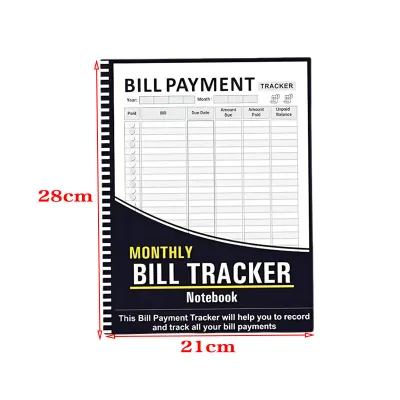
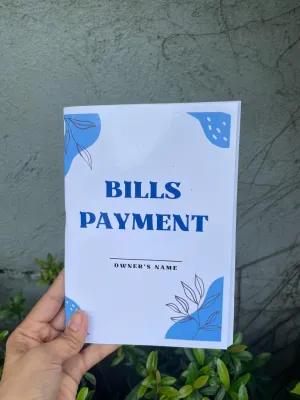
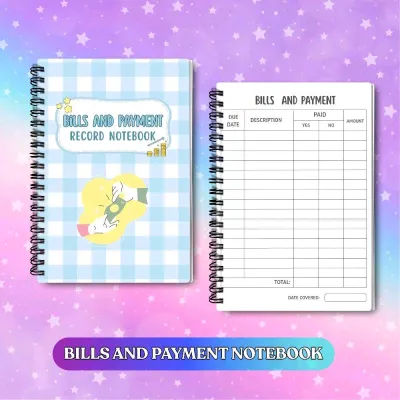
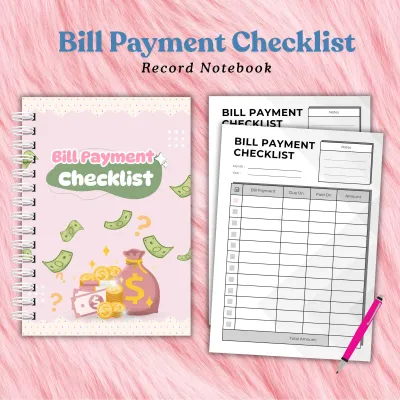
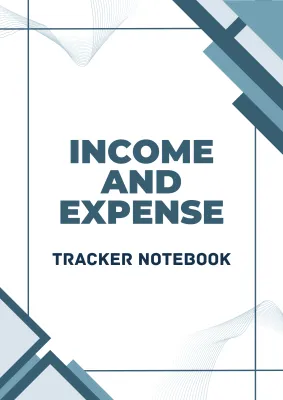
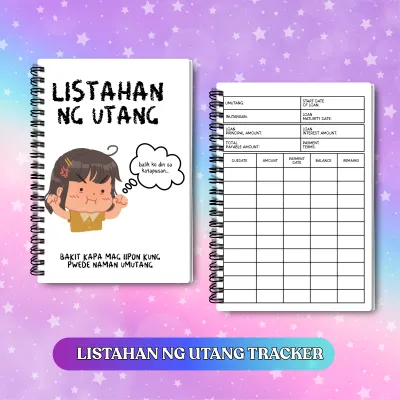
Prices are valid at publication and may change. Please refer to the product page for the latest price.

To maintain clear records, your notebook should feature a structured grid with five non-negotiable columns. First, a due date column helps you sequence payments chronologically to avoid late fees. Second, a payee name column clearly identifies the service provider or utility company. Third, an amount due column records the expected charge in ₱, which is especially useful for fluctuating bills like electricity or water. Fourth, an amount paid column captures the actual payment made, helping you track any discrepancies. Finally, a payment status column, such as a checkbox or a “Paid” date field, provides immediate visual confirmation.
Beyond these basic columns, look for layouts that allocate dedicated space for transaction reference numbers. In an era of digital banking and mobile wallet payments, recording the reference code is crucial for resolving payment disputes with service providers. It is also helpful to have small fields for account numbers, customer hotlines, and notes on late fees or grace periods. Keeping this information directly alongside your payment log ensures all vital account details remain in one secure physical location.
Using visual cues within your layout can also improve tracking efficiency. Consider a layout that leaves a small margin or blank space next to each entry. This allows you to use color-coded highlighters or small functional stickers—such as red for urgent, yellow for pending, and green for paid. Visual indicators make it easy to scan the page and identify outstanding payments in seconds, reducing the cognitive load of managing multiple accounts.
Choosing the Right Size, Binding, and Paper Quality
Choosing the right physical dimensions depends on where you plan to manage your finances. Desk-friendly sizes like A4 or Letter offer generous writing space, making them ideal if you keep your notebook permanently in a home office. However, portable sizes like A5 or B5 are often more practical for daily life, fitting easily into a drawer or bag while still providing enough room for legible handwriting.
The binding style directly impacts how comfortable the notebook is to use. Lay-flat bindings, such as wire-o, spiral, or high-quality thread-sewn designs, are essential for financial tracking. These bindings allow the notebook to remain completely flat on your desk, enabling you to write comfortably across the gutter without holding the pages down. Spiral and wire-o bindings also let you fold the notebook back on itself to save desk space.
Paper quality is critical, especially in humid tropical climates where moisture can affect ink absorption and paper texture. Look for notebooks with a paper weight of at least 80 gsm, though 100 gsm or higher is preferable if you use gel pens, rollerballs, or highlighters. Smoothness, bleed resistance, drying speed, and water resistance depend on the exact combination of your paper and ink. To verify compatibility, perform a quick trial on a back page with your preferred pen; the ink should dry quickly without feathering or showing through on the reverse side.
The durability of the notebook cover is another practical consideration. Since a bill tracker is handled at least several times a month over the course of a year, a sturdy cover is essential. Hardcover options made of thick cardboard, water-resistant plastic, or synthetic leather protect the inner pages from spills, dust, and wear. If you live in a high-humidity environment, a plastic or treated cover is particularly beneficial as it prevents the notebook from absorbing moisture and warping over time.
Customization and Extra Features for Personal Finance
A comprehensive bills payments notebook should include a yearly overview page. This high-level layout is invaluable for tracking non-monthly expenses, such as annual insurance premiums, quarterly real estate taxes, or yearly subscription renewals. Mapping these out at the beginning of the year prevents sudden cash flow surprises.
Built-in storage features greatly enhance the utility of a physical tracker. Look for notebooks equipped with expandable paper or plastic pockets at the back. These pockets are perfect for holding physical receipts, paper bills, or warranty cards until they can be filed away or digitized.
Perforated pages offer excellent flexibility, allowing you to tear out a monthly sheet for archiving or sharing with a family member. Additionally, an index page or built-in ribbon markers help you navigate quickly to the current month, saving you from flipping through past records to find your active tracking sheet.
For those who prefer maximum flexibility, refillable binder systems are an excellent option. Using a standard 6-ring or 20-ring binder allows you to insert, remove, and rearrange pages as needed. This compatibility ensures you can mix pre-printed bill tracking templates with blank grid paper for custom notes, and easily refill the binder year after year without buying a completely new notebook.
Integrating a small budget summary section at the bottom of your monthly spread can also elevate your financial tracking. A simple three-line section for “Total Income,” “Total Bills,” and “Remaining Balance” helps you see the direct impact of your bills on your overall monthly budget. This small addition transforms your notebook from a simple checklist into an active tool for financial mindfulness.
Frequently Asked Questions (FAQ)
Can I use a regular dotted or lined notebook instead of a pre-printed bill tracker?
Yes, you can easily adapt a standard dotted, grid, or lined notebook into a custom bill tracker. Dotted journals are particularly popular because the dot grid serves as a subtle guide for drawing straight lines and custom tables without the rigidity of pre-printed layouts.
The primary trade-off is time versus customization. A blank notebook allows you to design a layout tailored exactly to your specific bills and financial habits. However, this requires a regular time investment to draw the grids each month. Pre-printed templates save time and offer immediate structure, but they may include columns you do not need or lack space for unique tracking requirements.
How many months of bill history should one notebook cover?
For most users, a 12-month tracking cycle is the most practical choice. A one-year notebook aligns perfectly with the calendar year, making it easy to compare seasonal utility fluctuations, such as higher electricity bills during the hot summer months.
If you prefer a slimmer, more portable notebook, a 6-month tracker is a viable alternative. When transitioning to a new notebook, ensure you copy over essential recurring information, such as account numbers, service provider hotlines, and average monthly payment benchmarks. Store your completed notebooks in a dry, secure place to maintain a reliable physical archive of your financial history.
Community discussion
Share your experience or ask a question. Comments are reviewed before publication.