
A cozy coloring book offers a gentle, low-stress creative outlet designed to soothe the mind rather than challenge your artistic skills. Finding the right book involves looking for simple, comforting illustrations, selecting thick paper that resists ink bleed-through, and ensuring the binding allows you to color comfortably. By matching your coloring tools to the book’s paper specifications, you can create a peaceful, screen-free routine that fits perfectly into a relaxing afternoon at home.
What Defines a "Cozy" Coloring Book?
Unlike traditional coloring books that feature highly intricate geometric patterns or dense mandalas, a cozy coloring book focuses on warmth, simplicity, and comfort. The illustrations typically depict inviting scenes such as quiet cafe corners, sleeping pets, rustic kitchens, and soft nature landscapes. These familiar, gentle subjects help lower cognitive load, allowing your mind to drift away from daily stressors without requiring intense concentration.
The inclusion of nostalgic and domestic themes plays a significant role in emotional relaxation. Many cozy books feature scenes of rainy days, warm beverages, and cluttered bookshelves, which naturally resonate with quiet indoor activities. This thematic focus creates a safe mental space where you can focus on comforting imagery rather than complex, abstract designs.
Products mentioned in this guide
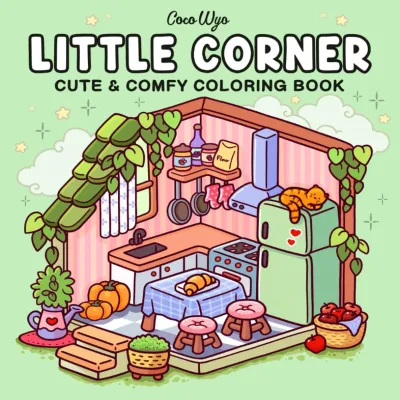
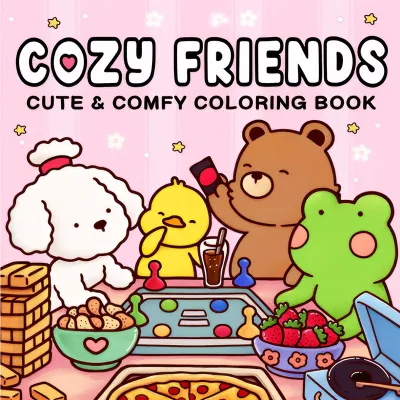
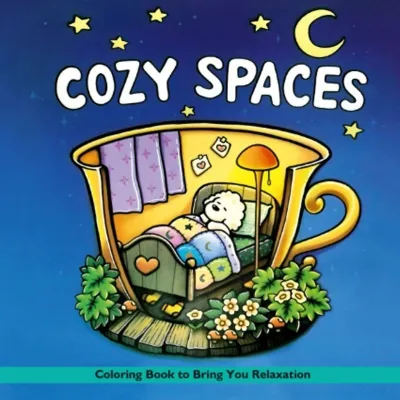
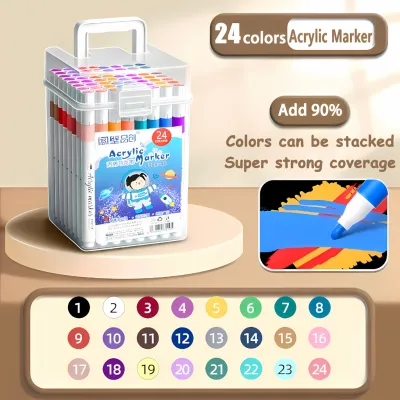
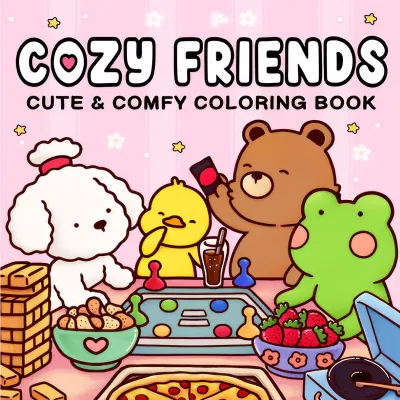
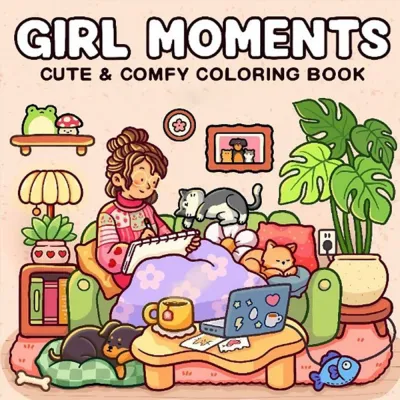
Prices are valid at publication and may change. Please refer to the product page for the latest price.
The technical design of the artwork also plays a critical role in promoting relaxation. Cozy books generally feature thicker line weights and larger, open coloring spaces. This design choice minimizes eye strain and accommodates broader strokes, making it easier to fill in shapes without worrying about microscopic details. You do not need perfect fine-motor control to achieve a satisfying result, which removes the pressure of perfectionism.
Furthermore, the absence of overly busy backgrounds prevents visual fatigue during extended coloring sessions. When a design contains too many tiny elements, the brain must constantly make decisions about color placement, which can inadvertently increase stress. Cozy illustrations strike a balance by providing enough detail to remain engaging while leaving ample room for soft, uncomplicated color washes.
Ultimately, the emotional intent behind cozy illustrations is to foster mindfulness rather than test your artistic precision. There are no complex color-by-number rules or overwhelming patterns that demand rigid focus. Instead, the open layouts invite you to play with color intuitively, turning your coloring session into a soothing, meditative ritual where the process is far more important than the final product.
Essential Paper and Binding Features for Stress Relief
The physical construction of a coloring book directly impacts how relaxing the experience actually is. One of the most important specifications to check is the paper weight, which is measured in grams per square meter (GSM). Standard copy paper is typically around 70 to 80 GSM, which easily bleeds and warps under wet media. For a frustration-free experience, look for books featuring paper that is at least 100 to 120 GSM, as thicker paper provides better resistance to ghosting and holds up well under various dry and light wet mediums.

Paper texture, or “tooth,” is another critical element that determines how your coloring tools behave on the page. Paper with a slight texture allows colored pencils to grip the surface and lay down pigment smoothly, enabling easy blending and layering. Extremely smooth, glossy paper, on the other hand, can cause pencils to slip and slide, resulting in uneven color distribution and hand fatigue as you press harder to apply color.
The binding style determines how easily the book stays open while you work. Perfect bound books with tight, glued spines often fight back, forcing you to hold the pages down constantly or risk cracking the spine to color near the inner margins. Spiral-bound or lay-flat bindings are widely recommended for stress relief, as they allow the book to rest completely flat on your desk, giving you unhindered access to every corner of the illustration without hand strain.
Page layout is another crucial factor to verify before purchasing. Opt for books that feature single-sided printing, where each illustration is backed by a blank page. This layout ensures that even if your coloring tools bleed through the paper, they will not ruin a design on the reverse side. Additionally, books with perforated pages allow you to cleanly tear out your finished artwork to display or color on a separate flat surface.
Finally, consider the physical dimensions of the book in relation to your coloring workspace. Large, oversized books can be cumbersome to use on small coffee tables or lap desks, whereas medium-sized or square formats are often easier to handle and rotate as you color. Choosing a size that fits comfortably within your physical environment prevents unnecessary physical adjustments and keeps your focus entirely on the creative process.
Pairing the Right Art Supplies with Your Book
To protect your coloring book and achieve satisfying visual results, you must pair your illustrations with compatible art supplies. Wax-based or oil-based colored pencils are a safe default choice for almost any paper weight. They offer excellent control for blending and shading, require zero drying time, and carry absolutely no risk of bleeding through to the next page, even on lighter paper.
Wax-based pencils tend to be softer and blend more easily, making them ideal for creating smooth gradients in cozy sky or fabric scenes. Oil-based pencils are slightly harder and hold a sharp point longer, which is useful for defining clean edges and filling in smaller details without smudging. Keeping a small selection of both types allows you to adapt to different illustration styles within the same book.
If you prefer the vibrant, streak-free coverage of alcohol markers or the smooth flow of gel pens, you must take extra precautions. These wet mediums release a high volume of liquid ink that easily saturates standard paper fibers. When using markers, always place a thick sheet of cardstock or a dedicated plastic blotter page directly behind the sheet you are coloring to catch any excess ink before it reaches the subsequent designs.
Water-based fine-liners and gel pens are excellent for adding small pops of color or metallic accents to cozy scenes, but they can still cause thin paper to warp if applied too heavily. To maintain the integrity of the page, apply these mediums in light, single strokes rather than scrubbing the tip back and forth over the same spot. Allowing each layer to dry completely before adding more color prevents the paper fibers from pilling or tearing.
Before starting a new page, perform a simple compatibility check to avoid damaging the artwork. Locate a small, inconspicuous area—such as a blank margin or a test page at the back of the book—and apply a small amount of your chosen medium. Observe how the paper reacts to the ink or pencil pressure, checking for feathering, bleeding, or paper pilling before committing to the main illustration.
Sourcing Authentic Cozy Coloring Books in the Philippines
Finding high-quality, authentic cozy coloring books in the local market requires careful shopping, especially when browsing online marketplaces. To guarantee you receive genuine paper stock and crisp printing, prioritize purchases from official brand stores, authorized stationery retailers, and established local bookshops. Authentic publishers use high-grade paper designed specifically for art, whereas unauthorized reproductions often use cheap, thin paper that ruins the coloring experience.
Be vigilant against common red flags that indicate pirated or low-quality counterfeit prints. If a listing features an unusually low price—such as books sold for under ₱100 when the standard retail price is significantly higher—it is very likely a low-resolution photocopy. Other warning signs include pixelated or blurry line art in the product photos, missing publisher logos on the cover, and descriptions that fail to specify the paper weight or binding type.
Counterfeit books also suffer from poor binding quality, with pages that easily detach from the spine after only a few uses. The paper used in these bootleg copies is often bright white, highly alkaline, and extremely thin, causing almost any marker or gel pen to bleed through instantly. Investing in authentic copies ensures that you support the original artists while securing a durable, high-quality book that enhances your relaxation.
When evaluating online listings, spend a few minutes analyzing customer reviews and user-submitted photos. Look specifically for feedback regarding the physical quality of the book rather than just the delivery speed. Helpful reviews will often mention whether the paper feels thick, if markers bleed through instantly, and if the binding holds together during extended use, helping you make an informed decision before checking out.
Additionally, check if the seller provides clear photos of the book’s interior pages and copyright information. Reputable sellers are transparent about the publisher details and often include video previews showing the paper texture and layout. Taking these extra verification steps protects your budget and ensures your coloring sessions remain peaceful and frustration-free.
Frequently Asked Questions (FAQ)
Can I use water-based markers on standard cozy coloring books?
Water-based markers can be used on standard uncoated paper, but they require a gentle touch. Because water-based inks can easily saturate and pill thin paper fibers, it is best to avoid heavy layering or repeated strokes in the same area. Always place a protective scrap paper barrier behind your page to catch any potential bleed-through, and test the marker on a small corner first to see how the paper handles the moisture.
How do I store partially finished coloring books in humid climates?
The tropical climate in the Philippines presents unique challenges for paper preservation, as high humidity can cause pages to warp, cockle, or develop mold. To protect your coloring books, store them flat in dry, enclosed spaces such as a drawer, cabinet, or plastic storage box away from direct sunlight. Placing a few silica gel packets inside your storage container will help absorb ambient moisture and keep your pages crisp and dry.
Are digital cozy coloring books a good alternative for relaxation?
Digital coloring apps on tablets offer great convenience, unlimited color palettes, and the ability to undo mistakes instantly, but they provide a different experience than physical books. Physical coloring books offer tactile feedback and a valuable opportunity for screen-free relaxation, which is highly beneficial for reducing eye strain and mental fatigue. If your primary goal is to unplug and unwind after a long day of looking at screens, a physical book remains a deeply therapeutic choice.
Community discussion
Share your experience or ask a question. Comments are reviewed before publication.