
Finding the right writing or drawing tool is essential for both comfort and performance. When selecting a high-quality fiber castell pencil, your choice depends entirely on your specific task—whether that is taking quick notes in a humid lecture hall, shading a detailed portrait, or filling out a standardized exam sheet. While the brand is globally renowned for its deep green Castell 9000 and ergonomic Grip series, choosing the wrong lead hardness or format can lead to smudged work, broken tips, or hand fatigue. By matching the pencil’s graphite grade, casing, and design to your daily routine, you can ensure a seamless writing or drawing experience.
Understanding Faber-Castell Pencil Grades and Formats
To make an informed decision, you must first understand the standard graphite grading scale. Pencils are graded using the “HB” system, where “H” stands for hard and “B” stands for black. Hard leads (such as 2H, 4H, or 6H) contain more clay binder, producing light, precise lines that resist smudging but can scratch soft paper if too much pressure is applied. Soft leads (such as 2B, 4B, or 8B) contain more graphite, yielding dark, rich lines that are easy to blend but prone to smearing. The “HB” grade sits directly in the middle, offering a balanced compromise of darkness and hardness, while “F” (firm) is slightly harder than HB, holding a sharp point longer for detailed writing.
Beyond lead hardness, the format of the pencil dictates its daily utility. Traditional wood-cased pencils offer a classic feel and allow you to vary your line width by tilting the pencil. Mechanical pencils, on the other hand, provide consistent line widths without the need for a sharpener, making them ideal for precise technical work or mathematical formulas. Colored pencils utilize wax- or oil-based pigments instead of graphite, serving creative and highlighting purposes rather than standard writing.
Products mentioned in this guide
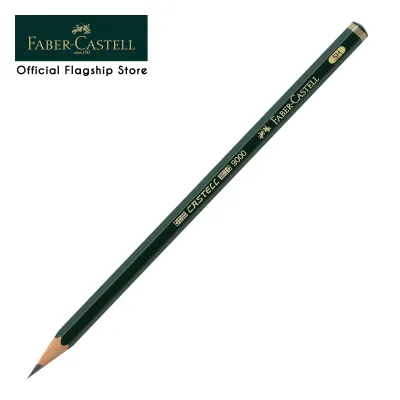
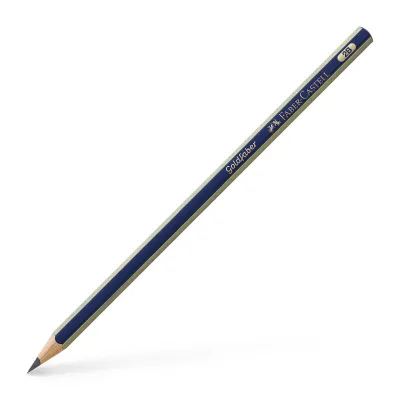
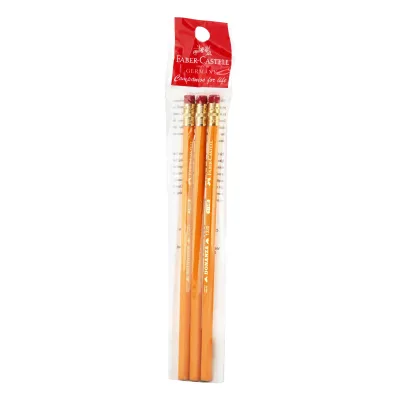
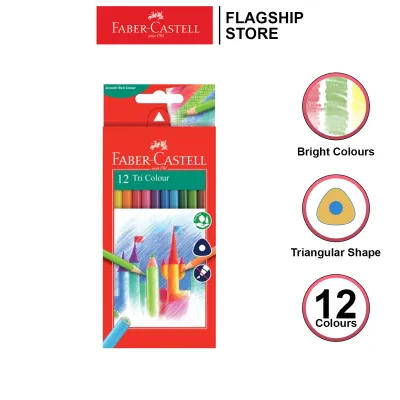
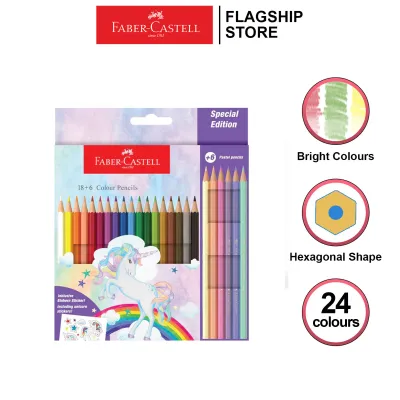
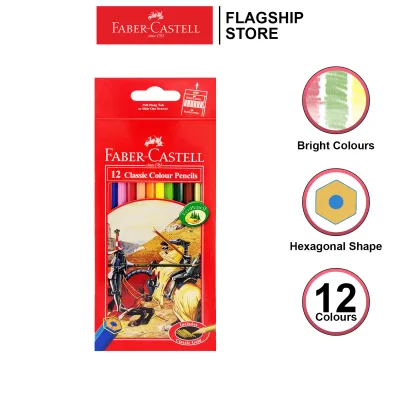
Prices are valid at publication and may change. Please refer to the product page for the latest price.
When shopping at local bookstores or online stationery shops, never rely solely on the visual appearance of the pencil barrel to determine its hardness. Always check the specific grade stamped clearly on the end or side of the barrel. A common mistake is assuming all yellow or green pencils are standard HB; some specialized drafting lines use similar green barrels across their entire 16-grade range.
One of the brand’s most critical innovations is its proprietary lead-bonding process, often referred to as SV (secural) bonding. This manufacturing technique glues the graphite lead along the entire length of the wooden casing, preventing the lead from shattering internally when the pencil is dropped. This feature is particularly valuable in tropical climates like the Philippines, where high humidity can soften paper fibers and lead to heavy-handed writing that puts extra stress on the pencil core.
Matching Pencils to Everyday Writing and Note-Taking
For daily journaling, office tasks, and rapid note-taking, your priority should be legibility, comfort, and smudge resistance. Medium to hard grades like HB, F, or H are the optimal choices for these tasks. These grades leave clean, crisp marks that do not smear easily when your hand moves across the page—a crucial consideration for left-handed writers or when writing in high-humidity environments where paper absorbs moisture and increases friction.

Ergonomics play a massive role in preventing hand strain during long writing sessions. The brand’s “Grip” series features a unique triangular barrel studded with small, non-slip grip dots. This design encourages the recommended tripod grip, distributing finger pressure evenly and reducing the muscle fatigue associated with traditional round or hexagonal barrels. For students and professionals who write for hours at a time, these ergonomic adjustments can significantly improve comfort.
The quality of the wood casing also determines how easily a pencil can be maintained. High-quality cedar or sustainably managed softwood casings ensure that when you use a manual sharpener, the wood shaves away in a smooth, continuous spiral rather than splintering or cracking. Splintered wood not only ruins the aesthetic of the pencil but can also leave sharp edges that irritate your fingers during use.
Before purchasing pencils in bulk, perform a simple verification check on your preferred paper. Write a few lines on your typical notebook or pad, then rub your finger lightly across the text. If you observe significant feathering, smudging, or an oily shine, you may need to switch to a harder grade like H or F, or upgrade to a higher-density paper that resists graphite transfer.
Selecting Graphite for Sketching, Drawing, and Shading
Artists and hobbyists require a much broader spectrum of graphite grades than everyday writers. A complete sketching kit typically spans from hard leads for technical layouts to soft leads for rich, dark values. Harder leads, such as 2H to 4H, are perfect for initial light outlines, architectural drafting, and fine details because they leave thin, faint lines that can be easily erased or drawn over without leaving a dark residue.
Conversely, softer leads ranging from 2B to 6B, or even 8B, are indispensable for deep shading, tonal transitions, and expressive sketching. These soft leads lay down thick layers of graphite with minimal pressure, allowing for smooth blending with a paper stump or your finger. However, because soft graphite is highly malleable, it is prone to breaking under heavy pressure. This is where fully bonded SV leads become essential, ensuring the core remains intact even when you press down to achieve the deepest black values.
It is important to distinguish between standard school-grade pencils and specialized artist-grade lines like the Castell 9000. While a school pencil might suffice for basic drawings, professional-grade pencils use highly refined graphite with consistent particle sizes, eliminating the annoying grit that can scratch your paper mid-stroke. Artist lines also offer a much wider and more precise range of grades, allowing you to execute subtle tonal shifts with confidence.
When buying sketching pencils, always verify the exact grade composition of the set. Many pre-packaged sets are curated for specific artistic styles—some focus on hard grades for technical design, while others bundle soft grades for portraiture and life drawing. Selecting the right assortment ensures you have the exact tool needed for every stage of your creative process.
Reliable Pencils for Schoolwork, Exams, and Homework
For students, reliability and compliance with school standards are paramount. When it comes to standardized examinations and national tests, using an HB or #2 pencil is a strict requirement. Optical Mark Recognition (OMR) scanners rely on the specific light-reflection and carbon-density properties of HB graphite to read filled-in bubbles. Using a harder lead like 2H may result in marks that are too light for the machine to register, while a softer lead like 4B can smudge across the sheet, causing scanning errors that invalidate the test.
Younger students often write with a heavy hand, which can lead to frequent lead breakages and constant trips to the sharpener. To minimize classroom disruptions, look for pencils featuring thick, break-resistant cores. The SV-bonded leads found in standard school pencils provide the durability needed to withstand drop tests and high-pressure writing without snapping mid-sentence.
Safety is another critical factor when selecting school supplies for children. Ensure the packaging carries clear non-toxic, child-safe certifications, such as the European EN71 standard or the CE mark. These certifications guarantee that the paint used on the pencil barrel and the materials in the eraser are free from harmful heavy metals and phthalates, providing peace of mind if a child accidentally chews on the end of the pencil.
When deciding between traditional wood-cased and mechanical pencils for classroom use, consider the student’s age and task. Wood-cased pencils are highly recommended for younger children as they help develop fine motor skills and allow for natural line-weight variation. Mechanical pencils (such as 0.5mm or 0.7mm models) offer convenience for older students who do not want to deal with pencil shavings, though they require a gentler hand to prevent the thin leads from snapping.
Cross-Scenario Compatibility: Can One Pencil Do It All?
If you prefer to carry only a single pencil, the standard HB or #2 wood-cased pencil is the ultimate multi-purpose tool. It is hard enough to keep your daily notes clean and legible, soft enough to allow for basic sketching and shading, and fully compliant with standardized exam scanners. For the casual user, a single high-quality HB pencil easily bridges the gap between different daily tasks.
However, relying on a single mid-grade pencil introduces noticeable limitations if your work becomes more specialized. For instance, you will struggle to achieve the deep, velvety blacks required for high-contrast portrait drawing, and your hand may tire quickly during long writing sessions due to the lack of an ergonomic grip or cushioned barrel.
To strike the perfect balance, consider building a minimal, highly versatile three-pencil kit. This setup should include:
- One standard HB wood-cased pencil for examinations and general writing.
- One 2B or 4B wood-cased pencil for sketching, shading, and creative brainstorming.
- One 0.5mm or 0.7mm mechanical pencil for precise mathematical formulas, clean margins, and quick note-taking.
This simple combination covers almost every academic, professional, and artistic scenario without cluttering your pencil case.
Frequently Asked Questions (FAQ)
How to identify genuine Faber-Castell pencils
To ensure you are purchasing genuine products, always examine the barrel markings and finish. Authentic pencils feature clean, crisp, and perfectly aligned gold or silver hot-foil stamping that does not flake off easily. The wood casing should be smooth, symmetrical, and free from rough grain or chemical odors. To avoid counterfeit items, purchase your stationery from authorized physical bookstores, official online brand stores, or reputable local distributors in the Philippines.
What the different packaging colors mean
The brand categorizes its products using a color-coded packaging system to help consumers identify the target user base. Generally, red packaging indicates the school and office line, designed for everyday durability and affordability. Blue or green packaging typically represents the creative studio or student line, offering a balance of performance and value for hobbyists. Gold or dark green packaging signifies the professional artist line, featuring the highest-grade pigments, premium wood, and precise graphite grading. Always read the specific product description to verify the exact materials and intended use.
Are mechanical pencil refills universally compatible
Mechanical pencil leads are compatible across brands, provided you match the exact diameter specified on your pencil’s barrel. Common sizes include 0.5mm, 0.7mm, and 0.9mm. Using a 0.5mm lead in a 0.7mm pencil will cause the lead to fall out, while attempting to force a larger lead will jam the mechanism. Additionally, you can choose different hardness grades (such as HB or 2B) for your refills to customize your writing darkness, as long as the lead diameter matches the pencil specification.

Community discussion
Share your experience or ask a question. Comments are reviewed before publication.