
Finding the right notebook cover organizer is about creating a seamless bridge between your thoughts and your physical workspace. In a busy work environment, your notebook is often the central hub for meetings, sketches, and daily task lists. However, a bare notebook easily gets damaged in transit, lacks space for essential writing tools, and can look cluttered on a clean desk. Choosing the ideal organizer requires analyzing how you move, how much physical desk space you command, and the exact tools you need to carry.
In tropical climates like the Philippines, where high humidity and sudden rain showers are part of daily life, material choice and protective features become even more critical. A well-chosen cover does more than hold paper; it acts as a portable workstation that keeps your pens, cards, and devices secure. By evaluating your specific workflow, desk footprint, and tool inventory, you can select an organizer that enhances your productivity instead of adding unnecessary bulk to your bag.
Assess Your Workflow to Determine Size and Portability
Your daily movement patterns dictate the foundational size and structural form of your notebook cover organizer. If you work primarily from a dedicated home office or a fixed corporate desk, a larger, more substantial organizer can serve as a permanent desk companion. For those navigating hybrid work arrangements, split-week office schedules, or frequent client meetings in local coffee shops, portability becomes the primary deciding factor. A heavy, oversized cover will quickly become a burden if you are constantly packing and unpacking your bag throughout the day.
Products mentioned in this guide
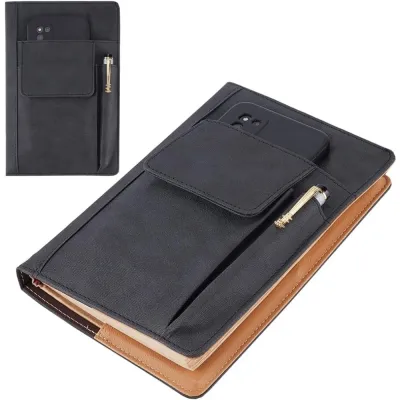
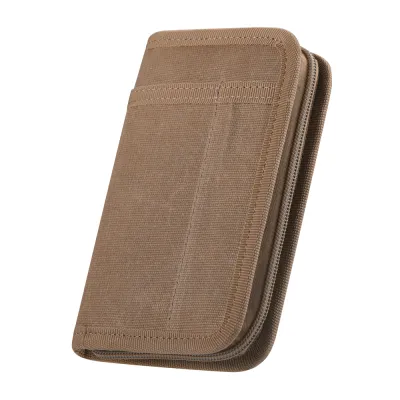
Prices are valid at publication and may change. Please refer to the product page for the latest price.
To find the right fit, start by matching the organizer’s base dimensions to your preferred notebook size, such as A5, B5, or A4. Keep in mind that the listed dimensions of a cover usually refer to the notebook size it accommodates, not the external footprint of the organizer itself. Adding paper refills, plastic pocket inserts, and thick planners will expand the depth of the cover significantly. If you prefer standard A5 notebooks for their balance of writing space and portability, ensure the organizer has enough clearance along the spine to close comfortably when fully loaded.
Transit protection is another critical element for mobile professionals. If your organizer frequently travels in a backpack or tote bag, look for secure closure mechanisms to prevent pages from bending and loose items from falling out. Zippered closures offer a high level of security against dust and sudden tropical downpours, though they take slightly longer to open. Elastic bands and snap buttons provide quicker access for rapid note-taking but leave the edges of your notebook exposed to potential wear and tear.
Evaluate Desk Space to Choose the Right Form Factor
The physical limits of your workspace should directly influence the form factor of your notebook cover organizer. A sprawling executive desk can easily accommodate a wide, flat-folding folio that remains open next to a keyboard. On smaller desks, co-working hot desks, or compact home setups, a large organizer can quickly crowd out your mouse and keyboard. Measuring your active desk surface area helps you determine whether a traditional flat-folding cover or a more specialized, space-saving design is appropriate.

For tight workspaces, consider rigid or stand-up organizer designs that minimize their physical footprint. Some modern organizers feature stiff covers that fold backward to act as a self-supporting easel, allowing you to view your task list vertically without taking up flat desk space. If you prefer to clear your desk at the end of the day, check the depth of your desk drawers or storage shelves. A fully loaded organizer with thick covers and stuffed pockets might not slide easily into shallow drawers, forcing you to leave it on the desktop.
Your digital device integration also plays a role in choosing the right layout. Many professionals operate in multi-device environments, switching constantly between a physical notebook, a smartphone, and a tablet. If you need to view your phone screen while writing, look for organizers that include built-in slip pockets or front slots designed to hold a phone upright. This integration keeps your essential screens within your line of sight without requiring separate plastic stands that add to desktop clutter.
Map Your Essential Tools to Pocket Configurations
An organizer is only as useful as its internal layout, and overbuying features is a common pitfall that leads to unnecessary bulk. Before choosing a cover, gather all the stationery items you use on a daily basis and lay them out on your desk. Count your high-frequency tools, such as gel pens, highlighters, rulers, sticky notes, and business cards. This physical inventory defines the exact number of pen loops, card slots, and mesh pockets your organizer actually needs to provide.
If you only carry a single signature fountain pen, a cover with multiple elastic pen loops will leave unused, loose material that catches on bag straps. Conversely, if you rely on color-coded writing systems, look for dedicated multi-pen slots or an external zippered pouch that can house a small collection of writing instruments. For business cards, ID badges, or sticky note flags, dedicated shallow slots on the inside front cover keep these small items visible and easily accessible during meetings.
Loose documents, receipts, and transit tickets require flat, secure storage that does not interfere with your writing surface. Evaluate whether you prefer left-side or right-side wide gusseted pockets for these loose papers. Left-side pockets are excellent for quick storage, but if they are too thick, they can create an uneven writing surface when you write on the left page of your notebook. To maintain a flat writing plane, look for organizers that place bulky storage pockets on the back cover or feature removable pocket inserts.
Remember that every additional pocket, zipper, and flap adds weight and thickness to the overall package. A highly complex organizer with dozens of compartments might look versatile, but once filled, it can become too heavy for comfortable daily carry. Focus on simplicity and prioritize quick-access slots for your top three most-used tools, leaving specialized gear in a separate pencil case if necessary.
Select Materials for Durability and Desk Aesthetics
The material of your notebook cover organizer determines how well it withstands daily wear, how easy it is to clean, and how it complements your overall desk aesthetic. Common options include polyurethane (PU) leather, canvas, hardboard, and felt, each offering distinct tactile experiences and maintenance requirements. In humid environments, material selection is particularly important to prevent premature degradation, mold growth, or peeling.
Canvas and heavy-duty nylon are highly durable, resistant to scratches, and easy to spot-clean with mild soap and water, making them excellent for active, on-the-go professionals. PU leather offers a sleek, professional appearance suitable for corporate boardrooms, but it requires careful maintenance to prevent the synthetic layers from cracking over time. Felt provides a warm, cozy aesthetic that softens a modern, minimalist desk setup, but it can attract lint and requires gentle hand-washing if stained.
To ensure your organizer matches your existing workspace, align its texture and color palette with your current desk accessories. A dark, matte PU leather cover fits seamlessly into a traditional corporate or industrial setup, while a light gray felt or natural canvas cover complements a Scandinavian or minimalist aesthetic. If you use a wooden desk, choosing a contrasting color prevents the organizer from blending too quietly into the tabletop.
Regardless of the material you choose, inspect the physical construction details to gauge long-term durability. Look closely at the edge banding and stitching quality along the seams. Double-stitched edges and reinforced corners are reliable indicators of structural integrity, ensuring the cover will not fray or split after months of being pulled in and out of a bag. Avoid covers with glued edges that lack stitching, as these are highly prone to separating when exposed to heat and humidity.
Frequently Asked Questions (FAQ)
Can I use a notebook cover organizer for digital tablets?
Yes, many notebook cover organizers can double as tablet sleeves, but you must verify the dimensions carefully. Always measure your tablet with its protective case or keyboard attachment installed, as these add significant thickness and width. Ensure the interior lining of the organizer is made of a soft, non-abrasive material like microfiber or felt to prevent screen scratches. Keep in mind that standard notebook covers lack the rigid, shock-absorbing corners found in dedicated tablet cases, so they may not provide adequate drop protection.
How do I clean and maintain a faux leather organizer?
Cleaning a faux leather or PU organizer requires gentle care to preserve its surface finish. Use a slightly damp, soft microfiber cloth to wipe away surface dust, fingerprints, and light stains. Avoid using harsh chemical cleaners, alcohol-based sanitizers, or abrasive pads, as these can strip the protective coating and cause the material to peel. To prevent cracking, keep the organizer away from direct sunlight, high-heat sources, and prolonged exposure to high humidity, allowing it to air-dry completely in a shaded, well-ventilated area if it gets wet.
Community discussion
Share your experience or ask a question. Comments are reviewed before publication.