
The best password lock savings book for tracking personal finances is one that balances secure, reliable privacy controls with high-quality, bleed-resistant paper and a structured layout that fits your specific logging habits. For most people tracking savings in the Philippines, a medium-sized A5 notebook with a resettable three-digit metal combination lock and thick, 100 gsm (grams per square meter) paper offers the ideal combination of security, writing comfort, and durability. This setup keeps sensitive financial details safe from casual glances while ensuring that ink from daily gel pen entries does not bleed through the pages.
In a shared household or office environment, keeping track of personal savings, daily expenses, and long-term financial goals requires a dedicated space that feels both private and functional. A physical notebook with a built-in lock provides a tangible, distraction-free alternative to digital budgeting apps, helping you build a consistent financial habit. Selecting the right book involves evaluating how you plan to log your data, the physical properties of the paper, the reliability of the locking mechanism, and the overall portability of the notebook.
By choosing a physical ledger, you commit to a mindful financial practice. Writing down your expenses by hand has been shown to increase financial awareness, making you more conscious of your spending patterns. However, because financial records contain highly sensitive personal data—such as your total savings, monthly income, and specific debt repayment plans—protecting this information is paramount. A password lock notebook serves as an excellent physical barrier, ensuring that your financial journey remains entirely your own.
Products mentioned in this guide
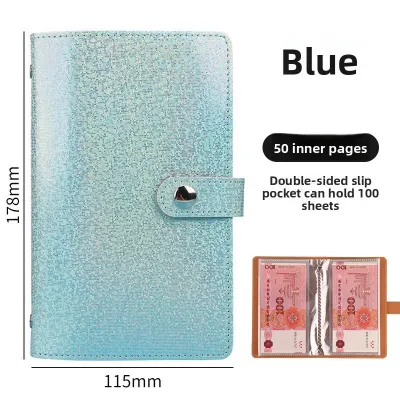
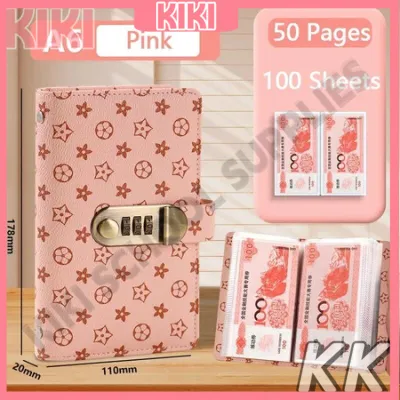
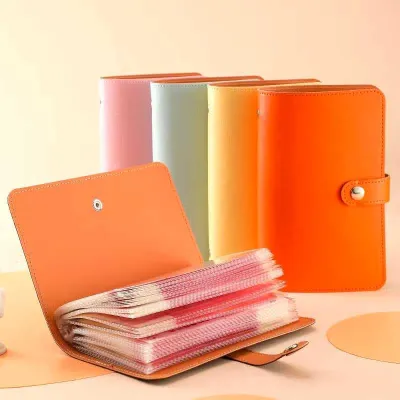
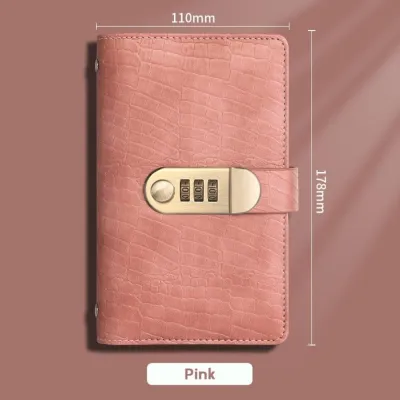
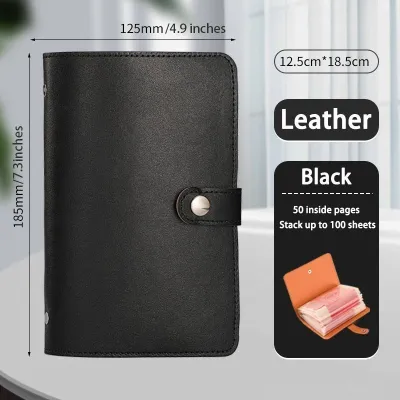
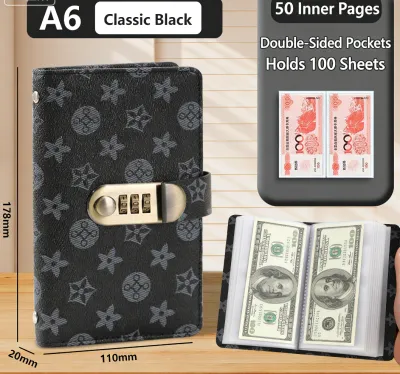
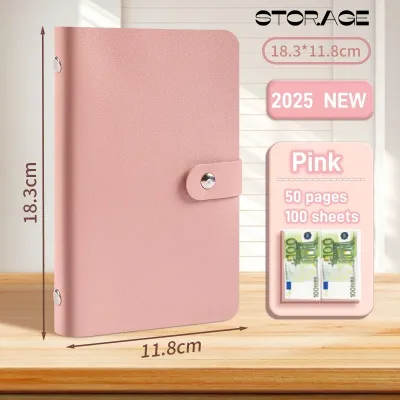
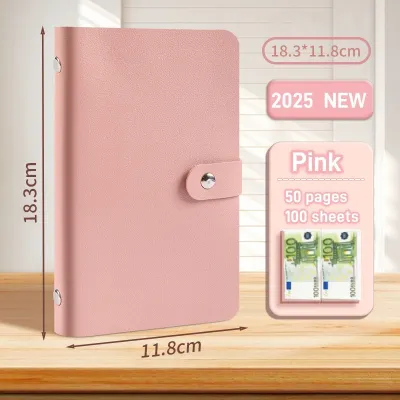
Prices are valid at publication and may change. Please refer to the product page for the latest price.
Identifying Your Savings Tracking Style and Usage
To find the perfect password lock savings book, you must first define your personal tracking style and daily routine. If you are someone who logs every single transaction—from your morning coffee and jeepney fares to grocery bills and utility payments—you will need a notebook designed for high-frequency use. This daily logging style requires a layout with plenty of lines or grids and a compact size that is easy to open and close multiple times throughout the day. The lock mechanism must also be highly durable to withstand constant opening and closing without wearing out.
On the other hand, if your financial tracking style is more reflective, focusing on weekly summaries, monthly utility bills, or long-term savings milestones, your physical requirements will differ. You will not need to open the book every day, meaning a larger, more substantial notebook with fewer, highly structured pages will suffice. This style allows you to focus on detailed budgeting frameworks, such as the Japanese Kakeibo method or custom savings charts, which require more page space but less frequent access.
Portability is another crucial factor that depends heavily on your daily environment. If you prefer updating your ledger on your daily commute, at a local coffee shop, or during lunch breaks at work, portability is your primary concern. A lightweight, compact notebook that fits easily into a backpack, tote bag, or purse is essential for this on-the-go lifestyle. However, if you only update your records at home at your desk, a heavier, more substantial book that stays securely in a drawer is a better fit, as you do not have to worry about carrying extra weight.
Finally, assess the level of privacy required in your living or working space. In shared dorms, boarding houses, busy family homes, or open-plan offices, curiosity can lead to unwanted eyes on your personal financial goals. A physical lock acts as a clear boundary, signaling to others that the contents are strictly private. While it will not stop a determined intruder with tools, it effectively deters casual snooping from roommates, visitors, or family members, giving you peace of mind as you document your path to financial independence.
Choosing the Right Paper Quality and Page Layout
When tracking financial figures, legibility and neatness are critical for maintaining accurate records over time. Standard notebook paper is often thin, typically around 70 gsm to 80 gsm, which can cause gel pens, rollerballs, or highlighters to bleed through to the other side of the page. For clean financial records, look for paper weights of 100 gsm or higher. This thickness prevents ghosting, allowing you to use both sides of every sheet without making your previous entries unreadable or messy.

In the Philippines, the high relative humidity can also affect how paper behaves over time. Humid air makes paper fibers softer and more absorbent, which can exacerbate ink bleeding and feathering on low-quality sheets. Choosing a notebook with high-density, acid-free paper ensures that your financial records remain crisp and legible, even after months of exposure to tropical weather. Acid-free paper also prevents the pages from yellowing or deteriorating over the years, preserving your financial history for long-term reference.
The layout of the pages dictates how you organize your financial data. Grid or graph paper is highly recommended for tabular expense tracking, as the vertical and horizontal lines make it easy to align columns of numbers, dates, and categories. Lined pages are excellent if you prefer a narrative style of budgeting, where you write down financial reflections alongside your numbers. Dotted pages offer a versatile middle ground, providing subtle guidelines for drawing custom charts, progress bars, and visual savings trackers without the visual clutter of dark grid lines.
The binding of the notebook is another critical element that directly impacts writing comfort. Writing financial entries across a thick notebook can become frustrating if the pages constantly try to flip closed or if the binding creates a steep slope near the center gutter. Look for thread-bound or lay-flat binding designs that allow the notebook to open completely flat at a 180-degree angle. This feature ensures you can write comfortably across the entire width of the page, making it much easier to maintain neat, aligned columns of financial figures.
Evaluating Lock Mechanisms for Daily Reliability
The lock mechanism is the defining feature of a password lock savings book, and its reliability determines how often you will actually use the notebook. Combination locks are generally the most convenient option for daily financial tracking. A three-digit combination dial eliminates the risk of losing a tiny physical key, which can easily go missing in a cluttered room, bag, or drawer. However, physical keys offer a classic feel and do not require you to remember a code. If you choose a key lock, ensure you have a designated, secure spot to store the spare key to avoid getting locked out of your own financial records.
The durability of the lock mechanism depends heavily on its materials. Metal clasps, typically made of zinc alloy or stainless steel, offer much better resistance to daily wear and tear than plastic alternatives. Plastic locks are prone to cracking, chipping, or jamming over time, especially when subjected to daily use. Furthermore, in humid tropical climates, metal components can be susceptible to rust if they are made of cheap, untreated iron. Opting for a notebook with a high-quality, rust-resistant metal lock ensures that the latch aligns perfectly and operates smoothly every time you close the book.
It is important to manage expectations regarding the security of a locked notebook. These locks are designed to protect your privacy from casual snoopers, not to act as a heavy-duty safe. The paper or faux-leather cover can still be cut, and a forced entry is always possible with enough physical effort. Treat the lock as a psychological barrier and a deterrent rather than a high-security vault. If you require absolute security for highly sensitive financial documents, consider keeping the notebook inside a dedicated home safe or lockbox.
When your notebook arrives, perform a quick quality check before writing any sensitive information. Spin the dials to ensure they turn smoothly without catching, and test the latch mechanism multiple times. Check that the alignment of the lock clasp is straight and that it snaps shut securely. If the dials feel loose or the latch requires excessive force to close, it may be a sign of a manufacturing defect. Testing the lock immediately allows you to return or exchange the product before you have committed your personal financial data to its pages.
Matching Notebook Size and Page Count to Your Goals
Selecting the right notebook size is a balancing act between writing comfort and physical convenience. Notebook sizes are standardized, with A5 (approximately 14.8 x 21 cm) and A6 (approximately 10.5 x 14.8 cm) being the most common options for lock journals. An A5 notebook provides ample space for detailed monthly budgets, multi-column ledgers, and long-term financial planning. This size is ideal if you prefer a comprehensive overview of your finances on a single page. An A6 notebook is much more compact, fitting easily into a small bag or even a large pocket, making it perfect for quick, on-the-go expense logging.
Page count is another critical factor that affects both the longevity and the usability of your savings book. A thicker notebook with 200 or more pages will last for several years of financial tracking, saving you the hassle of transferring your system to a new book frequently. However, excessive thickness can make the notebook heavy and bulky to carry. It can also put strain on the locking mechanism, as the cover may bulge when the book is full, causing the lock clasp to misalign. A moderate page count of 120 to 160 pages often strikes the best balance between longevity and structural integrity.
Consider how the physical footprint of the notebook will fit into your long-term storage and archiving system. Financial records are often kept for several years for reference, tax purposes, or personal reflection. A standard-sized notebook like A5 fits neatly onto bookshelves or inside standard filing boxes, making it easy to organize. If you plan to use multiple books over the years, keeping a consistent size and style makes archiving your past financial history much simpler and visually cohesive.
Additionally, the thickness of the cover material plays a role in protecting the pages over time. A thick, padded faux-leather or hardbound cover provides structural support that prevents the notebook from bending or warping when stored on a shelf or packed tightly in a bag. This durability is especially important for lock notebooks, as a warped cover can permanently misalign the locking clasp, rendering the lock useless. Choosing a sturdy cover ensures that your financial records remain protected and accessible for years to come.
Pre-Purchase Verification and Buying Checklist
Before purchasing a password lock savings book from an online marketplace, it is essential to verify the product specifications and seller claims to ensure you receive a high-quality item. Do not rely solely on the seller’s promotional images, which can sometimes be misleading. Read through customer reviews to check for common complaints about stiff locks, misaligned clasps, or thin paper that bleeds. Look for photos uploaded by other buyers to verify the actual color, texture, and paper quality in real-world lighting.
Always check the detailed specification list for the exact dimensions and weight of the notebook. Some product listings use close-up photos that make a small A6 notebook look like a large A5 book. Ensure the physical size matches your expectations and fits comfortably into your daily bag or the specific drawer where you plan to store it. Checking the weight is also important if you plan to carry the notebook with you daily, as a heavy book can add unnecessary strain to your shoulders.
Prices for password lock notebooks in the Philippines can vary widely, typically ranging from ₱200 to ₱800 depending on the cover material, paper quality, and lock type. Compare listings across different online stationery stores to find a reasonable price that fits your budget. Additionally, verify the seller’s return policy; because mechanical locks can occasionally have factory defects, you want to ensure you can easily exchange the product if the lock is broken or jammed upon arrival.
Finally, pay attention to the packaging and shipping details provided by the seller. A notebook with a mechanical lock is sensitive to impacts during transit. Look for sellers who package their items securely with bubble wrap or sturdy cardboard boxes to prevent the lock clasp from getting bent or scratched during delivery. Checking the estimated delivery time is also helpful, especially if you want to start your new savings tracking routine by a specific date.
Frequently Asked Questions (FAQ)
Can I reset the password on a combination lock notebook?
Yes, most modern combination lock notebooks allow you to reset the password, but this depends entirely on the specific model. Many budget-friendly options feature a small reset button or a lever near the dials that you must press down with a pen tip while setting your new three-digit code. However, some basic models come with a fixed, non-resettable password set by the factory, which is usually printed on a small tag inside the packaging. Always read the product description carefully before buying to confirm if the code is customizable, and keep the instruction slip in a safe place so you do not accidentally lock yourself out.
What pen types work best with standard notebook paper?
To keep your financial records neat and legible, pair your notebook with the right writing instruments. Standard ballpoint pens are the safest choice for almost any paper quality, as their oil-based ink dries instantly and rarely bleeds or ghosts. Fine-liner pens with water-based ink also work well, provided the paper is at least 80 gsm. If you prefer gel pens for their smooth writing experience, opt for quick-drying gel ink to prevent smudging when you close the book. Avoid using heavy-ink fountain pens, permanent markers, or broad felt-tip highlighters unless you have verified that the notebook features thick, high-density paper of 100 gsm or more.
Community discussion
Share your experience or ask a question. Comments are reviewed before publication.