
Organizing documents efficiently requires tools that can handle both the weight of your paperwork and the physical demands of daily transport. A plastic envelope with handle offers a practical, portable solution for students, educators, and office professionals alike. However, choosing the right one involves looking beyond simple color preferences. To find an envelope that keeps your documents pristine and remains comfortable to carry, you must evaluate material durability, handle reinforcement, closure reliability, and capacity alignment. Understanding these core features ensures your filing system stands up to daily wear and tear.
Essential Features to Evaluate for Durability and Usability
Material and Thickness
When selecting a plastic envelope with handle, the base polymer determines how well the folder resists punctures, tears, and environmental degradation. The two most common materials you will encounter are Polypropylene (PP) and Polyvinyl Chloride (PVC). Polypropylene is highly favored for modern stationery because it is lightweight, rigid, and chemically inert, meaning it will not lift toner or ink from your printed pages over time. Polyvinyl Chloride, on the other hand, is softer, more flexible, and often completely transparent, but it can degrade and become sticky or yellowed when exposed to heat.
To assess durability, look closely at the material thickness, which is typically measured in microns (µm) or millimeters (mm). Standard-duty envelopes usually range from 0.18 mm to 0.3 mm in thickness and are typically priced in the budget-friendly range of ₱30 to ₱100. These provide a lightweight option suitable for carrying light homework loads or temporary project files. For heavy-duty use, opt for envelopes with a thickness of 0.5 mm to 0.7 mm or higher. While thicker plastic adds slightly more weight to your empty folder, it prevents the corners of your documents from puncturing the sides and keeps the folder from sagging when fully loaded.
Products mentioned in this guide
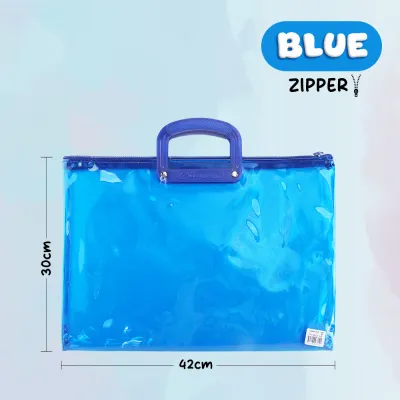
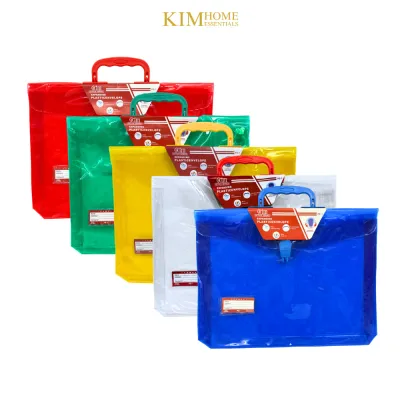
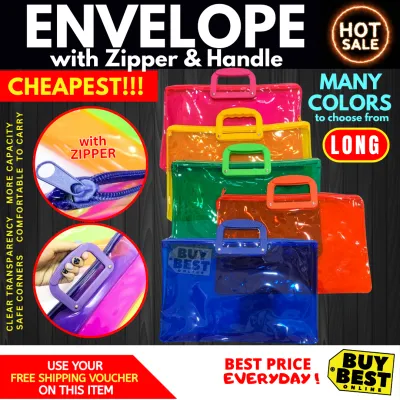
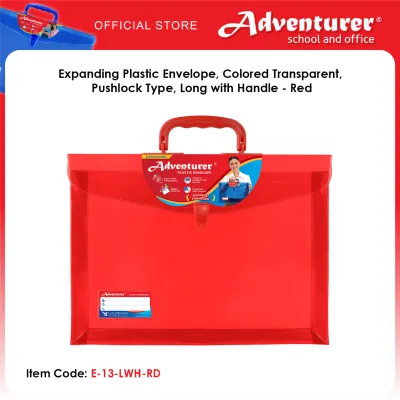
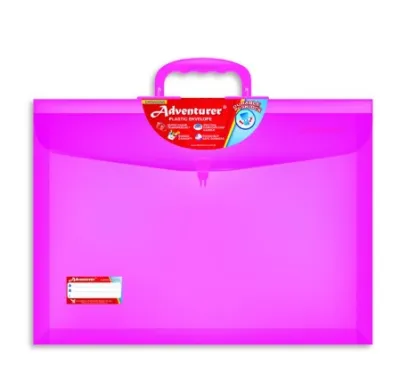
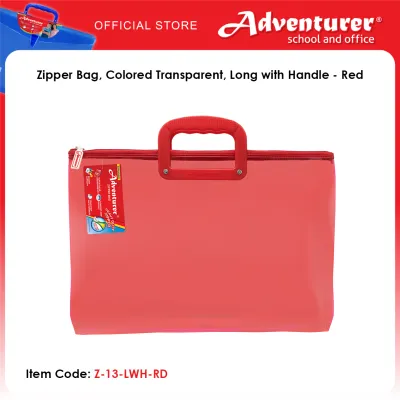
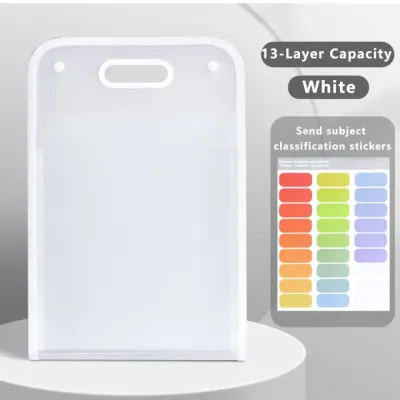
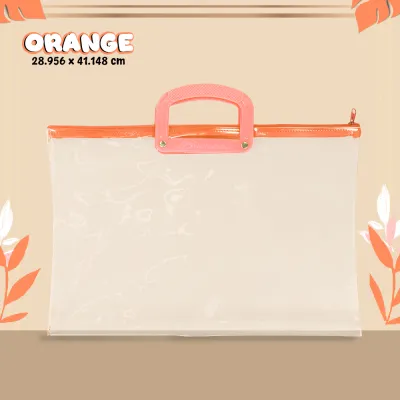
Prices are valid at publication and may change. Please refer to the product page for the latest price.
To verify if a plastic envelope will react with your printed documents, perform a simple, non-destructive trial. Place a freshly printed, non-critical test sheet inside the envelope and leave it in a warm room for 48 hours. If the ink or toner lifts off the page and sticks to the plastic wall upon removal, the material is prone to ink transfer and is unsuitable for long-term storage of original documents.
Handle Ergonomics and Reinforcement
The handle is the primary point of physical interaction and the most common failure point on portable envelopes. Two primary handle configurations dominate the market: die-cut handles and attached strap handles. Die-cut handles are integrated directly into the plastic body or flap of the envelope. While they offer a streamlined, low-profile design that easily fits inside larger bags, they can pinch your fingers when carrying heavy loads and are prone to tearing at the corners if the plastic is thin.
Attached strap handles, typically made of molded plastic, nylon webbing, or synthetic rubber, are secured to the top spine of the envelope. These designs are significantly more ergonomic, distributing weight evenly across your palm. When evaluating an attached handle, inspect the reinforcement at the connection points. Look for metal rivets, plastic backing plates, or double-stitched fabric tabs that anchor the handle to the envelope body. If the handle is merely heat-sealed to a thin sheet of plastic without reinforcement, it is highly susceptible to snapping or tearing away under the weight of thick document stacks.
Closure Mechanisms
The closure mechanism keeps your documents secure inside the envelope during transit. Your choice should match how frequently you access your files and the environments you travel through. Snap buttons, usually made of plastic or metal, are highly popular for their quick, one-handed operation. However, they can pop open unexpectedly if the envelope is overfilled, and plastic snaps can crack over time.
Zippers offer the highest level of security, sealing the envelope along three sides to prevent loose pages or small items like pens from falling out. They are ideal for active commutes, though they require a bit more effort to open and close. Velcro closures provide incredibly fast access and can accommodate slightly overstuffed envelopes due to their flexible grip, but they tend to collect lint, hair, and dust over time, which gradually reduces their holding power. Elastic cords that loop over plastic buttons offer a flexible, self-adjusting closure that accommodates varying expansion levels, though the elastic will eventually stretch out and lose its tension after prolonged use.
Internal Layout
The internal layout of your plastic envelope directly dictates your document retrieval speed and organization style. Single-compartment envelopes are essentially open pouches, making them excellent for storing bulk piles of a single project, large manuals, or booklets. However, if you need to organize multiple subjects or distinct client files, a single compartment forces you to rummage through a stack to find a specific sheet.
Multi-pocket or expandable accordion layouts feature internal dividers that segment the envelope into three, five, twelve, or even twenty-four distinct sections. These dividers often include tabbed tops where you can insert labels or color-coded index cards. While multi-pocket designs dramatically improve your ability to categorize documents, they also add bulk and weight. When choosing an accordion style, verify that the internal dividers are securely anchored to the bottom and sides of the envelope so that smaller documents do not slip underneath into adjacent pockets.
Recommended Envelope Styles for Different Filing Needs
For Daily Student and School Use
Students require storage solutions that can survive being crammed into backpacks, dropped on classroom floors, and carried across campus. For daily school use, look for lightweight, flexible plastic envelopes with handle configurations that fit easily alongside textbooks. A4 or B5 sizes are generally ideal, as they match the standard dimensions of worksheets, notebooks, and exam papers.

In a fast-paced school environment, organization is key to keeping track of different subjects. Opt for envelopes featuring three to five colorful internal dividers, allowing you to dedicate a section to each class. The closure should prioritize speed and ease of use; a robust snap button or an elastic cord closure allows you to pack up your materials in seconds when the school bell rings. Bright, semi-transparent colors are also beneficial, as they allow you to quickly verify that you have packed the correct notes without needing to open the envelope.
For Professional Commuting and Client Meetings
For working professionals, a plastic envelope must project a polished, organized image while protecting confidential business proposals, contracts, and marketing collateral. Sleek, minimalist designs with opaque or frosted finishes are highly recommended, as they keep sensitive client information hidden from public view during your commute.
Security is paramount when traveling between the office and client sites. Choose an envelope with a secure zipper or a heavy-duty dual-snap closure to ensure no loose pages escape. If your commute involves navigating crowded public transit like jeepneys, the MRT, or buses, a comfortable, ergonomic handle is essential. Look for handles that fold flat when not in use, allowing the envelope to slide smoothly into a briefcase or laptop bag. For business travelers, some premium envelopes feature rear straps designed to slide over the telescoping handle of a luggage trolley, making airport transit significantly easier.
For Heavy-Duty Archiving and Project Management
If your primary goal is long-term document archiving, tax record storage, or managing massive construction blueprints and legal briefs, standard envelopes will quickly buckle under the weight. You need a heavy-duty, high-capacity archiving envelope. These models typically feature a fully expanding accordion design with a wide bottom gusset that allows the envelope to stand upright on your desk or shelf.
Look for envelopes made from extra-thick Polypropylene (0.7 mm or thicker) to prevent sagging and structural collapse. These premium archiving envelopes, typically priced between ₱150 and ₱400, are a worthwhile investment for long-term protection. The handle must be exceptionally robust, preferably a molded plastic grip secured with heavy-duty metal rivets through a reinforced top spine. Multi-pocket designs with 12 to 24 compartments are ideal for archiving by month or alphabetical order. Ensure the outer flap covers the entire top and sides of the expanding gusset, protecting the archived documents from dust accumulation over months or years of storage.
Matching Paper Sizes, Capacity, and Storage Systems
Standard Paper Dimensions
One of the most common mistakes when purchasing a plastic envelope with handle is relying solely on the general size label on the packaging. Standard paper dimensions vary globally, and in the Philippines, you will frequently encounter Letter (8.5 x 11 inches), A4 (210 x 297 mm), and Legal (8.5 x 14 inches, often locally referred to as “long bond paper”).
Before buying, always verify the internal dimensions of the envelope rather than the external measurements. Manufacturers often print the external dimensions on the label, which includes the wide plastic welded seams along the edges. A welded seam can easily subtract 1 to 2 centimeters of usable space. If you frequently handle Legal-sized documents, a standard A4 envelope will be too short, forcing you to fold your documents or leave the top exposed. Look for envelopes explicitly labeled as “Legal Size” or “Long” and check that the internal width comfortably exceeds 356 mm (14 inches) to prevent your papers from crumpling at the edges.
Gusset Width and Expandability
The capacity of a plastic envelope is determined by its gusset width—the flexible, folded side panels that expand as you add more documents. A flat envelope with no gusset is designed to hold only a few dozen sheets of paper; forcing more inside will stretch the plastic, warp the envelope, and prevent the closure from latching.
To estimate the capacity you need, use a general rule of thumb: one centimeter of gusset expansion can comfortably hold approximately 80 to 100 sheets of standard 70 gsm or 80 gsm paper. If you need to carry a standard ream of paper (500 sheets), you will require an envelope with an expanding gusset of at least 5 centimeters. Keep in mind that as the gusset expands, the center of gravity shifts, so look for models with a structured, rigid base panel that helps the envelope maintain its shape when fully expanded.
Shelf and Binder Compatibility
If you plan to store your plastic envelopes inside existing office furniture, such as filing cabinets, bookshelf cubbies, or desk organizers, you must consider their external footprint. While a handle makes transport incredibly convenient, rigid, fixed plastic handles add significant height to the envelope’s profile.
Measure the vertical clearance of your shelves or filing drawers before purchasing. A rigid handle that stands upright can prevent the envelope from sliding into standard cabinet drawers or low-clearance shelves. If space is tight, look for envelopes with flexible, soft strap handles that lay completely flat when not in use, or models where the handle can be recessed into the top spine. Additionally, if you plan to integrate the envelope into a larger binder system, verify if the envelope features pre-punched margins that align with standard two-hole or three-hole binders.
Maintenance Tips to Extend the Life of Your Plastic Envelopes
Cleaning and Stain Removal
Over weeks of daily use, plastic envelopes can accumulate dust, oil from your hands, sticky adhesive residues from labels, and accidental ink smudges from ballpoint pens. To maintain a clean, professional appearance, regular cleaning is essential. However, you must avoid using harsh chemical solvents like acetone, paint thinner, or high-concentration isopropyl alcohol, as these can chemically react with certain plastics, causing them to cloud, melt, or become brittle.
Instead, prepare a simple cleaning solution of lukewarm water and a few drops of mild dishwashing soap. Dampen a soft microfiber cloth with the soapy water, wring out any excess moisture, and gently wipe down the plastic surfaces. For stubborn adhesive residue left behind by old labels, apply a tiny amount of vegetable oil or a specialized, plastic-safe adhesive remover to a cloth, rub the spot gently in circular motions, and then wipe the area clean with a damp, soapy cloth. Always allow the envelope to air dry completely in a well-ventilated area before placing paper documents back inside.
Preventing Warping in Humid Climates
The tropical climate of the Philippines presents unique challenges for stationery maintenance. High ambient temperatures and elevated humidity levels can severely affect both plastic envelopes and the paper stored inside them. When exposed to extreme heat—such as being left inside a parked car under the sun or placed near a window receiving direct sunlight—thermoplastics like PP and PVC can soften, warp, and permanently lose their shape.
Furthermore, high humidity can cause moisture to become trapped inside a sealed plastic envelope, leading to paper curling, ink bleeding, or pages sticking to the plastic walls. To prevent these issues, store your plastic envelopes in a cool, dry indoor environment away from direct sunlight and heat sources. If you are storing highly critical documents, consider placing a small, food-safe silica gel packet inside the envelope to absorb any ambient moisture and protect your paperwork from dampness.
Load Management
While high-capacity expanding envelopes are designed to hold substantial amounts of paperwork, every envelope has a physical limit. Overloading your plastic envelope is the fastest way to ruin it. When you force too many documents inside, the plastic walls stretch, putting extreme tension on the welded side seams, the closure mechanism, and the handle attachments.
Regularly audit the contents of your envelope. If you find that the plastic is bulging outward, the zipper is difficult to slide, or the snap button requires significant force to close, it is time to redistribute your documents. Splitting your paperwork across two separate envelopes not only preserves the structural integrity of the folders but also makes carrying them significantly more comfortable and ergonomic for your hands and shoulders.
Frequently Asked Questions (FAQ)
Can a plastic envelope with a handle safely hold a laptop or tablet?
Standard plastic envelopes with handles are designed specifically for lightweight paper documents and are not suitable for carrying expensive electronic devices like laptops or tablets. These envelopes lack the rigid structural support, padded shock absorption, and corner protection required to safeguard electronics from drops and impacts. Additionally, the weight of a laptop can easily exceed the load limit of standard plastic handles and heat-sealed seams, risking a sudden tear that could drop your device onto a hard surface. If you need to transport a tablet or thin laptop, always use a dedicated, padded tech sleeve or a backpack with a built-in padded compartment.
How do I fix a broken snap button on a plastic envelope?
If a plastic snap button cracks or pulls out of the envelope, you can apply a few low-risk, temporary fixes depending on the thickness of the plastic. For a quick and easy solution, apply a small strip of heavy-duty, self-adhesive Velcro tape directly over the area where the snap button was located, ensuring the surfaces are clean and dry before application. If the plastic envelope is made of thick, heavy-duty material, you can use a basic snap-fastener tool kit to install a replacement metal or plastic snap button into the existing hole. However, if the plastic surrounding the snap button has torn or stretched significantly, the structural integrity of the closure is compromised, and it is best to replace the envelope to prevent your documents from falling out.
Are expandable plastic envelopes completely waterproof?
No, standard expandable plastic envelopes are water-resistant but not completely waterproof. While the Polypropylene or PVC sheet material itself is entirely impervious to water and will easily repel surface spills, light rain, or accidental splashes, the envelope as a whole is vulnerable to water entry. Moisture can easily penetrate through the stitched seams, zipper coils, handle attachment points, and the open gaps along the sides of the top flap. If you must travel through heavy tropical downpours, do not submerge the envelope or expose it to prolonged rain. For critical, irreplaceable documents, place them inside individual, airtight zip-top plastic sleeves before storing them inside your plastic envelope with handle.
Community discussion
Share your experience or ask a question. Comments are reviewed before publication.