
Selecting the right transparent envelope with zipper is more than just finding a plastic pouch; it is about securing your critical documents against physical damage, moisture, and organizational chaos. Whether you are a student managing school modules, an office professional organizing contracts, or a traveler keeping credentials secure, the right envelope ensures your papers remain pristine and accessible.
To make an efficient decision, you must balance three core variables: standard sizing, material composition, and internal layout. In tropical climates where high humidity and sudden downpours are common, choosing the wrong material can lead to ruined documents, stuck zippers, or ink transfer. By understanding how these factors interact, you can select a zippered envelope that perfectly matches your daily routine and storage environment.
Matching Envelope Sizes to Your Documents and Devices
Selecting the correct envelope size requires looking beyond the advertised dimensions to understand how paper standards and document thickness affect the actual fit. In many professional and academic settings, you will encounter three primary paper sizes: A4 (210 x 297 mm), Letter (8.5 x 11 inches), and Legal (8.5 x 13 inches). While an envelope labeled “A4” will easily hold a few flat sheets of A4 paper, it will struggle to accommodate a thick stack of the same paper size without bending the corners.
Products mentioned in this guide
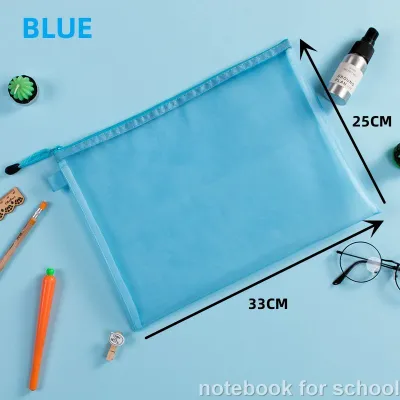
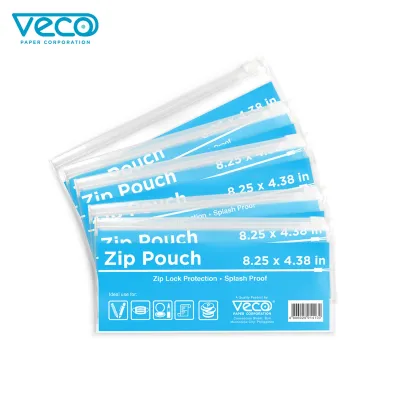
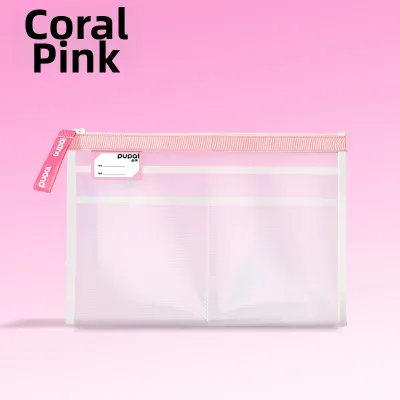
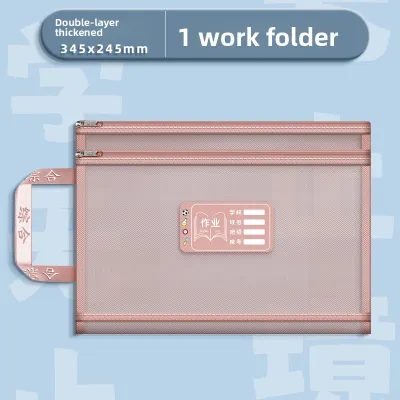
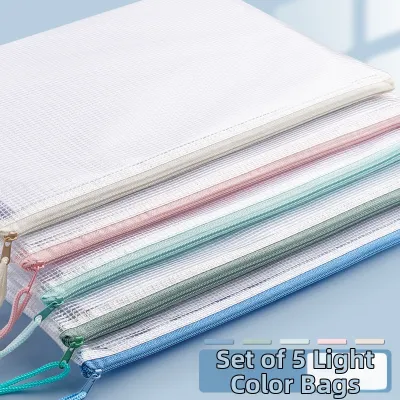
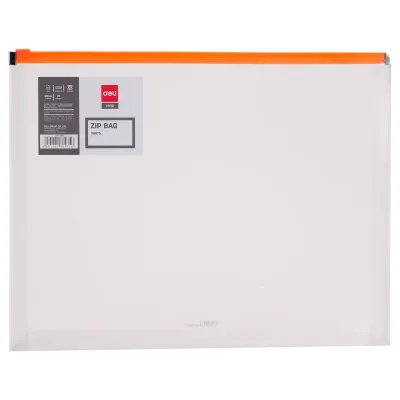
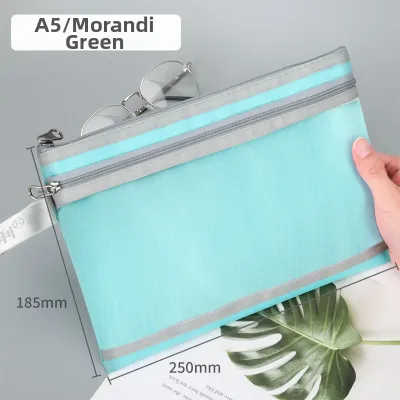
Prices are valid at publication and may change. Please refer to the product page for the latest price.
To prevent damage to your documents, always calculate a clearance margin. A flat plastic envelope has no natural depth; as you insert more sheets, the plastic stretches outward, pulling the sides inward and reducing the usable width and height. For a stack of 20 to 50 sheets, choose an envelope that offers at least a half-inch (approximately 1.2 cm) of clearance on all sides. If you regularly handle long bond paper, ensure you purchase envelopes explicitly designated for Legal size, as attempting to slide these sheets into an A4 or Letter envelope will force you to fold the edges.
Non-standard items like tablets, passports, and receipts require a different sizing approach. If you plan to use a transparent envelope with zipper to protect electronic devices or thick notebooks, you must account for the three-dimensional volume of the object. A tablet with a protective case may have a thickness of 1.5 cm, which significantly reduces the flat capacity of the envelope. For these items, look for envelopes with built-in side or bottom gussets that expand to accommodate depth without putting excessive tension on the zipper track.
There is a clear trade-off between compact portability and maximum storage capacity. Large Legal-size envelopes offer the greatest versatility for office documents but are difficult to fit into standard backpacks, tote bags, or messenger bags without bending the entire envelope. Conversely, smaller sizes like A5 or A6 are highly portable and fit easily into small bags or glove compartments, making them excellent for passports, receipts, and flashcards, though they are entirely unsuitable for standard office correspondence.
Evaluating Material Thickness and Zipper Durability
The durability of a transparent zippered envelope depends heavily on the type of plastic used and the thickness of the material, often referred to as its gauge. The two most common materials used in these envelopes are Polyvinyl Chloride (PVC) and Polypropylene (PP). Each material behaves differently under daily use and environmental exposure, particularly in warm, humid conditions.

PVC is highly flexible, rubbery to the touch, and offers excellent, crystal-clear transparency, making it easy to read documents without opening the envelope. However, PVC contains plasticizers that can degrade over time, especially when exposed to heat. In tropical environments, PVC can become sticky, and the plasticizers may react with laser-printed toner, causing the ink to lift off the paper and stick to the inside of the envelope. PP, on the other hand, is stiffer, slightly frosted or textured, and chemically inert. PP is acid-free and archival-safe, meaning it will not react with printed ink or yellow over time, making it the preferred choice for long-term document preservation.
Material thickness is typically measured in microns or millimeters, ranging from lightweight (around 0.15mm) to heavy-duty (0.35mm or thicker). Thicker materials provide structural rigidity, keeping the envelope flat and protecting the contents from bending inside a crowded bag. Lightweight envelopes are highly flexible and easy to fold or tuck away when empty, but they are much more susceptible to punctures from sharp pen tips, paperclips, or keys.
When evaluating construction quality, pay close attention to the seams and corners. The weakest points of any plastic envelope are the heat-sealed edges. High-quality envelopes feature wide, double-welded seams or fabric-reinforced stitched borders that distribute physical tension away from the plastic joints. Inspect the corners where the zipper track meets the plastic body; these areas should be reinforced with extra stitching or plastic patches to prevent the zipper from tearing away from the envelope under load.
Zipper durability is equally critical. Plastic slide zippers (with a sliding plastic toggle) are convenient for quick opening and closing but can easily slip off the track if the envelope is overfilled. Coil zippers, which resemble the zippers found on clothing and backpacks, are much more robust and can handle higher tension, though they do not provide a completely airtight seal. For maximum water resistance, some envelopes utilize heavy-duty zip-lock style tracks that seal shut when pressed, though these require manual alignment and can be more difficult to operate quickly.
Choosing the Right Compartment Layout and Zipper Design
The internal configuration of a zippered envelope determines how effectively you can organize your materials. Single-pocket envelopes are the most common and are ideal for keeping a single project, set of credentials, or subject module together. However, if you need to separate different types of items—such as keeping receipts apart from large contracts—a single-pocket design will force you to rummage through the entire contents.
Multi-compartment and accordion-style zippered envelopes solve this issue by offering internal dividers. These designs allow you to categorize documents systematically while keeping them secured under a single zipper closure. Expandable gusset designs are particularly useful for carrying bulky items like textbooks, catalogs, or multiple notebooks. A flat envelope will warp and stretch when forced to hold thick items, whereas a gusseted envelope expands evenly, maintaining its shape and protecting the zipper from splitting.
Zipper designs also vary to suit different organizational workflows. Standard top-loading zippers are ideal for quick access when the envelope is held vertically in a backpack. Side-loading or L-shaped zippers, which open along two adjacent edges, make it much easier to slide large, fragile documents in and out without bending them. If you plan to integrate your zippered envelopes into a larger filing system, look for designs that feature a reinforced binding edge with pre-punched holes, allowing you to secure the entire pouch inside a two-ring or three-ring binder.
Additional functional features can greatly enhance usability. Exterior index windows or label pockets allow you to insert a paper tag to identify the contents of the envelope without opening it. Some heavy-duty envelopes also include integrated pen loops or small mesh pockets on the front, turning the envelope into a self-contained mobile workstation where you can store writing instruments, sticky notes, and USB drives alongside your documents.
Scenario-Based Selection Guide for Common Use Cases
To help you identify the ideal specifications for your specific needs, consider these three common organizational scenarios and their corresponding product profiles.
Scenario 1: Daily Student or Office Commuter
- Primary Need: High durability, physical protection, and secure closure to withstand daily transit, crowded bags, and sudden weather changes.
- Recommended Specifications: Choose a medium-to-heavyweight Polypropylene (PP) envelope (0.25mm to 0.35mm thickness) with fabric-reinforced stitched edges. Opt for a sturdy coil zipper with a durable metal or plastic pull tab. An A4 or Letter size is ideal for carrying school modules, printed reports, and notebooks. The stiff PP material will prevent your papers from crumpling inside your backpack, while the stitched edges ensure the envelope will not split when packed tightly.
Scenario 2: Archival and Long-Term Document Protection
- Primary Need: Chemical safety, flat storage, and prevention of ink degradation or yellowing over several years.
- Recommended Specifications: Select acid-free, archival-grade Polypropylene (PP) envelopes. Avoid standard PVC entirely to prevent plasticizer migration and ink transfer. Choose a flat, non-gusseted design to keep documents pressed flat and minimize air exposure. A standard plastic slide zipper is sufficient, as the envelope will remain stationary in a filing cabinet or storage box. Size should match your documents exactly (typically Letter or Legal) to prevent shifting.
Scenario 3: Travel and Credential Organization
- Primary Need: Compact size, high visibility, quick access, and water resistance for passports, boarding passes, and keys.
- Recommended Specifications: Opt for an A5 or A6 size envelope made of highly transparent, flexible PVC or clear PP. The high transparency allows for instant visual checks at security gates and check-in counters. Look for a secure slide zipper or a water-resistant zip-seal to protect sensitive paper credentials from rain or accidental spills. A small wrist strap or a corner eyelet for a lanyard can add extra security during transit.
When shopping on e-commerce platforms or in physical stationery stores, use these profiles to filter your options. Do not rely solely on generic product titles; instead, look at the detailed specifications for material type (PP vs. PVC), seam construction, and exact internal dimensions to ensure you get the performance you need.
Pre-Purchase Checklist and Quality Verification
Before finalizing your purchase, especially when ordering in bulk for an office or school, use this practical checklist to verify the quality of the transparent zippered envelopes:
- Verify Internal Dimensions: Check the manufacturer's specifications for the internal usable dimensions. The external dimensions often include the width of the heat-sealed seams and the zipper track, which can reduce the actual usable space by up to 1.5 cm. Ensure your largest documents will fit comfortably within the internal limits.
- Inspect the Seams: If buying in person, gently pull the sides of the envelope apart near the seams. The heat-seal should be uniform, smooth, and free of tiny bubbles or gaps. If buying online, look at customer-uploaded photos to check if other buyers have experienced splitting along the edges.
- Test the Zipper Operation: Slide the zipper back and forth several times. It should move smoothly without catching on the plastic body or leaving gaps behind the slider. Avoid envelopes where the zipper track feels stiff, misaligned, or poorly attached to the plastic.
- Check for Chemical Odor: A strong, pungent plastic smell is often an indicator of low-grade PVC containing volatile plasticizers. If you require safe, long-term storage for printed documents, prioritize odorless Polypropylene (PP) options.
- Review Bulk Return Policies: When ordering large quantities, confirm the seller's return policy regarding manufacturing defects. Test a few envelopes from the batch immediately upon delivery to ensure the zippers and seams meet your standards before distributing them to your team or class.
Frequently Asked Questions (FAQ)
Can I store thermal receipts in transparent plastic envelopes long-term?
No, you should avoid storing thermal receipts directly in standard transparent plastic envelopes, especially those made of PVC, for long-term archiving. Thermal paper relies on a chemical reaction to display text, and the plasticizers (phthalates) used to make PVC flexible will migrate out of the plastic over time. When these chemicals come into contact with the thermal coating, they cause the printed text to fade rapidly, often leaving the receipt completely blank within a few months. If you must use plastic storage, ensure the envelope is made of acid-free, archival-safe Polypropylene (PP), or place the receipts inside a protective paper envelope before inserting them into the plastic pouch.
How do I clean and maintain the zipper track on a plastic envelope?
To keep the zipper track functioning smoothly, regularly inspect it for dust, lint, or paper fibers that can accumulate in the teeth and cause the slider to stick or split. You can clean the track by gently brushing it with a soft, dry toothbrush to dislodge any debris. If the track becomes sticky or dirty, wipe it with a microfiber cloth slightly dampened with water and a single drop of mild dish soap. Never use harsh chemical solvents, rubbing alcohol, or acetone, as these substances can dissolve the adhesive holding the zipper to the plastic, warp the envelope body, or degrade the zipper teeth. If the zipper track becomes physically deformed, missing teeth, or completely separated from the plastic, the envelope should be replaced to ensure your documents remain protected.
Community discussion
Share your experience or ask a question. Comments are reviewed before publication.