
Managing stock in a small business requires a reliable, hands-on system that keeps pace with daily transactions without the complexity of expensive software. For many retail shops, local boutiques, and food stalls in the Philippines, a physical weekly inventory form or dedicated tracker planner provides the most practical, immediate, and error-free way to monitor stock levels. Choosing the right physical tracker depends on your specific operational scale, the number of items you carry, and how well the paper and binding can withstand the daily wear of a busy workspace. By focusing on layout clarity, paper durability, and a structured counting routine, you can establish a manual tracking system that prevents stockouts, highlights discrepancies, and keeps your business running smoothly.
Assessing Your Inventory Tracking Needs
Before purchasing any physical planner or pre-printed form book, you must evaluate the scale and physical environment of your business operations. Start by estimating your total Stock Keeping Units (SKUs). A small business with fewer than fifty distinct items can easily manage with a compact, standard-sized planner. However, if you run a mini-grocery, a hardware store, or a diverse apparel shop with hundreds of SKUs, you will need a larger ledger-style book or a multi-page form system to avoid cramped, illegible handwriting. Consider the physical space available at your checkout counter or stockroom desk; a bulky binder might crowd a small counter, whereas a slim, flexible notebook can be tucked away easily.
The frequency of your counts also dictates the structure of your tracker. While the primary goal is a comprehensive weekly audit, some businesses require daily cycle counts for high-turnover items like fresh pastries or fast-moving consumer goods. Your physical form must accommodate these mid-week updates without becoming cluttered. Additionally, identify any specialized tracking requirements unique to your industry. For instance, if you sell perishable food items or cosmetics, your weekly form needs dedicated columns for expiration dates and batch numbers. If you repackage bulk goods into smaller retail portions, look for layouts that allow you to record unit conversions clearly, ensuring that your physical counts match your sales records.
Products mentioned in this guide
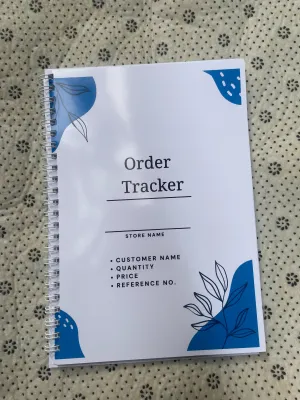
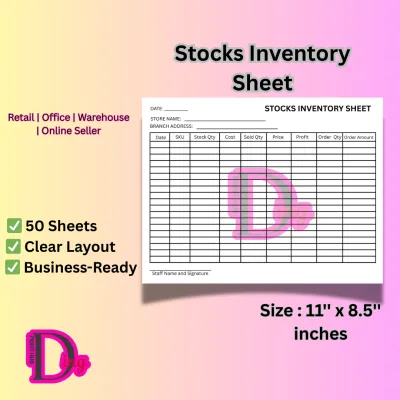
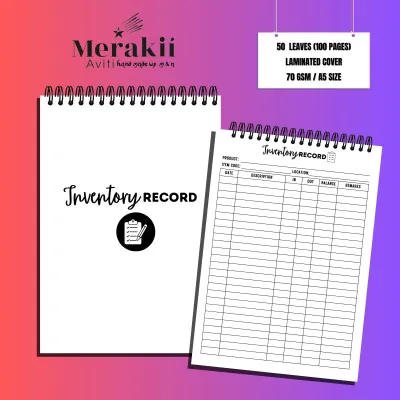
Prices are valid at publication and may change. Please refer to the product page for the latest price.
Key Layout Features of an Effective Weekly Inventory Form
An effective weekly inventory form serves as a visual map of your stock movement, requiring a logical flow of columns that minimizes calculation errors. The core of any manual tracker consists of several essential data fields arranged from left to right. First is the identifier column, which should have ample space for the SKU or item code, followed by a clear item description. Next, a “unit of measure” column is vital to clarify whether you are counting individual pieces, boxes, kilograms, or packs. The numerical tracking section must begin with the “beginning balance” (the stock carried over from the previous week), followed by columns for “received” stock (new deliveries) and “sold or used” quantities. Finally, the “ending balance” column represents the calculated stock that should physically remain on your shelves.

Beyond these standard fields, a highly functional layout includes dedicated spaces for operational realities. Look for forms that feature a “discrepancy” or “variance” column, allowing you to note differences between your physical count and your sales records, which is crucial for identifying shrinkage or recording damaged goods. An “alert” or “reorder point” column helps you flag items that have fallen below a safe threshold, serving as an immediate visual prompt to contact your suppliers.
The physical orientation of the page also impacts usability. Landscape layouts are generally superior for comprehensive inventory tracking because they provide wider columns, allowing you to write longer descriptions and larger numbers without squeezing your handwriting. Portrait layouts, on the other hand, are highly portable and fit better on narrow clipboards or small desks, making them ideal for staff members who must walk around the stockroom while performing active counts.
Comparing Types of Physical Inventory Planners
When selecting a physical medium for your weekly inventory form, you will generally choose among three primary formats, each offering distinct operational trade-offs. Pre-printed inventory log books are highly popular for their convenience and professional structure. These books come with fixed weekly grids, saving you the time and effort of drawing lines or printing templates. They are ideal for businesses with a stable, unchanging list of SKUs, as you can establish a consistent routine using a standardized layout. However, their rigidity can be a drawback if your product offerings change frequently, leaving you with unused rows or insufficient space for new arrivals.
For businesses that require instant record duplication, carbonless (NCR) form books are an indispensable tool. These books use specially treated paper that transfers your handwriting from the top sheet to one or more sheets underneath without the mess of carbon paper. This format is highly beneficial if you need to provide immediate physical copies of inventory reports to off-site business partners, delivery riders, or your accounting team, while keeping the original bound securely in the book. The primary limitation of NCR books is their page capacity; they are typically thinner and contain fewer sets of forms than standard notebooks, requiring more frequent replacements.
If your business handles a highly dynamic inventory with seasonal products or custom orders, blank grid, lined, or dot-grid notebooks offer the ultimate flexibility. Using a blank notebook allows you to design a customized, DIY weekly inventory form tailored precisely to your current stock list. You can adjust column widths, add specialized sections for seasonal promotions, and expand or contract your tracking sheets as your business evolves. The trade-off is the significant time investment required to draw these grids manually every week, which can become a tedious chore during busy sales seasons and increases the risk of alignment errors.
Evaluating Paper Quality and Binding for Daily Use
The physical environment of a retail shop or warehouse in the Philippines demands stationery that can withstand high humidity, frequent handling, and accidental spills. Paper weight and opacity are critical factors to consider. Standard office paper is often too thin, leading to ink bleed-through and ghosting when using gel pens, heavy ballpoints, or highlighters to mark low stock levels. To ensure clean, legible records on both sides of a page, look for planners featuring paper with a weight of at least 80 GSM (grams per square meter), though 100 GSM or higher is preferable if you use liquid ink pens. You can verify paper quality by performing a quick trial on a back page: write firmly with your preferred pen and check if the ink feathers or shows through on the reverse side.
Binding durability directly affects how easily you can write while standing in a stockroom. Spiral or wire-O binding is highly practical because it allows the planner to lay completely flat on a counter or fold back on itself, making it easy to hold in one hand while counting shelves with the other. However, exposed wire coils can catch on clothing or bend over time. Stitched or case-bound books offer superior longevity and are excellent for long-term archiving, but they often require you to hold the pages down to keep the book open, which can be frustrating during a long inventory session.
Finally, pay close attention to the cover materials. In tropical climates, paperboard covers can absorb moisture from the air, leading to warping and mold. Opt for planners with water-resistant plastic, laminated cardstock, or heavy-duty synthetic covers. These materials protect the inner pages from sweaty hands, damp stockroom shelves, and accidental liquid splashes, ensuring your business records remain intact and readable throughout the year.
Integrating a Physical Tracker into Your Weekly Workflow
A physical weekly inventory form is only as effective as the routine built around it. To establish a successful workflow, set a recurring, non-negotiable schedule for your physical counts. Many small businesses find that conducting counts on Sunday evening after closing or Monday morning before opening provides the cleanest data, as transactions are paused. Assign the responsibility of inventory tracking to a specific staff member or handle it yourself to maintain consistency in how items are counted and recorded.
Once the physical count is complete, the next step is reconciliation. Compare the physical totals written in your tracker against your point-of-sale (POS) system reports or digital sales spreadsheets. Any discrepancies between what your physical form shows and what your digital records claim must be investigated immediately. This process helps you identify issues such as administrative errors, supplier short-shipments, or physical shrinkage due to damage or theft.
After resolving any variances, secure archiving is essential. In the Philippines, maintaining clear physical records is highly beneficial for financial reviews and tax compliance. Store your completed inventory books in a dry, organized space, arranged chronologically. Label the spine or cover of each book with the date range it covers, ensuring that you can quickly retrieve historical stock data whenever you need to analyze seasonal sales trends or prepare for an annual business audit.
Frequently Asked Questions (FAQ)
Can I use a standard notebook instead of a pre-printed weekly inventory form?
Yes, you can use a standard lined, grid, or dot-grid notebook, which offers excellent flexibility for businesses with frequently changing product lines. However, drawing custom grids by hand every week requires a significant time investment and introduces the risk of layout inconsistencies or calculation errors during busy periods. If you choose this route, consider creating a reusable cardboard stencil or using a ruler to keep your columns uniform, or transition to a pre-printed form once your SKU list stabilizes.
How many weeks should a physical inventory tracker book ideally cover?
For most small businesses, a tracker book that covers 52 weeks is ideal because it aligns perfectly with a standard calendar year, allowing you to keep a full year of business records in a single volume. However, if your business experiences high staff turnover or operates in a damp environment where books wear out quickly, a shorter 12-week or quarterly tracker may be more practical. Shorter books are lighter, easier to carry around a stockroom, and can be archived quickly to prevent physical damage to the paper.
What is the best way to store completed inventory form books?
To protect your business records from the high humidity and pests common in the Philippines, store completed tracker books in airtight plastic storage bins rather than open cardboard boxes. Place a few silica gel packets inside the container to absorb excess moisture and prevent mold growth. Organize the books chronologically with clear external labels indicating the year and months covered, and store them off the floor in a cool, dry area to ensure they remain legible for future financial audits.
Community discussion
Share your experience or ask a question. Comments are reviewed before publication.