
Selecting the right acrylic paint for canvas involves balancing pigment quality, paint viscosity, and surface preparation to ensure your artwork remains vibrant and durable over time. Whether you are painting a tropical landscape in a humid studio or practicing fine-line portraits, the interaction between your paint’s binder and the canvas fibers determines the success of your piece. To make an informed purchase, you must evaluate the paint’s grade, select the appropriate consistency for your technique, interpret label specifications accurately, and prepare your canvas surface correctly.
In the tropical climate of the Philippines, environmental factors such as high relative humidity and warm ambient temperatures significantly influence how acrylic paint behaves on canvas. High humidity slows down the evaporation of water from the acrylic emulsion, slightly extending your working time, while high temperatures can cause the surface of the paint to skin over rapidly. Understanding these physical dynamics, along with the chemical properties of your materials, allows you to choose the ideal acrylic paint for canvas that matches both your artistic style and your working environment.
Artist vs. Student Grade: Which Acrylic Paint Fits Your Canvas Project?
Acrylic paints are broadly categorized into two quality tiers: artist-grade (or professional-grade) and student-grade. The primary distinction between these two tiers lies in the ratio of pigment to binder, the purity of the pigments used, and the presence of manufacturing fillers. Choosing between them depends on your budget, your level of experience, and the ultimate purpose of your canvas painting.
Products mentioned in this guide
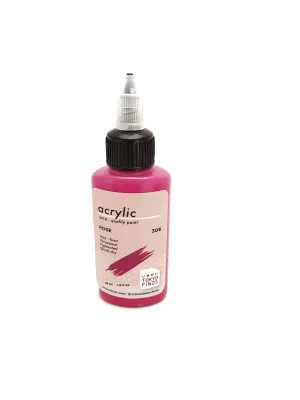
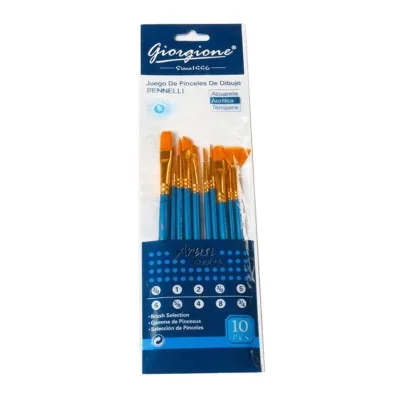
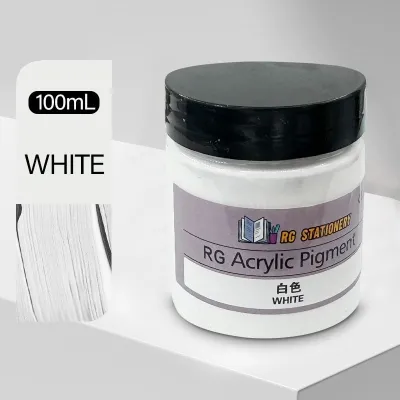
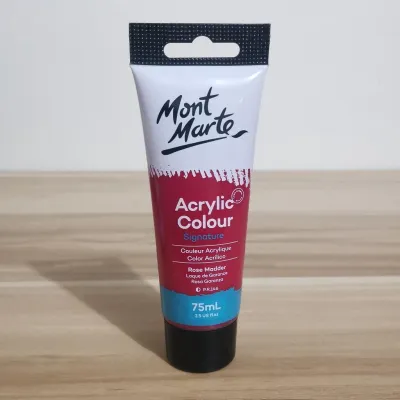
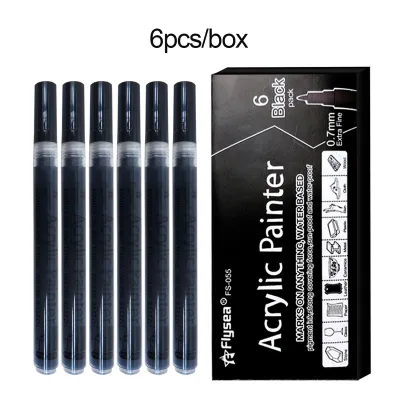
Prices are valid at publication and may change. Please refer to the product page for the latest price.
Artist-grade acrylic paints feature a high concentration of pure pigments suspended in a high-quality acrylic polymer emulsion. These formulations contain minimal fillers, which ensures that the colors remain exceptionally vibrant when dry. Many professional paints are single-pigment formulations, meaning they utilize only one chemical pigment to produce a specific color. Single-pigment paints are highly valued by artists because they allow for clean, predictable color mixing without turning muddy. When applied to canvas, artist-grade paints offer superior coverage, excellent workability, and rich color depth that highlights the natural texture of the fabric.
Student-grade acrylic paints are formulated to be more affordable, making them highly accessible for beginners, classroom settings, and large-scale practice. To reduce production costs, manufacturers replace expensive organic or mineral pigments with synthetic alternatives, often labeled as “hues” (for example, “Cadmium Red Hue”). Additionally, student-grade paints contain a lower concentration of pigment and a higher proportion of fillers, such as calcium carbonate or barium sulfate. These fillers reduce the tinting strength of the paint, meaning you will need to use more paint to achieve the same level of color saturation as an artist-grade equivalent.
When deciding which grade to purchase, consider your specific project goals. If you are working on final gallery pieces, complex color portraits, or commission work where archival longevity and precise color mixing are critical, investing in artist-grade paints is highly recommended. Conversely, student-grade paints are perfectly adequate for initial color studies, practicing brush techniques, underpainting, or blocking out large background areas on a stretched canvas.
It is also important to note how canvas texture and absorbency can exaggerate the visual differences between these two grades. A coarse, highly absorbent cotton duck canvas will draw in moisture quickly, which can make student-grade paints look dry, flat, or slightly chalky due to their high filler content. Artist-grade paints, with their superior binder and pigment quality, maintain their rich satin or gloss finish even when applied to heavily textured canvas surfaces.
Matching Paint Consistency to Your Canvas Technique
The viscosity, or thickness, of your acrylic paint determines how it flows across the canvas, how it retains texture, and how easily it blends. Acrylic manufacturers produce paints in several distinct consistencies to accommodate different artistic techniques. Matching the paint’s physical behavior to your preferred style is essential for achieving your desired visual effects.

Heavy Body Acrylics Heavy body acrylics are the most popular choice for traditional canvas painting. They possess a thick, buttery consistency similar to soft butter or oil paint. Because of their high viscosity, heavy body paints retain brushstrokes, palette knife marks, and sculptural peaks on the canvas, making them the ideal choice for impasto techniques. When applied thickly, they dry to a durable, flexible film that resists cracking, allowing you to build rich dimensional textures directly on the canvas support.
Soft Body Acrylics Soft body acrylics have a smooth, creamy consistency comparable to yogurt. They contain the same high pigment concentration as heavy body paints but lack the added thickeners, allowing them to flow more easily from the brush. Soft body paints are excellent for smooth blending, detailed brushwork, underpainting, and covering large areas of the canvas with a flat, even coat. Because they level out slightly as they dry, they minimize visible brushstrokes, making them highly suitable for graphic styles or fine details.
Fluid and High Flow Acrylics Fluid and high flow acrylics have an ink-like, highly liquid consistency. Despite their watery texture, professional fluid acrylics maintain a high pigment load, offering intense color without the need for heavy dilution. These paints are designed for specialized canvas techniques such as paint pouring, glazing, staining raw canvas, airbrushing, or creating fine, calligraphic lines. They flow effortlessly into the weave of the canvas, creating vibrant washes that mimic watercolor but dry to a permanent, water-resistant finish.
Altering Paint Consistency Safely While it is tempting to thin heavy body paint with water to achieve a fluid consistency, doing so can compromise the structural integrity of the paint film. Acrylic paint relies on an emulsion of acrylic polymer binder and water. If you dilute the paint with too much water—typically exceeding 30% to 50% depending on the brand’s specifications—the polymer chains are spread too far apart to form a continuous, stable plastic film as the water evaporates. This can result in an under-bound paint layer that may easily smudge, powder, or peel off the canvas over time.
To alter your paint’s consistency safely, you should use dedicated acrylic mediums rather than water. To thin your paint while preserving its adhesive properties, mix it with a fluid medium, gloss medium, or flow improver. To thicken your paint or add structural volume for impasto work, blend it with a gel medium or modeling paste. These mediums contain the same acrylic polymer binder as the paint, ensuring that the mixture adheres permanently to your canvas fibers without breaking down.
How to Read Acrylic Paint Labels for Canvas Quality
Before purchasing a tube of acrylic paint, learning to read the manufacturer’s label is one of the most effective ways to verify its quality, performance characteristics, and suitability for your canvas projects. Professional paint tubes display standardized technical information that reveals how the paint will behave during application and how it will withstand environmental exposure over time.
Lightfastness Ratings Lightfastness refers to a pigment’s ability to resist fading or shifting color when exposed to light over time. This is especially critical in tropical environments like the Philippines, where artwork may be subjected to intense ambient sunlight. Most reputable manufacturers use the standardized ASTM International rating system (specifically ASTM D5098 for artists’ acrylic paints) or the Blue Wool Scale:
- ASTM Class I (or Blue Wool 7-8): Excellent lightfastness. Paints in this category will remain unchanged for decades under normal gallery lighting conditions.
- ASTM Class II (or Blue Wool 6): Very good lightfastness. These paints are highly durable and suitable for professional artwork.
- ASTM Class III (or Blue Wool 4-5): Fair lightfastness. These pigments are prone to fading over time and are generally restricted to student-grade lines.
Opacity and Transparency Symbols Understanding a paint’s opacity is crucial for effective layering, glazing, and covering dark underpaintings on canvas. Many brands print a small square or circle symbol on the tube to indicate this property:
- Empty Outline (Square or Circle): Fully transparent. Ideal for glazing, where light passes through the paint layer to reveal the colors underneath.
- Diagonal Line or Half-Filled: Semi-transparent or semi-opaque. Offers moderate coverage while allowing some underlying detail to show through.
- Solid Black Fill: Fully opaque. Provides maximum coverage, easily hiding underlying pencil lines, dark canvas primers, or previous paint layers.
Pigment Index Numbers To verify if a paint contains genuine pigments or cheap synthetic mixtures, look for the Pigment Index Number on the label. This code consists of letters and numbers indicating the chemical family and specific pigment identity. Common examples include:
- PW6: Pigment White 6 (Titanium Dioxide / Titanium White)
- PB29: Pigment Blue 29 (Ultramarine Blue)
- PR108: Pigment Red 108 (Cadmium Selenosulfide / Cadmium Red)
If a label lists a single pigment code, it is a pure color that will mix predictably with other paints. If the label lists multiple pigment codes for a single color (often accompanied by the word “Hue”), it is a pre-mixed shade. While convenient, multi-pigment mixtures are more likely to produce muddy results when blended on your palette.
Drying Time and Environmental Factors While standard acrylic paint labels do not always list a specific drying time in minutes, some specialized lines (such as interactive or slow-drying acrylics) will explicitly state their extended open time. In the warm, humid climate of the Philippines, standard acrylics dry relatively quickly on the palette but may dry slightly slower on the canvas due to high atmospheric moisture. Always check the manufacturer’s technical data sheets online if you require precise drying characteristics for complex blending techniques.
Canvas Preparation: Priming and Paint Adhesion
The physical bond between acrylic paint and your canvas depends heavily on how the canvas surface is prepared. Painting directly on raw, untreated canvas fibers can lead to poor adhesion, uneven absorption, and long-term degradation of your artwork. Understanding the role of priming ensures your paint remains locked to the surface for years to come.
The Purpose of Priming and Sizing Raw canvas, whether made of cotton duck or linen, is highly absorbent and porous. If you apply acrylic paint directly to raw canvas, the thirsty fibers will rapidly suck the liquid binder out of the paint emulsion. This leaves the pigment particles sitting on the surface with insufficient binder to hold them together, making the dried paint layer fragile, powdery, and highly susceptible to flaking.
Additionally, raw canvas is prone to a phenomenon known as Support Induced Discoloration (SID). As water-based acrylic paint dries on raw canvas, it draws water-soluble impurities and natural oils out of the cotton or linen fibers. These impurities migrate to the surface of the wet paint, causing yellowing, amber staining, or discoloration, which is particularly noticeable in white or transparent glaze layers. Applying a proper primer acts as a physical barrier that prevents these impurities from seeping into your paint.
Verifying Pre-Primed Canvases Many artists purchase pre-stretched, pre-primed canvases from local art supply stores to save time. When buying these products, it is critical to verify the type of primer used. Ensure the label explicitly states that the canvas is primed with acrylic gesso. Acrylic gesso is a flexible mixture of acrylic polymer binder, calcium carbonate (chalk), and titanium dioxide pigment that provides a stable, receptive surface for water-based paints.
Avoid canvases primed with oil-based primers if you intend to paint with acrylics. Acrylic paint is water-based and will not adhere properly to an oily surface. Because oil repels water, applying acrylic paint over an oil primer will result in severe adhesion failure, causing the acrylic paint film to crack, peel, or delaminate from the canvas as it dries.
Visual and Tactile Checks for Canvas Readiness To determine if a pre-primed canvas is ready for painting, perform a simple visual and tactile inspection:
- Check the Texture (Tooth): Run your hand gently across the canvas surface. A good primer should leave a slight, sandpaper-like texture (known as "tooth"). This texture allows the wet paint to grab onto the surface mechanically. If the canvas feels completely slick, glossy, or plastic-like, the paint may slide around and struggle to adhere.
- Check the Coverage: Hold the canvas up to a bright light source. If you can see light shining clearly through the weave of the fabric, the factory priming layer may be too thin or uneven.
- The Water Bead Test: Drop a single droplet of water onto an inconspicuous corner of the primed canvas. If the water absorbs evenly into the surface within a few seconds, the canvas has good absorbency. If the water beads up and rolls off without absorbing at all, the surface may be too slick or oily, indicating that it requires preparation before painting.
If your pre-primed canvas feels too slick, too absorbent, or shows thin coverage, applying one or two additional coats of high-quality acrylic gesso is a simple and effective solution. Lightly sand the surface between coats to maintain a balanced tooth for optimal paint adhesion.
Top Acrylic Paint for Canvas Lines: Categorized Picks
To help you choose the right product, here is a categorized overview of reliable acrylic paint lines widely available in art supply stores and online marketplaces, tailored to different skill levels, budgets, and painting techniques.
Best for Beginners and Students
For those starting their painting journey or working on large-scale practice pieces, selecting an affordable yet reliable paint line is key. These student-grade lines offer a balanced compromise between cost and performance.
- Liquitex Basics: This is one of the most popular student-grade lines globally. It features a dependable heavy body consistency that holds brushstrokes well, making it excellent for learning texture control on canvas. While it contains more fillers than professional lines, it offers decent pigment saturation and mixes relatively well for its price point.
- Winsor & Newton Galeria: Known for its smooth, free-flowing consistency, Galeria sits between a soft and heavy body paint. It offers excellent coverage and a satin finish that looks highly professional on stretched canvas. It is a fantastic option for students who prefer detailed brushwork over heavy impasto textures.
- Pebeo Studio Acrylics: Widely available in large, economical tubes (such as 100ml or 250ml sizes ranging from ₱200 to ₱450), this line features a satin finish and a thick consistency. It is highly forgiving for beginners practicing basic color theory and canvas layering.
Note on limitations: When using student-grade paints, avoid mixing more than three colors together, as the higher filler content can quickly cause the mixture to look muddy or greyish on your canvas.
Best for Intermediate to Professional Artists
Professional-grade paints are formulated for artists who require maximum pigment concentration, exceptional lightfastness, and archival longevity for finished gallery work.
- Golden Artist Colors Heavy Body: Golden is widely regarded as an industry standard for professional artists. Their heavy body line features an incredibly smooth, buttery texture with no added fillers or matting agents. This means each color dries to its own natural sheen depending on the pigment's chemical properties (some pigments dry glossier, while others dry matte). It offers unparalleled mixing purity and exceptional lightfastness.
- Liquitex Professional Heavy Body: This line offers a highly consistent, satin finish across all colors. It is slightly softer than Golden's heavy body paint, making it incredibly responsive to brushwork. It features a wide range of single-pigment colors with excellent tinting strength, ensuring your canvas artwork remains vibrant for generations.
- Winsor & Newton Professional Acrylics: This line is highly valued for its minimal color shift. Standard acrylic binders dry from a milky white to clear, which causes wet paint to look slightly lighter than dry paint. Winsor & Newton uses a unique, clear acrylic binder that virtually eliminates this color shift, allowing you to match colors accurately from palette to canvas.
Best for Specific Canvas Techniques (Pouring or Impasto)
If you practice specialized painting techniques, standard heavy body paint straight from the tube may not deliver the best results without proper modification.
- For Fluid Art and Paint Pouring: Using heavy body paint thinned solely with water for pouring techniques will cause the paint film to crack and craze as it dries. Instead, intermediate artists use pre-formulated fluid lines like Golden High Flow or Liquitex Professional Acrylic Ink. Alternatively, you can mix standard heavy body or soft body paints with a dedicated pouring medium (such as Liquitex Pouring Medium or Floetrol) to maintain a strong, flexible binder while achieving a smooth, self-leveling flow.
- For Heavy Impasto and Sculptural Textures: To build thick, three-dimensional peaks on canvas without the paint shrinking or cracking as the water evaporates, mix your heavy body acrylics with an Extra Heavy Gel Medium (available in gloss, semi-gloss, or matte finishes). This allows you to create dramatic textures while preserving the adhesive strength and flexibility of the acrylic film.
Frequently Asked Questions (FAQ)
Can I use regular craft acrylic paint on a stretched canvas?
While you can physically apply craft acrylic paint to a stretched canvas, it is generally not recommended for fine art or long-term projects. Craft acrylic paints (often sold in small plastic squeeze bottles for ₱30 to ₱80) are formulated for rigid, porous surfaces like wood, terracotta, or paper. They contain a very low concentration of inexpensive pigments, high water content, and a high proportion of chalky fillers. Stretched canvas is a flexible support that naturally expands and contracts with changes in temperature and humidity. Because craft paint lacks the high-quality, flexible polymer binder of fine art acrylics, it dries to a brittle, chalky finish that is highly prone to cracking, flaking, or scratching off when the canvas flexes. For canvas work, it is always best to use at least a student-grade fine art acrylic paint.
Why is my acrylic paint peeling off the canvas?
If your acrylic paint is peeling, flaking, or lifting off your canvas, it is usually caused by one of three common issues:
- Incompatible Primer: The canvas may have been pre-primed with an oil-based primer. Acrylic paint is water-based and cannot form a chemical bond with an oily surface, leading to delamination as the paint dries.
- Over-Thinning with Water: If you thinned your paint with more than 30% to 50% water, you diluted the acrylic polymer binder to the point where it could no longer form a cohesive, adhesive plastic film on the canvas fibers.
- Surface Contamination: Dust, grease, or natural oils from your hands on the canvas surface can prevent the paint from adhering properly.
To prevent peeling, always ensure your canvas is primed with acrylic gesso, use dedicated acrylic mediums instead of excessive water to thin your paint, and handle your canvas by the edges to avoid transferring skin oils to the painting surface.
Do I need to seal my acrylic canvas painting after it dries?
Yes, sealing your finished acrylic canvas painting with a high-quality varnish is highly recommended, especially in tropical climates. A varnish serves several critical functions: it protects the paint film from airborne dust, dirt, moisture, and mold; it provides a protective barrier against UV radiation to prevent fading; and it unifies the surface sheen of your painting (allowing you to choose a uniform gloss, satin, or matte finish). When choosing a sealer, look for a removable, non-yellowing acrylic varnish designed specifically for fine art. Always allow your acrylic painting to cure completely—typically at least 72 hours for thin layers, and up to several weeks for thick impasto work—before applying an isolation coat and your final varnish layers.

Community discussion
Share your experience or ask a question. Comments are reviewed before publication.