
Investing in an acrylic marker pen full set is an exciting step for any artist or crafter looking to bring vibrant, opaque designs to life. Unlike traditional water-based markers, acrylic paint markers use highly pigmented, water-based acrylic paint that can adhere to surfaces from paper and canvas to wood, terracotta, and glass. However, choosing the right set requires looking beyond the sheer number of colors in the box. In tropical climates like the Philippines, where high humidity can influence paint drying times and storage conditions, understanding the technical specifications of your markers is crucial to ensuring they perform beautifully and last. By decoding the key specifications on the packaging and understanding how different nibs and ink types behave, you can select a set that offers excellent coverage, smooth flow, and long-term value.
Nib Shapes and Sizes: Decoding Tip Specs for Your Technique
The nib is the direct point of contact between your creative vision and your working surface, making its shape and size a critical specification to check before buying. Acrylic marker pen full sets typically feature a variety of tip styles, each suited for distinct artistic tasks. Bullet tips are the most common, offering a versatile, rounded point that is excellent for coloring, sketching, and general outlining. Chisel tips provide a flat, angled edge that allows you to switch between broad strokes and thin lines, making them ideal for hand lettering, calligraphy, and filling in large areas quickly. For fine-line work, detailed illustrations, or precise outlines, extra-fine or needle tips are indispensable, while flexible brush tips offer a dynamic, painterly feel that responds to hand pressure.
When evaluating a full set, do not assume that every marker in the box shares the same tip size. Many comprehensive sets are curated with a mix of sizes, such as medium bullet tips for base colors alongside extra-fine tips for detailing. It is essential to read the product description carefully to verify the exact distribution of nib sizes so you do not end up with a set that is too broad or too fine for your intended projects. Additionally, check if the markers feature reversible nibs, which can be pulled out and flipped from a bullet to a chisel tip, or if the manufacturer offers replaceable nibs. This feature significantly extends the lifespan of your markers, especially when working on rough surfaces like wood or stone that can wear down fiber tips.
Products mentioned in this guide
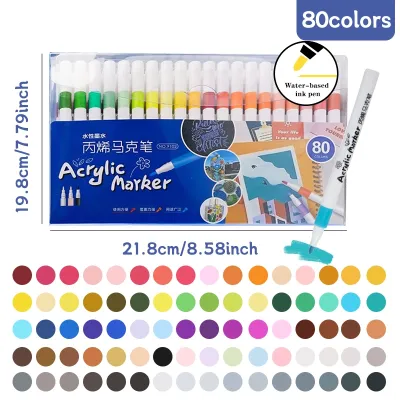
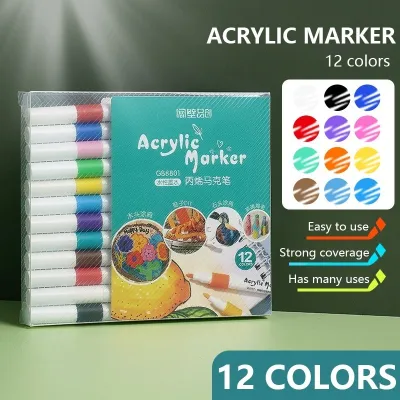
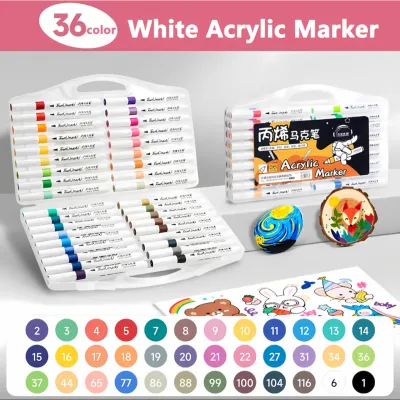
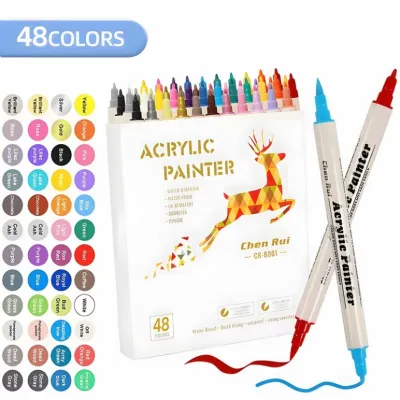
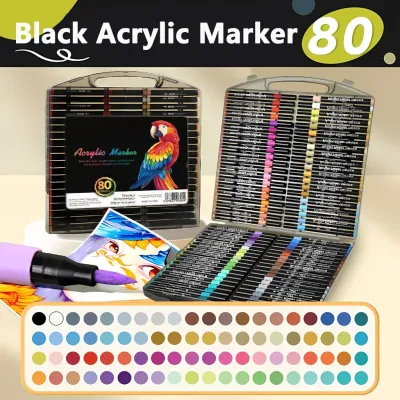
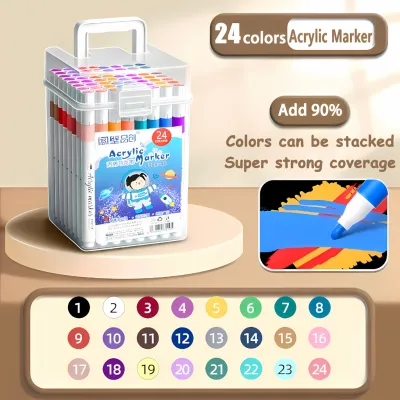
Prices are valid at publication and may change. Please refer to the product page for the latest price.
Ink Volume and Pigment Load: Reading Manufacturer Specifications
The longevity and vibrancy of your acrylic marker pen full set depend heavily on the ink volume and the concentration of pigments inside each barrel. Because marker barrels vary in thickness and design, you cannot judge how much paint a marker holds simply by looking at its external size. Instead, look for the manufacturer’s stated ink volume, usually measured in milliliters, or check for an estimated draw length on the packaging. A higher ink volume ensures that your favorite colors will not run dry in the middle of a major project, saving you from the frustration of having to purchase individual replacements mid-way through your work.

Pigment load determines how opaque and vibrant the paint appears on your chosen surface. High-quality acrylic markers use finely ground pigments suspended in an acrylic binder, resulting in a rich, solid layer of color that covers underlying marks. When reading product labels, look for standardized terms such as “highly pigmented,” “archival quality,” or “lightfast.” Lightfastness is particularly important if your artwork will be exposed to sunlight, as it indicates the paint’s resistance to fading over time. Before committing your entire set to a critical project, it is wise to test a single marker on a scrap piece of your target material. This trial allows you to observe the flow consistency and evaluate the shake-to-prime mechanism, ensuring the internal valve system dispenses paint smoothly without flooding or starving the nib.
Color Palette and Opacity: Evaluating Set Composition
A common pitfall when purchasing an acrylic marker pen full set is focusing solely on the total count of pens rather than the utility of the color palette. A set containing eighty markers might seem like an incredible value, but if it includes dozens of nearly identical pastel shades and lacks essential neutrals, its practical artistic value is diminished. A well-balanced set should offer a thoughtful ratio of primary and secondary colors, a strong selection of essential neutrals like black, white, and various grays, and perhaps a few specialty metallic or neon shades for accents. White and black are particularly high-use colors in acrylic painting for highlighting and outlining, so ensuring your set has adequate representation of these shades is vital.
To avoid purchasing a set with redundant colors, examine the color chart provided by the manufacturer. Be aware that the printed colors on the packaging or the plastic caps of the markers often differ slightly from the actual ink output on paper or canvas. When you receive your set, the first step should always be to create a dedicated swatch card on a representative piece of material. Swatching not only reveals the true hue and opacity of each marker but also helps you identify which colors blend well together. This practice prevents unexpected color mismatches during your creative process and ensures you know exactly how each shade will look once it dries.
Surface Adhesion and Drying Time: Verifying Real-World Performance
Acrylic paint is celebrated for its multi-surface compatibility, but the actual adhesion and drying performance can vary significantly depending on the specific formulation of the marker set. In the warm and humid climate of the Philippines, drying times can be slightly extended, especially on non-porous surfaces like glass, plastic, or glazed ceramics. To ensure your markers perform as expected, conduct a simple swatch test on a scrap piece of your target material. Observe how the paint behaves as it is applied: look for signs of feathering on paper, bead-up on plastic, or excessive bleed-through on canvas. A high-quality acrylic marker should lay down a smooth, self-leveling coat of paint that adheres firmly without scratching off easily once cured.
Layering is another critical performance metric to evaluate during your initial tests. Once the base layer is fully dry, test whether a lighter color can cleanly cover a darker shade without picking up or reactivating the underlying paint. This opacity is the hallmark of true acrylic paint and is essential for adding highlights, fine details, or correcting mistakes. Finally, always check the manufacturer’s recommended surfaces and safety certifications on the packaging. If the markers will be used in enclosed spaces, by children, or for school projects, look for non-toxic labels such as the AP (Approved Product) seal, which ensures the formulation is safe and free from harmful solvents.
Frequently Asked Questions (FAQ)
How should I store a full set of acrylic markers to prevent them from drying out?
To maintain optimal ink flow and preserve the health of the nibs, it is generally recommended to store your acrylic markers horizontally. Horizontal storage keeps the paint pigments and acrylic binder evenly distributed throughout the barrel, preventing the nib from becoming either completely flooded or starved of ink. Always ensure that the caps are securely clicked shut immediately after each use; even a small gap can allow air to enter, drying out the nib and clogging the valve system. In humid environments, keeping your markers in a cool, dry place away from direct sunlight is also beneficial. If you are using valve-action markers, consult the manufacturer’s specific guidelines, as some specialized designs may require vertical storage with the tip pointing upward to prevent leakage.
Can I buy replacement ink or nibs for my acrylic marker set?
The availability of replacement parts depends largely on whether you purchase a premium, professional-grade set or a budget-friendly, student-grade option. Many high-end acrylic marker sets are designed with sustainability in mind, offering individual replacement nibs and refill ink bottles that allow you to reuse the plastic marker barrels indefinitely. Conversely, many budget-friendly full sets are manufactured as disposable, single-use units that must be discarded once the ink runs out. Before making your purchase, check the brand’s official website or product documentation to see if compatible spare parts are readily available. Avoid attempting to refill non-refillable markers with standard bottled acrylic paint, as the thicker viscosity of regular paint will clog the delicate internal valve mechanism and permanently ruin the pen.
Community discussion
Share your experience or ask a question. Comments are reviewed before publication.