
Selecting the right big crayons for school art classes in the Philippines requires balancing ergonomic support for young hands with physical durability against tropical heat. Large-format crayons, often labeled as jumbo or toddler-safe, provide the structural integrity needed to survive enthusiastic classroom use while delivering vibrant colors on standard drawing papers. By focusing on barrel shape, wax composition, and break resistance, parents and educators can ensure students have tools that foster creativity without constant frustration.
Why Big Crayons Are Essential for Early Art Classes
Young learners naturally use a palmar grasp—holding objects with their whole fist—before developing the mature tripod grasp. Standard thin crayons force a tight, fatiguing grip that can discourage early mark-making and cause hand strain. Big crayons fill the palm comfortably, reducing muscle fatigue and allowing children to focus on the creative motion of their arms and shoulders rather than struggling to pinch a tiny wax stick.
Beginners have not yet calibrated their physical pressure when drawing. When excitement peaks during an art project, standard crayons snap easily under heavy downward force, leading to interrupted play and broken pieces. Large-format crayons feature a much wider diameter, distributing the applied force across a thicker core. This structural strength minimizes mid-activity breaks, keeping the creative flow uninterrupted and reducing the waste of snapped, unusable pieces.
Products mentioned in this guide
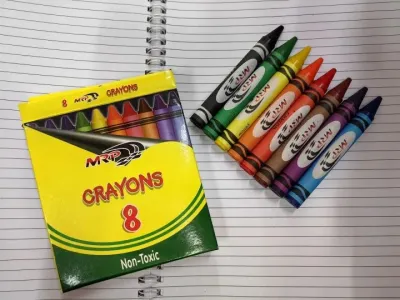
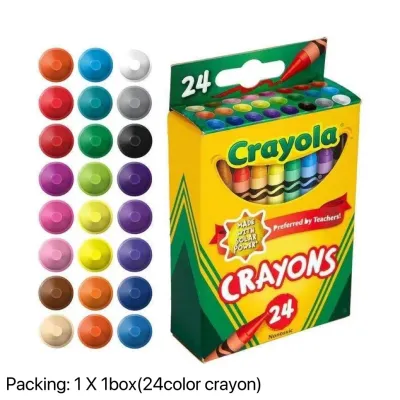
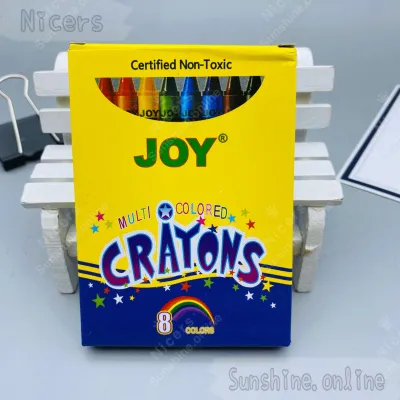
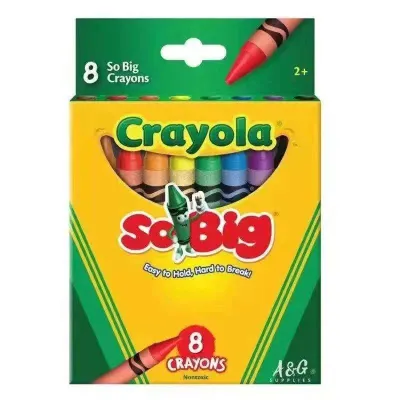
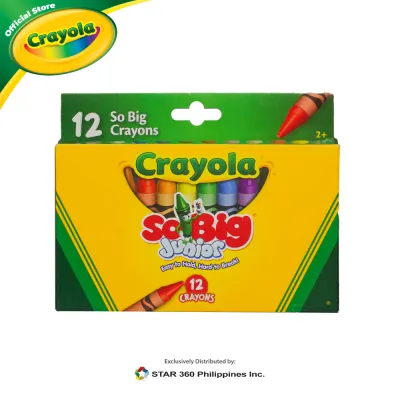
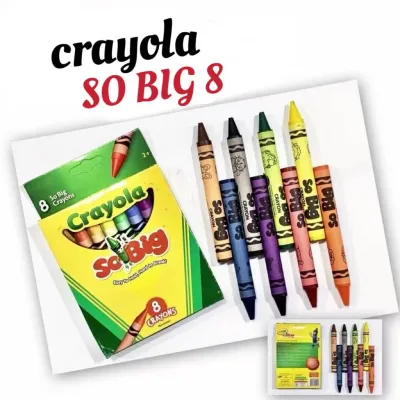
Prices are valid at publication and may change. Please refer to the product page for the latest price.
In a busy classroom setting, sharing materials is a common practice. Larger crayons are easier to spot on shared tables, less likely to roll into hard-to-reach corners, and simple for small fingers to retrieve from communal bins. Additionally, when working on large-format art paper like Manila paper or butcher paper, the wider tip allows students to cover expansive areas quickly, matching their natural desire for bold, high-visibility strokes.
Key Features to Check When Buying Big Crayons
While classic cylindrical crayons are widely available, they easily roll off sloped school desks, leading to frequent drops and fractures. Triangular and hexagonal profiles offer a distinct advantage by staying stationary on flat or angled surfaces. Furthermore, triangular barrels naturally guide a child’s fingers toward a proper tripod grip, serving as an intuitive developmental bridge that prepares them for writing with standard pencils later on.

Because young children frequently touch their faces or even attempt to taste their art supplies, non-toxic certification is non-negotiable. Look for packaging marked with recognized safety standards, such as the AP (Approved Product) seal or CE mark, which verify the materials have been evaluated for toxicological safety. Additionally, understand the difference between standard paraffin wax formulas, which are firmer and less prone to melting, and oil-based or beeswax alternatives, which offer a creamier laydown but may soften faster in warm environments.
A high-quality crayon should transfer rich pigment with minimal effort. In many local classrooms, students work on standard school bond paper, newsprint, or textured sketchpads. To evaluate performance, test a sample crayon on these specific mediums: look for a smooth, consistent line that does not skip or require excessive pressure. Avoid formulas that leave behind heavy, loose flakes, as these crumbs easily smudge across the page and stain hands or clothing.
Beyond the thickness of the wax core, look at how the crayon is reinforced. High-quality big crayons are wrapped in tight, durable paper sleeves that run the entire length of the barrel. This wrapper acts as a protective exoskeleton, holding the wax together even if a hairline fracture occurs inside. Double-wrapped options provide even greater resistance to the bending forces applied by energetic young artists.
Matching Crayon Types to Specific Art Activities
For projects that involve coloring large skies, grassy fields, or background elements, softer and wider wax formulas are ideal. These crayons lay down a generous layer of pigment with light pressure, preventing hand fatigue during long art sessions. Look for flat-topped or block-style crayons for these tasks, as they allow students to use the flat side of the block to shade wide swaths of paper in a single stroke.
When the curriculum calls for drawing specific shapes, outlining characters, or writing letters, harder wax blends are necessary. These formulas hold a defined point much longer without flattening out into a blunt dome. While they may require slightly more pressure to achieve maximum color saturation, they prevent fine lines from smudging into unrecognizable blobs, making them perfect for structured drawing exercises.
Many school art projects combine crayons with water-based paints or markers, such as wax-resist watercolor painting. For these activities, standard paraffin wax crayons perform best because their hydrophobic nature cleanly repels water-based washes. If the project involves blending colors directly on the page, look for softer, oil-infused crayons that can be layered and smudged with a finger or blending stump without scraping off the underlying color layers.
How to Build Your Shortlist for the School Year
Before purchasing, carefully review the specific requirements provided by the school. Teachers often specify the exact color count—such as 8-packs for basic color recognition or 16-to-24-packs for more advanced color mixing. Some curricula also request specific color palettes or explicitly state whether washable formulas are required to protect classroom furniture and uniforms.
Consider how the crayons will be stored and transported throughout the school year. Individual cardboard tuck boxes are lightweight but tend to tear quickly under daily wear. Plastic cases with snap closures or durable tin boxes offer superior protection, keeping the crayons organized and preventing them from rolling loose in a school bag. For home use or small study groups, bulk tub packaging can be a cost-effective way to maintain a shared supply.
In the Philippines, school supplies are widely sourced from physical bookstores, local department stores, and major online marketplaces. When shopping online, verify the seller’s reputation and look for clear photos of the safety seals on the packaging. Physical shopping allows you to inspect the boxes for pre-existing damage or broken tips, ensuring you receive a pristine set ready for the classroom.
Crayons are consumable items that inevitably wear down, get lost, or break over months of active use. Instead of buying a single premium set, consider budgeting for a mid-year replacement or purchasing multi-packs at the start of the academic year. Having a backup set tucked away ensures your child always has functional drawing tools, especially during peak project seasons when local store shelves might be depleted.
Practical Tips for Maintaining and Storing Crayons
The warm, humid climate of the Philippines poses a unique challenge for wax-based art supplies. If left in direct sunlight, inside a hot car, or near unventilated windows, crayons can soften, warp, or even melt into a solid block. Store crayon boxes in a cool, dry drawer or a shaded shelf away from direct heat sources. If a crayon does become soft or sticky, placing it in a refrigerator for fifteen minutes can restore its structural hardness.
As big crayons wear down, their tips become blunt, making detailed drawing difficult. To restore the point safely, avoid standard pencil sharpeners, which can clog easily with soft wax and snap the thick core. Instead, use a specialized large-diameter crayon sharpener, or gently shave the edges with a plastic scraping tool under adult supervision. Alternatively, teach students to rotate the crayon in their hand while drawing to naturally maintain a conical tip.
Keeping crayons organized prevents them from knocking against each other and chipping. A durable, zippered canvas pouch or a dedicated plastic pencil box with internal dividers works exceptionally well for transport. Encourage students to return each color to its designated spot after use; this simple habit not only protects the crayons from physical damage but also ensures that missing colors are noticed immediately before they are left behind at school.
Frequently Asked Questions (FAQ)
Can regular crayons be used instead of big crayons for young beginners?
While regular crayons are functional, they are not recommended for young beginners who are still developing their fine motor skills. Standard crayons require a refined tripod grip that toddlers and preschoolers have not yet mastered, often leading to hand fatigue and frustration. Additionally, the thin barrels break easily under the heavy, uncalibrated pressure typical of early learners, whereas big crayons offer the physical durability and comfortable grip needed to build confidence.
How do I safely remove big crayon marks from school uniforms or skin?
To remove wax-based crayon marks from school uniforms, first scrape off any excess wax with a dull edge, then place the stained fabric between two paper towels and press with a warm iron to transfer the wax to the paper. Wash the garment with a heavy-duty laundry detergent, checking the care label first. For skin, avoid harsh scrubbing; instead, apply a small amount of baby oil, mineral oil, or a mild liquid soap, gently massage the area to break down the wax, and wipe clean with a soft cloth.

Community discussion
Share your experience or ask a question. Comments are reviewed before publication.