
Using butterfly tattoo stickers to decorate planners, bullet journals, and scrapbooks has become a popular creative trend. Unlike traditional paper or thick vinyl stickers, temporary tattoo stickers—including water-transfer decals and dry rub-on transfers—lay incredibly flat on the page. This ultra-thin profile creates a seamless, painted-on look that blends beautifully with paper fibers, allowing journalers to build intricate, layered spreads without adding unnecessary bulk to their notebooks.
However, selecting the right butterfly tattoo sticker requires looking beyond the visual design. Because these stickers were originally formulated for skin application, their adhesive chemistry, moisture requirements, and surface finishes interact uniquely with different types of journal paper. Understanding these technical characteristics is essential for achieving clean, long-lasting layouts that do not damage your pages or cause your journal to warp over time.
Key Quality Factors for Journal-Friendly Stickers
When evaluating butterfly tattoo stickers for stationery use, paper and material compatibility is the most critical factor. Journal papers vary widely in weight, texture, and sizing. Standard bullet journals often feature paper weights ranging from thin 52 gsm or 68 gsm sheets to thick 160 gsm cardstock. Water-transfer tattoo stickers require moisture to release the design from the backing paper. On thin or uncoated papers, this moisture can cause cockling, which is the unsightly wrinkling or warping of the page. For delicate papers, dry rub-on transfers or ultra-thin clear polyethylene terephthalate (PET) stickers are often safer alternatives, as they require no water to apply.
Products mentioned in this guide
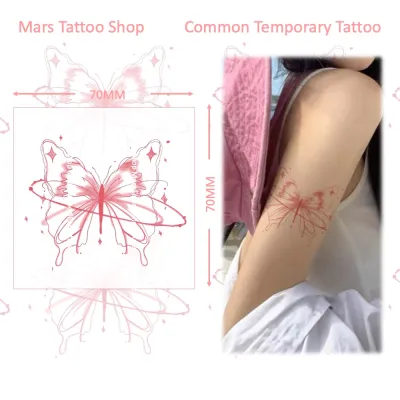
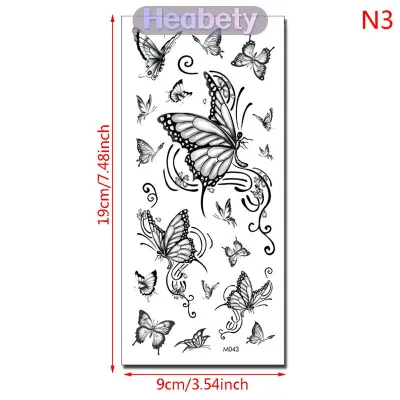
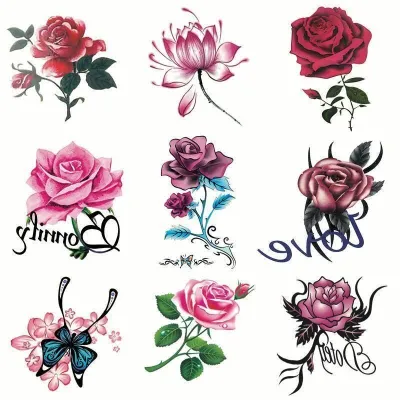
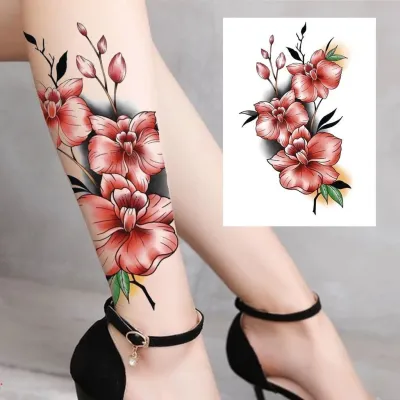
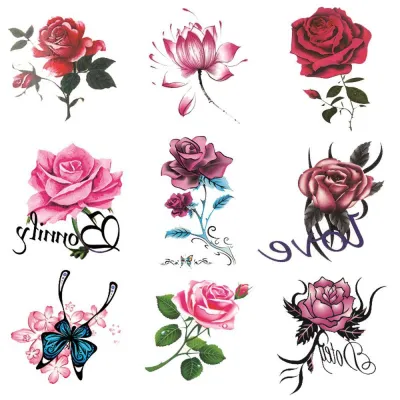
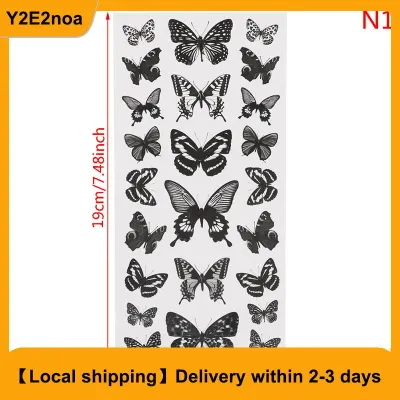
Prices are valid at publication and may change. Please refer to the product page for the latest price.
Adhesive strength and residue behavior also dictate how well a sticker performs inside a notebook. Skin-safe adhesives on temporary tattoos are designed to bond tightly to prevent premature peeling. When applied to paper, this bond often becomes permanent almost instantly. If you enjoy repositioning your decorative elements, you must verify the adhesive type before application. High-tack adhesives will tear the delicate top fibers of your journal pages if you attempt to peel them off, whereas low-tack or specialized stationery-grade transfers allow for minor adjustments during the first few seconds of placement.
Thickness and edge lifting are key structural considerations, especially for journals that are carried daily in a bag. Thick stickers create a cumulative bulk known as “alligator mouthing,” where the notebook becomes significantly thicker at the edges and cannot close flat. High-quality tattoo stickers measure only a few micrometers in thickness, preserving the flat profile of your notebook. Furthermore, a sticker with poor edge adhesion will catch on adjacent pages as you flip through your journal, leading to frayed edges, dirt accumulation, and eventual peeling. Choosing stickers with a flush, low-profile edge ensures the design remains intact for years.
In tropical climates like the Philippines, environmental factors such as high humidity and ambient heat can severely affect adhesive performance. Excessive humidity can soften the adhesive on tattoo stickers, making them gummy or causing the adhesive to migrate past the edges of the design. This can result in adjacent journal pages sticking together when the notebook is closed. To prevent this, look for stickers with stable, heat-resistant acrylic adhesives, and always ensure your journal pages are completely dry before closing the book.
Design and Aesthetic Features for Bullet Journals
Achieving a balanced and visually appealing journal spread relies heavily on the scale and size variations of your decorative elements. A well-curated sticker sheet should offer a range of butterfly sizes to suit different layout duties. Large butterfly designs, measuring five centimeters or more, serve as excellent focal points for monthly cover pages, weekly dashboards, or major section dividers. Conversely, tiny butterflies measuring one to two centimeters are ideal for accenting daily logs, tracking habits, or creating delicate visual trails that guide the reader’s eye across a written entry.

Color palettes, opacity, and transparency play a major role in how a sticker integrates with your existing handwriting and background elements. Transparent backing allows the underlying dot grid, graph lines, or text of your journal to show through the butterfly wings, creating an elegant, integrated look. However, if you are layering stickers over dark paper, kraft paper, or vibrant washi tape, transparent designs can lose their contrast and disappear into the background. In these cases, stickers with an opaque white under-print are highly suitable, as they ensure the butterfly’s colors remain vivid and true regardless of the background color.
Die-cut precision and border finishes can make or break the professional look of your journal spreads. Many budget-friendly stickers feature wide, uneven white or clear borders around the butterfly illustration, which can look distracting and messy. High-quality butterfly tattoo stickers utilize precise die-cutting or borderless transfer technology. This ensures that delicate anatomical details, such as thin antennae and fine wing tips, stand out sharply against the paper without a visible halo of excess plastic. A clean edge finish allows the butterfly to look like a hand-painted illustration rather than a stuck-on label.
Building Your Butterfly Sticker Shortlist
To build a practical collection of butterfly stickers, start by defining your personal journaling style. If you prefer a vintage or “junk” journaling aesthetic, look for sticker sheets featuring realistic botanical illustrations, anatomical sketches, and muted sepia or earth-toned color palettes. For modern, whimsical, or pastel-themed spreads, seek out watercolor gradients, holographic foils, or stylized fantasy designs. Matching the visual weight and artistic style of the stickers to your writing style ensures a cohesive aesthetic throughout your notebook.
Before purchasing, carefully read the product descriptions and packaging specifications on online marketplaces or at local stationery shops. Pay close attention to the material listings; look for terms like “PET transfer,” “rub-on decal,” or “water-active tattoo sticker” to understand exactly how the product must be applied. Check the overall sheet dimensions to estimate the actual size of the individual butterflies, as product photos can often be misleadingly zoomed in. Additionally, verify if the stickers are acid-free and archival-safe, which prevents the adhesive from yellowing or degrading your journal paper over time.
Evaluating the overall value requires comparing the pricing per sheet against individual die-cut pieces. In the local stationery market, prices can range from budget-friendly sheets at ₱15 to premium, imported designer sheets costing ₱150 or more. To determine the true value, divide the total price of the pack by the number of usable butterfly designs. While individual die-cut flakes offer convenience and zero waste, larger sticker sheets often provide a wider variety of sizes and a lower cost-per-sticker, making them a more economical choice for frequent journalers.
Application and Care for Sticker Spreads
Proper surface preparation is essential for ensuring a smooth, bubble-free application on your journal pages. Before applying any sticker, ensure the paper surface is clean, dry, and free of oils from your hands. If you are working on a textured paper, such as cold-press watercolor paper or heavily textured sketch paper, press down firmly across the entire design using a bone folder or the back of your fingernail. This ensures the adhesive makes full contact with the valleys of the paper texture, preventing air pockets and premature lifting.
When layering butterfly stickers with other stationery elements, sequence is key. Always apply background washes, distress inks, and stamps first, allowing them to dry completely before placing the sticker. If you are layering a butterfly over washi tape, ensure the tape is pressed flat and has a matte finish; glossy or wax-coated tapes can repel adhesives. Apply the butterfly sticker as the final decorative layer, which keeps the delicate wing tips flat and prevents other elements from accidentally lifting the sticker’s edges during the journaling process.
Storing your unused sticker sheets correctly is vital for preserving their adhesive quality and color vibrancy, especially in warm, humid climates. Store your sticker collection flat in a cool, dry place away from direct sunlight, which can cause colors to fade and backing papers to warp. Utilizing airtight plastic storage boxes or acid-free sticker books is highly recommended. Adding a few silica gel desiccant packets to your storage container will absorb excess moisture, preventing the sticker sheets from curling, sticking together, or losing their adhesive properties before you have a chance to use them.
Frequently Asked Questions (FAQ)
Can I write over butterfly tattoo stickers with standard pens?
Your ability to write over a butterfly sticker depends entirely on its surface finish. Matte-finish stickers and dry rub-on transfers often have enough tooth to accept ballpoint pens, permanent fine liners, and certain gel pens, though drying times may be longer than on bare paper. However, glossy or highly plasticized PET surfaces will cause water-based inks, such as fountain pen inks and standard gel inks, to bead up, smear, or rub off completely. If you plan to write directly over a sticker design, always perform a quick test with your preferred pen on an unused corner of the sticker sheet first.
How do I remove a sticker if I place it in the wrong spot?
Removing a tattoo-style sticker from paper without causing damage is highly challenging because the adhesive is designed to bond permanently. If the sticker was recently applied to a sturdy, high-gsm paper, you can attempt to gently lift the edge using a precision craft knife or a pair of fine tweezers, peeling it back slowly at a sharp angle. For stubborn adhesives, applying very mild, localized heat with a craft heat tool can help soften the glue, making it easier to lift. However, on thin or delicate papers, attempting to remove the sticker will almost certainly tear the paper fibers, so it is highly recommended to plan your layout carefully before committing to final placement.
Community discussion
Share your experience or ask a question. Comments are reviewed before publication.