
When designing custom jewelry, selecting the right components is the key to balancing visual brilliance with structural durability. K9 crystal beads have become a staple for jewelry makers seeking the intense sparkle of high-end glass without the premium price tag. However, achieving a professional finish requires understanding how these beads behave, how their physical properties influence your designs, and how to match them with the correct stringing materials and jewelry types.
Understanding K9 Crystal: Material Properties and Expectations
K9 crystal is a specific grade of optical borosilicate glass valued for its exceptional clarity and high refractive index. Originally developed for scientific lenses and prisms, this material has transitioned into the decorative arts due to its ability to split light into a vibrant spectrum. When cut into beads, K9 glass offers a level of brilliance and light dispersion that closely rivals premium leaded crystal brands, but without the environmental and safety concerns associated with lead content.
It is essential to distinguish manufactured K9 crystal from natural quartz or mined gemstones. Natural quartz is a silicon dioxide mineral formed deep within the earth, often carrying unique natural inclusions and color variations. In contrast, K9 crystal is a highly controlled, manufactured product. This manufacturing process ensures a completely uniform structure, free from internal flaws, bubbles, or structural weak points, allowing for precise faceting and highly consistent color distribution.
Products mentioned in this guide
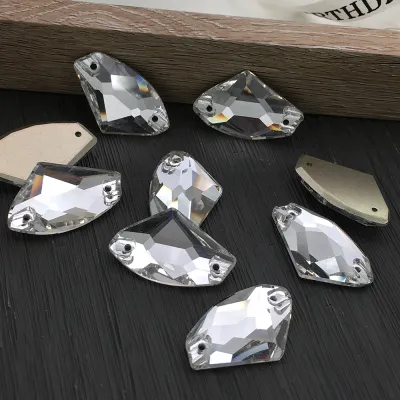
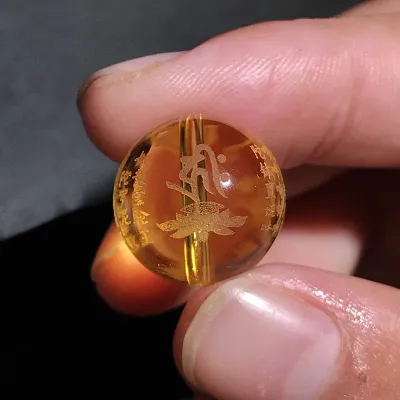
Prices are valid at publication and may change. Please refer to the product page for the latest price.
Because of its popularity, jewelry makers must exercise caution when sourcing materials. Online marketplaces and local craft suppliers often use the term “crystal” loosely, sometimes applying it to cheap acrylic plastics or basic soda-lime glass. Genuine K9 optical glass is significantly heavier than acrylic, feels cool to the touch, and possesses much higher light refraction. Before purchasing, always read the product specifications carefully and look for explicit mentions of “K9 optical glass” to ensure you are getting the quality you expect for your designs.
While K9 crystal offers outstanding optical performance, its physical properties dictate how it must be handled and worn. With a Mohs hardness rating of approximately 5.5 to 6, K9 glass is softer than natural quartz (which sits at Mohs 7). This makes it more susceptible to surface scratching and chipping if subjected to hard impacts. Additionally, in hot and humid tropical environments like the Philippines, where sweat and humidity are constant factors, the glass itself remains perfectly stable, but any applied surface finishes—such as Aurora Borealis (AB) coatings—can degrade over time if exposed to acidic skin oils and moisture.
Core Selection Criteria: Shapes, Sizes, and Stringing
Choosing the right K9 crystal beads involves more than just picking a color that matches your aesthetic vision. To create a piece of jewelry that hangs correctly, feels comfortable, and resists breaking, you must carefully evaluate the physical dimensions and structural features of each bead. This means analyzing how facet cuts handle light, balancing the physical weight of different bead sizes, and ensuring absolute compatibility between the bead holes and your chosen stringing medium.

Evaluating Shapes and Facet Cuts
The shape and cut of a K9 crystal bead determine how it interacts with light and how it sits within a jewelry layout. The most common shapes available to designers include bicones, rounds, teardrops, octagons, and rondelles. Each of these shapes serves a distinct aesthetic and functional purpose.
Multi-faceted cuts, such as bicones and octagons, are engineered to maximize light dispersion. The sharp angles of these facets act as miniature prisms, bending and reflecting light to create an intense, eye-catching sparkle. These shapes are ideal for pieces designed to draw immediate attention, such as bridal wear, evening accessories, or statement drop earrings.
In contrast, smooth rounds, cabochons, or lightly faceted rondelles offer a more subdued, classic glow. These shapes do not scatter light as aggressively, making them perfect for understated, everyday jewelry or vintage-inspired designs. Rondelles, with their slightly flattened profiles, are particularly useful because they nestle closely together, creating a continuous line of color and light without the gaps often left by perfect spheres.
When selecting beads, the precision of the facet alignment is a primary indicator of manufacturing quality. High-quality K9 beads feature clean, sharp edges where the facets meet perfectly at defined points. If you observe rounded facet edges, blurry transitions, or visible mold lines running across the bead, it indicates a lower-quality manufacturing process. These defects disrupt the path of light, causing the bead to look dull and lifeless under normal lighting conditions.
Balancing Sizes and Visual Weight
K9 crystal beads are available in a vast range of sizes, typically measured by their outer diameter in millimeters (mm). Understanding how to scale these sizes within a project is crucial for achieving both visual balance and physical comfort.
Small spacer beads (2mm to 4mm) are primarily used to separate larger elements, add subtle hints of sparkle, or construct intricate woven beadwork. They provide texture without overwhelming the design. Medium accent beads (5mm to 8mm) are the most versatile sizes for jewelry making. They are large enough to showcase their facet patterns clearly, making them excellent for the main body of bracelets, necklaces, and drop earrings. Large focal beads (10mm to 14mm or larger) serve as the centerpiece of a layout, capturing and refracting large amounts of light for dramatic effect.
Because K9 is a dense optical glass, its physical weight increases rapidly as the millimeter size grows. A large 14mm K9 bead is significantly heavier than an acrylic or wooden bead of the exact same size. If you design a necklace using exclusively large K9 beads, the cumulative weight can make the piece feel heavy and uncomfortable to wear, especially in warm climates where heavy jewelry can cling to the skin. To prevent this, balance your designs by mixing larger K9 focal beads with lighter materials, such as seed beads, delicate metal spacers, or lightweight gemstones, ensuring a comfortable drape and an enjoyable wearing experience.
Matching Hole Sizes to Stringing Materials
One of the most common mistakes in jewelry making is failing to match the bead’s hole size with the appropriate stringing material. The holes drilled through K9 crystal beads typically range from 0.5mm to 1.0mm, depending on the overall size and shape of the bead.
Before purchasing your beads, always verify the thickness of your stringing medium, whether you are using multi-strand stainless steel beading wire, elastic polyurethane cord, or nylon thread. For example, if you are using a standard 0.8mm elastic cord for a stretch bracelet, you must ensure that the K9 beads you select have a hole diameter of at least 0.9mm to allow the cord to pass through smoothly. If you plan to secure your design by passing the wire through the end beads twice—a common practice when finishing a necklace with crimp beads—you will need a much thinner wire, such as 0.38mm (0.015 inches), to fit through the hole twice.
Forcing a thick wire or cord through a tight glass hole creates immense internal pressure. Because glass is rigid and brittle, this stress can easily chip the delicate edges of the entry hole or cause the entire bead to fracture during assembly or wear. If you encounter a bead hole that is partially blocked by manufacturing residue, do not try to force a needle or wire through it. Instead, use a manual bead reamer with extreme caution. Dip the bead in water to lubricate the surface and suppress glass dust, then gently rotate the reamer to clear the obstruction. Avoid aggressive pressure, as this can easily crack the bead.
Design Recommendations: Matching Beads to Jewelry Types
Different types of jewelry experience different levels of movement, friction, and physical impact during daily wear. To create pieces that are both stunning and long-lasting, you must match the specific characteristics of your K9 crystal beads—such as shape, weight, and finish—to the functional demands of the jewelry type.
Focal Pieces: Earrings and Pendants
Earrings and pendants are designed to be noticed, making them the perfect canvas for showcasing the high refractive qualities of K9 crystal. Because these pieces hang freely, they are constantly in motion, catching the light from various angles.
For pendants and dangle earrings, teardrops, briolettes, and large faceted rounds (8mm to 12mm) are highly recommended. Their elongated shapes and suspended positions allow light to enter from all sides, creating a dazzling display of color. A single, well-placed K9 teardrop suspended from a delicate chain makes a sophisticated, minimalist statement that highlights the material’s optical clarity.
However, weight management is critical when designing earrings. Heavy earrings can pull uncomfortably on the earlobes, causing pain and potential damage over time. To keep your earring designs comfortable for all-day wear, limit the use of larger K9 beads. Opt instead for smaller sizes, such as 4mm to 6mm bicones or rondelles, or use a single 8mm bead as the maximum weight. Additionally, ensure you use high-quality, hard-tempered headpins or eyepins (such as 20-gauge or 22-gauge stainless steel or sterling silver) to construct your earrings. Soft, low-grade metal pins can easily bend under the weight of glass beads, leading to lost components or misshapen designs.
High-Movement Wear: Bracelets and Anklets
Bracelets and anklets are subjected to more physical abuse than almost any other type of jewelry. They constantly bump against table surfaces, rub against clothing, and are exposed to sweat and skin oils.
For these high-movement pieces, 4mm to 8mm round or faceted rondelle beads are the ideal choice. Their rounded profiles sit comfortably against the skin and roll smoothly as the wearer moves, minimizing friction. Avoid using sharp bicones or highly angular geometric cuts in bracelets, as the pointed edges can dig into the wrist or snag on delicate clothing fabrics like lace, knitwear, or silk.
Durability is paramount when constructing bracelets. Because glass beads are heavy, they put continuous tension on the stringing material. Standard thin sewing threads or low-grade elastic cords will quickly fray and snap under this pressure. For stretch bracelets, use a high-quality, pre-stretched elastic polyurethane cord between 0.7mm and 1.0mm in thickness, and secure the knot with a tiny drop of jewelry-safe adhesive hidden inside an adjacent bead hole. For clasped bracelets, use a robust, nylon-coated multi-strand stainless steel beading wire (such as 19-strand or 49-strand wire) secured with high-quality metal crimp beads and wire protectors to prevent friction wear at the clasp connection.
Layered Layouts: Necklaces and Chokers
Designing necklaces and chokers allows you to experiment with complex layouts, layering, and structural balance. Because a necklace can incorporate dozens of beads, managing the overall drape and weight is essential.
A highly effective technique for creating a balanced necklace is graduating the bead sizes. Start with smaller beads (such as 4mm or 6mm rounds) near the back clasp, gradually transition to 8mm beads along the collarbone, and place your largest beads (10mm to 12mm) at the front center. This graduation creates a natural, flattering drape that contours to the body while concentrating the physical weight at the lowest point of the necklace, preventing the piece from shifting or riding up during wear.
You can also use small K9 bicones or rondelles (3mm to 4mm) as spacers between larger, non-faceted elements, such as natural stone beads or metal tubes. This technique breaks up visual monotony, adds a continuous play of light throughout the strand, and provides the necessary flexibility for the necklace to curve smoothly without binding.
Because a full glass necklace carries significant weight, cheap clasps can easily fail. Always complete your necklace designs with robust closures, such as heavy-duty lobster claws, secure toggle clasps, or strong magnetic clasps. Ensure your stringing wire is rated for the total weight of the finished piece, and use wire guards at the attachment points to protect the wire from wearing against the metal of the clasp.
Specification Comparison for Common K9 Bead Types
To help you quickly select the right components for your next project, the table below summarizes the physical characteristics, best uses, and stringing recommendations for the most popular K9 crystal bead styles.
| Bead Shape & Size | Best Used For | Recommended Stringing | Design Notes |
|---|---|---|---|
| Bicone (3mm–4mm) | Spacers, accent highlights, and intricate bead weaving. | Fine nylon thread, 0.25mm wire, or 0.15 inches beading wire. | Provides maximum sparkle per millimeter; sharp edges require careful placement to avoid skin irritation. |
| Round Faceted (6mm–8mm) | Main body of bracelets, anklets, and classic beaded necklaces. | 0.7mm–0.8mm elastic cord or 0.38mm (0.015 inches) 49-strand wire. | Offers a traditional look with excellent light refraction; comfortable for daily wear against the skin. |
| Teardrop/Briolette (10mm+) | Focal pendants, drop earrings, and central necklace accents. | 20-gauge to 22-gauge metal headpins or sturdy wire wrapping. | Delivers dramatic light dispersion; must be balanced carefully in earring designs to manage weight. |
| Octagon (8mm–12mm) | Statement necklaces, vintage-style jewelry, and suncatchers. | Heavy-duty 0.45mm (0.018 inches) beading wire or thick metal rings. | Features a bold, geometric aesthetic; requires robust clasps and structured layouts to support weight. |
This comparison serves as a practical baseline. When planning your designs, remember that combining these shapes within a single piece can yield excellent results, provided you maintain structural balance.
Pre-Purchase Checklist: Verifying Quality and Compatibility
Before finalizing your purchase of K9 crystal beads, take a moment to run through this quality and compatibility checklist. Taking these verification steps will save you time, money, and frustration, ensuring that the materials you receive are perfect for your intended designs.
- Material Verification: Double-check the seller's product description. Ensure it explicitly states "K9 optical glass" or "K9 crystal." Avoid listings that use ambiguous terms like "crystal-style," "glass-like," or "resin," as these are often lower-grade materials that lack the durability and refractive index of genuine K9 glass.
- Visual Clarity Inspection: If purchasing in person, hold the beads up to a bright light source. If buying online, examine high-resolution product photos and customer reviews. Look for absolute transparency. High-quality K9 beads must be completely free of internal air bubbles, cloudy white patches, or surface scratches.
- Facet Sharpness and Alignment: Inspect the cut of the facets. The lines separating each facet should be sharp, crisp, and meet precisely at clean intersections. Rounded facet edges or visible seams indicate that the beads were molded rather than precision-cut, which drastically reduces their ability to sparkle.
- Dimension and Hole Accuracy: Do not guess bead sizes based on product photos, as macro photography can make small beads appear much larger. Use a digital caliper to verify the outer diameter and, most importantly, the hole diameter. Ensure the hole is clean, centered, and wide enough to accommodate your chosen stringing wire or cord.
- Quantity and Yield Calculations: Calculate the exact number of beads required for your project. To do this, convert your desired jewelry length into millimeters and divide by the bead size. For example, a 180mm (approx. 7-inch) bracelet made of 8mm beads requires 23 beads (180 divided by 8). Always purchase 10% to 15% more beads than your calculation dictates. This buffer covers any accidental drops, design modifications, or the occasional bead with a blocked hole.
Frequently Asked Questions (FAQ)
Is K9 crystal the same as natural quartz?
No, K9 crystal is not the same as natural quartz. K9 is a high-grade, manufactured optical borosilicate glass engineered specifically for high clarity, uniform structure, and exceptional light refraction. Natural quartz, on the other hand, is a silicon dioxide mineral mined from the earth. While both materials can be cut and polished into beautiful jewelry components, they have different physical properties. Natural quartz is harder (Mohs 7) and often contains unique internal inclusions, growth lines, and natural variations. K9 crystal is slightly softer (Mohs 5.5 to 6), completely flawless, and offers a more consistent, uniform appearance across large quantities.
How do I clean K9 crystal jewelry safely?
To clean your K9 crystal jewelry safely and preserve its brilliant sparkle, gently wipe the beads with a soft, dry, lint-free microfiber cloth. This easily removes surface dust, fingerprints, and skin oils without scratching the glass. For deeper cleaning, you can use a damp cloth with a tiny drop of mild, pH-neutral dish soap, followed by a thorough wipe with clean water and immediate drying. Never use harsh chemical cleaners, ammonia-based sprays, abrasive brushes, or ultrasonic jewelry cleaners. These harsh methods can scratch the polished glass surface, strip away delicate Aurora Borealis (AB) coatings, and degrade the elastic cords or nylon threads holding your jewelry together.
Community discussion
Share your experience or ask a question. Comments are reviewed before publication.