
Selecting the right materials is the foundation of any successful jewelry-making project. When sourcing 6mm round glass beads, the difference between a professional-grade accessory and a piece that quickly falls apart lies in the details. Buyers must evaluate physical dimensions, structural integrity, and surface durability to ensure their creations stand up to daily wear. In the warm, humid climate of the Philippines, where moisture and skin contact can accelerate the wear of jewelry components, choosing high-quality glass beads is especially critical.
The 6mm size is widely considered the sweet spot for jewelry making. It is large enough to handle easily without specialized tools, yet small enough to create elegant, intricate patterns. Whether you are crafting simple stretch bracelets for a local weekend market or designing complex woven necklaces, the quality of these beads directly impacts the perceived value of your finished work.
Verifying Size Accuracy and Shape Uniformity
6mm is a highly versatile size, perfect for delicate bracelets, spacer beads, or intricate bead weaving. However, nominal sizes on online listings do not always match reality. To verify size accuracy, rely on a digital caliper or a dedicated bead gauge rather than a standard ruler. A standard ruler lacks the precision needed to measure sub-millimeter differences that can ruin the alignment of a symmetrical pattern.
Products mentioned in this guide
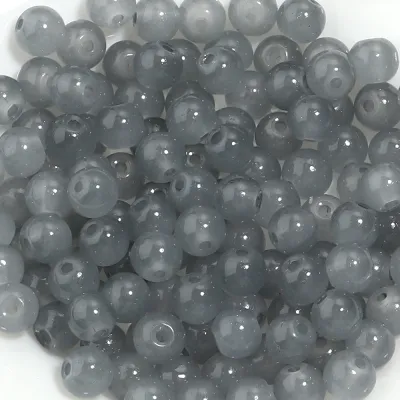
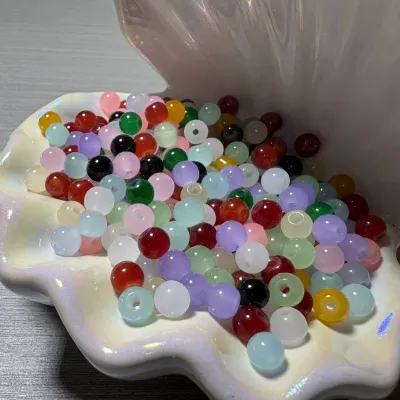
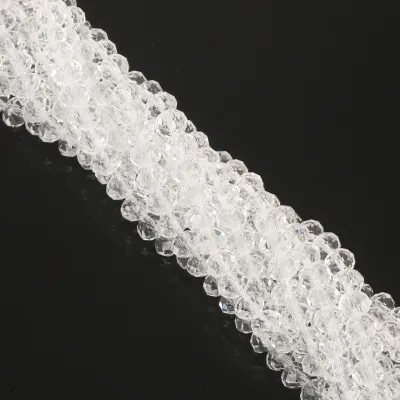
Prices are valid at publication and may change. Please refer to the product page for the latest price.
When measuring a batch, check for acceptable tolerances. Machine-pressed glass beads generally offer the highest consistency, with variations often limited to less than 0.1mm. Handmade or lampwork beads, on the other hand, naturally exhibit wider tolerances. For these artisanal options, a variation of up to 0.5mm might be acceptable, but you must decide if your specific design can accommodate these slight differences without looking uneven.
When purchasing from a new supplier, it is wise to order a small test batch first. Measure at least ten random beads from the shipment to calculate the average diameter and variance. If the variance is too high, it indicates poor quality control, and you should look for a different manufacturer for your production runs.
Inspect the beads visually for shape uniformity. Roll a handful of beads across a flat surface; uniform round beads will roll in a straight, smooth line. If any beads wobble, veer off course, or slide instead of rolling, they likely have flat spots, oval distortions, or prominent mold seams. These irregularities are common in lower-grade glass beads and can cause the finished jewelry to sit awkwardly against the skin.
Evaluating Glass Clarity, Color, and Surface Finish
Glass beads come in three primary light-transmission categories: transparent, translucent, and opaque. Transparent beads should allow light to pass through cleanly, showcasing a brilliant sparkle. Translucent beads offer a soft, diffused glow, while opaque beads should block light entirely with a solid, rich color. When inspecting these types, hold the beads up to a bright, neutral light source to check for consistency across the entire batch.

Look closely for internal flaws that compromise both aesthetics and structural strength. Unintended air bubbles, dark streaks, or cloudy inclusions inside transparent glass are signs of poor manufacturing control. While intentional bubbles can be a design feature in specialized art glass, accidental pockets of air weaken the bead, making it prone to cracking under minor pressure or impact.
Surface finishes—such as high-gloss, matte, metallic, or aurora borealis (AB) coatings—require rigorous inspection. In tropical environments, humidity and sweat can cause low-quality surface coatings to peel, flake, or tarnish rapidly. Test the durability of a sample bead by rubbing it firmly between your fingers or using a damp cloth. If the metallic or iridescent coating scratches off easily with a fingernail, the finish will not survive regular wear, and you should opt for beads with through-color or baked-on glazes instead.
Colorfastness is another critical aspect of glass quality. Some beads are made from naturally colored glass, while others are clear glass that has been dyed or painted. Dyed beads can fade when exposed to sunlight or bleed color onto the wearer’s skin when wet. To test this, soak a few beads in warm water with a drop of mild soap for a few hours to ensure the color remains stable.
Inspecting Hole Quality and Drilling Precision
The quality of the bead hole is just as important as the exterior of the glass. Before purchasing in bulk, verify that the hole diameter is compatible with your intended stringing materials. For 6mm beads, common stringing options include 0.5mm to 0.8mm elastic cords, nylon threads, or metal jewelry wire. If the hole is too narrow, you will struggle to thread your cord; if it is too wide, the bead may wobble or slide over knots.
Examine the edges of the holes for smoothness. Rough, chipped, or sharp glass edges around the entry and exit points act like tiny saws. As the finished jewelry moves, these sharp edges will gradually fray and cut through elastic cords or nylon threads, leading to sudden breakage. High-quality glass beads undergo a tumbling or heat-polishing process to ensure the hole edges are smooth and rounded.
If you plan to use fine silk thread or delicate embroidery floss, even minor imperfections inside the hole can cause issues. Running a piece of scrap thread back and forth through the bead hole several times is an excellent way to test for hidden snags. If the thread emerges frayed or fuzzy, the internal channel of the bead is too rough for delicate stringing materials.
Drilling precision is another critical factor. The hole must be drilled straight through the exact center of the bead. If a hole is crooked or off-center, the bead will hang at an odd angle when strung. This misalignment disrupts the flow of your design, creating gaps or awkward bumps in bracelets and necklaces. You can check this by stringing a few beads onto a straight headpin; they should align perfectly in a straight line without any zig-zagging.
Assessing Packaging, Quantity, and Transit Condition
Glass is inherently fragile, making packaging a vital consideration when ordering online. Ensure the seller uses protective packaging, such as bubble wrap, padded envelopes, or rigid plastic organizers, to cushion the beads during transit. Rough handling during shipping can cause beads to collide, resulting in chipped edges, surface scratches, or complete shattering before they even arrive at your workspace.
Upon delivery, verify the quantity received against the product description. Glass beads are typically sold by the strand, by weight, or by piece count. For reference, a standard 40-centimeter strand of 6mm beads usually contains approximately 60 to 67 individual beads. If buying by weight, use a digital kitchen scale to ensure the package matches the advertised weight, factoring in a small margin for the packaging material itself.
Calculate the true unit cost to determine the value of your purchase. For example, if a pack of 100 beads costs ₱120, the unit cost is ₱1.20 per bead. However, you must also factor in the potential breakage rate. If five beads in a pack arrive chipped or unusable, your effective unit cost rises. Comparing these metrics across different suppliers helps you identify which sources offer the best balance of price and usable quality for your jewelry-making business or hobby.
Frequently Asked Questions (FAQ)
How can I tell if glass beads are real glass or plastic?
Distinguishing real glass from acrylic or plastic is straightforward using sensory checks. First, feel the temperature: glass is a natural thermal conductor, so it feels distinctly cool to the touch when first picked up, whereas plastic immediately feels close to room temperature. Glass is also significantly heavier than plastic of the same size; a handful of glass beads will have a reassuring heft that plastic lacks.
Another reliable method is the sound test. Gently drop a few beads onto a hard surface or tap two beads together. Glass produces a bright, clear, high-pitched clinking sound. In contrast, plastic beads produce a dull, hollow, or muted clicking noise. Finally, inspect the surface under a magnifying glass; plastic beads often feature a distinct, raised mold seam running around the center, whereas quality glass beads are polished smooth.
What is the standard hole size for 6mm glass beads?
There is no single universal standard for bead hole sizes, as dimensions vary depending on the manufacturer, country of origin, and production method. However, most machine-made 6mm round glass beads feature a hole diameter ranging between 0.8mm and 1.2mm. This range is designed to accommodate standard jewelry-making threads, 0.8mm elastic cords, and 20-to-24-gauge jewelry wires.
Always check the seller’s detailed specifications before purchasing, especially if you plan to use thicker stringing materials like leather cord or multiple passes of thread. If you encounter a bead with a slightly blocked or narrow hole, you can use a diamond-tipped bead reamer dipped in water to gently smooth and enlarge the opening. Be cautious when reaming glass, as excessive pressure can crack the bead.
Community discussion
Share your experience or ask a question. Comments are reviewed before publication.