
To choose high-quality peach lace fabric for embroidery, you must look for a stable base mesh that resists distortion under hoop tension, clean and secure selvedges that prevent fraying, and excellent colorfastness to ensure the delicate peach hue does not bleed during washing. The fabric must balance structural integrity with the flexibility required for your specific needlework technique. By evaluating the fiber content, weight, and pattern density, you can select a lace that supports your embroidery stitches without puckering, tearing, or losing its shape.
Key Quality Indicators for Embroidery-Ready Lace
Embroidery places unique physical demands on fabric, and lace is particularly vulnerable to structural failure if the base material is weak. When evaluating peach lace, the first element to inspect is the ground mesh or net base. A high-quality lace features a dense, consistently woven mesh that does not easily distort when pulled diagonally. If the ground mesh feels flimsy or shows irregular spacing between the threads, it will likely pucker or sag once placed under the tension of an embroidery hoop. This is especially critical in warm, humid climates where fibers can absorb moisture and stretch differently than they would in dry conditions.
The quality of the selvedge, or the finished edge of the fabric, is another vital indicator of durability. A well-made lace has clean, tightly bound edges that resist unraveling during handling and hooping. If you notice loose threads, fraying, or uneven stitching along the borders, the fabric may degrade quickly during the embroidery process. When hooping lace, the outer edges often bear the brunt of the clamping force; a weak selvedge can slip or tear, ruining the alignment of your design. Inspecting these edges before purchasing ensures that the fabric can withstand the repetitive motion of the embroidery needle.
Products mentioned in this guide
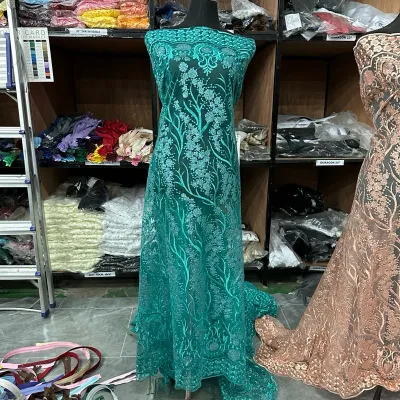
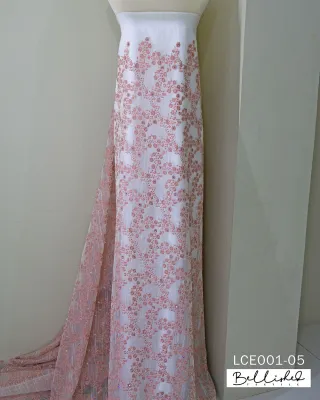
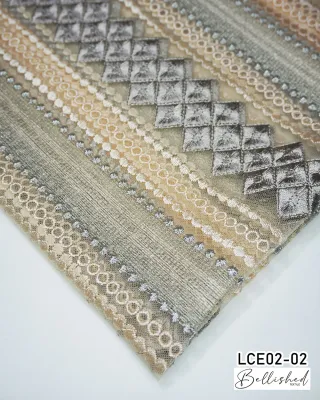
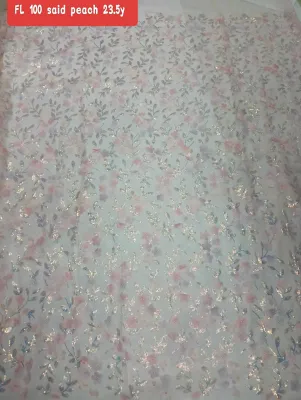
Prices are valid at publication and may change. Please refer to the product page for the latest price.
Colorfastness is a non-negotiable quality marker, particularly for delicate pastel shades like peach. Because embroidery projects often require pre-washing, marking with water-soluble pens, or post-stitch blocking, the fabric will inevitably come into contact with moisture. To prevent the peach dye from bleeding onto your embroidery threads or adjacent fabrics, you must verify the dye quality. A simple rub test using a damp white cloth pressed firmly against the lace can reveal if the dye is stable. If any peach pigment transfers to the white cloth, the fabric is prone to bleeding and may ruin your finished needlework during its first wash.
Evaluating Weight, Stretch, and Drape
Understanding the physical behavior of peach lace requires a close look at its weight, stretch, and drape, as these factors dictate your choice of stabilizers and embroidery techniques. Lace fabrics generally fall into two categories: stretch and non-stretch. Stretch lace, often containing elastane or spandex fibers, offers excellent flexibility for garments but presents significant challenges for embroidery. Under hoop tension, stretch lace can easily become overextended, leading to severe puckering once the hoop is removed and the fabric snaps back to its original size. Non-stretch lace, typically made from cotton, polyester, or nylon, provides a much more stable foundation for intricate stitching.

If you choose to embroider on stretch peach lace, your stabilizer selection becomes your primary line of defense against distortion. A firm, wash-away or cut-away stabilizer must be adhered to the back of the lace to temporarily eliminate the stretch during the stitching process. For non-stretch lace, a lighter tear-away or water-soluble stabilizer is often sufficient, allowing the natural texture of the lace to remain prominent. Matching the elasticity of your lace to the correct stabilization method prevents the embroidery from warping the finished piece.
Fabric weight is equally important when planning your embroidery design. Lightweight peach laces, such as delicate Chantilly or fine tulle-based laces, cannot support heavy, dense embroidery fills or thick satin stitches. Attempting to stitch a heavy monogram or dense floral pattern onto a featherweight lace will result in the needle tearing holes in the mesh. Conversely, heavier laces, such as corded Guipure or thick chemical lace, can easily support complex thread work, beadwork, or metallic threads. Always match the weight of your embroidery thread and the density of your design to the structural capacity of the lace base.
Drape refers to how the fabric hangs and flows, which is a critical consideration depending on the final application of your project. If you are embroidering a modern barong, a wedding veil, or a flowing dress, you need a peach lace with a soft, fluid drape that moves naturally with the body. Polyester and nylon laces often provide this soft fluidity while remaining highly durable. For structured items like home decor runners, table linens, or decorative pouches, a stiffer lace with a firmer hand is preferable. A stiff lace holds its shape under the weight of heavy embroidery, ensuring that your decorative panels remain flat and crisp.
Pattern Density and Hoop Compatibility
The existing pattern of the peach lace plays a major role in how your embroidery design will look and how easily it can be stitched. Lace patterns range from highly open, airy designs with large mesh gaps to dense, closed motifs with solid fabric areas. When planning your embroidery, you must consider how the needle will interact with these different zones. Stitching over an open mesh area requires a stabilizer that can support the new stitches in mid-air until they are locked together, whereas stitching over a closed motif requires a needle that can cleanly penetrate the dense lace threads without deflection.
To navigate open patterns successfully, a sandwiching technique using water-soluble stabilizers is highly effective. Placing a layer of water-soluble stabilizer both underneath the lace and on top of it creates a temporary solid surface. This prevents the embroidery needle from pushing the delicate mesh threads aside and ensures that your stitches form evenly over the gaps. For closed, dense patterns, you must ensure that your embroidery design aligns harmoniously with the existing lace motifs. Placing a dense embroidery design directly on top of an already thick lace motif can create an uncomfortably stiff patch and increase the risk of needle breakage.
Tension management is another critical factor when hooping lace with varying pattern densities. Because some areas of the lace are denser and heavier than others, the fabric may pull unevenly when stretched in a standard embroidery hoop. To achieve uniform tension, consider using a hoop with a non-slip surface or wrapping the inner ring of your wooden hoop with bias tape. This extra grip prevents the lighter, more open sections of the lace from slipping while the denser sections remain tight. Always check that the fabric is taut but not stretched to the point of distorting the natural lace pattern.
Before committing your final design to your primary piece of peach lace, performing a test stitch-out on a scrap piece is essential. This trial run allows you to observe how the needle penetrates the specific lace construction and whether the thread tension is correct. Watch closely for any signs of thread shredding, skipped stitches, or fabric pulling during the test. Adjusting your machine’s tension settings or changing your hand-stitching pressure during this phase saves valuable fabric and ensures a clean final result.
Building Your Shortlist: What to Check Before Buying
When sourcing peach lace fabric from online craft stores or local textile suppliers, building a systematic checklist helps you avoid low-quality materials. Begin by thoroughly reading the product descriptions, paying close attention to the exact fiber content and construction method. Look for terms like “embroidered mesh,” “raschel lace,” or “chemical lace” to understand how the fabric was made. Knowing whether the lace is made from polyester, nylon, or cotton helps you predict its durability, shrinkage rate, and resistance to tropical humidity.
Whenever possible, request physical swatches before purchasing large quantities of peach lace. Digital screens can highly distort colors, and what appears as a soft, warm peach online might arrive as a harsh neon orange or a dull beige. A physical swatch also allows you to feel the texture of the lace, test its stretch, and conduct a quick colorfastness test. Feeling the fabric in your hands is the only reliable way to assess its softness and determine if it will feel comfortable against the skin if used for garments.
If you are working on a large or multi-panel embroidery project, ensuring yardage continuity is critical. When buying lace, ask the supplier if your order will be delivered as a single, continuous cut. Receiving multiple smaller pieces instead of a continuous yard can disrupt your pattern layout and lead to significant fabric waste. Additionally, verify the supplier’s return policy regarding cut fabrics. Many retailers do not accept returns once the fabric has been cut from the bolt, making it even more important to verify all quality markers through swatches first.
Matching Lace Constructions to Embroidery Styles
Different lace constructions require specific embroidery approaches to achieve professional results. Matching the physical structure of the lace to the right needlework style and stabilizer ensures that your project remains durable and visually appealing. The table below outlines the recommended pairings for common lace constructions.
| Lace Type | Recommended Embroidery Style | Ideal Stabilizer | Key Hooping Tip |
|---|---|---|---|
| Flat Mesh Lace | Delicate monogramming, light floral fills | Water-soluble (top and bottom) | Wrap inner hoop with bias tape for grip |
| Corded / Alencon | Outline stitching, beadwork, sequins | Medium tear-away or cut-away | Hoop stabilizer only; baste lace on top |
| Stretch Lace | Light decorative borders, flexible motifs | Firm wash-away or mesh cut-away | Avoid stretching the lace during hooping |
When working with corded or Alencon lace, the thick outlining cords present a significant obstacle for embroidery needles. If the needle strikes a dense cord directly, it can deflect, causing skipped stitches or even breaking the needle. To minimize this risk, use a sharp, slender needle and slow down your stitching speed when navigating these transitions. For stretch lace, the primary pitfall is over-tensioning; always ensure the fabric lies flat and relaxed on the stabilizer before securing it in the hoop to prevent the embroidery from puckering later.
Frequently Asked Questions (FAQ)
Do I need a special needle for embroidering on peach lace?
Yes, selecting the correct needle is crucial to prevent snagging or tearing the delicate mesh of peach lace. For most lightweight to medium-weight laces, a sharp embroidery needle (size 75/11 or 80/12) is ideal because it cleanly pierces the fibers without pushing them out of alignment. If you are working with a very fine tulle or Chantilly lace, a smaller size 70/10 ballpoint or jersey needle may be preferred to slide between the delicate knit loops without cutting the threads. Watch for signs of damage such as small runs in the mesh, audible popping sounds as the needle penetrates, or thread shredding, which indicate that your needle is too dull or too large and must be replaced immediately.
How should I pre-wash peach lace before embroidering?
Pre-washing peach lace is essential to prevent future shrinkage and to ensure that any excess dye is removed before you invest hours of embroidery work. Gently hand wash the lace in cool water using a mild, pH-neutral detergent, avoiding any harsh scrubbing or wringing that could distort the delicate pattern. Rinse the fabric thoroughly and press it gently between two clean, dry towels to remove excess moisture. Lay the lace flat on a drying rack away from direct sunlight to preserve the delicate peach color. Once dry, if pressing is required, use a low temperature setting on your iron and place a protective pressing cloth over the lace to prevent melting or crushing the textured motifs.

Community discussion
Share your experience or ask a question. Comments are reviewed before publication.