
Quick Answer: Core Features of Quality Puffy Velvet Markers
To choose high-quality puffy velvet markers, you must evaluate four primary metrics: tip design, ink viscosity, color opacity, and drying behavior. High-quality options feature durable fiber tips that resist fraying under pressure, highly viscous ink that maintains its three-dimensional structure without flattening, and dense pigmentation that remains opaque on dark surfaces.
Because these specialty markers rely on a thick, slow-drying formula to achieve their signature raised or velvet texture, matching the ink to the correct paper weight is essential. Before purchasing, verify the manufacturer’s specifications for drying times, surface compatibility, and safety certifications to ensure the markers suit your specific craft application.
Matching Puffy Velvet Markers to Your Craft Projects
Puffy velvet markers are designed to add tactile, three-dimensional interest to creative projects. They are highly popular for customizing greeting cards, designing DIY scrapbooks, and adding textured accents to personal journals.
Products mentioned in this guide
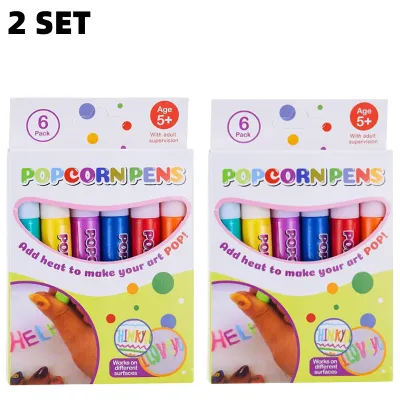
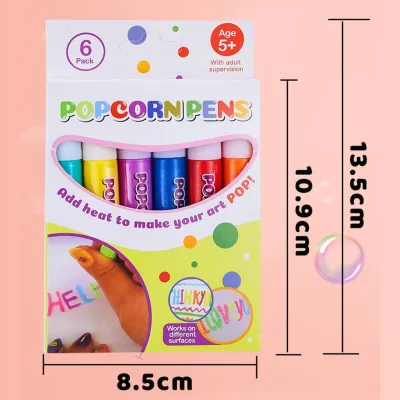
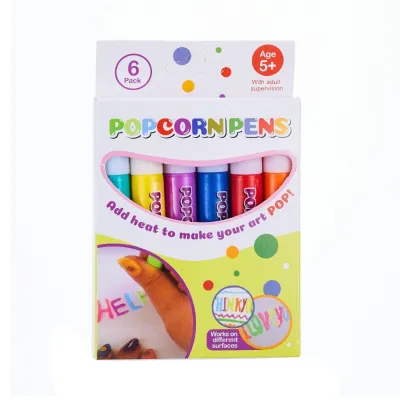
Prices are valid at publication and may change. Please refer to the product page for the latest price.

Unlike standard highlighters or paint markers that dry flat, these specialty instruments leave a raised, velvety, or rubbery finish that invites touch. This unique texture makes them excellent for decorative borders, hand-lettered titles, and illustrative details.
However, their thick, slow-flowing ink makes them unsuitable for everyday writing, rapid note-taking, or intricate, fine-line detailing. The heavy ink deposit can easily blur fine lines or saturate standard paper. Understanding these limitations helps you plan your projects effectively, reserving these markers for bold, decorative elements where texture is the primary goal.
Key Quality Indicators to Evaluate Before Buying
Evaluating specialty markers requires looking beyond vibrant packaging to assess the physical and chemical properties of the ink and delivery system. The overall performance of a puffy velvet marker depends on a delicate balance between ink thickness and tip durability, which you can verify through observable specifications.
Tip Design and Material
The tip of a puffy velvet marker acts as the gatekeeper for its thick, viscous ink. Broad chisel tips and rounded bullet tips are the most common configurations, as they allow for a generous, even flow of ink. Chisel tips are highly versatile, enabling you to switch between broad strokes for filling large shapes and sharp edges for structured lettering. Bullet tips, on the other hand, provide a consistent line width that is ideal for outlining and drawing bold patterns.
Because the ink is significantly thicker than standard water-based formulas, the tip material must be exceptionally durable. Look for high-density felt or synthetic fiber tips that resist fraying, splitting, or collapsing when you apply the pressure needed to squeeze out the ink.
Some premium marker sets feature reinforced tips or even replaceable nibs, which extend the life of the marker if the tip becomes clogged or worn before the ink reservoir is empty. Checking the product description for these structural details ensures you select a tool built to withstand heavy use.
Ink Consistency and Puff Effect
The defining characteristic of these markers is the “puff” or “velvet” effect, which relies entirely on the ink’s chemical formulation and viscosity. High-quality markers contain a high-viscosity, water-based acrylic or latex-emulsion ink that holds its shape upon application rather than spreading flat.
When evaluating options, distinguish between a matte velvet finish and a glossy puffy effect. Velvet markers typically dry to a soft, suede-like texture with a completely matte appearance, while puffy markers often require a heat source—such as a craft heat gun or a hair dryer—to expand into a glossy, raised, foam-like state.
Review the product packaging or online specifications for explicit mentions of 3D expansion, tactile texture, or raised finishes. Avoid relying solely on creative color names, which rarely indicate the actual physical behavior of the dried ink. A reliable marker will clearly state whether the puff effect is self-activating upon air-drying or if it requires external heat to rise, allowing you to choose the method that fits your workflow.
Color Range and Opacity
To achieve a striking three-dimensional effect, the ink must possess high opacity, meaning it completely covers the underlying surface without letting the paper color bleed through. This is especially critical if you plan to work on dark cardstock, kraft paper, or colored construction paper.
Check the manufacturer’s specifications to confirm if the ink is formulated with professional-grade pigments that offer full coverage. Low-quality markers often use dye-based inks that appear translucent, resulting in a dull, muddy look when applied to dark backgrounds.
Layering capabilities are another important consideration; the thick ink should allow you to apply secondary details over a dried base layer without dissolving or blending into the bottom color. However, applying excessively thick layers can lead to cracking or uneven drying, so moderation is key. Because printed packaging and digital color swatches can be highly misleading, verify color accuracy and opacity by looking at unedited user-uploaded photos on online marketplaces. These real-world images provide a much more accurate representation of how the colors look once fully dried and textured.
Drying Time and Smudge Resistance
Because puffy velvet markers deposit a thick, dimensional layer of ink, they inherently require a significantly longer drying and curing time than standard felt-tip pens. While a typical marker dries in seconds, textured inks can take anywhere from several minutes to a few hours to set completely, depending on the thickness of the application.
Environmental factors play a massive role in this process, particularly in tropical climates like the Philippines, where high relative humidity can drastically delay drying times. In humid conditions, the water content in the ink evaporates much slower, leaving the wet design vulnerable to accidental smudging or running.
To prevent ruining a completed project, always plan your crafting schedule to accommodate these extended drying periods, and work in a well-ventilated, air-conditioned, or fan-cooled room to help speed up evaporation. Before committing to a final piece, conduct a simple drying test on a scrap piece of the same paper. Apply a stroke of ink, note the time, and gently touch the edge at regular intervals to determine exactly how long the formula takes to cure in your specific environment.
Checking Paper and Surface Compatibility
The success of your textured designs depends heavily on the medium you write on, as the moisture and weight of thick puffy ink can easily overwhelm standard paper. To prevent severe bleeding, feathering, or warping, always pair these markers with heavyweight paper or cardstock.
A minimum paper weight of 200 gsm (grams per square meter) is highly recommended, though heavier cardstock of 250 gsm or more provides the best structural support for thick, wet applications. The sturdy fibers of heavy cardstock absorb the liquid carrier of the ink while maintaining a flat, unwarped surface.
Conversely, you should avoid using standard 70 gsm or 80 gsm copy paper, as the high water content in the marker will quickly saturate the thin sheets, causing the ink to bleed through to the other side and warp the paper into waves. Highly glossy, non-porous surfaces like photo paper or plastic sheets should also be avoided unless the manufacturer explicitly guarantees compatibility, as the ink cannot grip the surface and may peel off once dry.
Because every paper brand uses different sizing agents and fiber blends, always perform a quick test on a hidden corner or a scrap piece of your chosen material. Observe how the ink behaves over a 24-hour period to ensure it adheres well, does not bleed through, and achieves the desired puffy texture without distorting the page.
Building Your Shortlist: What to Check on the Label
When browsing online marketplaces or visiting local stationery stores, having a structured checklist will help you filter out low-quality options and find the best value.
First, prioritize safety by checking the label for non-toxic certifications, such as the ACMI AP (Approved Product) seal or compliance with EN71 standards. This is especially important if the markers will be used by children, in classrooms, or in enclosed crafting spaces where you might be exposed to fumes for extended periods.
Second, look for manufacturing dates or shelf-life indicators on the packaging. Because puffy and velvet markers contain dense emulsions with suspended solids, the ink can separate, settle, or dry out inside the barrel if they sit on a shelf for too long before purchase.
Third, read through user reviews specifically looking for mentions of ink separation, frequent tip clogging, or a failure of the ink to rise or puff as advertised. If multiple buyers report that the markers arrived dried out or that the tips clogged after a single use, it is a strong indicator of poor sealing or low-quality binders.
Finally, calculate the overall value by comparing the price per marker in Philippine Pesos (₱) against the ink volume and tip durability. A set priced at ₱300 for six high-quality, long-lasting markers with durable tips often represents far better value than a ₱150 set of twelve that dries out after a few strokes or ruins your paper with uneven flow.
Frequently Asked Questions (FAQ)
Can you use puffy velvet markers on fabric?
Whether you can use puffy velvet markers on fabric depends entirely on the specific binder used in the ink formulation. You must check the manufacturer’s label for explicit fabric-safe or textile-compatible markings before applying them to clothing, tote bags, or canvas.
Many standard puffy markers designed for paper will wash out or crack and peel when applied to flexible fabrics. If the label confirms fabric compatibility, the design will typically require a heat-setting step—such as ironing the reverse side of the fabric or using a heat gun—to lock the pigment into the fibers and activate the puff effect.
Keep in mind that even fabric-safe puffy inks will reduce the flexibility of the textile, creating a stiff, raised patch. For best results, hand-wash these customized items in cold water and line-dry them to preserve the textured design over time.
How do you fix a dried-out puffy velvet marker?
Because of their high viscosity and dense pigment load, puffy velvet markers are highly susceptible to drying out if the caps are left off or if they are stored incorrectly. To prevent this, always store your markers horizontally, which keeps the ink evenly distributed and prevents the pigments from settling at the bottom of the barrel.
If a marker begins to write dry, try capping it tightly and shaking it gently for a minute to redistribute the separated ink components, then store it tip-down for an hour before testing it on scrap paper.
If the ink inside the barrel or tip has permanently hardened, the marker cannot be safely revived and should be discarded. Do not attempt to add water, alcohol, or unauthorized chemical thinners to the marker, as this can destroy the emulsion, prevent the puff effect from activating, and void the product’s non-toxic safety profile.
Community discussion
Share your experience or ask a question. Comments are reviewed before publication.