
Using tag price label stickers for bullet journal expense tracking offers a structured, visually distinct way to log daily spending and categorize monthly budgets. However, not all price labels are designed for journaling. The right choice depends on finding a balance between layout compatibility, ink adherence, and paper safety. This guide outlines the essential criteria for selecting tag price label stickers that will keep your expense spreads neat, functional, and damage-free.
To achieve a clean layout, you must look beyond the basic utility of a label and consider how its physical properties interact with your journal’s paper and writing instruments. A sticker that works perfectly on a plastic retail container might bleed, smudge, or warp when placed inside a notebook. By understanding the nuances of size, material composition, and adhesive chemistry, you can transform simple price tags into highly effective tools for visual financial tracking.
Key Features to Evaluate for Expense Tracking
Standard retail price tags are manufactured for high-volume commercial labeling, meaning their design prioritizes low production costs and aggressive adhesion over paper preservation and writeability. When you repurpose these labels for a personal journal, you are introducing materials that were never intended to sit flat in a closed book for years. To avoid ruined pages and illegible logs, you must evaluate how these stickers perform under the specific conditions of daily journaling.
Products mentioned in this guide
Prices are valid at publication and may change. Please refer to the product page for the latest price.
Selecting the ideal tag price label sticker requires a systematic look at three primary pillars: size, material, and adhesive. Each of these factors directly influences how easily you can write your transaction details, how well the sticker fits within your existing grid system, and whether the adhesive will degrade your journal pages over time. Balancing these elements ensures your expense tracker remains both highly functional and visually appealing.
Size and Format Dimensions
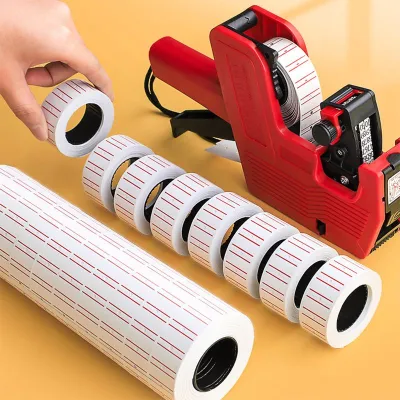
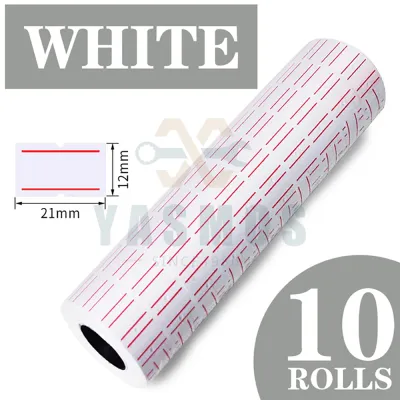
The physical dimensions of your tag price label sticker must align with the grid system of your bullet journal to maintain a cohesive look. Most popular bullet journals utilize a 5mm dot grid or square grid layout. Standard retail price tags come in various dimensions, such as 12mm by 21mm or 26mm by 16mm. A label that is 10mm to 15mm high will perfectly span two to three grid rows, providing a neat, bounded area that aligns naturally with your horizontal lines of text.
Before purchasing a large pack of stickers, measure your journal’s grid and calculate how much writing space you actually need. A tracking entry typically requires room for a date, a short category description (such as “Groceries” or “Transport”), and the final transaction amount in ₱. If a sticker is too small, your handwriting will become cramped and illegible; if it is too large, a single entry will dominate the page, leaving little room for other daily notes or weekly reflections.
You should also evaluate whether you prefer pre-printed lines, colored borders, or completely blank tags. Many classic price gun labels feature pre-printed red or blue borders, which can add a retro, structured aesthetic to your spreads. However, blank tags offer maximum layout flexibility, allowing you to write horizontally, vertically, or even stamp custom icons onto the sticker surface without competing with pre-existing lines.
Material and Writeability
The material of the sticker determines how well it accepts ink and how quickly that ink dries. Price labels generally fall into two categories: paper-based (matte or uncoated) and synthetic (glossy, coated, or vinyl). For bullet journaling, matte paper-based labels are almost always the superior choice because their porous surface allows ink to sink into the fibers, resulting in crisp lines and minimal drying time.
If you prefer using gel pens, fineliners, or water-based markers, you must test how they interact with the sticker surface. Glossy or highly coated synthetic labels repel water-based inks, causing the ink to pool on the surface, bead up, and smudge at the slightest touch. In warm, humid tropical climates like the Philippines, high humidity can severely prolong the drying time of even semi-gloss labels, making matte paper labels an absolute necessity for quick, frustration-free logging.
To verify writeability, perform a simple smudge test on a sample sticker before committing to a full page layout. Write a few sample characters using your favorite journaling pen, wait five seconds, and gently run your finger over the ink. If the ink smears, the material is too non-porous for your pen type, and you will need to either switch to a quick-drying permanent marker or opt for a more absorbent, uncoated paper label.
Adhesive Type and Paper Safety
Adhesive chemistry is a critical but often overlooked aspect of choosing stationery stickers. Commercial price labels typically use either permanent or removable (repositionable) adhesives. Permanent adhesives are designed to stick firmly to retail goods and can be incredibly difficult to peel off once applied to paper. If you make a mistake in your layout, attempting to reposition a permanent sticker will likely tear the underlying journal page, especially on thinner paper weights like 80gsm.
Furthermore, many cheap, industrial-grade adhesives contain acidic compounds that can degrade paper fibers over time. Over several months or years, these acids can seep through the page, causing unsightly yellowing, oily halos around the stickers, or brittle spots that ruin the reverse side of your paper. For long-term journaling, look for labels explicitly marked as acid-free, archival-safe, or designed specifically for stationery and scrapbooking.
You must also consider the opacity of the sticker and how it interacts with your journal’s paper weight. If you are using a journal with thinner pages (80gsm to 100gsm), a heavy, dark adhesive might show through to the other side of the page, a phenomenon known as ghosting. Testing a single sticker on a back page of your journal allows you to observe how the adhesive behaves under pressure and whether it causes the page to warp or buckle when the notebook is closed.
Matching Sticker Types to Your Tracking Layout
Your choice of tag price label sticker should directly reflect how you prefer to organize your financial data. Different tracking frequencies, layout styles, and visual hierarchies require different sticker shapes, colors, and sizes. By matching the physical characteristics of the stickers to your specific tracking system, you can create a highly intuitive spread that makes budgeting feel like a creative habit rather than a chore.

Visual hierarchy is key to a successful bullet journal layout. Using a single type of sticker for every single entry can make your pages look flat and difficult to scan quickly. By varying the shapes, sizes, and colors of your labels, you can establish a clear visual order that separates daily micro-transactions from major monthly financial milestones.
Daily and Weekly Log Formats
For daily and weekly expense logging, consistency and speed are essential. If you log every small purchase—such as a quick snack, a jeepney fare, or a cup of coffee—you will need a high volume of small, uniform stickers. Tiny rectangular labels (around 10mm by 20mm) are ideal for this purpose because they allow you to stack multiple transactions neatly within a single day’s column without cluttering your weekly spread.
Because daily logging often happens on the go or during quick breaks, prioritizing quick-dry materials is vital. You do not want to write down an expense, close your journal immediately, and find that the ink has transferred to the opposite page. Opt for highly absorbent, uncoated matte paper labels that dry instantly when written on with standard ballpoint or quick-dry gel pens.
When arranging these small tags within a weekly grid, try aligning them along a single vertical axis to create a clean, column-like list. This structured arrangement makes it incredibly easy to sum up your weekly spending at a glance. It also prevents your journal from becoming unevenly thick, as distributing the small stickers evenly across the page prevents the binding from warping.
Monthly Summaries and Category Tags
Monthly summaries and budget overviews require a different visual approach than daily logs. For these spreads, you want to highlight larger financial categories, total monthly spending, or savings goals. Larger, distinctly shaped stickers—such as medium-sized round labels, pastel-colored flags, or wide rectangular tags—are perfect for creating prominent headers and section dividers.
Color-coding is an incredibly effective way to categorize your expenses visually. You can assign specific sticker colors to different spending categories: green for savings, yellow for food, blue for utilities, and pink for entertainment. When you open your monthly summary, your eyes will naturally group the colors together, giving you an instant, intuitive understanding of where your money went without needing to read every individual line item.
You can also use these larger stickers to create a visual legend at the beginning of your journal or at the top of your monthly spread. Write the category name directly onto a colored sticker and place it next to your budget goals. This consistent visual language not only keeps your journal looking beautiful but also streamlines your tracking process, making it easier to maintain your budgeting habits over time.
Selection Checklist for Your Next Purchase
Before you head to your local stationery store or browse online marketplaces, it helps to have a concrete set of criteria to evaluate your options. Not all packages of tag price label stickers provide the necessary specifications on their covers, so knowing what to look for—and what questions to ask the seller—can save you from purchasing unusable products. Use this practical checklist to guide your next purchase:
- Verify Paper Weight and Opacity: Look for labels that feel substantial to the touch. If the packaging does not list the paper weight, hold a sheet up to the light to check its opacity; transparent or thin labels will allow your journal's grid lines to show through, making your writing harder to read.
- Check for Acid-Free Labels: Prioritize products that explicitly state they are "acid-free," "archival-safe," or "photo-safe" to ensure the adhesive will not yellow or degrade your journal pages over time.
- Confirm Pen Compatibility: Read the manufacturer's description to see if the labels are optimized for hand-writing. Avoid labels designed exclusively for thermal printers or industrial laser printing, as these often feature slick coatings that resist standard journaling inks.
- Calculate the Cost per Sticker: Compare different packaging options to find the best value for your stationery budget. Divide the total price in ₱ by the number of individual stickers in the pack to determine the cost per unit, keeping in mind that larger multi-sheet packs are often more economical than small decorative rolls.
- Plan a Small-Batch Test: Never apply a new type of sticker to an active, important page of your journal right away. Always peel off a single label and test its adhesive strength, writeability, and drying speed on an inconspicuous back page or a scrap piece of similar paper first.
Common Mistakes to Avoid When Using Price Labels in Journals
Integrating price labels into your bullet journal can elevate your tracking spreads, but it is easy to make mistakes that lead to messy layouts or damaged pages. One of the most common errors is overcrowding a single page with too many large, thick stickers. While stickers add great visual structure, using too many of them can make your journal incredibly bulky, causing the pages to fan out and making it difficult to write comfortably on subsequent sheets.
Another frequent mistake is using wet-ink pens, such as fountain pens or heavy felt-tip markers, on highly absorbent, uncoated paper labels. Because these labels are designed to take ink quickly, they can act like a sponge, drawing too much ink from wet pens and causing severe feathering on the sticker itself, as well as bleed-through to the reverse side of your journal page. Always match your pen’s ink flow to the specific absorbency of your sticker material.
Applying permanent adhesive tags before you have finalized your layout can also lead to frustration. If you realize you miscalculated your grid spacing or misspelled a category header, trying to peel off a permanent sticker will almost certainly tear your paper. To avoid this, lightly place your stickers on the page without pressing down fully, or use removable adhesive labels until you are completely satisfied with the overall arrangement of your spread.
Finally, many journalers fail to test their pens and stickers together before starting a new month. A pen that works beautifully on your journal’s standard pages might behave completely differently on a sticker’s surface. Taking five minutes to run a quick ink and adhesive test on a scrap page will save you from the disappointment of a smudged, illegible monthly expense log.
Frequently Asked Questions (FAQ)
Can I use standard retail price tags for my bullet journal?
Yes, you can use standard retail price tags, but they require careful testing before application. Retail tags are often made with highly aggressive adhesives designed to prevent shoplifting or peeling in stores, which can easily tear delicate journal paper if you try to adjust them. Additionally, their paper quality is typically lower, meaning they may yellow over time or cause ink to feather. If you choose to use them, always perform a test on a back page to check for bleed-through and adhesive safety.
How do I prevent ink from smudging on glossy price label stickers?
To prevent smudging on glossy or coated price labels, avoid water-based gel pens, fountain pens, and traditional fineliners, as these inks cannot penetrate the slick surface. Instead, opt for oil-based ballpoint pens, fine-tip permanent markers, or specialized multi-surface drawing pens. If you must use a standard pen, allow the ink to dry completely for several minutes, or place a clean sheet of blotting paper over the sticker before closing your journal to absorb any excess moisture.
Are removable adhesive stickers reliable for long-term expense tracking?
Removable adhesive stickers are highly reliable for planning and layout design, but their long-term durability depends heavily on environmental conditions and how often you handle your journal. In warm, humid climates like the Philippines, the adhesive on repositionable stickers can break down over time, causing the edges of the labels to curl or peel away from the page. For permanent financial records that you plan to reference years down the road, high-quality, acid-free permanent stickers are generally a safer choice.
Community discussion
Share your experience or ask a question. Comments are reviewed before publication.