
Finding the right alphabet stickers for your bullet journal in the Philippines requires balancing visual appeal with practical performance. With the local climate’s high humidity and the wide variety of journal paper weights available—ranging from standard 80 gsm pages to thick 160 gsm bamboo paper—the wrong adhesive or material can lead to peeling edges, ink smudging, or ruined layouts. The ideal alphabet stickers are those that match your specific paper type, resist moisture-induced curling, and offer the precise typography needed to organize your weekly spreads, habit trackers, and monthly headers.
To build a reliable collection, you must evaluate how different sticker materials interact with your favorite journaling pens and how well the adhesive holds up over time. Whether you prefer minimalist black-and-white sans-serif letters or colorful, decorative washi-style alphabets, understanding the technical aspects of sticker production helps you avoid common pitfalls like paper tearing and faded prints. By focusing on material composition, sheet formats, and smart online sourcing strategies, you can curate a versatile sticker kit that elevates your bullet journal layouts.
Key Criteria for Choosing Alphabet Stickers
Selecting the perfect alphabet stickers involves analyzing how the sticker material behaves on your journal pages. Matte paper stickers are highly favored by bullet journal enthusiasts because they mimic the texture of the page itself, allowing them to blend almost seamlessly into the background. These stickers are highly compatible with most water-based inks, gel pens, and brush markers, meaning you can easily write over or around them without worrying about severe smudging. However, standard matte paper is susceptible to moisture absorption, which can cause the edges to lift slightly if your journal is frequently exposed to humid tropical air.
Products mentioned in this guide
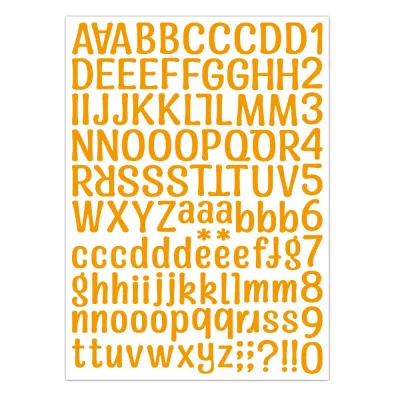
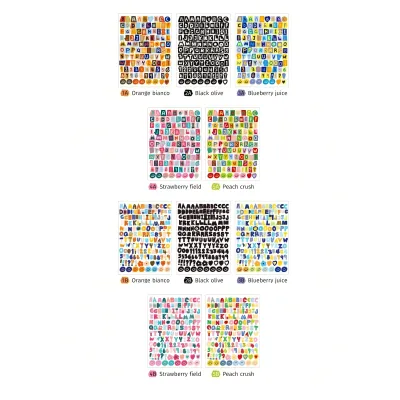
![ENWEI 52 Pcs [English Alphabet Series] Vintage Journal Stickers Washi Paper Sticker Paper Scrapbooking Material Scrapbook Kit](https://img.lazcdn.com/g/p/be17faf11df226b0a05f9927bff90e50.jpg_400x400q80.jpg_.webp)
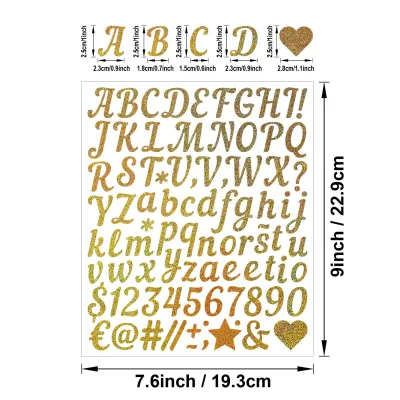
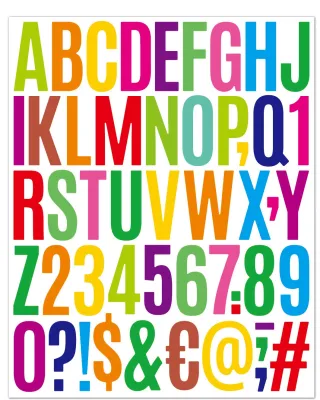
Prices are valid at publication and may change. Please refer to the product page for the latest price.
Glossy and vinyl finishes offer a distinct, vibrant look but present different functional challenges. Glossy paper stickers have a polished coating that makes colors pop, making them excellent for bold headers or decorative themes. The trade-off is their non-porous surface, which repels water-based inks and requires specialized permanent markers or oil-based ballpoint pens if you plan to write directly on them. Vinyl stickers, on the other hand, are highly durable and water-resistant, making them virtually immune to humidity. However, their thickness can add noticeable bulk to your journal, causing the pages to stack unevenly as you fill up the book.
Adhesive strength is another critical factor that dictates how user-friendly your alphabet stickers will be. High-tack, permanent adhesives lock onto the paper fibers immediately, ensuring your letters will not peel off over years of use. The downside is that they leave no room for error; attempting to adjust a crookedly placed letter will almost certainly tear the delicate fibers of standard 80 gsm or 100 gsm journal paper. Repositionable or low-tack adhesives, often found on washi-style sticker sheets, allow you to peel and adjust the letters multiple times during layout creation. While highly forgiving, these low-tack options may require extra burnishing with a bone folder or scraper to ensure they remain flat in humid conditions.
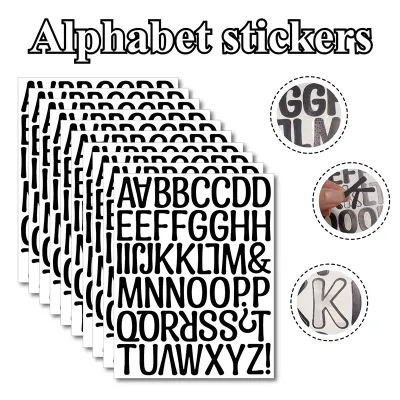
Finally, you must consider the typographic utility of the sticker sheet, specifically the font style, size, and character distribution. A functional alphabet sticker sheet should provide a balanced ratio of uppercase and lowercase letters, along with numbers and basic punctuation marks. Many standard sheets contain an abundance of rare consonants like “Q,” “X,” and “Z,” but run out of high-frequency vowels like “A,” “E,” “I,” and “O” after just a few layouts. Before purchasing, examine the sheet layout to ensure it contains enough repeating characters for your typical headings, and verify that the font size matches your journal’s grid spacing—usually 5mm in standard dot-grid notebooks.
Popular Styles and Formats for Bullet Journaling
Alphabet stickers are distributed in several physical formats, each catering to different journaling workflows and storage preferences. The most common format is the flat sticker sheet, which typically measures around A6 or five-by-seven inches. These sheets are incredibly convenient because they lie completely flat, making them easy to slip into the back pocket of your journal or store inside a standard sticker book. Flat sheets allow you to see the entire alphabet at a glance, making it simple to plan your spacing and letter combinations before peeling them off.

For those who prefer a more tactile, vintage aesthetic, individual die-cut or kiss-cut letters offer a unique alternative. These are often sold in small tins, boxes, or paper flakes, containing multiple copies of each letter. While highly decorative and often featuring intricate watercolor or floral designs, individual letters can be tedious to sort through when you are looking for a specific character. They also tend to be slightly thicker than sheet-based stickers, which can create uneven writing surfaces on the reverse side of your journal pages.
Roll formats, such as alphabet washi tape or sticker rolls, provide a continuous stream of letters that you can tear or cut as needed. Washi tape rolls featuring repeating alphabets are highly portable and cost-effective, offering hundreds of letters in a single compact roll. However, using them requires a bit more preparation, as you must carefully cut out each letter with scissors or a precision craft knife. The thin, semi-transparent nature of washi paper also means that any dark lines or dots on your journal page will show through the sticker, which may affect the readability of lighter-colored fonts.
The design style of the typography should align with your overall journaling philosophy. Minimalist setups benefit from clean, uniform sans-serif or typewriter-style fonts in neutral tones like black, white, or gray. These simple designs keep the focus on your tasks and schedules without creating visual clutter. Conversely, decorative alphabets—featuring calligraphy, metallic foil accents, or themed illustrations—are perfect for monthly cover pages or creative memory-keeping spreads. Mixing and matching a bold, decorative capital letter with simple lowercase letters is a popular technique for creating eye-catching headers without overwhelming the page.
How to Build Your Shortlist on E-Commerce Platforms
Navigating online marketplaces in the Philippines to find high-quality alphabet stickers requires a strategic approach to searching and filtering. Because generic search terms like “letter stickers” often return thousands of irrelevant results, including large vinyl decals meant for cars or walls, you should use highly specific search modifiers. Incorporating terms like “bullet journal alphabet stickers,” “matte letter sticker sheet,” “washi alphabet stickers,” or “mini alphabet stickers 5mm” will help filter out oversized products and direct you to items designed specifically for paper crafts.
Once you have narrowed down the search results, the next step is to carefully evaluate the product listings to verify quality. Do not rely solely on the seller’s stock photos, which are often digitally rendered and may not accurately represent the actual print quality or color saturation. Instead, scroll down to the customer review section and look for user-uploaded photos and videos. These real-life images allow you to assess the sharpness of the print, the true colors under natural light, and how the stickers look when applied to actual paper. Pay close attention to reviews that mention whether the stickers are easy to peel or if they tear easily along the kiss-cut lines.
Shipping origin and delivery timelines are also crucial considerations, especially if you are planning your layouts for an upcoming month. Many stationery sellers on local e-commerce platforms ship directly from overseas, which can take anywhere from one to two weeks to arrive. If you need your stickers quickly to start a new monthly setup, filter your search to local sellers within the Philippines who can dispatch items within a few days. Additionally, look for sellers who offer bundled sets or multi-sheet packs; purchasing alphabet stickers in bulk or curated color palettes is often much more economical than buying individual sheets, and it ensures you have a consistent supply of matching fonts.
Application and Storage Best Practices
Applying tiny alphabet stickers cleanly requires a steady hand and the right tools. Using your fingers to peel and place small letters can be frustrating, as the natural oils on your skin can weaken the adhesive on the corners, causing them to lift later. Instead, invest in a pair of fine-tip craft tweezers or a dual-ended silicone sticker picker. These tools allow you to grip the edge of the sticker precisely, position it perfectly over your journal’s dot grid, and press it down without blocking your line of sight.
Before applying any sticker, ensure the surface of your journal page is properly prepared. Dust your pages lightly to remove any eraser shavings, graphite dust, or loose paper fibers, as these particles will stick to the adhesive and prevent a secure bond. If you have just used watercolor, gouache, or heavy ink washes on your page, make sure the medium is completely dry before placing your stickers. Applying stickers to damp paper will trap moisture underneath, leading to paper warping, adhesive failure, and potential ink bleeding.
Proper storage is essential for maintaining the quality of your alphabet stickers, especially in the warm, humid climate of the Philippines. High humidity can soften adhesives, making them gummy and difficult to peel, while extreme heat can cause the backing sheets to curl or the vinyl to shrink. Store your sticker sheets flat in a cool, dry place away from direct sunlight, which can fade the printed colors over time. Using an accordion folder, a dedicated sticker album with release paper, or a sealed plastic container with a small packet of silica gel will keep your collection organized and protect the adhesive from moisture degradation.
Frequently Asked Questions (FAQ)
Can I write on alphabet stickers with gel pens or markers?
Your ability to write on alphabet stickers depends entirely on the sticker’s material and finish. Matte paper and matte washi stickers are highly porous, making them excellent surfaces for almost all writing instruments, including gel pens, fine liners, and water-based brush markers. The ink absorbs quickly into the paper fibers, minimizing the risk of smudging.
Conversely, glossy paper, clear plastic, and vinyl stickers have non-porous surfaces that repel water-based inks. If you attempt to write on these finishes with standard gel pens or water-based markers, the ink will bead up, pool, and smudge easily. For glossy or vinyl stickers, you must use oil-based ballpoint pens, permanent fine-tip markers, or specialized multi-surface pens, and allow the ink to dry completely before touching the surface.
How do I remove a misplaced sticker without tearing my journal page?
Removing a misplaced sticker without damaging your journal page requires patience and a gentle touch. If the sticker has a low-tack or repositionable adhesive, you can often peel it off slowly by pulling it back flat against itself at a 180-degree angle, rather than pulling it straight up at a 90-degree angle. This technique minimizes the upward tension on the paper fibers, reducing the likelihood of a tear.
For stickers with stronger, permanent adhesives, applying gentle heat can help soften the glue. You can use a hairdryer on a low, warm setting directed at the sticker for a few seconds to loosen the bond before attempting to peel it. Keep in mind that thin, low-gsm papers are much more fragile and prone to tearing than thick, high-gsm cardstock or mixed-media papers, so always proceed with extreme caution.
Are transparent alphabet stickers better for minimalist layouts?
Transparent alphabet stickers are highly effective for minimalist layouts because they eliminate the white or colored borders that typically surround opaque die-cut letters. This transparency allows the natural color and texture of your journal paper—whether it is bright white, cream, or kraft paper—to show through, creating a clean, integrated look that resembles direct printing.
However, transparent stickers come with contrast challenges. If you use light-colored or pastel fonts on a transparent background, they may become virtually invisible when applied to off-white or cream-colored pages. To maintain readability in a minimalist setup, choose transparent stickers with high-contrast lettering, such as solid black, dark gray, or opaque white, depending on the color of your journal paper.
Community discussion
Share your experience or ask a question. Comments are reviewed before publication.